






Square Antique Rugs for Balanced Luxury Interiors
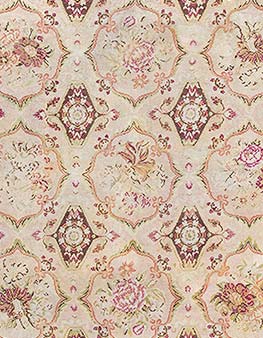
Square antique rugs solve a design problem that rectangular carpets often cannot: they create visual order in rooms where architecture, furniture, or circulation calls for equal emphasis in both directions. In this collection, Doris Leslie Blau presents square and nearly square antique carpets chosen for scale, craftsmanship, palette, and decorative usefulness. The selection includes Persian Kirman, Tabriz, Bidjar, Meshad, Sultanabad, Bakshaish, Turkish Oushak, Indian Agra and Amritsar, French Aubusson, English Axminster, and Bessarabian pieces, many dating from the late nineteenth and early twentieth centuries.
Why square antique carpets are different
A square rug reads differently in a room than a long rectangle. It can anchor a central seating arrangement without implying a corridor, sit naturally beneath a square or round dining table, or reinforce the symmetry of a grand entrance hall. Antique square rugs are also comparatively uncommon, which makes the best examples valuable to interior designers and collectors who need a specific proportion rather than a generic area rug. Since antique rugs are typically 100+ years old in the broader market, buyers should evaluate each piece by its stated date, origin, weave, condition, and decorative character.
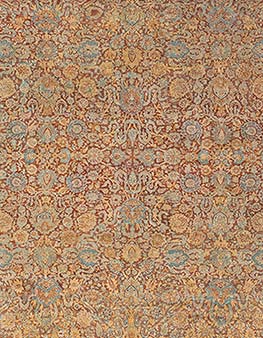
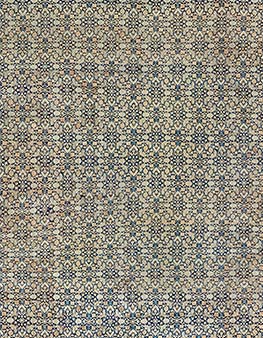
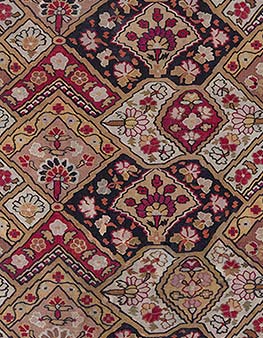
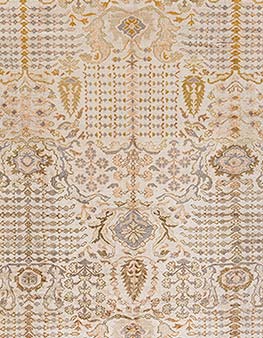
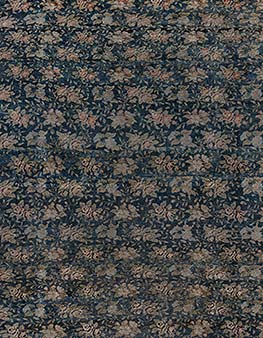
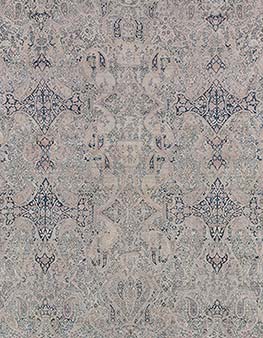
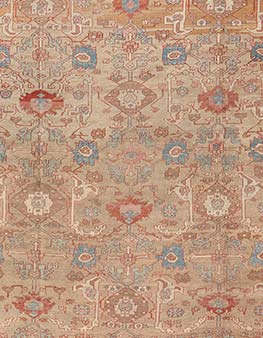
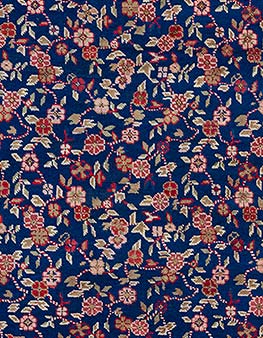
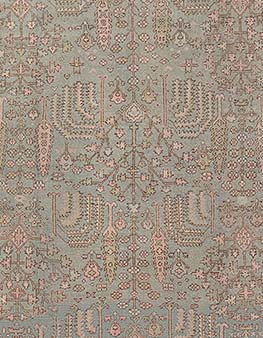
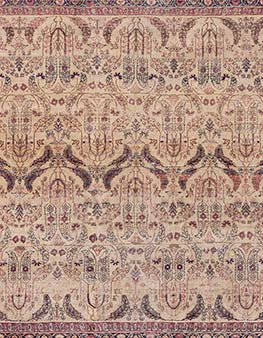
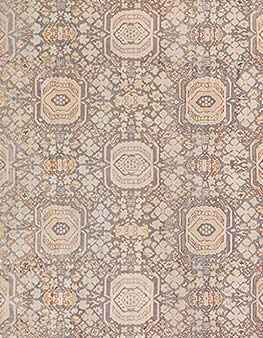
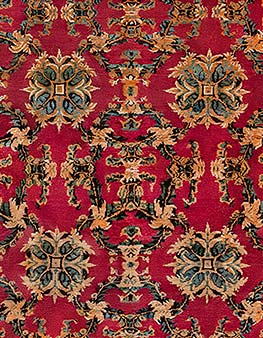
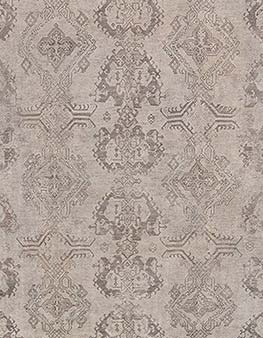
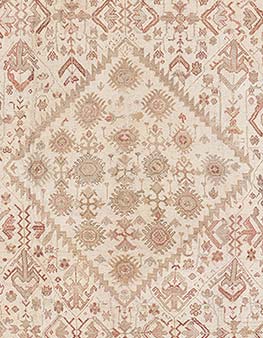
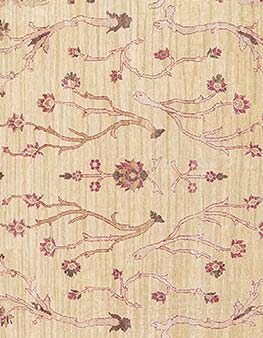
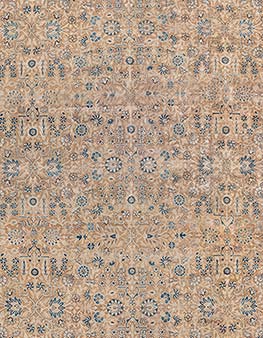
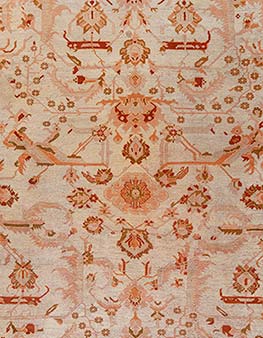
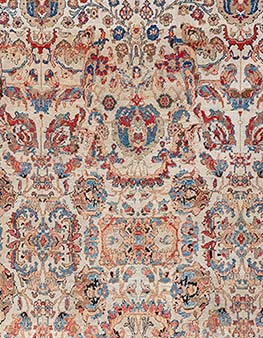
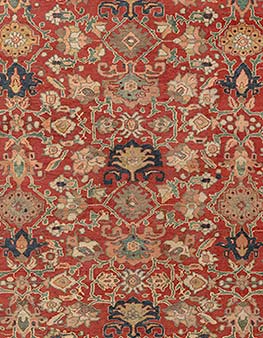
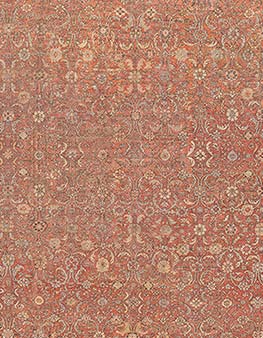
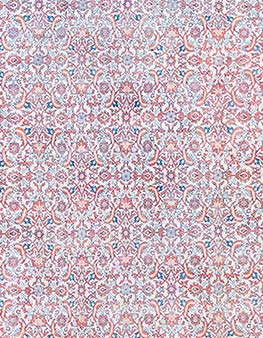
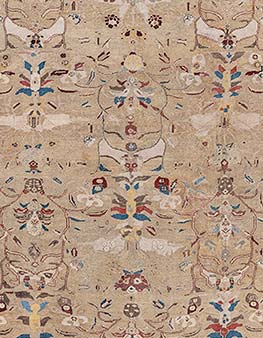
The strongest square antique area rugs combine proportion with depth of design. Allover Persian floral patterns can soften formal rooms, while geometric Bakshaish, Bidjar, or tribal-influenced carpets bring structure to contemporary interiors. Oushak rugs often suit pale, atmospheric rooms because of their open drawing and quiet color. Aubusson, Axminster, and Bessarabian carpets may work beautifully in European-inspired interiors where architectural detail, antiques, or upholstered furniture call for a more decorative surface.
How to evaluate a square antique rug
When comparing hand-knotted wool and silk rugs, the most useful details are not only size and color, but also construction, origin, material, pattern scale, age, and restoration history. A square rug must fit the room with particular precision: too small and it can look isolated; too large and it may crowd door swings, fireplaces, or built-in cabinetry. Doris Leslie Blau product listings are designed to help buyers review visible dimensions, age, origin, material, and pricing before requesting further guidance.
- Measure the room in both directions and allow for furniture placement, door clearance, and exposed flooring.
- Compare allover designs with medallion layouts; square formats can emphasize a central motif more strongly.
- Consider pile, patina, and restoration in relation to foot traffic and intended room use.
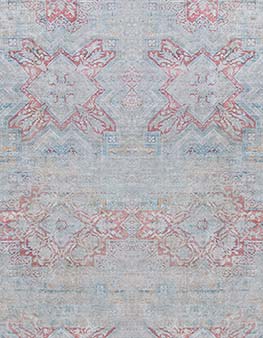
- Study palette carefully: warm tan, ivory, pale sand, blue, gray, and taupe rugs affect the entire room scheme.
- For oversized square rooms, review large antique carpets as well as adjusted or nearly square examples.
Curated square rugs from antique sources
Doris Leslie Blau has sourced rugs from estates, auctions, dealers, and private collections since 1965, a history that matters in a category where proportion and rarity are central to value. Square antique carpets are often found one at a time rather than in predictable supply, so the collection may include formal Persian workshop rugs, decorative European carpets, Indian palace-scale weavings, or more relaxed Turkish and tribal designs. Each piece should be considered as both a functional floor covering and a design object with age, workmanship, and visual presence.
For clients who love the balance of a square format but need a precise size, color, or design interpretation, Doris Leslie Blau can also advise on made-to-order square rugs as a separate option. Antique pieces offer patina and provenance; custom rugs offer control. Together, they give interior designers, architects, and luxury homeowners a broader path to finding the right square rug for formal rooms, modern apartments, collector residences, and highly specific design plans.