

Arts and Crafts Rugs
Arts and Crafts rugs appeal to designers and collectors who want pattern with discipline, warmth without excess, and craftsmanship that can hold its own in a serious interior. In this Doris Leslie Blau New Rugs category, the style is interpreted through handmade wool carpets with floral rosettes, lattice structures, soft fields, and carefully balanced palettes. These are not reproductions in the casual sense; they are design-led rugs that borrow from the movement’s respect for handwork, natural motifs, and architectural proportion while being made for contemporary rooms.
Design character and interior use
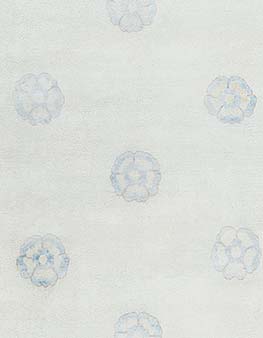
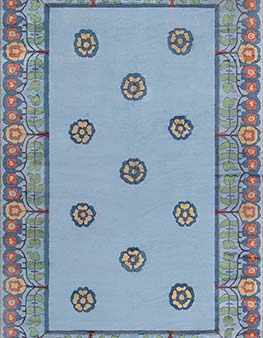
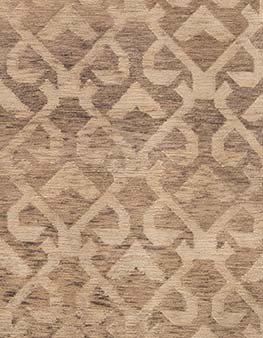
The Arts and Crafts vocabulary sits comfortably between traditional and modern decorating. Its patterns often use stylized flowers, vine work, repeating medallions, or geometric frameworks rather than dense ornament. That makes these rugs especially useful in interiors where antique rugs may feel too formal and minimalist rugs may feel too plain. A pale beige floral rug can soften a living room with stone, plaster, oak, or linen; a light blue field can introduce color without dominating the room; a geometric runner can add structure to a hallway, library, or dressing area.
Because the current selection includes large and oversized handmade wool rugs as well as a runner format, scale is a major part of the buying decision. Oversized Arts and Crafts rugs work well beneath seating groups, dining tables, and open-plan arrangements where the rug needs to visually organize the architecture. Runners bring the same design language into transitional spaces, where durability, rhythm, and a calm palette matter as much as decoration.
Materials, weave, and quality considerations
Many luxury Arts and Crafts rugs are valued for the way wool accepts color, shows texture, and performs in furnished rooms. Hand-knotted wool rugs offer depth that flat printed surfaces cannot replicate: the pattern is built into the structure, and the pile responds to light, furniture, and foot traffic over time. When evaluating a rug in this category, look beyond the motif alone. Consider the fineness of the drawing, the clarity of the border, the relationship between field and pattern, and whether the palette supports the surrounding materials.
- Choose oversized rugs when the carpet should anchor a full seating or dining plan.
- Use runners to bring Arts and Crafts geometry into halls and long circulation spaces.
- Compare floral designs for softness and geometric designs for architectural order.
- Review wool construction, pile texture, and finishing for long-term decorative value.
- Consider custom made rugs when exact room dimensions or colors are required.
Why buy Arts and Crafts rugs from Doris Leslie Blau
Doris Leslie Blau has worked with rare, antique, vintage, modern, and custom rugs since 1965, giving the gallery a broad design context for selecting new pieces that belong in luxury interiors. That perspective matters with Arts and Crafts design because the style depends on proportion, restraint, and material honesty. A successful rug should relate to antique carpets, European decorative rugs, Persian and Oriental design traditions, and modern interior planning without looking forced or generic.
For interior designers, architects, and homeowners, this category offers a focused way to source handmade wool rugs with the Arts and Crafts sensibility in sizes suitable for significant rooms. Product listings help buyers compare dimensions, color, pattern, and construction before making an inquiry. Where the existing selection does not meet a project brief, Doris Leslie Blau’s made-to-order capabilities can help translate the same craft-oriented design language into a specific size, palette, or room requirement.