

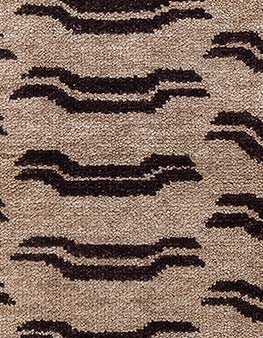
Animal Rugs for Modern Luxury Interiors
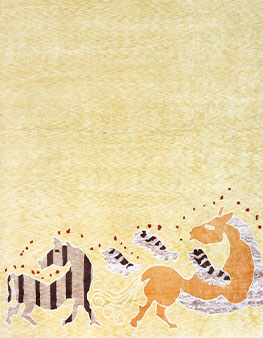
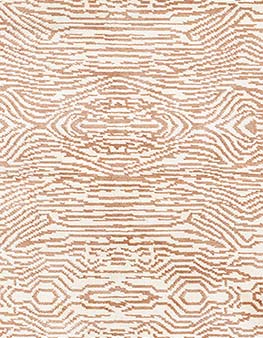
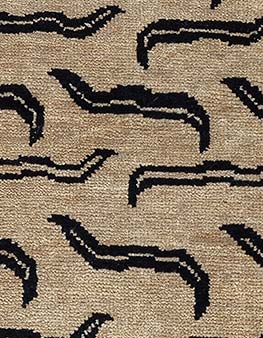
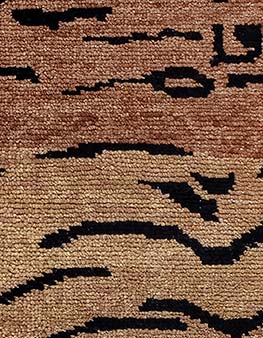
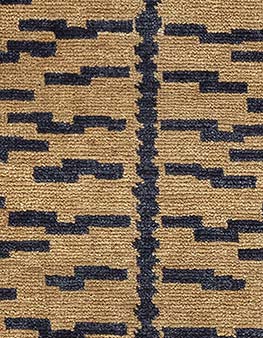
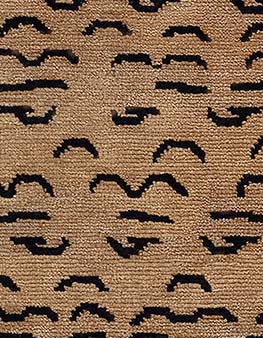
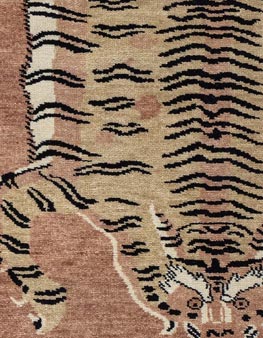
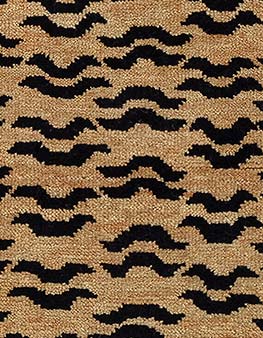
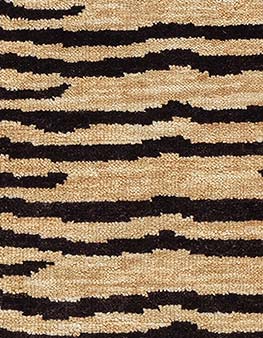
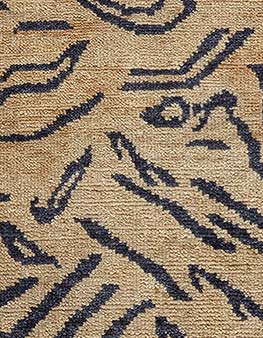
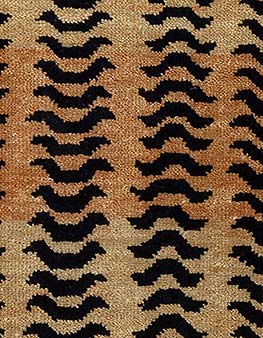
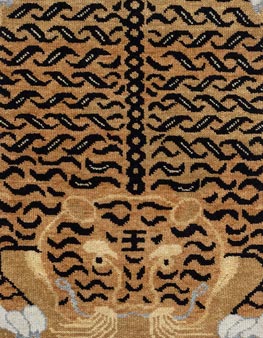
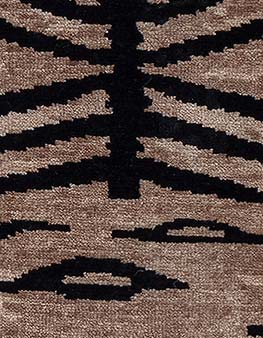
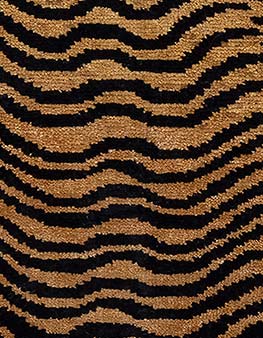
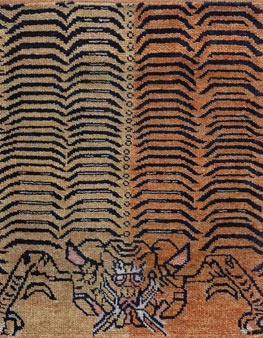
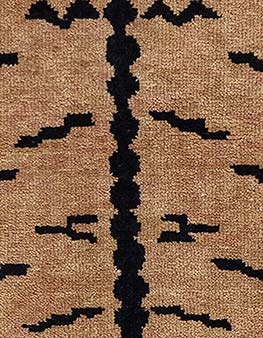
Animal rugs offer a graphic way to introduce movement, texture, and character into a room without relying on literal decoration. In this Doris Leslie Blau category, the emphasis is on modern and contemporary animal-inspired rugs: tiger stripes, abstract hide patterns, chevrons, tonal markings, and geometric interpretations designed for sophisticated interiors. Many pieces are handmade or hand-knotted in wool, silk, cotton, or blended natural fibers, giving the motif a more architectural and collectible quality than a standard animal print floor covering.
What Defines a Refined Animal Rug
A strong animal rug depends on proportion, color control, and the quality of the weave. Warm tan, brown, black, beige, charcoal, and navy details can read as bold or restrained depending on the scale of the pattern. A small wool rug with a tiger-inspired stripe may work as a layered accent, while an oversized hand-knotted carpet can anchor a living room, library, gallery-like foyer, or primary bedroom. The best examples balance animal pattern with craftsmanship, so the rug feels intentional rather than decorative in a temporary way.
Materials, Construction, and Design Use
This selection includes contemporary animal rugs made in materials associated with high-end rug production, including wool for resilience, silk for luminosity, and cotton for a crisp handmade structure. Hand-knotted rugs often provide greater depth, durability, and design precision, while handmade flatweave or cotton constructions can bring a lighter, more relaxed surface. Interior designers often use modern animal rugs to introduce contrast against stone, plaster, bronze, leather, lacquer, or quiet upholstery, especially when a room needs pattern without floral or medallion ornament.
- Review the rug size against furniture placement, not only room dimensions.
- Compare wool, silk, and cotton surfaces for sheen, softness, and traffic level.
- Use tiger stripe and chevron motifs where directional movement is desirable.
- Choose tonal beige, tan, or brown palettes for quieter luxury interiors.
- Consider custom sizing when the pattern is right but the scale needs adjustment.
Choosing Animal Rugs with Collector-Level Taste
Although this is a new rug category, the visual language of animal motifs has long appeared in antique carpets, tribal weaving, Persian rugs, Oriental rugs, European decorative carpets, and twentieth-century modernist design. Doris Leslie Blau has sourced rare rugs since 1965, and that broader knowledge informs how contemporary pieces are evaluated: design clarity, material quality, scale, color, condition, and usefulness in serious interiors. For collectors and designers, an animal rug should not be chosen as novelty; it should have enough structure, surface quality, and visual restraint to live with important furniture and art.
Buyers can use the product listings to compare visible pricing, exact dimensions, materials, construction, dominant colors, and room potential. Some pieces in this category are small accent rugs, while others are large or oversized carpets suitable for full room schemes. When a project requires a different dimension, palette, or level of pattern intensity, custom made animal rugs may be appropriate as an additional option. The result is a focused source for luxury animal rugs that can work in contemporary apartments, historic homes, hospitality spaces, and highly edited design projects.