



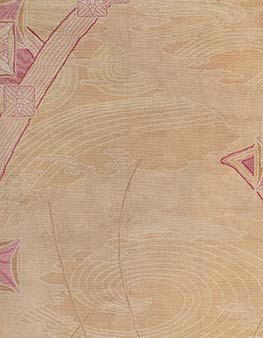
Viennese Rugs
Viennese rugs occupy a distinctive place within the world of vintage rugs: decorative enough for formal rooms, but disciplined enough for modern architecture. Associated with Art Nouveau, Jugendstil, and the Viennese Secession, these carpets often balance stylized florals, ordered borders, pale grounds, and measured geometry rather than heavy medallions or dense traditional ornament. The result is a category especially useful for designers seeking vintage Viennese rugs that feel historic, refined, and compatible with contemporary luxury interiors.
Art Nouveau and Secessionist design language
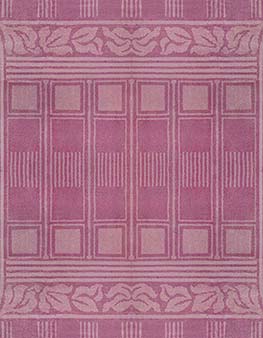
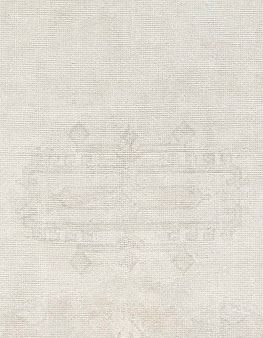
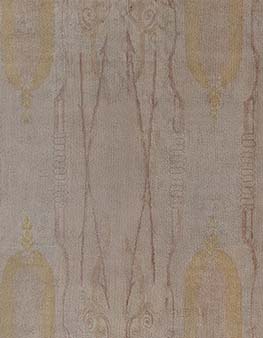
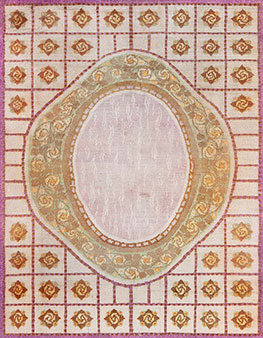
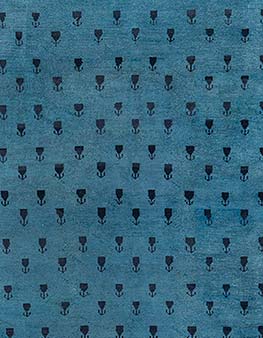
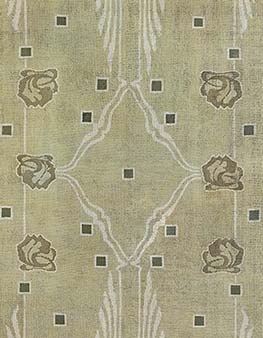
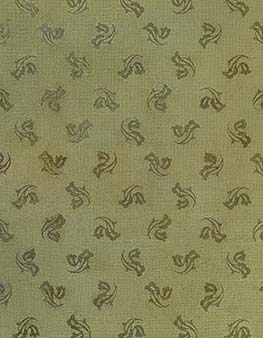
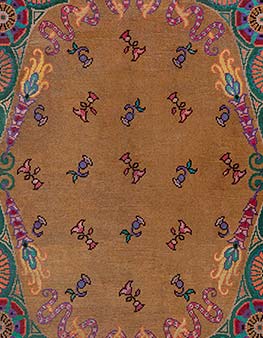
Many Viennese-inspired carpets draw from the artistic climate of turn-of-the-century Vienna, where architecture, furniture, textiles, and decorative arts were treated as parts of a complete interior. In rug form, that influence appears through elongated blossoms, scrolling stems, square formats, architectural borders, muted neutrals, olive, tan, gray, dusty rose, and warm beige. Some examples are floral and atmospheric; others are more abstract or geometric, with a restraint that makes them suitable for galleries, libraries, living rooms, and primary bedroom suites.
Unlike many Persian rugs or Oriental rugs built around a central medallion, Viennese carpets often work as a composed decorative field. That makes them valuable in rooms with strong furniture silhouettes, plasterwork, paneling, modern art, or antiques from several periods. A large hand-knotted wool carpet in a pale Secessionist palette can soften stone, wood, and metal without visually crowding the room, while a more patterned Art Nouveau rug can provide movement beneath a dining table or seating group.
How to evaluate a vintage Viennese rug
When comparing Viennese area rugs, the most important details are not only style but also construction, scale, and condition. Doris Leslie Blau presents these pieces for serious buyers who want to assess how a rug will perform in an actual interior, not simply how it photographs. Consider the following before selecting a carpet:
- Confirm the dimensions against furniture plans, door swings, and circulation paths.
- Study the palette in relation to wall color, upholstery, wood tones, and natural light.
- Review whether the pattern is floral, geometric, abstract, or a combination.
- Look for hand-knotted wool construction, surface texture, and quality of weave.
- Consider condition, restoration, pile character, and how much patina suits the room.
- Decide whether a room-size, oversized, square, or runner format best supports the layout.
For collectors and interior designers, provenance and design attribution may also matter. A Viennese Secessionist rug associated with a known designer, workshop tradition, or historically informed pattern can have a different level of decorative importance than a more general vintage floral carpet. At the same time, the best choice for a project is often the one whose scale, color, and rhythm resolve the room. Hand-knotted wool rugs in this category are prized because they combine surface durability with the subtle irregularities that give vintage carpets their character.
Using Viennese rugs in luxury interiors
Viennese rugs are particularly effective where a room calls for elegance without visual weight. Their pale beige, cream, gray, tan, olive, and brown tones work with French Art Nouveau furniture, Austrian modernist pieces, Scandinavian design, American antiques, and contemporary upholstery. In a living room, a large Viennese carpet can organize the seating plan; in a dining room, a geometric border can frame the table; in a bedroom, a softer floral composition can add warmth without competing with textiles or art.
Doris Leslie Blau’s selection is curated for buyers who compare rugs by age, origin, materials, weave, condition, design merit, and interior purpose. Because the available vintage pieces are one-of-a-kind, visible sizing and pricing help narrow choices efficiently. When an exact vintage size is not available, a custom made rug or made-to-order interpretation may be considered for projects that need a specific scale, palette, or decorative direction while preserving the spirit of Viennese and Art Nouveau design.