

Silk Antique Rugs
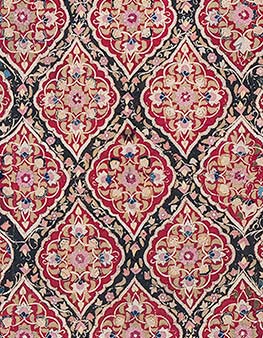
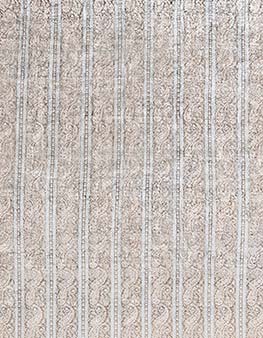
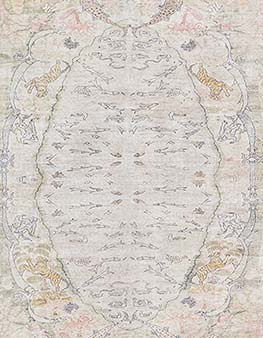
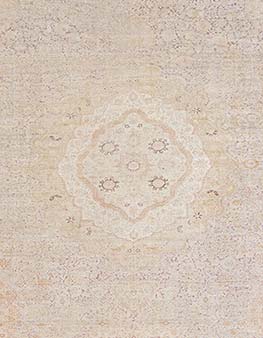
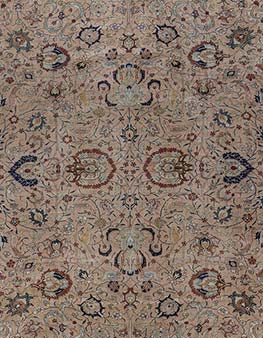
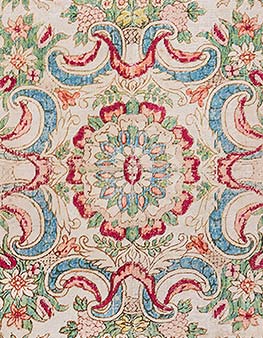
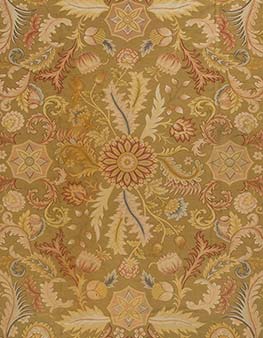
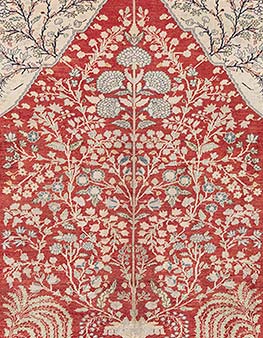
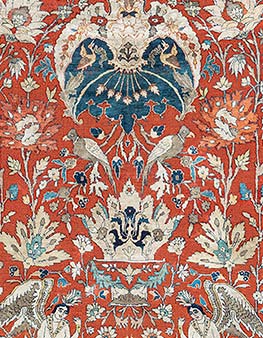
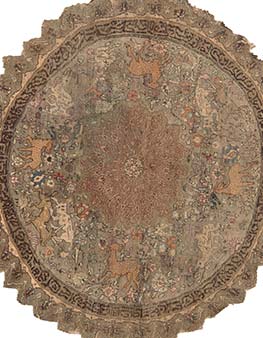
Silk antique rugs occupy a distinct place in the world of fine carpets: they are valued not only for age and rarity, but for the precision, luminosity, and surface detail that silk can bring to a hand-knotted or finely woven design. In this category, Doris Leslie Blau presents silk and wool-and-silk antique rugs suited to serious interiors, including Persian Tabriz carpets, Turkish silk rugs, French Aubusson examples, and decorative pieces with medallion, allover floral, and softly toned architectural designs. Each rug should be considered through its origin, circa date, materials, condition, and how its scale will function in the room.
What Makes Antique Silk Rugs Distinctive
In the general rug market, antique rugs are typically 100 years old or more, and silk examples require especially close evaluation because material, weave density, and preservation strongly influence their character. Silk allows unusually fine drawing, subtle color transitions, and a quiet sheen that changes with light. A cream, ivory, pale sand, or warm tan silk carpet can soften a formal room without flattening it; a Tabriz or Turkish medallion rug can introduce structure and historical refinement without overwhelming contemporary furniture.
Unlike many heavier wool antique rugs, silk antique rugs are often chosen for rooms where detail is meant to be seen: bedrooms, salons, libraries, dressing rooms, private galleries, and refined living spaces with controlled traffic. Some pieces combine wool and silk, offering more texture while preserving highlights in the pattern. When comparing options, buyers should look beyond beauty alone and assess how the rug will live in a space.
- Review the listed circa date and origin, especially for Persian, Turkish, and French pieces.
- Compare material composition, including pure silk, wool-and-silk, and metallic thread accents.
- Measure carefully for room-size placement, floating furniture layouts, or smaller accent use.
- Study condition, pile, borders, and color balance in relation to the intended room.
- Consider whether a medallion, allover, or floral design best supports the furniture plan.
Persian, Turkish, and French Design Value
The strongest silk antique carpets are rarely interchangeable. An antique Tabriz silk carpet may appeal to a collector or designer seeking Persian workshop precision, balanced ornament, and ivory or softly colored fields. Turkish silk rugs can offer disciplined medallions, floral repeats, pale sand palettes, or exceptional materials such as metal-thread details. French Aubusson and related European decorative rugs bring a different vocabulary: open fields, graceful borders, and neoclassical or floral compositions that pair naturally with traditional, transitional, and European-inspired interiors.
Doris Leslie Blau has sourced rugs from estates, auctions, dealers, and private collections since 1965, a useful advantage in a category where provenance indicators and condition matter. For luxury homeowners, architects, and interior designers, the appeal is practical as well as aesthetic: visible dimensions and pricing make it easier to compare rare rugs against floor plans, furniture scale, and project budgets. A small silk rug may anchor a reading area or entry vignette, while a larger wool-and-silk Aubusson or Turkish carpet can define an entire room.
Choosing a Silk Antique Rug for an Interior
The best choice depends on more than color. Consider natural light, upholstery texture, wall finish, and how much visual authority the rug should carry. Fine silk rugs often work best where their pattern can be appreciated without heavy wear, while wool-and-silk antique area rugs may suit more layered decorative schemes. If an exact size, palette, or performance requirement cannot be met by an antique piece, Doris Leslie Blau’s custom made and made-to-order rug capabilities can provide a complementary option for the same project, while preserving the antique rug as the focal point where it belongs.