

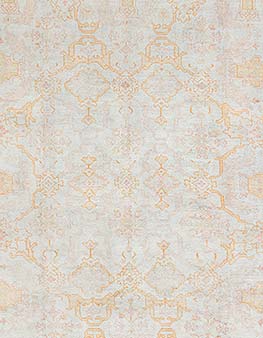
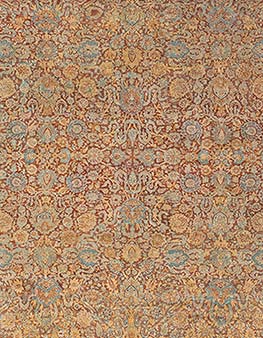
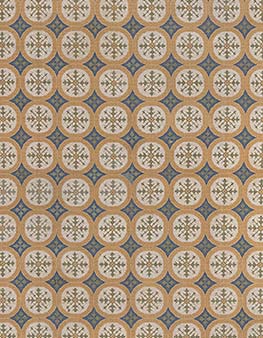
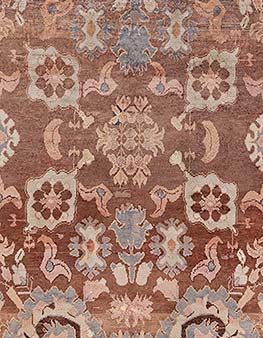



Antique Room Size Rugs
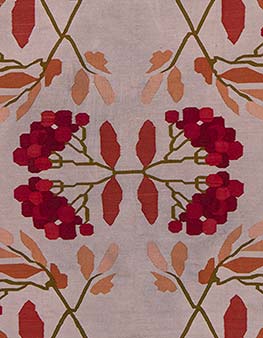
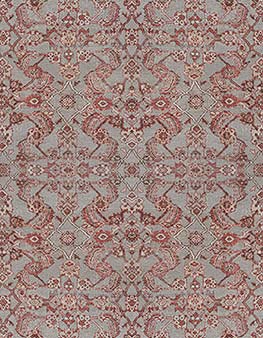
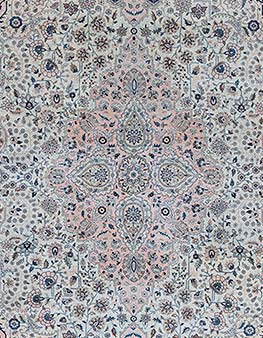
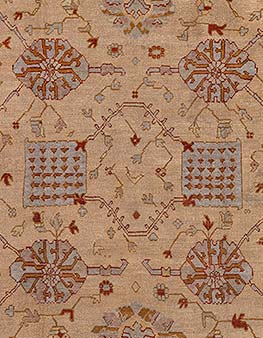
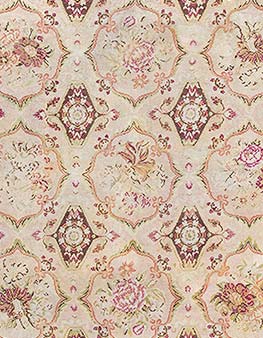
Antique room size rugs are among the most versatile choices for luxury interiors because they provide true decorative presence without overwhelming the architecture. Sized for living rooms, bedrooms, libraries, dining rooms and formal seating areas, these antique carpets create a complete design field: color, pattern, texture and scale working together under furniture. Doris Leslie Blau curates room size antique rugs across Persian, Turkish, Indian, Russian, English and French traditions, including hand-knotted wool rugs, silk rugs, flatweaves and needlework pieces with the character serious buyers expect from older decorative carpets.
Why Room Size Antique Rugs Work in Interiors
A well-chosen antique room size rug can anchor a furniture plan while leaving enough floor visible to preserve proportion. Common formats such as 8-by-10, 9-by-12 and 10-by-14 suit apartments, townhouses, country houses and large-scale residences where a small rug would feel incidental and an oversized carpet would dominate. For interior designers, these rugs offer a practical balance: sufficient coverage, strong visual identity and the flexibility to coordinate with upholstery, wall color, art and antiques. Many antique rugs are typically 100+ years old, while early and mid-20th-century examples may also appear in decorative room size formats.
Origins, Materials and Design Character
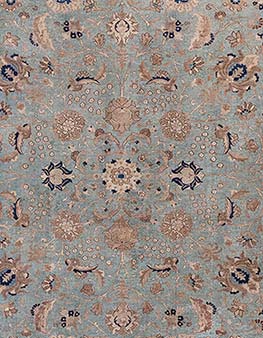
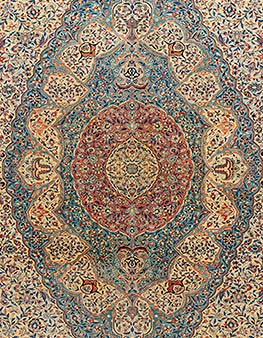
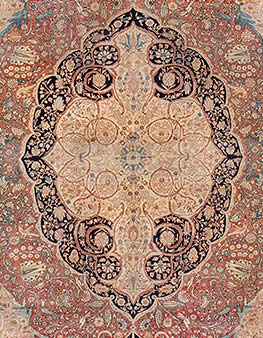
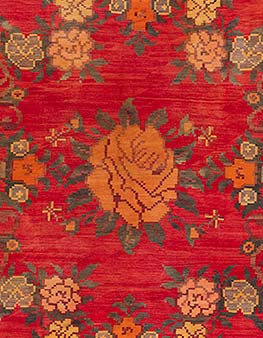
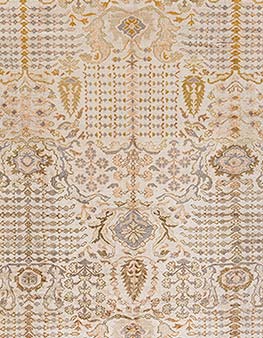
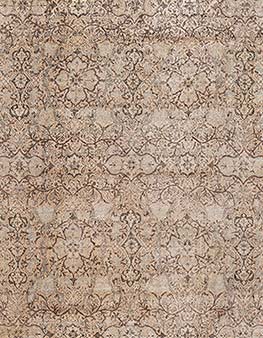
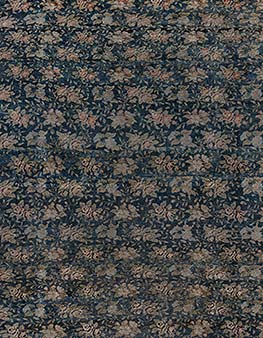
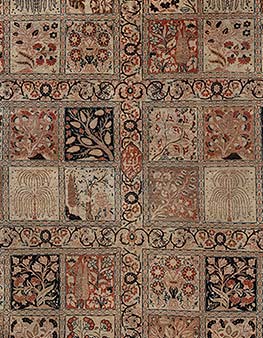
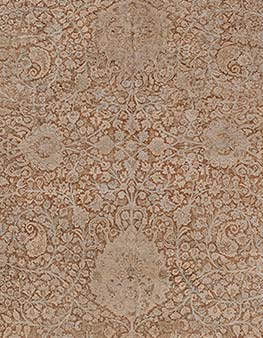
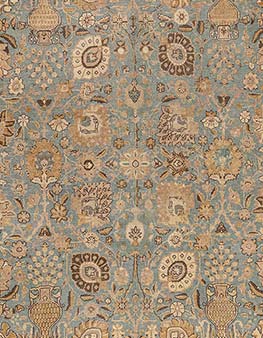
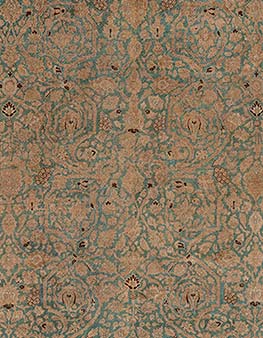
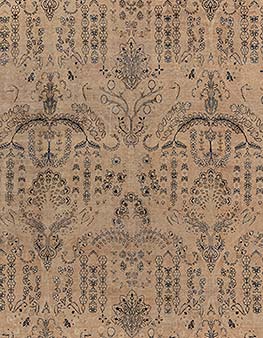
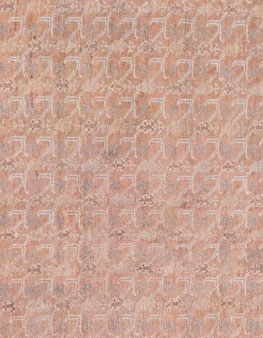
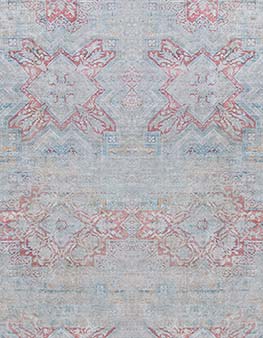
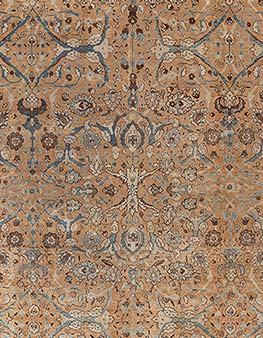
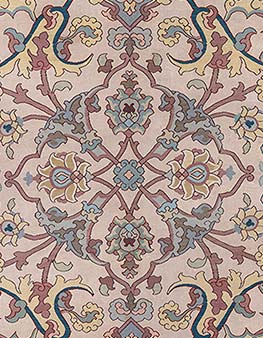
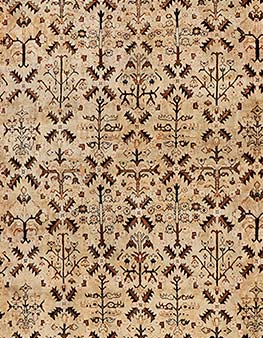
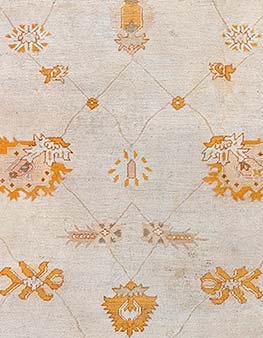
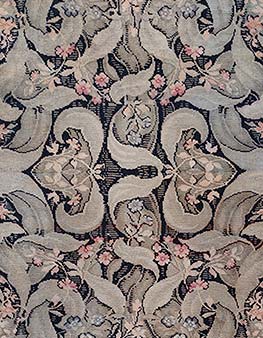
This category includes room size Persian rugs from weaving centers such as Tabriz, Kashan, Kirman, Meshad, Khorassan, Sultanabad, Bidjar and Heriz, along with Turkish Oushak rugs, Indian Agra carpets, Russian Bessarabian designs and European Aubusson, Savonnerie, Axminster and needlework traditions. Buyers can compare allover patterns, medallion layouts, geometric drawing, floral ornament, soft tonal palettes, warm tan grounds, navy fields, ivory and cream neutrals, rust accents and more formal classical compositions.
- Measure the room and furniture plan before choosing length and width.
- Review origin, age, weave, material and condition for each rug.
- Choose allover designs for flexible furniture placement.
- Use medallion rugs where the center field will remain visible.
- Consider wool for durability and silk for refinement and sheen.
Construction matters as much as surface design. Hand-knotted rugs often reveal subtle irregularities, pile variation and patina that distinguish them from modern reproductions. Wool is valued for resilience and depth of color; silk can introduce luminosity and fine detail; cotton foundations may appear in Persian and Indian carpets; flatweaves and needlework rugs offer a lower profile suited to certain rooms. Condition should be evaluated in relation to age, use, restoration, pile, selvages, ends and overall decorative impact, not by new-rug standards alone.
Curated Selection for Designers and Collectors
Doris Leslie Blau has sourced antique rugs directly from estates, auctions, dealers and private collections since 1965, an approach that supports a collection built for both connoisseurship and interior design use. A collector may focus on weaving origin, rarity, age and provenance indicators, while a decorator may prioritize palette, scale, room function and compatibility with existing furnishings. The strongest room size antique area rugs often satisfy both: they are historically grounded, visually livable and strong enough to define a refined space.
If an antique carpet in the exact size or palette is not available, made-to-order rugs can be considered as a separate design solution for projects requiring custom dimensions. For buyers seeking authentic antique room size rugs, the product listings help compare visible pricing, dimensions, materials and period details so that each piece can be assessed with both design intention and long-term value in mind.