

Bauhaus Rugs for Modern Luxury Interiors
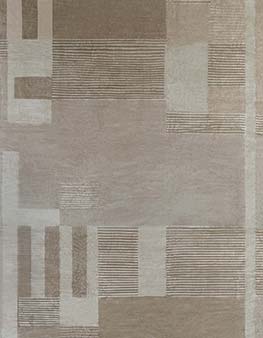
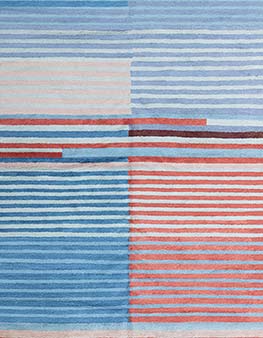
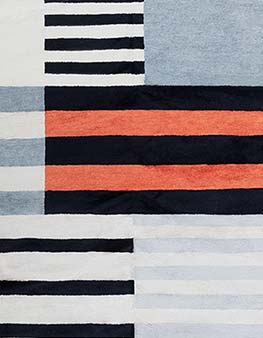
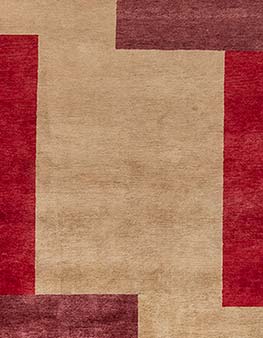
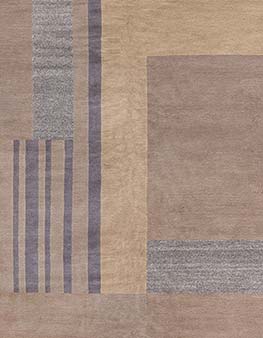
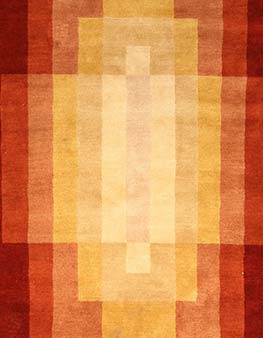
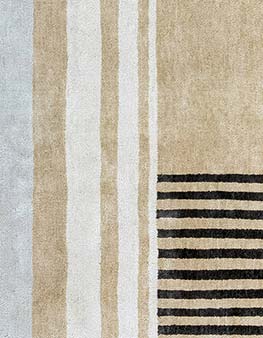
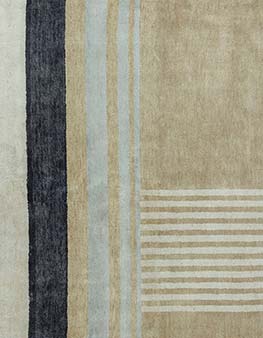
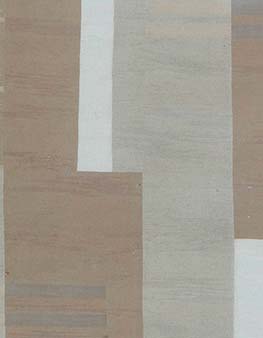
Bauhaus rugs are designed for interiors where structure, proportion, and material quality matter as much as decoration. Instead of relying on dense ornament, these modern geometric rugs use lines, grids, stepped forms, stripes, tonal blocks, and architectural rhythm to define a room. In the Doris Leslie Blau Bauhaus collection, the look is translated through handmade wool, wool-and-silk, silk, hand-knotted, and flatweave constructions, with palettes that favor warm tan, sand, taupe, beige, off white, and refined neutral contrasts. The result is a category especially useful for collectors of modern design, interior designers, architects, and homeowners who want a rug with presence but not visual excess.
Modernist Geometry, Art Deco Influence, and Handcrafted Texture
The strongest Bauhaus rugs balance intellectual clarity with tactile richness. A grid may feel crisp in a large living room, while a stripe or stepped composition can lengthen a gallery, corridor, or dining area. Many designs in this category also connect naturally with Art Deco rugs, modern abstract rugs, and Scandinavian restraint, making them adaptable to both contemporary architecture and older rooms furnished with antiques. Hand-knotted wool offers resilience and depth; silk and wool-and-silk rugs introduce luster, sharper detail, and a more formal finish. Flatweave examples can provide a lower profile where furniture clearance or a relaxed modern texture is important.
- Evaluate the rug’s geometry in relation to the room’s architecture and furniture layout.
- Choose wool for durability, silk for sheen, or wool and silk for balanced texture.
- Use runners to strengthen hallways, stair landings, and long transitional spaces.
- Consider oversized Bauhaus rugs for open-plan rooms and large seating groups.
- Compare palette carefully: warm neutrals soften geometry, while contrast adds graphic impact.
Choosing Scale, Palette, and Placement
Scale is central to this category. A small geometric rug can act like a modern design object, but a room-size or oversized Bauhaus carpet becomes part of the architecture itself. For living rooms, designers often look for enough width to anchor the main seating group; for dining rooms, the rug should extend beyond the chairs when they are pulled back. Runners with linear patterns can create movement without crowding a narrow space. In neutral interiors, a warm tan or taupe geometric rug adds definition while preserving calm. In minimalist spaces, a more pronounced grid or stripe can keep the room from feeling unfinished.
Custom Bauhaus Rugs for Exact Design Requirements
Because this is a new rug category, made-to-order possibilities are especially relevant. A project may require a larger size than the available piece, a narrower runner, a square format, or a modified palette that works with stone, wood, upholstery, or metal finishes. Doris Leslie Blau can support design conversations around custom made rugs when a Bauhaus-inspired pattern needs to be adjusted for scale, color, or room function. This is particularly useful for architects and interior designers specifying rugs for full-floor residences, hospitality spaces, and interiors where the rug must align precisely with built-in elements.
Doris Leslie Blau has worked with rare, antique, vintage, and custom rugs since 1965, and that long view informs the way new modern rugs are selected. A successful Bauhaus rug should not feel like a trend piece; it should have the clarity, craftsmanship, and material quality to remain visually relevant as furnishings change around it. Browse this collection with attention to weave, fiber, size, color temperature, and pattern density, then consider whether an existing rug or a custom Bauhaus carpet best serves the room.