No.:
BB8477



$38,000
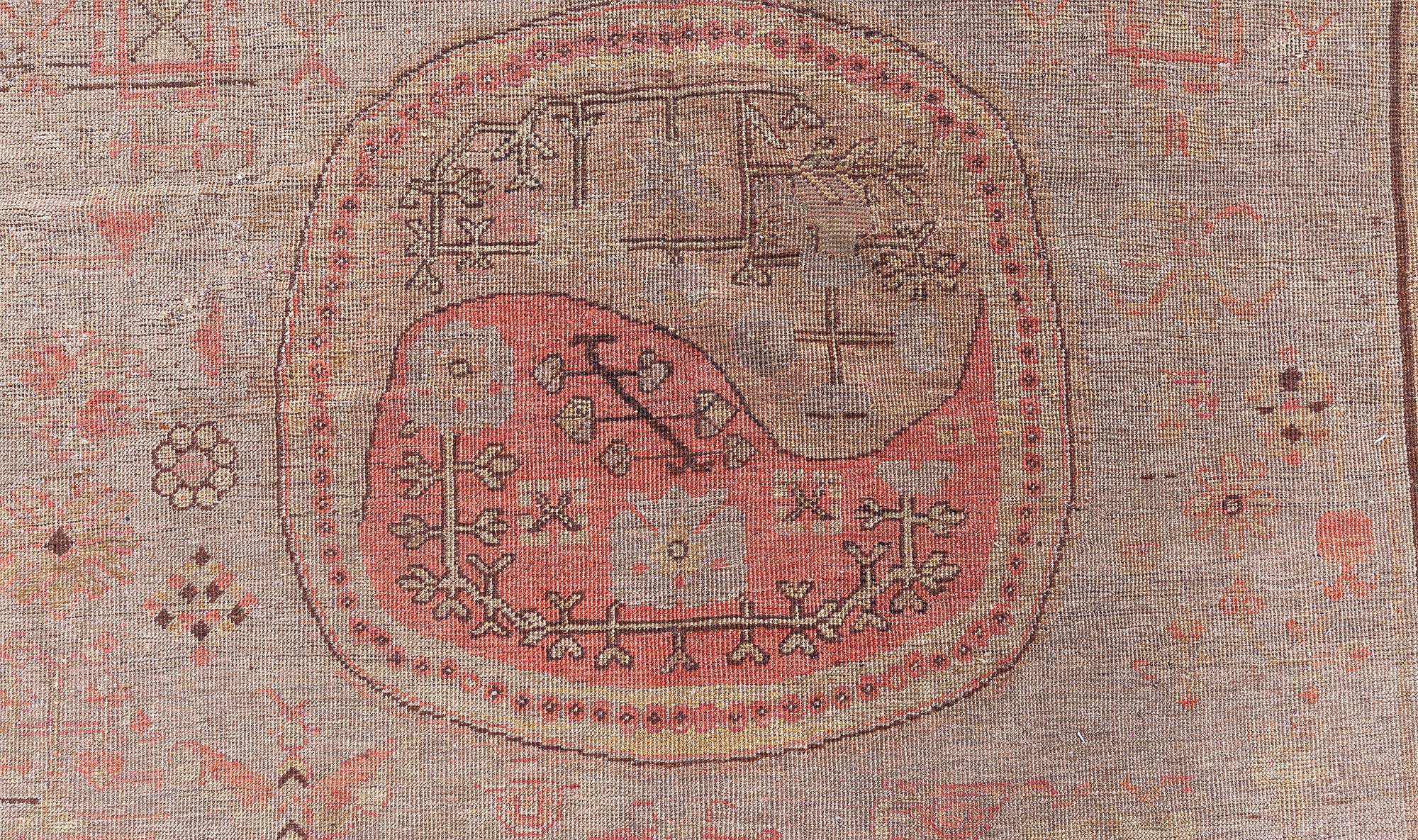
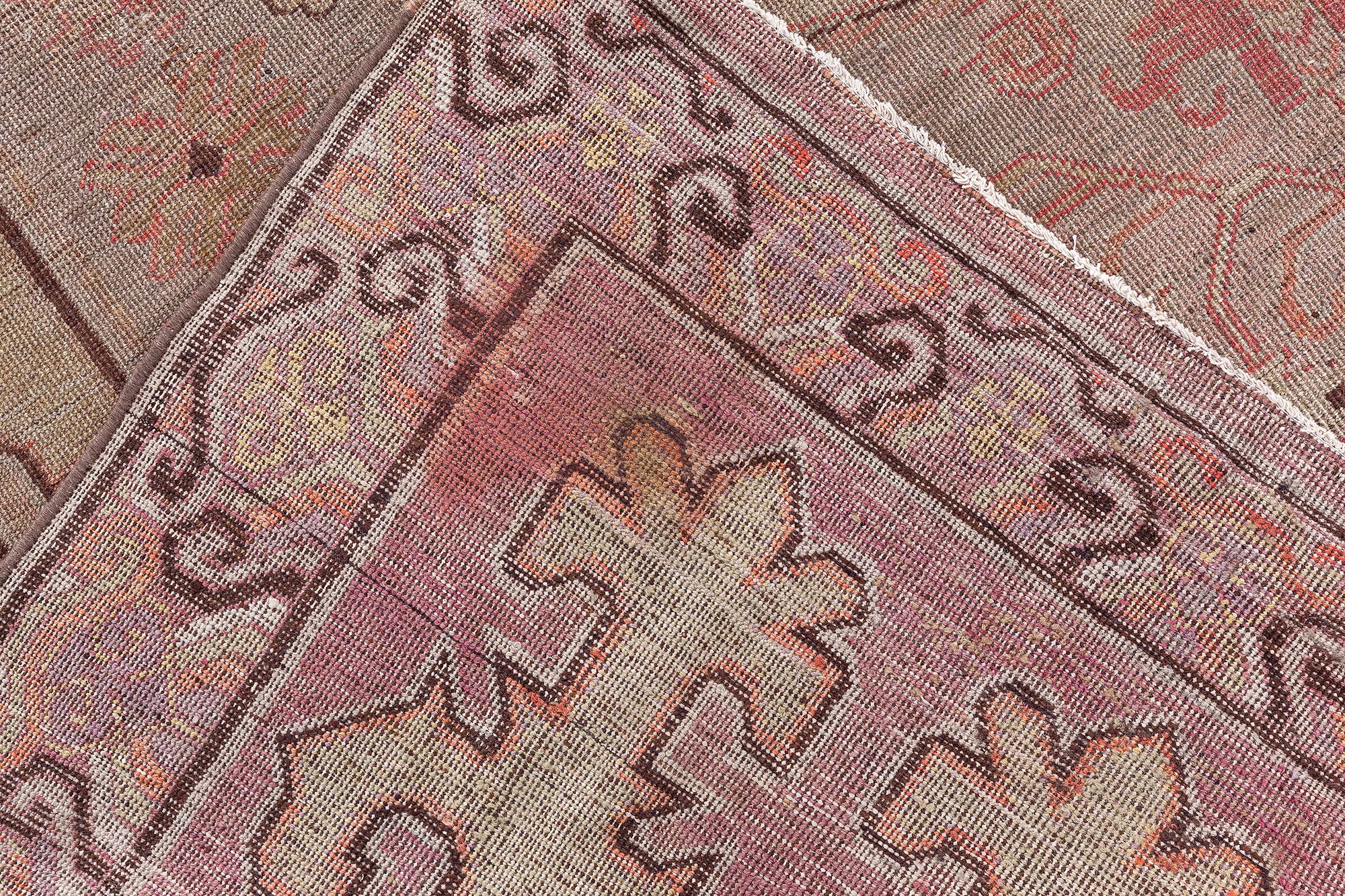
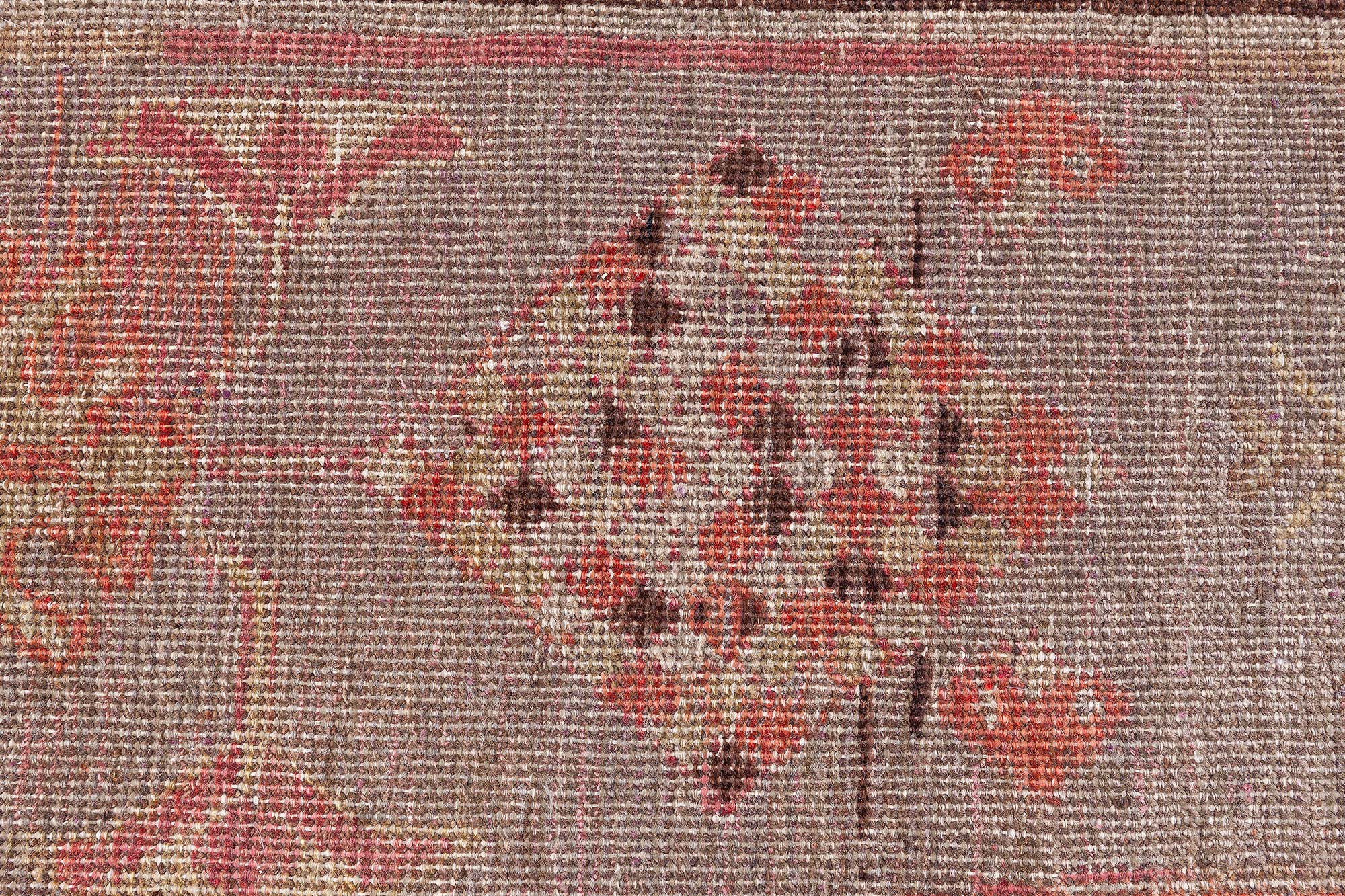
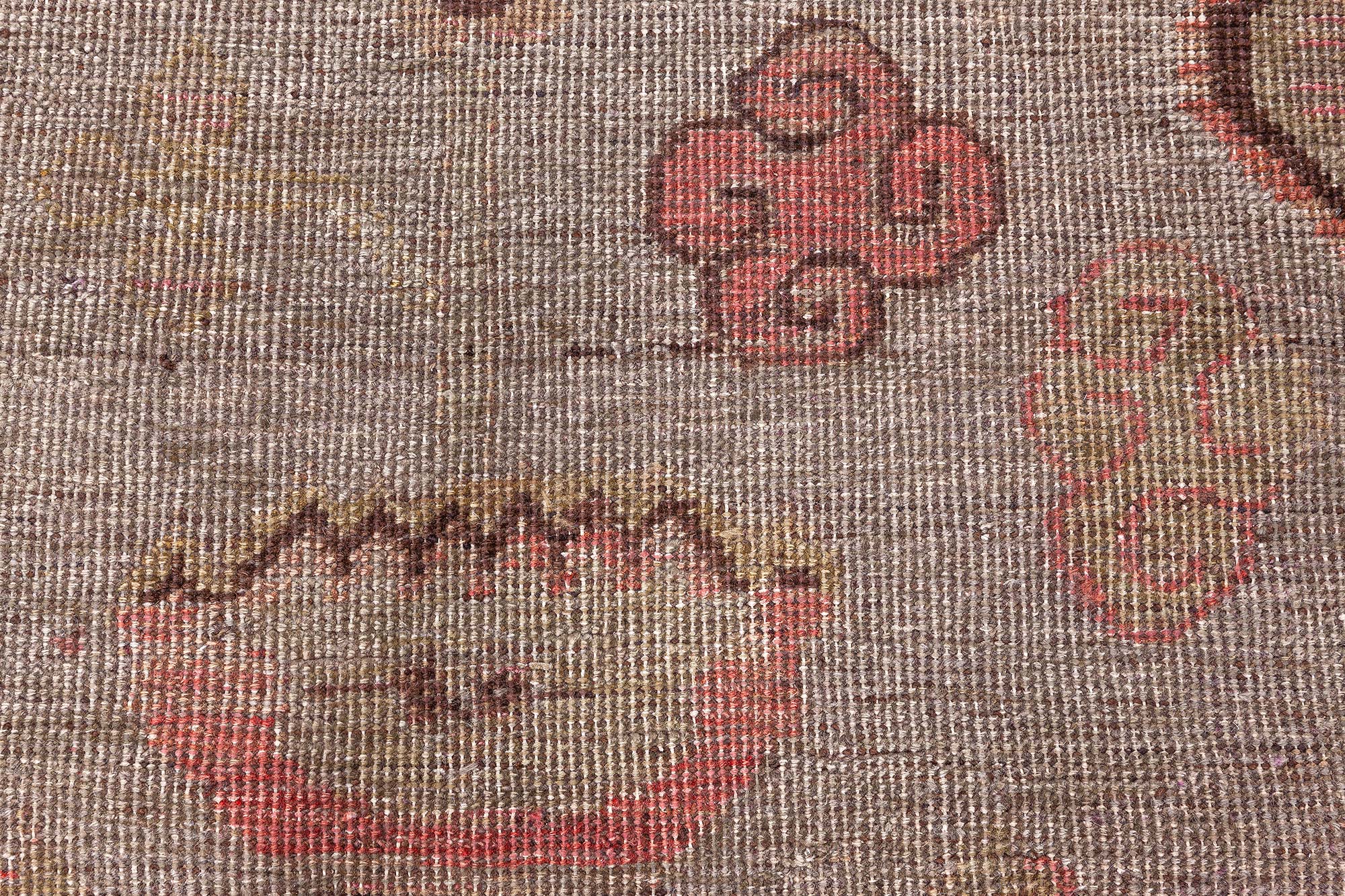
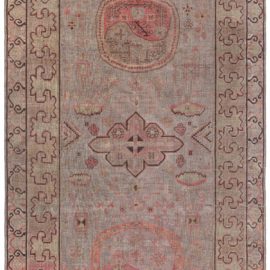
This vintage hand-knotted wool Samarkand rug from East Turkestan reflects the storied weaving tradition of the Silk Road oasis towns. Its composition is calm and spacious, with a softened, timeworn character that gives the piece a relaxed decorative presence rather than a strictly formal one.
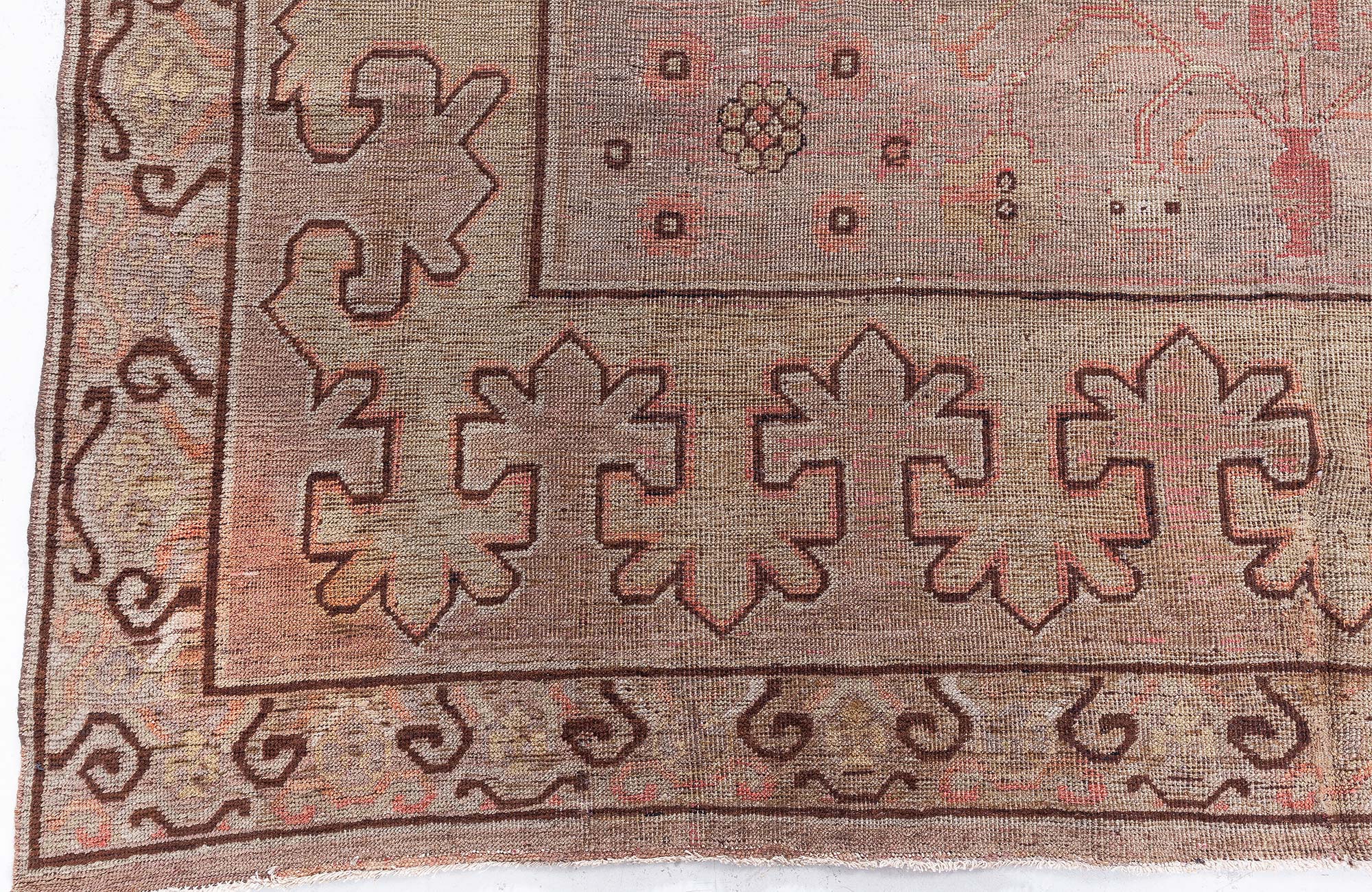
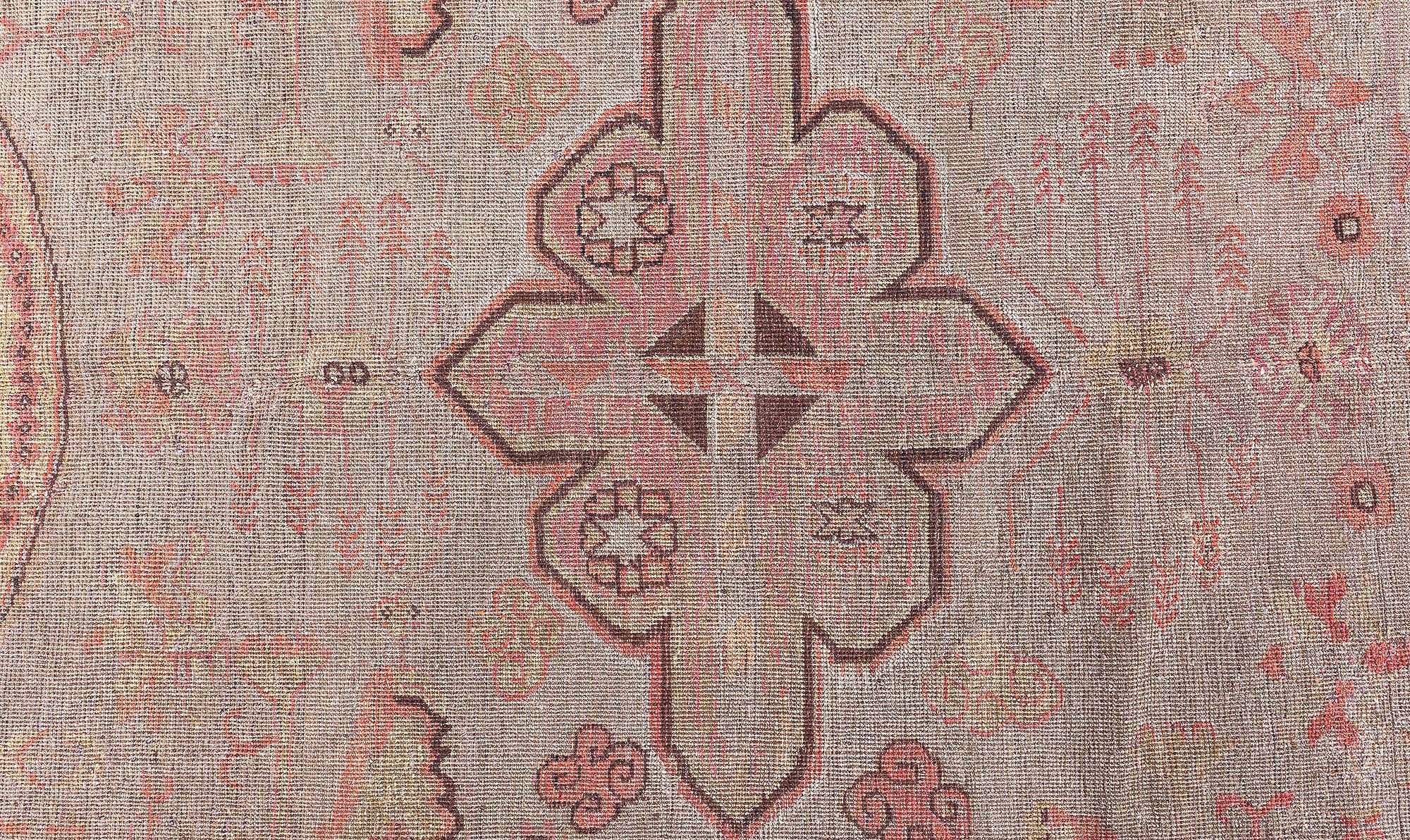
A muted beige field carries faded coral, dusty pink, taupe, and brown geometric devices: an emblematic central medallion, smaller crest-like forms above and below, and scattered abstract florets throughout. The drawing is intentionally softened, allowing the rug to feel architectural and rhythmic, with pattern that anchors a room without visual heaviness.
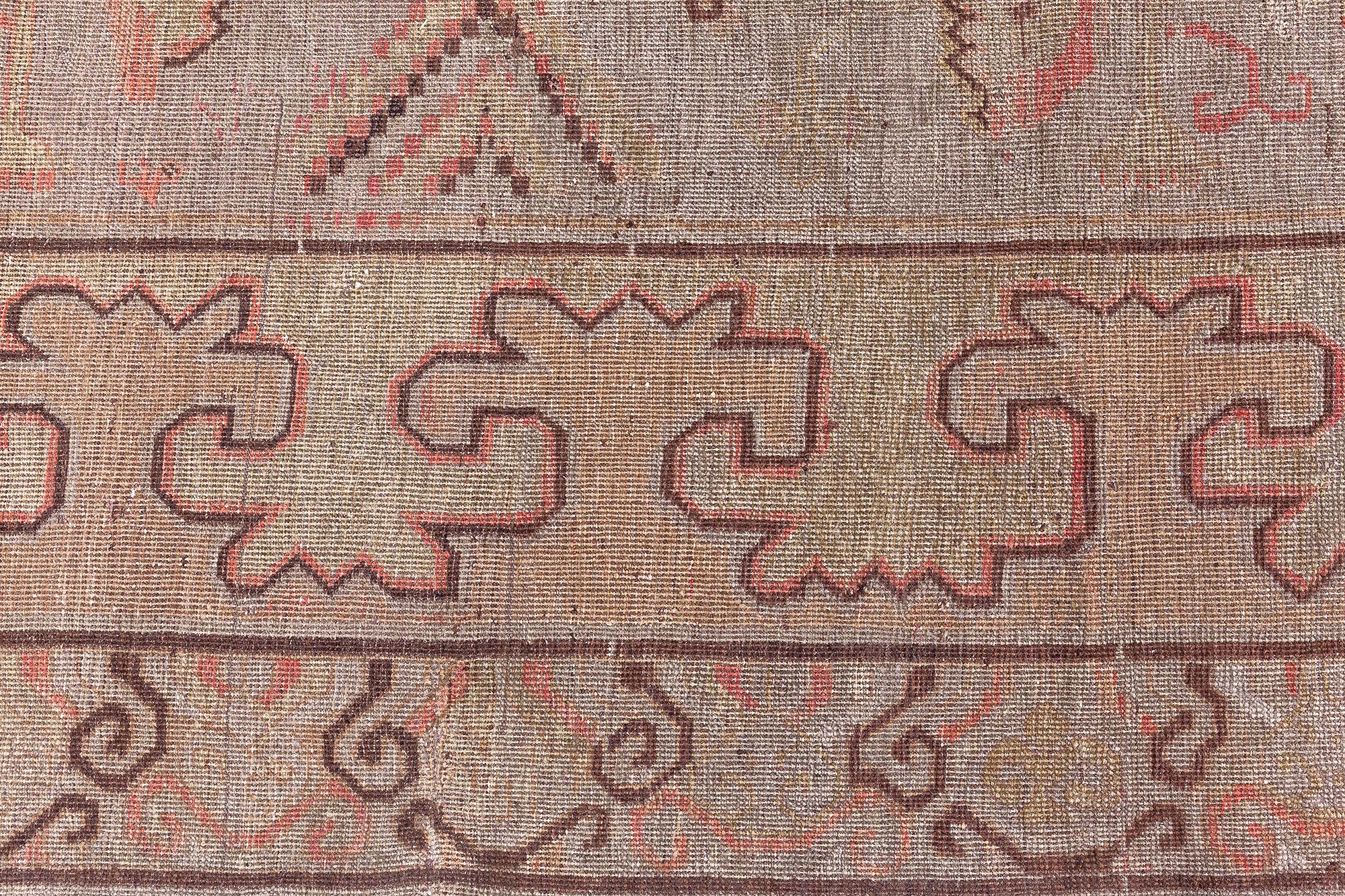
A broad border of stylized cloud and fret-like motifs frames the interior, reinforcing the Samarkand identity while keeping the overall look airy. In a layered interior, this vintage geometric rug brings warmth, quiet color, and historical character, pairing easily with both contemporary furnishings and more eclectic, collected spaces.
Curated by Doris Leslie Blau, this vintage rug carries the distinct character and artisanal soul that the gallery has championed for decades. With an unrivaled selection spanning eras, origins, and price points, Doris Leslie Blau continues to make fine carpet art accessible to designers and collectors worldwide.
In stock
*Free Shipping on All In-Stock Rugs
We offer complimentary shipping on in-stock rugs, but if returned, the customer pays all shipping costs, including the original outbound shipping.
In stock
Login