




Spanish Rugs
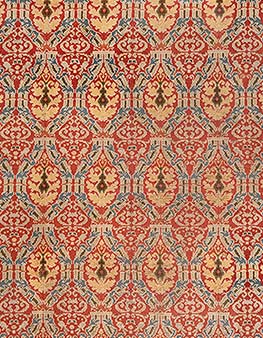
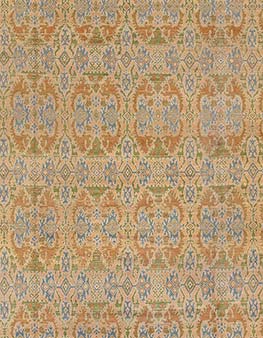
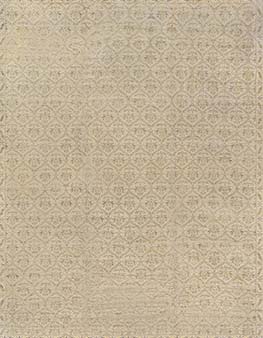
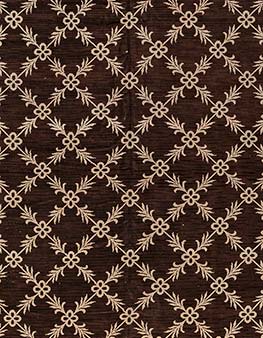
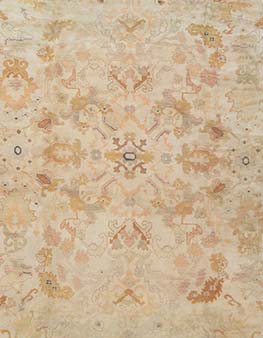
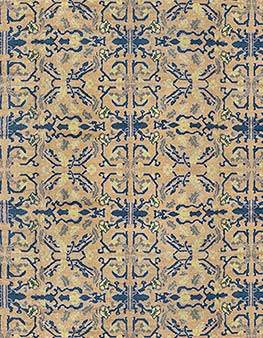
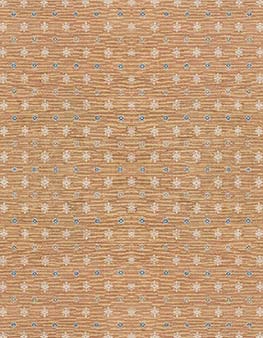
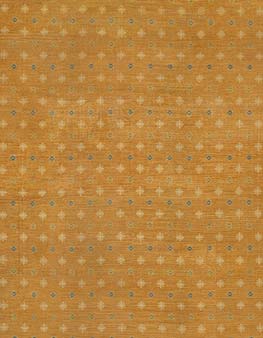
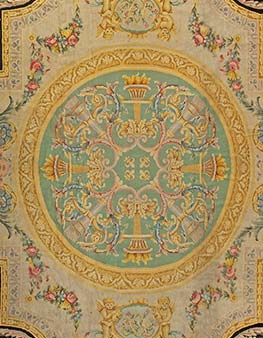
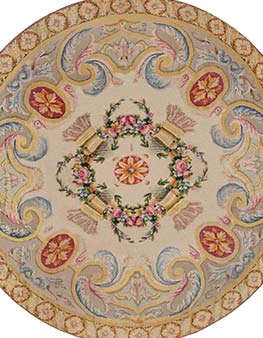
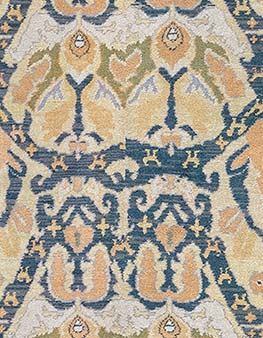
Spanish rugs occupy a distinctive place in European carpet history, combining Islamic, Iberian, Renaissance, and later neoclassical design influences into carpets that feel architectural rather than ornamental alone. In luxury interiors, they are valued for their spacious drawing, balanced floral and geometric patterns, and palettes that often settle into sand, wheat, ivory, taupe, brown, slate, navy, and muted gold. Doris Leslie Blau’s selection of Spanish rugs focuses on decorative vintage and antique-inspired pieces that work especially well in formal living rooms, galleries, libraries, dining rooms, and large-scale residences where proportion and restraint matter.
Historic Character and Spanish Weaving Traditions
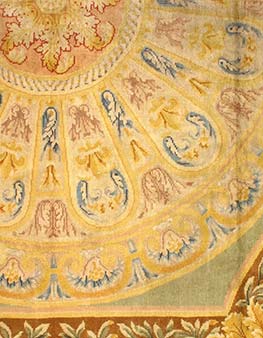
Spain was one of Europe’s earliest centers of knotted-pile carpet production, with historic weaving associated with Alcaraz, Cuenca, and later Madrid workshops. Early Spanish carpets are known for the Spanish knot, a single-warp knot structure, while later examples may show broader European techniques and design exchange with French Aubusson and Savonnerie carpets, Turkish carpets, Persian rugs, and other Oriental rug traditions. For today’s buyer, the appeal is not simply historical. A Spanish carpet can introduce old-world structure without the density of many Persian medallion rugs, making it a strong choice for interiors that need clarity, scale, and quiet visual authority.
Choosing Vintage Spanish Carpets for Interiors
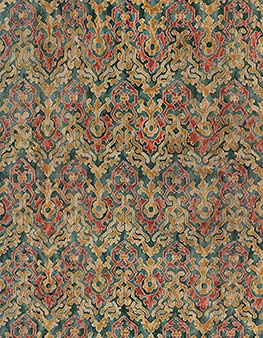
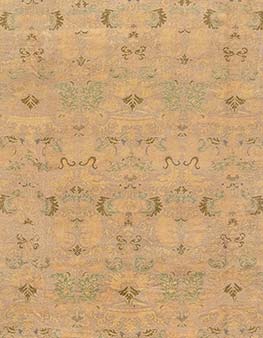
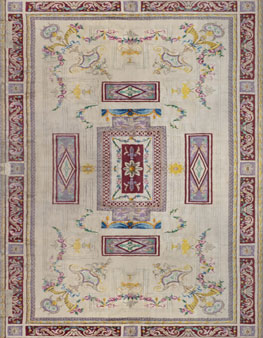
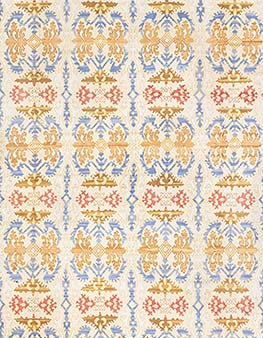
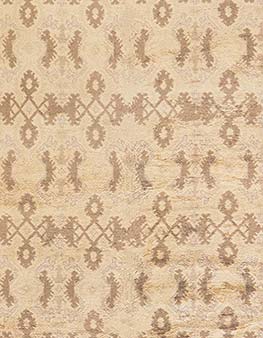
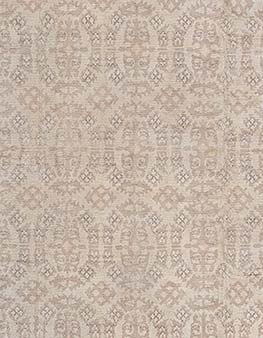
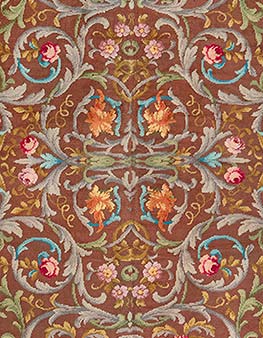
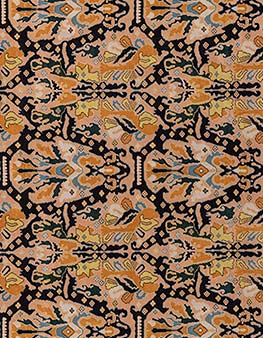
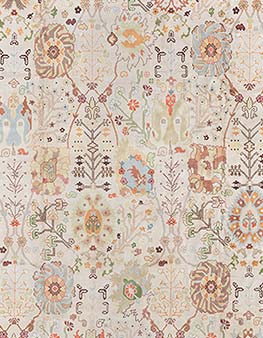
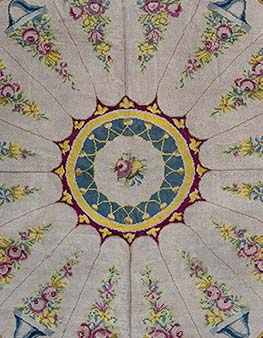
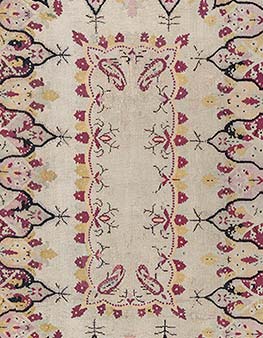
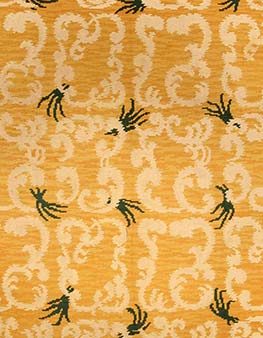
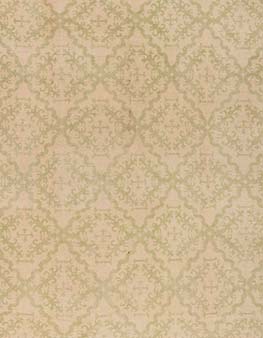
The current Spanish rug category includes many hand-knotted wool pieces with floral, botanical, abstract, and geometric designs, including oversized carpets and runners. Many examples favor soft beige, warm tan, cream, gray, brown, and navy accents, which helps them bridge traditional architecture and contemporary furniture. When comparing Spanish area rugs, look closely at the field composition, border rhythm, weave quality, wool handle, and whether the colors support the room’s stone, wood, plaster, upholstery, and metal finishes. A large Spanish carpet can make a room feel composed without appearing heavy, while a runner or square format can solve more specific architectural layouts.
- Choose oversized Spanish rugs for salons, dining rooms, and open-plan seating areas.
- Use floral Cuenca-style carpets where a room needs softness and European formality.
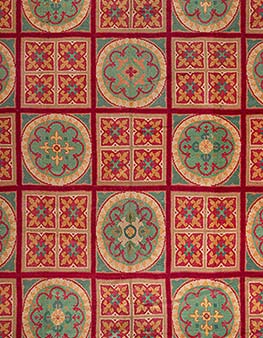
- Consider geometric Spanish rugs for cleaner architectural interiors and tailored furniture.
- Review condition, pile, edges, and restoration notes before selecting a vintage carpet.
- Compare palette in daylight and evening light when working with pale neutrals.
Provenance, Scale, and Custom Possibilities
Doris Leslie Blau has sourced rare, antique, vintage, and decorative rugs through estates, auctions, dealers, and private collections since 1965, giving designers and collectors access to pieces selected for both design value and usability. With Spanish rugs, provenance may relate to age, origin, workshop tradition, construction, or stylistic lineage rather than a single decorative label. Antique rugs are typically 100 years old or more, while vintage Spanish carpets may offer the same European character in more flexible condition, scale, or palette. Visible pricing on listings makes it easier to compare options before requesting more detailed guidance.
For projects that require a specific dimension, palette, or repeating motif, a custom made rug inspired by Spanish carpet design may be appropriate. This is especially useful when a room demands an unusually long runner, a very large carpet, or a color scheme coordinated to upholstery, millwork, or art. A one-of-a-kind vintage Spanish rug brings patina and individual history; a made-to-order interpretation offers control. Both approaches can support refined interiors when scale, material, and pattern are considered together.