





Damask Rugs
Damask rugs are chosen for interiors that need pattern with discipline: floral movement, vine-scroll ornament, arabesque curves and medallion structure, but without the visual weight of a dense traditional carpet. In this Doris Leslie Blau category, the damask language is interpreted through modern hand-knotted rugs, handmade silk rugs, wool rugs and wool-silk carpets designed for refined residential and hospitality spaces. The effect is decorative yet controlled, making these rugs especially useful in living rooms, bedrooms, dining rooms, galleries, libraries and formal sitting areas where furniture, art and architecture all need room to breathe.
What defines a damask rug
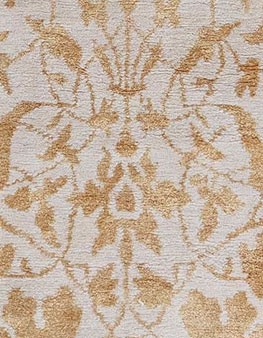
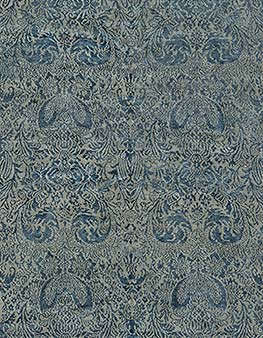
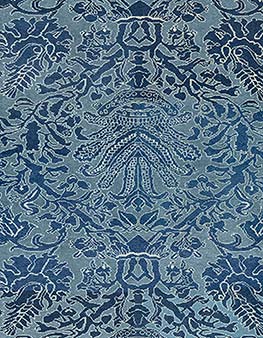
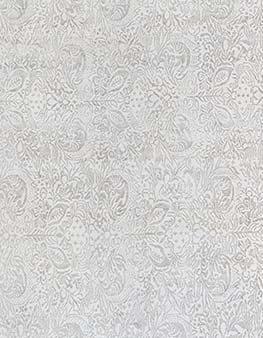
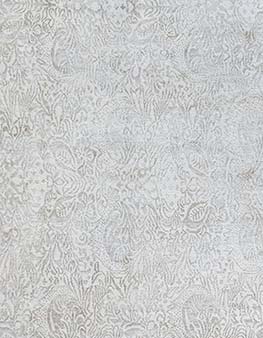
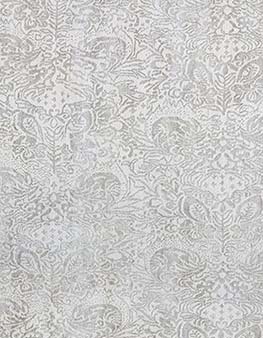
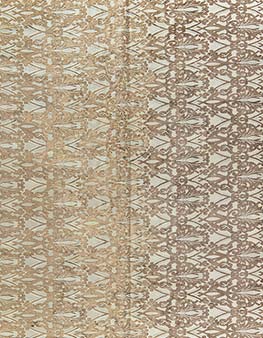
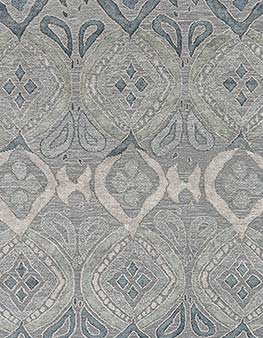
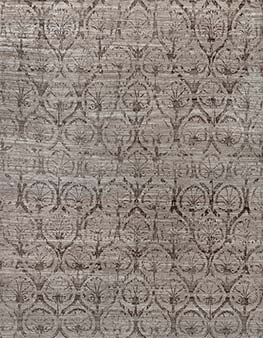
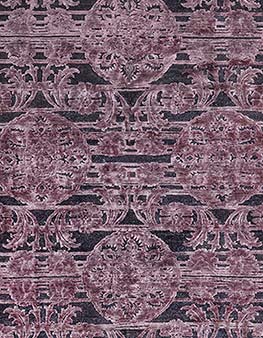
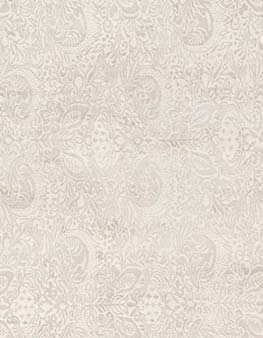
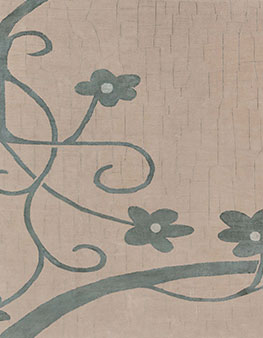
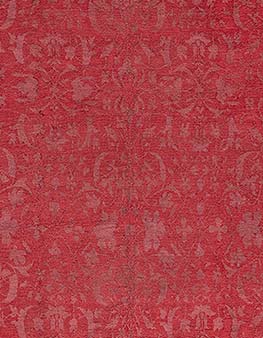
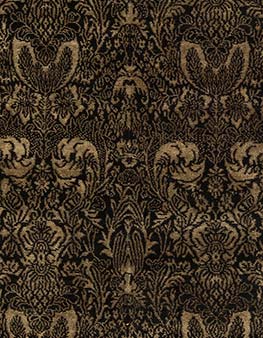
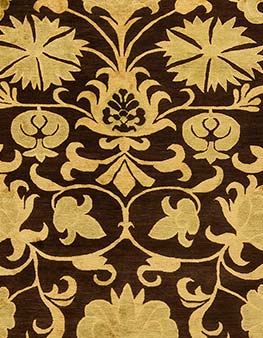
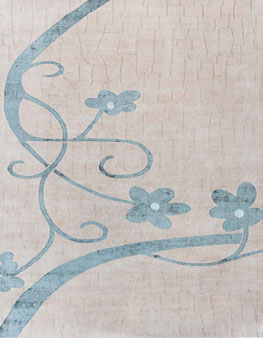
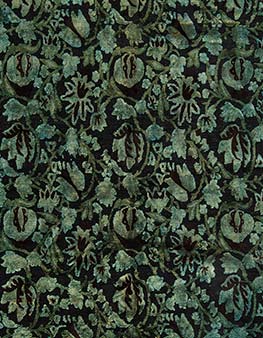
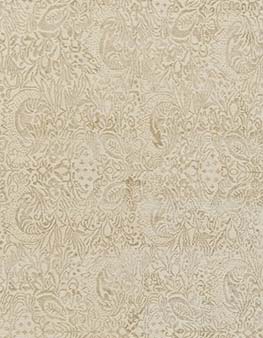
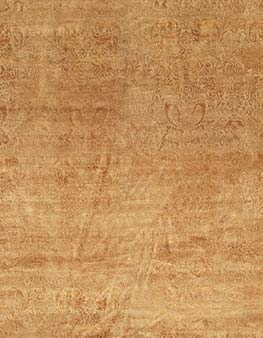
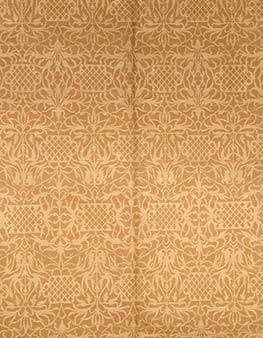
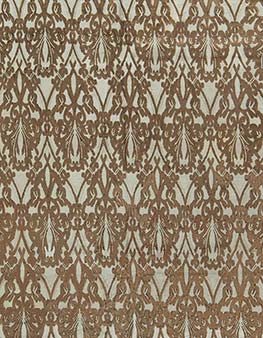
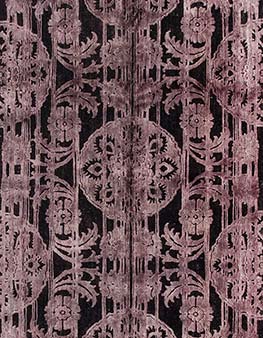
Damask began as a textile idea: reversible-looking pattern, stylized botanical ornament and a balance between matte and luminous surfaces. In rug design, that translates into floral damask rugs, vine lattice carpets, tone-on-tone arabesques, Spanish-inspired motifs and softly distressed patterns that reference historic fabric, Persian rugs and European decorative arts without copying them literally. A modern damask rug can feel classical, transitional or contemporary depending on the scale of the motif, the contrast of the palette and the amount of open field surrounding the design.
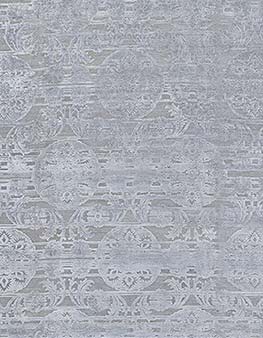
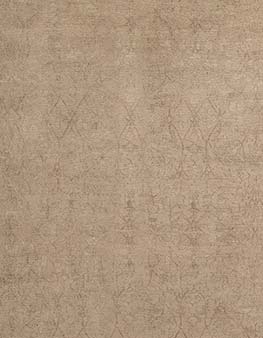
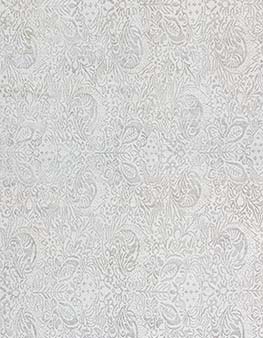
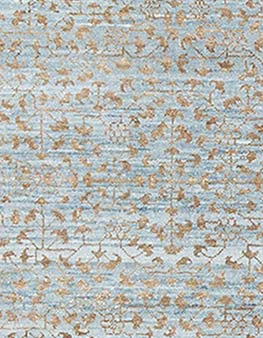
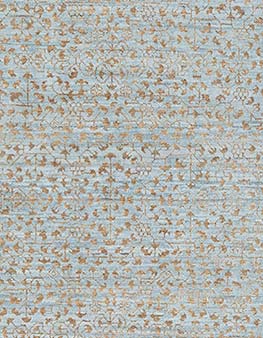
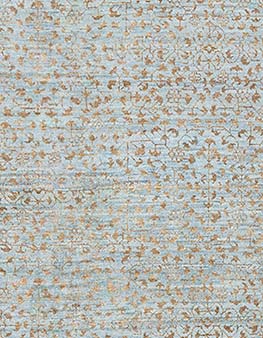
The category is particularly strong for clients who appreciate antique rugs and vintage rugs but require a cleaner, more tailored surface for current interiors. Instead of the high color contrast often found in some antique Persian carpets or Oriental rugs, many contemporary damask rugs use pale sand, ivory, taupe, light gray, charcoal, dusty blue or muted brown. These palettes allow the pattern to read through texture, pile direction and silk highlights rather than through aggressive color, which is valuable in luxury interiors built around stone, plaster, lacquer, wood paneling or custom upholstery.
Choosing scale, palette and construction
When comparing damask area rugs, the most important decision is not only color; it is proportion. A large arabesque can anchor an oversized room with architectural confidence, while a smaller vine or filigree pattern can soften a bedroom or passage without competing with fabrics. Doris Leslie Blau’s selection includes room-size rugs, oversized carpets and runners, giving designers more flexibility when connecting seating groups, dining tables, long corridors and open-plan spaces.
- Use low-contrast damask rugs for calm, layered rooms with art or statement furniture.
- Choose silk or wool-silk construction when sheen and fine pattern definition matter.
- Consider wool damask rugs for durability, warmth and a slightly quieter surface.
- Match motif scale to the room: large patterns for expansive spaces, finer repeats for intimate rooms.
- Review exact dimensions carefully, especially for dining rooms, runners and oversized layouts.
Construction also changes how a damask carpet performs visually. Hand-knotted rugs can hold intricate floral and vine detail, while silk brings luminosity to carved-looking motifs and wool adds body underfoot. Wool and silk together often provide the best balance: a resilient foundation with reflective highlights that make the pattern appear and recede as light changes. For rooms with strong daylight, the direction of the pile and the contrast between ground and motif should be considered before final placement.
Modern damask rugs for tailored interiors
Doris Leslie Blau has sourced and curated exceptional rugs since 1965, and that experience is reflected in the way this category addresses both decoration and specification. Buyers can evaluate listed sizes, materials and visible pricing before inquiring, while interior designers can identify whether an existing rug suits the floor plan or whether a custom made damask rug should be considered. Made-to-order options are especially relevant when a project needs an unusual runner length, an oversized living room carpet, a softer neutral, a stronger accent color or a motif scaled to architectural proportions.
A well-chosen damask rug does more than fill a floor. It can connect traditional millwork with modern furniture, make a monochrome room feel tactile, or introduce historical pattern into a contemporary interior without making the space feel period-specific. For collectors, designers and luxury homeowners, these rugs offer a practical bridge between antique decorative carpets and modern custom rugs: refined ornament, hand craftsmanship, controlled color and formats suited to sophisticated rooms.