

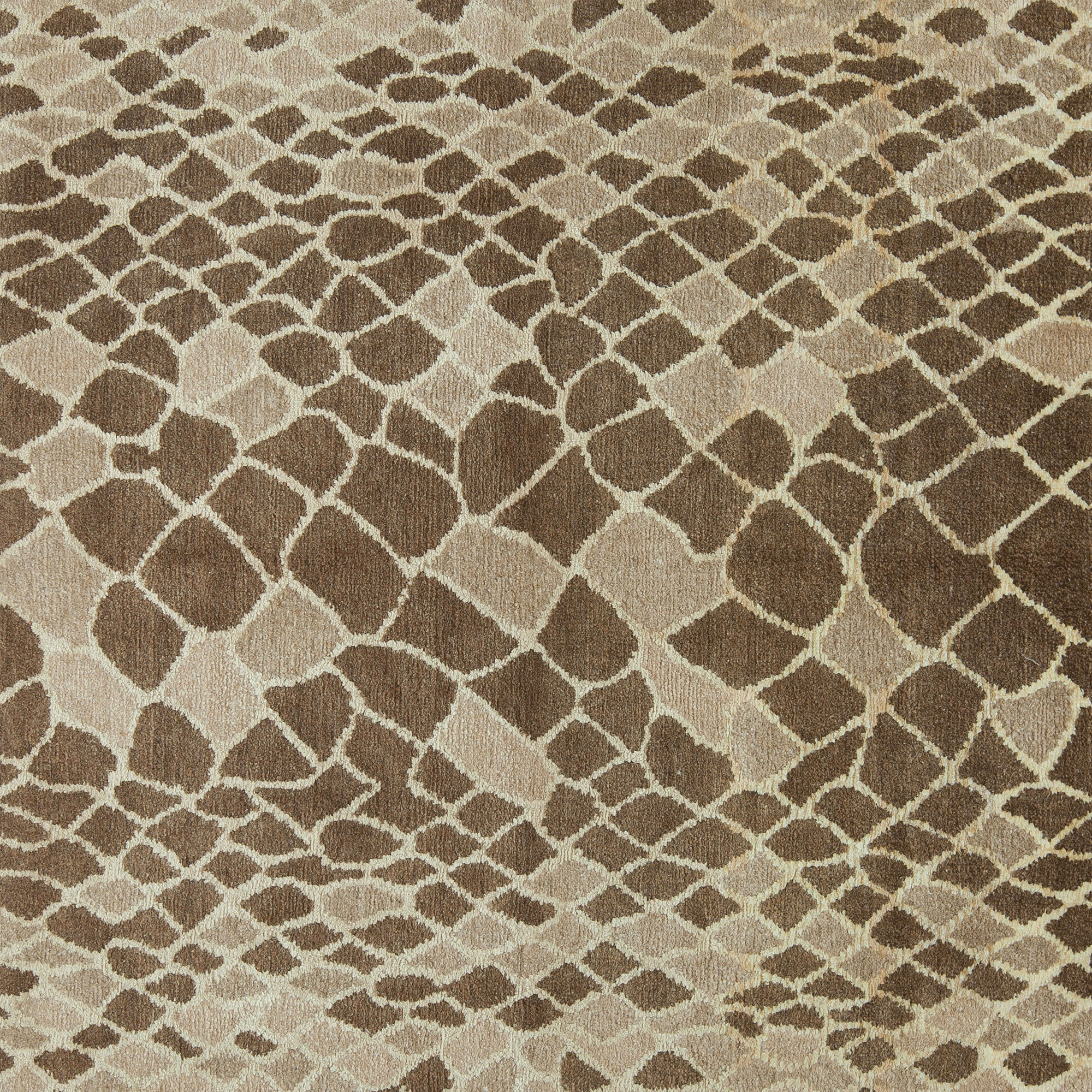
For households that ask a lot of a floor covering, wool rugs offer an unusually balanced answer: they feel refined underfoot, stand up well to daily use, and bring enough visual depth to suit tailored interiors. When a home needs both rug durability and rug softness, wool is often the material designers reach for first because it handles circulation, furniture movement, and changing light without looking overworked. That practical strength is why wool remains a leading choice for custom rugs in living rooms, dining rooms, family spaces, and primary bedrooms alike.
Wool succeeds in busy luxury homes because it is a resilient natural fiber with built-in structure. Each wool fiber has a springy crimp that helps it recover after compression, so footprints and furniture marks are usually less severe than on many softer but more delicate materials. This matters in rooms where seating gets shifted, children cross the rug with shoes off, or a chaise and cocktail table create repeated pressure points. In a well-made rug, that resilience does not come at the expense of character; instead, the pile develops a subtle patina that feels lived-in rather than worn out.
Another reason wool is so practical is that it performs well in a wide range of construction types. A tightly hand-knotted wool rug can offer crisp definition for pattern and a flatter, more tailored profile, while a denser hand-tufted or woven wool surface may feel plusher and more cushioned. For interiors that lean formal, a lower pile can keep the composition sharp and architectural. For rooms that need a softer landing, especially around seating groups or bedside furniture, a higher pile can bring welcome tactile comfort without drifting into fragile territory.
Explain wool’s resilience in everyday use
Day-to-day life is often the real test of any rug material. Wool handles abrasion better than many luxury fibers because the scales on the fiber surface interlock slightly, which helps the yarn retain body under traffic. In practical terms, that means a wool rug is less likely to flatten immediately in a circulation path or under the front legs of a sofa. It is also forgiving in rooms where the same surfaces are viewed from several angles, since slight wear tends to read as part of the textile’s depth rather than as a glaring change in texture.
That resilience is especially useful in homes with open layouts, where one rug has to anchor multiple functions at once. A seating area may bleed into a reading corner, or a dining arrangement may sit close to a passage to the terrace. In those situations, rug scale and construction matter as much as fiber choice. A wool rug with a disciplined weave, strong edge finishing, and appropriate pile height can define the zone without feeling precious, which is often the difference between a room that looks curated and one that looks too carefully protected to be comfortable.
For readers considering custom rugs, wool is often the most versatile starting point because it can be tailored to room dimensions, furniture layout, and the desired level of softness. That flexibility matters in luxury homes, where standard sizes frequently miss the mark by just enough to weaken the entire composition. A well-proportioned wool rug can stretch a seating group, frame a bed, or extend just far enough beyond a dining table to preserve visual balance while still supporting real use. The result is not simply a durable rug, but a more coherent interior.
Describe texture options from plush to more structured surfaces
Wool is not one look or one feel. Depending on yarn selection and construction, it can be velvety and plush, compact and tailored, or textured enough to add depth without visual noise. A cut pile wool rug gives a more cushioned sensation underfoot and can soften a room that already contains a lot of glass, stone, or lacquered surfaces. By contrast, a looped or lower-cut surface tends to register as more architectural, which can be helpful in formal living rooms, libraries, and dining spaces where the rug should support rather than dominate the furniture.
Texture also influences how a rug interacts with light. In a sunlit room, a slightly sheared wool pile may reveal subtle changes in direction and sheen, creating movement that feels elegant rather than flashy. In a more shaded interior, a structured weave can maintain definition so the rug does not disappear into the floor plane. This is where material and construction become inseparable from design intent: the same wool fiber can produce very different results depending on whether the room calls for softness, restraint, or a more tactile presence.
Designers often think about wool in relation to surrounding surfaces. If the room contains a deeply veined marble fireplace, polished wood paneling, or velvet upholstery, a rug with a disciplined surface can keep the composition from becoming too busy. If the architecture is spare and the furnishings are quiet, a more plush wool pile can introduce needed warmth and acoustic comfort. The right choice is less about choosing the “best” texture in abstract terms and more about matching the rug to the room’s proportions, light, and material density.
Address cleaning, wear, and seasonal rotation
Maintenance is where wool often outperforms expectations. Because the fiber contains natural lanolin and has a comparatively resilient structure, it can tolerate regular vacuuming and routine care more gracefully than many people assume. That said, wool is not maintenance-free, and a luxury home benefits from a disciplined approach. Prompt attention to spills, occasional professional cleaning when needed, and furniture rotation in high-contact zones all help preserve the rug’s appearance over time. For homes that host often, this kind of maintenance is less about fussiness and more about protecting the scale of the design investment.
Shedding and pilling are also part of the conversation, especially with new wool rugs. A certain amount of loose fiber can appear at the beginning of a rug’s life, particularly in hand-knotted or hand-tufted pieces, and that is not unusual. Pilling may occur when shorter fibers work free in high-friction areas, but it usually diminishes with proper care and use. What matters most is quality of construction, yarn preparation, and the expectations set for the room. A rug placed beneath a formal seating arrangement will wear differently from one in a family den, and the care plan should reflect that reality.
Seasonal rotation can be especially helpful in homes where sunlight or traffic is concentrated in one direction. Turning a wool rug periodically helps distribute wear more evenly, preserves the integrity of the pile, and reduces the chance that a single path becomes visually obvious. This is useful in long living rooms, gallery-like corridors, and large bedrooms where the arrangement of furniture encourages repeated movement in the same pattern. For homeowners who prize long-term value and preservation, rotation is a simple habit that supports both appearance and performance.
Show where wool is preferable to softer but more delicate fibers
There are rooms where a softer fiber may seem appealing at first glance, but wool is often the more intelligent choice. Silk, for example, can provide extraordinary luster and a fine hand, yet it is less forgiving in high-traffic settings and can show wear more quickly when used where people stand, pivot, or move furniture. Very delicate blends may also be best reserved for lower-use spaces, decorative layers, or areas where the rug is admired more than lived on. Wool, by contrast, can deliver a sense of luxury without asking the room to slow down.
That distinction is important in formal interiors, where refinement should not mean fragility. A dining room with substantial chairs, a family room with frequent turnover, or a primary suite with broad circulation paths benefits from a material that can endure daily movement while maintaining a calm visual register. Wool can also be an excellent choice for homes with pets, provided the weave and color are selected thoughtfully. A patterned or heathered wool rug, for instance, can soften the appearance of minor soil and wear better than a very pale, highly uniform pile.
Wool is also well suited to rooms that need a balance of acoustics and visual warmth. In open-plan interiors, hard surfaces can make a space feel exposed and noisy; a wool rug introduces absorption without creating a heavy or fussy look. In a bedroom, it gives the floor a more welcoming presence than a thin or overly slick fiber might. In a study or sitting room, it can support a serious, layered atmosphere that still feels comfortable enough for daily use. That mix of composure and practicality is hard to replicate with more delicate textiles.
How design decisions shape the final result
The best wool rugs are not chosen in isolation. Their success depends on pile height, border treatment, pattern density, and how they relate to the room’s architecture. A low-profile wool rug can sharpen the outline of a modern sofa grouping, while a more sumptuous pile may suit a traditional room with deeper upholstery and richer drapery. Color matters just as much: cooler greys can amplify a crisp interior, while warmer neutrals can soften stone and wood. Even subtle shifts in tone affect how a rug reads against upholstery and flooring.
Scale and proportion are especially important when the rug is meant to support custom interiors. A rug that is too small makes the furniture appear disconnected; one that is too large can overwhelm a room’s perimeter or compete with architectural features. Wool’s range of available constructions makes it adaptable, which is one reason it works so well for made-to-order rugs. It can be specified for a quiet border, a restrained field pattern, or a more expressive geometric rhythm without losing its underlying practicality.
For example, imagine a long family room with a pair of sofas facing each other, a stone hearth at one end, and a circulation path that cuts behind the seating arrangement. A dense wool rug with a measured pattern and low to medium pile can unify the room while resisting the visual distraction of compressed pile along the walkway. The same room in a silk-heavy textile might feel more glamorous at first, but it would likely be more vulnerable to wear and more demanding to maintain. That is where wool proves its value: it supports the design rather than dictating how carefully the room must be used.
Wool rugs and the custom specification process
In a luxury home, the right rug often needs more than a standard size and a generic material palette. It needs to be developed with the room’s architecture, light exposure, furniture footprint, and expected traffic in mind. That is why many designers turn to custom rugs when the goal is a result that looks deliberate from every angle. Wool is especially compatible with this process because it can be shaped into many different expressions, from understated solids to intricate patterns with strong visual rhythm. The material gives designers room to solve problems rather than merely decorate a floor.
Doris Leslie Blau approaches rugs as part of a room’s architecture, not as an afterthought. That perspective matters when the brief includes both comfort and endurance, or when a room needs a rug that feels tailored without looking stiff. Whether the goal is a quiet layer for a drawing room, a more grounded surface for a family space, or a textile that helps bring order to an irregular floor plan, wool provides a strong foundation for thoughtful specification. It is practical enough for active homes, yet refined enough to sit comfortably in the most composed interiors.
FAQ
Is wool hard to maintain?
No, wool is generally straightforward to maintain when cared for consistently. Regular vacuuming, prompt spill response, and occasional professional cleaning are usually enough for most homes. In active spaces, the key is choosing the right construction and pile height so the rug matches the room’s traffic level from the start.
Does wool pill or shed?
New wool rugs can shed a little at first, and some pilling may occur in high-friction areas. This is common and does not necessarily indicate a problem with the rug. Good construction and routine care help reduce these effects over time, especially in hand-knotted rugs and other well-made pieces.
Can wool rugs be formal enough for elegant rooms?
Absolutely. Wool can look very polished when the weave, color, and pile height are chosen carefully. A low-profile wool rug with restrained patterning can suit formal living rooms, dining rooms, and studies just as easily as more relaxed interiors. The material’s strength is that it can appear tailored without feeling overly delicate.
Are wool rugs a good choice for high-traffic areas?
Yes, wool is often one of the best choices for high-traffic areas because it holds up well under everyday use. It is especially effective in hall-adjacent living rooms, family spaces, and primary bedrooms where durability and softness both matter. The best results come from matching the rug’s density and construction to the room’s level of activity.
If you are weighing wool against other rug materials, a conversation with a specialist can clarify what will work best for your floor plan, furnishings, and lifestyle. Doris Leslie Blau can help you evaluate construction, scale, and finish so the rug feels considered from the first glance and practical for the long term.