

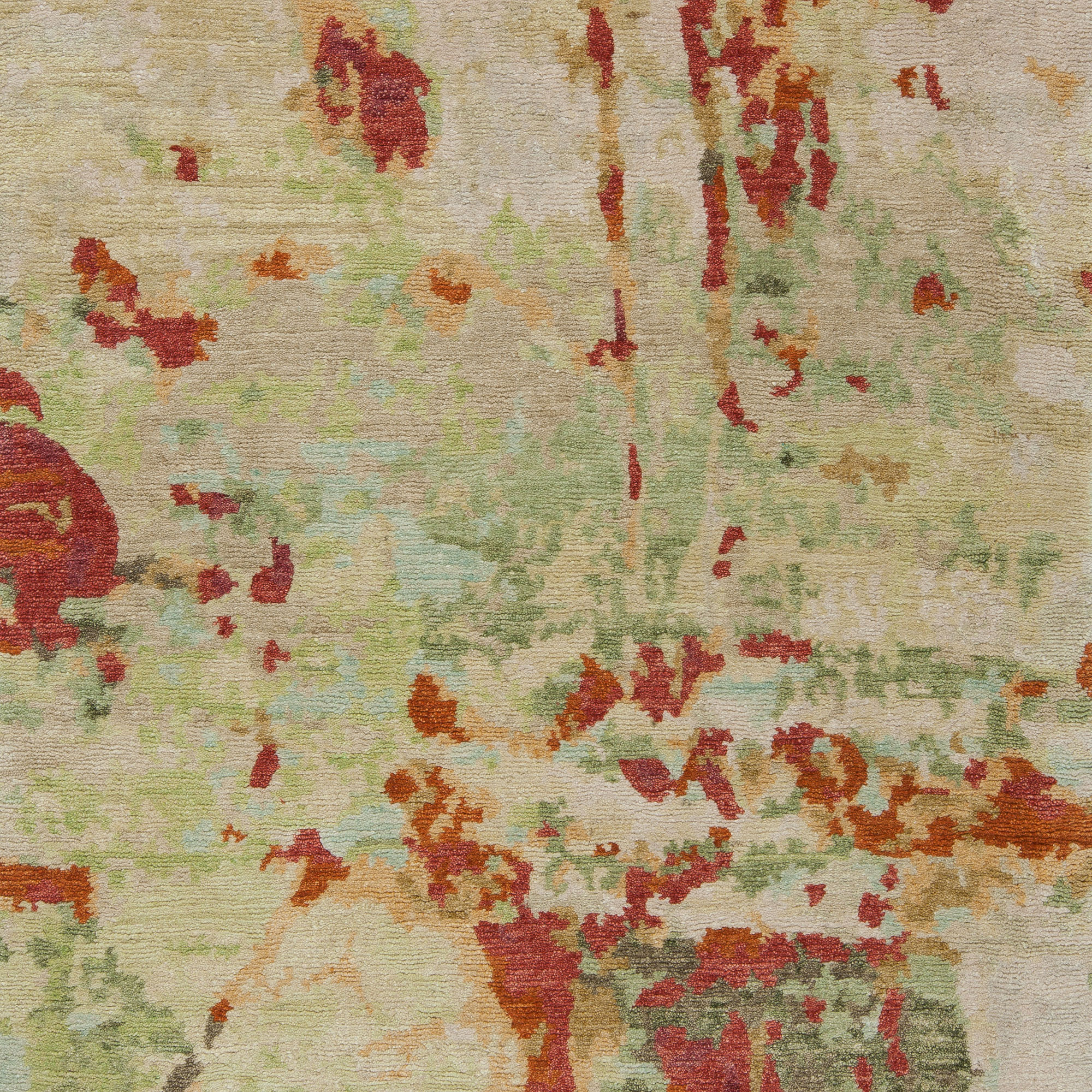
A rug that is technically “the right size” on a retail chart can still look wrong once it meets real furniture, real circulation, and real architecture. When the edges float too far from the seating group, borders turn into awkward frames, and walkways cut across exposed floor, the room starts to feel unresolved. That is usually the moment to consider custom rugs, especially when the goal is cleaner proportion, better zoning, and a more confident relationship between the rug and the architecture.
Many rooms fail not because the rug is unattractive, but because its dimensions were never calibrated to the layout. Standard sizes are built to serve a wide market, which means they often stop short of what a long living room, an open-plan apartment, or a generous primary suite actually needs. In practice, this can create several small problems at once: the front legs of seating fall off the rug, dining chairs catch on the border, or a corridor of bare floor splits a seating area in two. A well-sized rug should organize movement and anchor furniture, not merely sit underneath it.
For designers, the question is rarely whether a room needs a rug. The real question is whether the rug needs to be adjusted to the room. That is where made-to-measure rugs and careful custom rug design become practical tools rather than indulgences. A slight increase in length can clarify a seating arrangement, while a broader field can unify multiple pieces that otherwise feel assembled rather than composed. In rooms with strong architectural lines, the wrong rug size can compete with millwork, windows, or a fireplace; the right one can settle everything into a clearer visual rhythm.
Diagnose the visual problems caused by undersized rugs
The first step is to identify what exactly feels off, because “too small” can describe several different failures. In one room, the rug may stop short of the sofa legs, leaving furniture visually detached from the composition. In another, the borders may create a narrow moat of flooring that makes the seating area look like it is shrinking rather than grounding the room. In larger spaces, a modest rug can also break scale: the furniture may be substantial, but the textile beneath it reads as temporary or underplanned.
Look at the room from the main approach, not only from the center. If the rug is seen as a thin island surrounded by excess flooring, the composition will feel weak even when every object is attractive on its own. If chairs and tables straddle the edge, the problem is functional as well as visual, because traffic flow becomes less graceful and chair pull-back becomes awkward. The best rug solution should define the use zone clearly enough that the room reads in layers: architecture, furniture, then textile.
Pattern and color also affect whether a rug appears undersized. A dense border, a busy medallion, or a high-contrast edge can make a rug seem visually contained, even when the dimensions are adequate. By contrast, a quieter field with a refined perimeter can expand visually and help the room feel more open. This is why custom rug design is not only about inches; it is also about how pattern density, border width, and palette interact with wall color, upholstery, and light.
Show when enlarging the rug is better than layering
Layering can be useful, but it should solve a specific design problem rather than cover up a sizing mistake. If the room needs a single, continuous anchor—especially under a sofa group, dining table, or bed—adding a smaller rug on top of a larger neutral base rarely creates the same clarity as a properly scaled piece. In formal living rooms, layering can also introduce too many edges, which weakens the architectural calm that a more tailored rug would provide. When the room already has enough visual activity from art, upholstery, or window treatments, adding another layer often increases noise instead of reducing it.
Enlarging the rug is usually the better option when the seating arrangement is defined by a central axis or when circulation should move around, not through, the primary zone. It is also the more refined choice when the room has expensive or carefully selected furniture, because a properly proportioned rug will make those pieces look intentional. Layering works better in informal settings, eclectic rooms, or spaces where texture is meant to feel collected over time. If the goal is to restore order, however, a larger field is usually the cleaner answer.
There are also material considerations. A small rug layered over another surface can shift, curl, or create uneven stack height at the edges, especially in active family rooms. In high-use rooms, a single well-made textile is easier to maintain and more stable underfoot. For clients who want something more exacting, custom rugs allow the designer to match size, construction, and finish to the room rather than forcing the room to adapt to a stock dimension.
Explain how to set the target dimensions
Start by mapping the furniture, not by guessing the rug size from memory. In a living room, the most reliable approach is to measure the full seating group and decide how much of each piece should rest on the rug. A common design strategy is to include the front legs of the main seating and allow enough field around the group that the edges do not feel cramped. In a dining room, the rug should extend far enough beyond the table to accommodate pulled-out chairs without catching on the border. In a bedroom, the rug should support the bed visually and extend into the walking zone on at least the primary sides.
Room shape matters as much as furniture size. A long, narrow space often needs a rug that echoes the room’s proportions, not a square or underscaled rectangle that leaves two unhelpful strips of floor on either side. In an open-plan interior, the rug should define the seating or dining zone without colliding with adjacent functions such as a reading corner or passage to the kitchen. The goal is not to fill every inch, but to create a measured relationship between open floor, textile, and furniture footprint.
When working with made-to-measure rugs, many designers begin with the architecture and then subtract from that frame only where circulation demands it. That method is especially useful in rooms with fireplaces, central chandeliers, or strong window axes, because the rug can be aligned to the room’s dominant geometry. If you are uncertain, a practical custom rug sizing guide should account for door swings, chair clearance, and the sightline from entry points. A rug that is slightly larger than expected is often safer than one that leaves the room visually underweighted.
Discuss how to preserve balance in large rooms
Large rooms create a different challenge: the rug must feel substantial without swallowing the floor plane. Here, scale is about proportion, but also about restraint. A very large rug can soften acoustics, unify seating, and make a room feel composed, yet it should still allow the architecture to breathe. If the textile expands too close to the walls, the room can lose depth; if it is too small, the furniture begins to drift apart. The right answer usually sits in the middle, with enough perimeter flooring to show intention and enough textile surface to hold the composition together.
Material choice matters more in larger rooms because the rug occupies a greater share of the visual field. A wool rug with a moderate pile often provides body without excessive sheen, which helps maintain a calm surface in rooms with strong daylight. Silk accents, if used, are best treated as detail rather than the whole story, since too much reflectivity can make a large room feel restless. Hand-knotted rugs are especially effective when the scale is generous, because their construction supports refined pattern work and crisp definition across a substantial area.
Pattern should also be calibrated to the distance from which the rug will be seen. In a large living room, a very small motif can disappear, while an overly bold one can dominate the furnishings. The most successful custom oversized rugs often use a pattern scale that relates to the room’s architecture: broader borders near tall millwork, more open fields beneath low-profile furniture, and quieter transitions where sightlines remain long. This kind of proportion is less about decoration and more about visual pacing.
Use style, color, and construction to correct the room, not just the measurements
Size alone cannot solve every problem, which is why rug design should always be read alongside material and palette. A room that already feels busy may benefit from a rug with a softer palette and less contrast, allowing the floor covering to unify the space rather than compete with it. A quiet interior, by contrast, can handle a more expressive border or a denser pattern because the rug will carry some of the visual weight. The most effective custom solution respects the room’s existing temperature, daylight, and furnishing style.
Construction also affects whether a larger rug feels appropriate. A thick pile can add comfort and acoustic softness, but in a room with low doors, narrow transitions, or layered furnishings, it may create too much bulk. A flatter hand-knotted surface can be preferable where clean edges and furniture precision matter. For homes with pets, children, or frequent entertaining, durability should be considered alongside beauty, because a rug that is too precious for the room will not remain visually successful for long.
Think of the rug as part of the room’s structural grammar. If the sofa lines are rectilinear and the table edges are crisp, the rug should reinforce that order with a clear outline and a controlled pattern. If the room uses curved seating, layered antiques, or a more collected mix, the textile can be slightly softer in feeling, though it still needs disciplined dimensions. Good made-to-order rugs do not simply add color or texture; they correct the room’s proportions and help all the other elements read as purposeful.
Scenario: a living room with a strong layout but a weak rug
Consider a rectangular living room with a sectional, two lounge chairs, and a coffee table centered in front of a fireplace. A standard rug may fit beneath the coffee table but leave the chairs half-off the edge, making the grouping feel split into separate parts. In that case, a larger custom field can bring the chairs fully into the conversation, establish a cleaner perimeter, and make the fireplace axis feel more resolved. The room does not need more decoration; it needs better containment.
In a similar room, a designer might choose a quieter wool ground with a restrained border rather than a highly ornamented composition. That choice keeps the focus on the architecture and furniture while still giving the room a tailored finish. The same strategy works in open-plan spaces where the rug must define a conversation area without fighting the dining zone nearby. When the dimensions are right, the room begins to look edited rather than merely furnished.
When standard sizes fail, custom is often the most disciplined answer
There is a misconception that custom only matters when a room is unusual or highly formal. In reality, custom rugs are often the most practical answer when a standard size leaves awkward borders, exposes circulation paths, or breaks the visual weight of the furnishings. The advantage is not novelty; it is control. You can specify length, width, pattern scale, material behavior, and construction so the rug behaves like a designed element rather than an accommodation.
Doris Leslie Blau approaches this as a design problem with technical consequences. Whether the brief calls for understated luxury, a more expressive antique-meets-modern composition, or a practical family room solution, the rug should be built around the room’s actual use. That is where specialist guidance matters: the right dimensions are only the beginning, and the finish, fiber, and pattern should all support the same spatial logic. A rug that fits beautifully will usually look expensive even before anyone notices the quality of the weave.
FAQ
Why does a rug that is technically available still look wrong?
Because availability does not guarantee proportion. Retail sizes are standardized, while rooms are shaped by furniture depth, traffic flow, ceiling height, and architectural details. A rug can fit the floor and still fail to anchor the seating or dining area, which is why scale matters as much as dimensions.
Should I layer a smaller rug instead?
Only if layering solves a stylistic goal, such as adding texture in a relaxed or eclectic room. If the real issue is that the rug is undersized, layering usually does not correct the visual imbalance. In most formal or carefully planned interiors, a larger made-to-measure rug will create a cleaner result.
How do I keep a larger rug from overpowering the room?
Use proportion, not just size, to guide the design. Allow some visible floor at the perimeter, choose a pattern scale that matches viewing distance, and coordinate the rug’s color temperature with the room’s finishes. A well-chosen rug should support the architecture and furniture, not compete with them.
What is the best way to determine the right size before ordering?
Measure the full furniture arrangement, including pull-back clearance for chairs and walk paths around seating. Then test the layout with tape or paper outlines on the floor to judge how the room reads from multiple entry points. That process is especially useful when considering custom rug design for open-plan interiors or oversized rooms.
When a standard rug is too small, the answer is rarely to compromise with the room. It is usually to refine the scale until the floor covering supports the furniture, circulation, and architecture with more precision. If you are weighing custom oversized rugs or need help interpreting proportions in a difficult layout, specialist guidance can make the difference between a room that merely has a rug and one that feels fully resolved.