

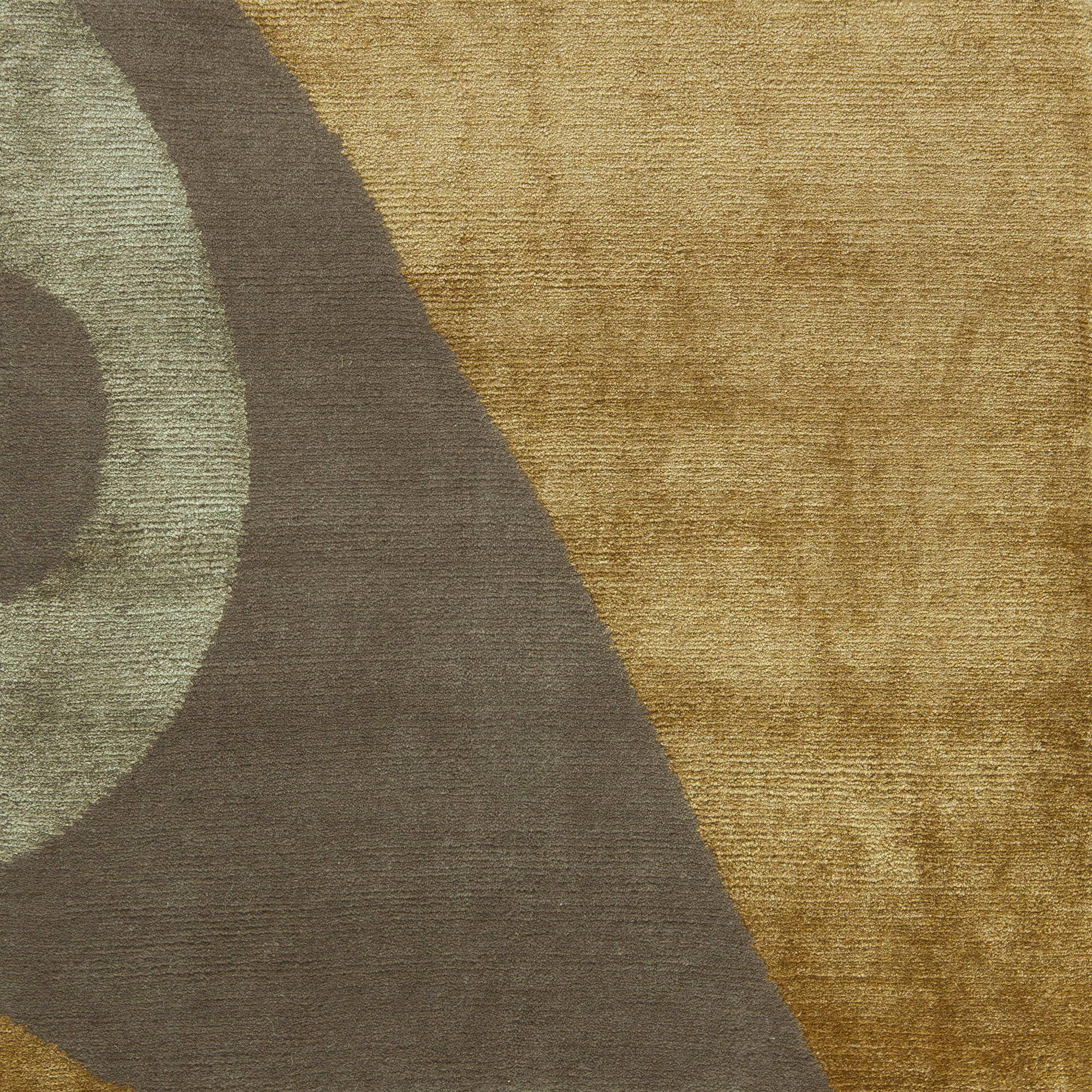
A rug can be the right color, the right pattern, and still feel wrong if it is undersized. In many rooms, standard retail dimensions leave a thin border of floor around the perimeter, break up furniture groupings, or leave exposed paths where people actually walk. That mismatch is not a styling quirk; it is a proportion problem, and it is one of the clearest reasons homeowners and designers turn to custom rugs.
When a rug is too small, the room usually feels less anchored than it should. Seating arrangements float instead of relating to one another, a dining table looks visually detached from its chairs, and circulation routes can cut through the composition in awkward ways. In a room with strong architecture, those flaws become even more obvious because the eye expects the rug to hold the space together with confidence. The good news is that the solution does not always mean choosing a larger off-the-shelf size and hoping for the best. Often, the better answer is a made-to-measure rug designed for the exact furniture layout, floor plan, and visual weight of the room.
Diagnose the visual problems caused by undersized rugs
Before deciding on a replacement, look closely at what the rug is failing to do. In a living room, the most common issue is insufficient furniture contact: the front legs of a sofa may sit on the rug while the chairs miss it entirely, or every piece may barely touch the edge. That makes the arrangement read as separate objects instead of one composed seating area. In a bedroom, a small rug can make the bed seem oversized and the floor look accidental rather than intentional. In open-plan interiors, the problem can be even more pronounced because a weak rug boundary does not provide enough zoning to define the function of the area.
Border width matters as much as total size. A narrow strip of bare floor between the rug and nearby walls can be acceptable in some rooms, but if the border appears pinched or inconsistent, the rug often looks like it was chosen from convenience rather than design logic. The same applies to hallways, entry spaces, and irregular rooms where the rug ends just before a doorway or major axis of travel. When circulation paths run beside or across the rug without enough visual clearance, the composition feels compromised even if the piece itself is beautiful.
It also helps to examine the rug against the room’s scale language. High ceilings, long sightlines, large windows, and substantial furniture demand a rug with presence. By contrast, a light, low-profile room may require a more restrained edge condition and a quieter pattern. The issue is not simply size in inches; it is whether the textile visually belongs to the room’s architecture. This is why custom rug design often becomes the right tool when standard dimensions stop short of what the room actually needs.
Show when enlarging the rug is better than layering
Layering can be useful, but it solves a different problem than scale. If the goal is to add texture, soften a hard floor, or introduce a decorative accent over a broad neutral base, layering has a real place. If the problem is that the room lacks a properly sized foundation, adding another small rug usually creates more edges, more seams, and more visual interruption. Instead of fixing proportion, it can make the room feel busier and less resolved.
Enlarging the rug is usually the better choice when the furniture group needs a single governing plane. That is especially true for sofas, sectionals, beds, and dining tables, where the layout depends on the rug doing structural work. A larger textile creates cleaner zoning and allows the eye to read the room in one pass. For rooms with strong decorative detail—paneling, carved mantels, expressive art, or a patterned sofa—an oversized ground plane can actually calm the composition by reducing fragmentation underfoot.
Layering may still make sense in highly casual settings, children’s spaces, or eclectic rooms where a deliberately collected look is part of the design language. But if the room already has enough visual information, two rugs can compete rather than cooperate. Designers often prefer a single proportionally correct rug because it improves both function and sightlines. If the layout calls for a very specific footprint, custom rugs are often the cleanest solution because they remove the compromises built into standard sizes.
How to set the target dimensions
The most reliable way to size a rug is to start with the furniture, then work outward. In a living room, measure the full seating group and decide how much of each anchor piece should sit on the rug. A common approach is to include at least the front legs of sofas and chairs, though larger rooms may benefit from more generous coverage so the composition feels settled rather than tentative. Leave enough clearance around the perimeter to preserve wall breathing room and circulation, but do not be afraid of scale if the room is spacious enough to support it.
For dining rooms, the calculation is more exacting because the rug must accommodate chair movement. Measure the table, then add generous border allowance on all sides so pulled-out chairs remain fully on the rug. This is where many standard sizes fall short, particularly with oval, round, and extra-long tables. If the rug is too small, chairs catch on the edge and the visual boundary becomes more about obstruction than design. A made-to-measure rug can accommodate unusual table shapes and ensure the edges land where the room needs them, not where a catalog happened to stop.
In bedrooms, the target dimensions depend on whether the rug is meant to frame the bed, run beside it, or define a larger sitting zone. A rug that begins too close to the bedside can make the bed appear crowded, while one that extends well beyond the foot of the bed gives the room a more composed, hotel-like balance. Consider how the rug interacts with nightstands, benches, and any upholstered chair in the corner. The goal is not maximum coverage; it is appropriate coverage, with enough surface area that the floor plan feels deliberate from every angle.
When in doubt, sketch the room at scale or tape the proposed rug footprint onto the floor. That simple step reveals whether the borders feel generous, whether the circulation path is clear, and whether the furniture arrangement reads as a single unit. This is also the moment to think about pile height and edge finish. A thicker wool rug may read larger than a flatwoven piece of the same dimensions, while a silk-rich surface can feel more precise and reflective. Those material effects matter, especially when the room already has a strong architectural presence.
Discuss how to preserve balance in large rooms
Large rooms introduce a different kind of challenge: a rug can be technically large enough and still feel timid. The solution is not simply to increase the footprint indefinitely, but to balance scale, pattern density, and texture against the room’s visual weight. A sparse, pale rug in a room with dark millwork and substantial upholstery may disappear. A highly patterned rug in a very open room may solve the scale issue while introducing too much activity. Good custom rug design accounts for both the physical and optical dimensions of the space.
One useful strategy is to consider how the rug interacts with sightlines from adjacent rooms. In open-plan interiors, a rug does more than ground one seating area; it helps mediate the relationship between zones. A larger custom piece can define a conversation area without forcing an abrupt transition from one function to another. If the room includes multiple uses, such as living and reading areas within one envelope, a tailored rug can be dimensioned to unify them while still leaving enough visual hierarchy for each zone to remain legible.
Material selection also affects balance. Dense hand-knotted wool can hold its own in a formal room because it has body, matte depth, and a stable visual surface. A wool-and-silk blend may be better when the room needs subtle sheen and finer pattern articulation, especially if the palette is restrained. Flatweaves can be excellent in large rooms where furniture lines need clarity and the owner wants a lower-profile textile that does not visually thicken the floor. The right choice is not about luxury in the abstract; it is about how the rug behaves in relation to the furniture, light, and architecture around it.
Think through pattern, material, and traffic before you commission a rug
Oversizing a rug is not only a question of dimensions. The surface itself must support the way the room is used. High-traffic areas call for materials and constructions that resist premature wear and maintain their outline over time. Wool remains a dependable choice because it balances resilience with softness, while hand-knotted construction offers durability and structural integrity for long-term use. In rooms with strong sunlight, pattern and color should be chosen with fade awareness in mind, especially if the rug will sit near large windows or glass doors.
Pattern can help or hinder the scale question. Small, busy repeats can look fragmented when enlarged, while broad motifs, restrained borders, and balanced open fields often read more calmly at larger dimensions. If the room already has visual complexity—art, upholstery, drapery, cabinetry—a rug with measured pattern rhythm can prevent the floor from becoming overworked. On the other hand, a room that feels too plain may benefit from a more expressive layout, as long as the scale is controlled and the colors work with the architecture rather than competing with it.
Families with pets or frequent guests should also think practically about maintenance and longevity. A rug that is too small often gets subjected to more edge wear because chairs, feet, and traffic fall near the perimeter. A properly sized rug can distribute use more evenly and preserve the room’s composition longer. That is one of the understated advantages of made-to-measure rugs: they are not only aesthetically accurate, they are often more durable in daily life because they fit how the room is actually used.
Use a designer’s eye for proportion, not a catalog’s default
Catalog sizing is built for averages, but interiors are rarely average. A room with an unusually deep sofa, an offset fireplace, or a grand piano will not be well served by default dimensions. Even a beautifully made rug can feel wrong if its size was not negotiated against the room’s geometry. This is where designer specification becomes valuable, because the rug is treated as part of the floor plan rather than as a decorative afterthought.
In practice, that means considering how the rug will look from the doorway, from adjacent seating, and from across the room. Will it frame the furniture or just sit beneath it? Will the edges align with architectural lines or cut across them awkwardly? Will the texture support the room’s mood, whether quiet luxury, classic formality, or a more expressive layered scheme? These are the questions that lead to a better result than simply choosing the largest standard size available.
If the room’s dimensions or furniture arrangement make standard options impossible, a tailored solution is usually the most disciplined one. Doris Leslie Blau approaches these decisions with the same care whether the request calls for a contemporary room, an antique-inspired setting, or a large-scale transitional interior. For homeowners and designers comparing rugs, heritage pieces, and made-to-measure rugs, the most useful starting point is often a conversation rather than a catalog page. A specialist can help translate furniture measurements, traffic patterns, and aesthetic goals into a rug that looks intentional from every angle.
FAQ
Why does a rug that is technically available still look wrong?
Because availability does not guarantee proportion. A rug can fit the room in a literal sense while failing to support the furniture layout, circulation paths, or architectural scale. If the edges stop short of the main grouping, the room may feel fragmented even when the size is “correct” by retail standards. The eye responds to relationships, not inventory categories.
Should I layer a smaller rug instead?
Only if layering serves a visual purpose beyond hiding the size problem. Layering can add texture or a decorative accent, but it rarely fixes a room that needs one coherent foundation. In living rooms, dining areas, and bedrooms, a larger single rug is usually more effective because it creates cleaner zoning and fewer visual breaks. If the room needs proper scale, a custom solution is typically stronger than trying to disguise the mismatch.
How do I keep a larger rug from overpowering the room?
Balance it through material, pattern, and color rather than shrinking the footprint too far. A larger rug can still feel refined if the pattern density is measured, the palette supports the room, and the pile height suits the architecture. In some rooms, a quieter surface reads more elegant than a heavily decorative one. The goal is to make the rug look integrated, not dominant.
What if my room has an unusual shape?
Irregular rooms are often where made-to-measure rugs make the most sense. An L-shaped seating area, a long gallery-like living room, or a space with a diagonal fireplace can require dimensions that standard sizes simply do not offer. Custom rug design allows the footprint to be adjusted around architectural features and circulation routes, which usually improves both the visual and functional result.
When a standard rug is too small, the best response is usually not compromise, but precision. A properly scaled rug can stabilize the room, clarify furniture placement, and make the architecture feel more deliberate without drawing undue attention to itself. If you are weighing size, material, and layout, specialist guidance can turn uncertainty into a clear specification and help you choose a rug that belongs to the room from the start.
For tailored advice, Doris Leslie Blau can help you think through proportion, construction, and finish so the final piece works as beautifully in plan as it does in person.