

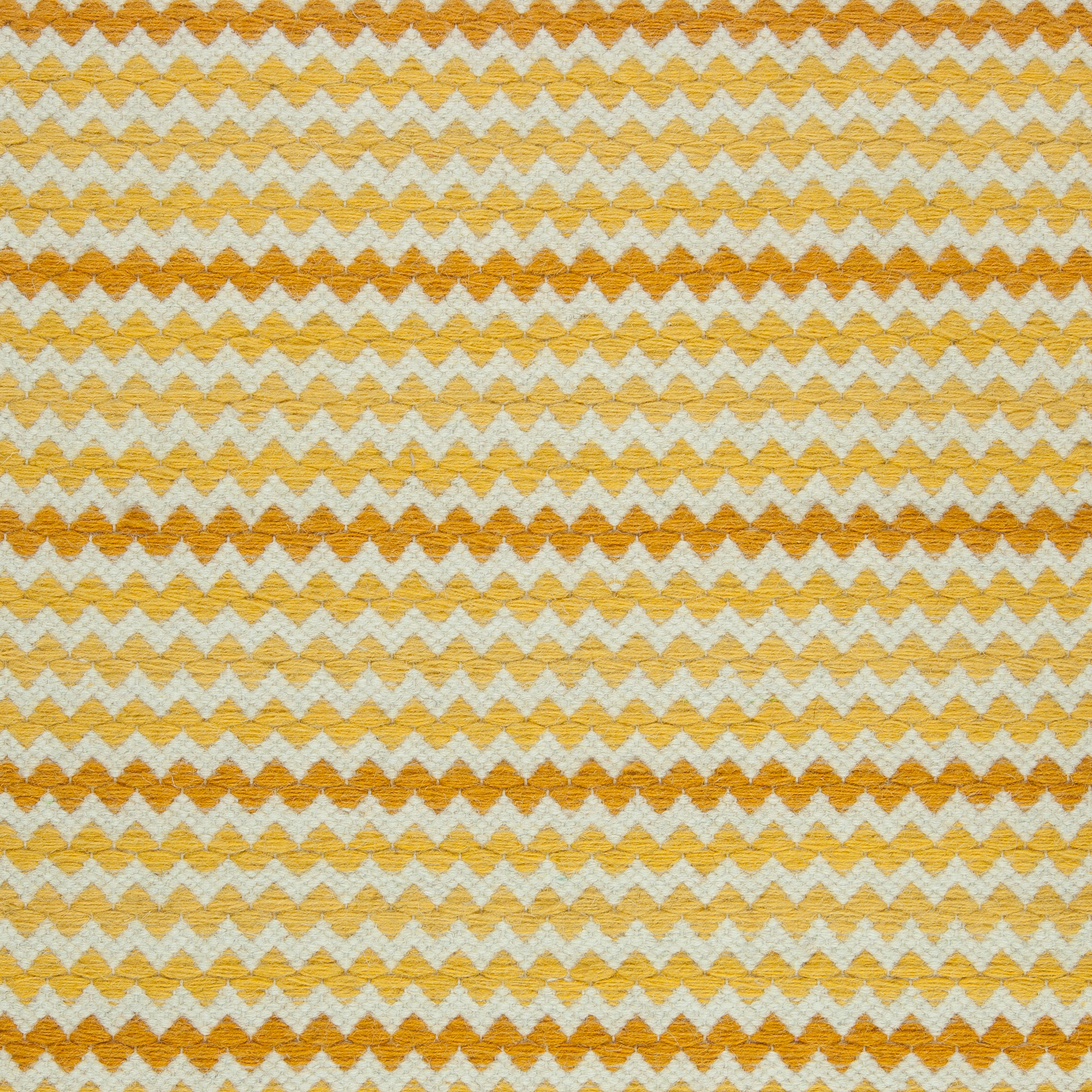
The best dining room custom rugs do two things at once: they frame the table with calm geometry and give chairs room to move without catching on the edge. That balance is not only about size, but also about shape, weave, pile height, and how the rug sits within the architecture of the room. When those variables are considered together, the result looks intentional rather than improvised. Doris Leslie Blau often approaches dining-room rug planning as a measurement problem first and a style decision second, because the order matters.
Dining spaces are unforgiving when proportions are slightly off. A rug that is too small makes chair legs land half on and half off the edge, which is awkward to use and visually busy from across the room. A rug that is too large can swallow the table, flatten the room, or interfere with circulation around a narrow perimeter. The right answer depends on the table dimensions, the number of seats, the movement pattern around them, and whether the room also needs to accommodate a sideboard, fireplace, or opening to another space.
Calculate chair pull-out clearance before choosing dimensions
The simplest way to think about dining room sizing is to measure the table first, then add the space needed for chairs to slide back while remaining fully on the rug. In practice, that means considering the farthest point a chair will travel during use, not just the footprint of the chair when pushed in. A useful working rule is that the rug should extend well beyond the table edge on every side so the chairs remain supported even when pulled out for seating. If you have ever wondered how much larger should a rug be than furniture, dining rooms are one of the clearest cases where the answer is dictated by motion, not only by outline.
For most rooms, the visual comfort zone starts when the rug extends enough to hold the chair legs in every normal position. That usually means at least 24 inches beyond the table edge, and often more if the chairs are deep, upholstered, or used in a larger setting with generous pull-out space. In tighter rooms, 18 inches may be the minimum workable perimeter, but this often looks compressed unless the table is small and the chairs are compact. Designers often test this by marking the rug boundaries with tape on the floor and physically pulling the chairs back to see whether the composition still reads as a stable rectangle or circle.
There is also a difference between dining comfort and dining discipline. A formal room with a long table and frequent hosting usually benefits from a broader border of exposed rug around the furniture, while a breakfast nook or apartment dining corner may accept a more compact perimeter if circulation is constrained. The goal is not simply to fit the room, but to let the table feel anchored while preserving a clean field around it. That is where custom area rugs can solve problems ready-made dimensions cannot, especially in rooms with unusual chair sizes or an off-center architectural layout.
Select shapes that suit round, rectangular, and oval tables
Shape should follow the table, but not mechanically. A rectangular table generally reads best on a rectangular rug because the parallel edges organize the room and reinforce the furniture axis. An oval table can work beautifully on either an oval or rectangular rug, depending on the room’s proportions; the oval softens a formal dining room, while a rectangular rug can make the setting feel more architectural and grounded. Round tables are often happiest on round rugs when the room itself is square or softly proportioned, because the repeated curve creates a self-contained zone that feels purposeful.
That said, a round rug is not automatically the correct answer beneath a round table. In a long room, a round rug can feel like a decorative island lost inside a corridor if the surrounding architecture is too linear. Conversely, in a compact square room, a round rug can ease the hard corners and make movement feel less rigid. The useful question is not “which shape matches the table?” but “which shape clarifies the room’s circulation and balances the surrounding edges?”
Rectangular rooms with centered tables are often the easiest to specify, but they can also become the most generic if the rug follows the table too literally. A slightly oversized rectangle with measured breathing room can make the dining zone feel composed rather than cramped. In more unusual rooms, custom rugs allow you to choose dimensions that respect door swings, sightlines, and the path to serving pieces without sacrificing the calm outline under the table. For many designers, that flexibility is the difference between a dining set that merely fits and one that feels resolved.
When a custom shape is worth considering
Custom shaping is especially useful when the room itself is not symmetrical, or when the table has a distinct silhouette that deserves support. An oval rug can moderate a room full of sharp edges, while a gently elongated round can soften a square breakfast area without looking whimsical. In an open-plan home, a tailored shape can also help define the dining zone without adding visual clutter or competing with nearby seating. If you are evaluating options, a custom rug consultation can be the fastest way to translate floor plan, table size, and chair clearance into a workable specification.
Discuss pattern placement under the table and around the border
Pattern matters in dining rooms because the table covers the center of the rug, which means the perimeter and visible border do much of the visual work. A large central medallion may be wasted if it disappears entirely beneath the table, while a border motif can become the most important compositional element in the room. That is why custom rugs are often specified with the layout in mind, not just the design itself. The border should help define the room, but it should not be so busy that it competes with upholstered chairs, pendant lighting, or a striking table finish.
If the room is formal, a controlled border can create a frame that keeps the dining zone from feeling like a floating object. If the room is more relaxed, a tone-on-tone field with subtle movement may be better than a sharply contrasted outline. Dense pattern can be helpful when the room needs to hide everyday use, but it should still read clearly from standing height, because dining rooms are experienced both seated and upright. A successful pattern usually leaves enough quiet space for the eye to rest beneath the table while providing enough detail at the edges to prevent the rug from disappearing into the floor.
Scale is critical here. Small allover motifs can become visually busy once chairs, table legs, and place settings are added, especially in rooms with multiple reflective surfaces. Larger medallions, wide borders, and restrained geometry tend to age more gracefully in dining rooms because they accommodate furniture movement without fragmenting the field. If the room already contains strong architectural lines, such as paneled walls or a coffered ceiling, a quieter rug often works better than a competitive one. The best result is usually not the loudest pattern, but the one that supports the room’s rhythm.
Address maintenance in eating spaces
Dining rooms ask more of a rug than a formal sitting room because the surface has to tolerate chair movement, spills, and repeated cleaning. Fiber selection matters as much as appearance. Wool remains one of the most reliable options because it offers resilience, natural soil resistance, and a surface that wears well under regular use. Flatwoven constructions can also be practical where chairs need easy glide, while a lower pile helps keep table legs stable and reduces the chance of snagging under chair feet.
Silk-heavy rugs may be beautiful, but they are usually less forgiving in eating areas unless the room is low-traffic and the owner is highly attentive to care. A wool-silk blend can introduce sheen without making the surface overly delicate, though placement and maintenance must still be considered carefully. In homes where dining is frequent, a rug with some texture can help disguise the traces of daily life better than a very smooth, high-contrast surface. The more active the room, the more important it becomes to balance visual refinement with realistic upkeep.
Maintenance also depends on what sits around the rug. Chairs with metal feet can abrade borders over time, while heavy wood chairs may compress pile if moved aggressively. Felt protectors, careful vacuuming, and prompt spill treatment are basic measures, but the underlying construction should be chosen with use in mind. Hand-knotted rugs with dense structure can be excellent in dining rooms because they maintain definition around the edge and hold up well under furniture, while a lower, more tailored weave can make daily chair movement feel smoother. The right material choice is less about avoiding use than about designing for it.
Light exposure is another practical concern, especially in dining rooms with large windows or evening use under strong pendants. Colors close to the window may shift over time, and a rug with nuanced tonal variation will usually age more gracefully than one relying on a single flat color. If the dining room opens to a terrace, kitchen, or family room, the rug must also coordinate with adjacent surfaces so the transition feels deliberate rather than abrupt. That is where material guides and care and preservation advice become part of specification, not an afterthought.
Use proportion to connect the dining room to the rest of the interior
Dining room rugs rarely exist in isolation. They usually sit in visual conversation with nearby flooring, wall color, lighting, and the lines of adjoining rooms. A rug that is perfect under the table but too dark, too dense, or too small in relation to the broader plan can still feel wrong. The most successful compositions usually echo one or two qualities from the architecture: a border that reflects millwork proportions, a field color that picks up the floor tone, or a pattern scale that matches the volume of the room. This is where scale becomes a design language rather than a measurement.
Consider a rectangular dining room that opens into a living area with softer furniture and warmer fabrics. A rug with a crisp perimeter can keep the dining zone distinct, while a more relaxed pile or gentler color palette prevents the transition from feeling abrupt. In a classic apartment with formal ceiling height, a rug can introduce enough visual weight to keep the table from appearing lightweight or temporary. In a modern home, by contrast, restrained pattern and precise dimensions often matter more than decorative flourish because the room already has strong lines to carry the composition.
For homeowners comparing ready-made options with bespoke solutions, the practical question is often whether the room will tolerate compromise. If chair clearance, table shape, or floor plan is awkward, made-to-order dimensions can remove the guesswork and produce a cleaner result than trying to force a standard size into the space. That is especially true when the dining room is part of an open-plan plan where a single misplaced edge can disrupt traffic or make the table feel off-center. In those cases, the rug should solve the room rather than decorate around the problem.
Worked example: a rectangular table in a compact city dining room
Imagine a 72-inch rectangular table with six dining chairs in a room that measures only slightly wider than the table itself. A standard rug might seem adequate on paper, but once the chairs are pulled back, their rear legs could land off the edge and create a staggered line around the table. In a room like this, a larger rectangular rug with a restrained border and a lower pile would be a more convincing solution than a richly textured piece that visually shrinks the floor. The added border gives the chairs a stable landing zone, while the flat enough surface keeps movement quiet and controlled.
If the same room contained a round pedestal table, the specification might change entirely. A round rug could work beautifully if the room is square and the circulation is even on all sides, but a rectangular rug might still be preferable if the room has a long wall, a radiator, or a doorway that interrupts symmetry. This is why dining room custom rugs should be thought of as design tools rather than decorative accessories. They are most effective when they are sized to the movement of the furniture and the geometry of the room, not just to the outline of the tabletop.
Practical checklist before you order
- Measure the table and chairs together, including the full pull-out depth of each chair.
- Account for door swings, sideboards, fireplaces, and any path that crosses the dining zone.
- Choose a shape that reinforces the room’s architecture instead of merely matching the table.
- Keep pattern scale visible around the edges, since the table will cover the center.
- Favor lower pile or stable construction for easier chair movement and simpler maintenance.
- Confirm that the rug relates cleanly to adjoining rooms, especially in open-plan layouts.
FAQ
How much extra rug should extend beyond the table?
In most dining rooms, the rug should extend enough for chairs to remain fully supported when pulled back, which usually means at least 24 inches beyond the table edge on all sides. More generous spacing is often better in larger rooms or where deep upholstered chairs are used. If the space is tight, 18 inches may be workable, but the room should be tested with the actual furniture before deciding.
Is a round rug ever best under a rectangular table?
Yes, but only when the room benefits from a softer, more centered visual field. A round rug can work under a rectangular table in a square room, a breakfast area, or a space where you want to interrupt strong linear architecture. In a long, narrow room, however, a rectangular rug is usually the more controlled and visually stable choice.
What materials work well in dining rooms?
Wool is a strong choice because it is durable, resilient, and relatively easy to maintain. Flatwoven constructions can also be useful where smooth chair movement matters, and low-pile hand-knotted rugs often perform well in formal dining rooms. Silk-rich materials can be beautiful, but they are usually better suited to low-use dining spaces with careful upkeep.
Should the pattern be centered under the table?
Not necessarily. Since the table often covers the middle of the rug, the border and visible perimeter may matter more than the center medallion. Many dining rooms look better when the pattern is planned so that the edges read clearly and the center remains calm enough to disappear gracefully beneath the table.
When a dining room needs a rug that clears chairs cleanly, the best specification is usually one that comes from the room itself: its measurements, its circulation, its light, and its architecture. Doris Leslie Blau approaches these decisions with that level of detail in mind, pairing the practical needs of daily use with the visual discipline that makes a dining room feel composed. For guidance on proportions, materials, or a made-to-order format suited to a specific table and floor plan, specialist design consultation can make the difference between a rug that fits and one that truly resolves the room.