

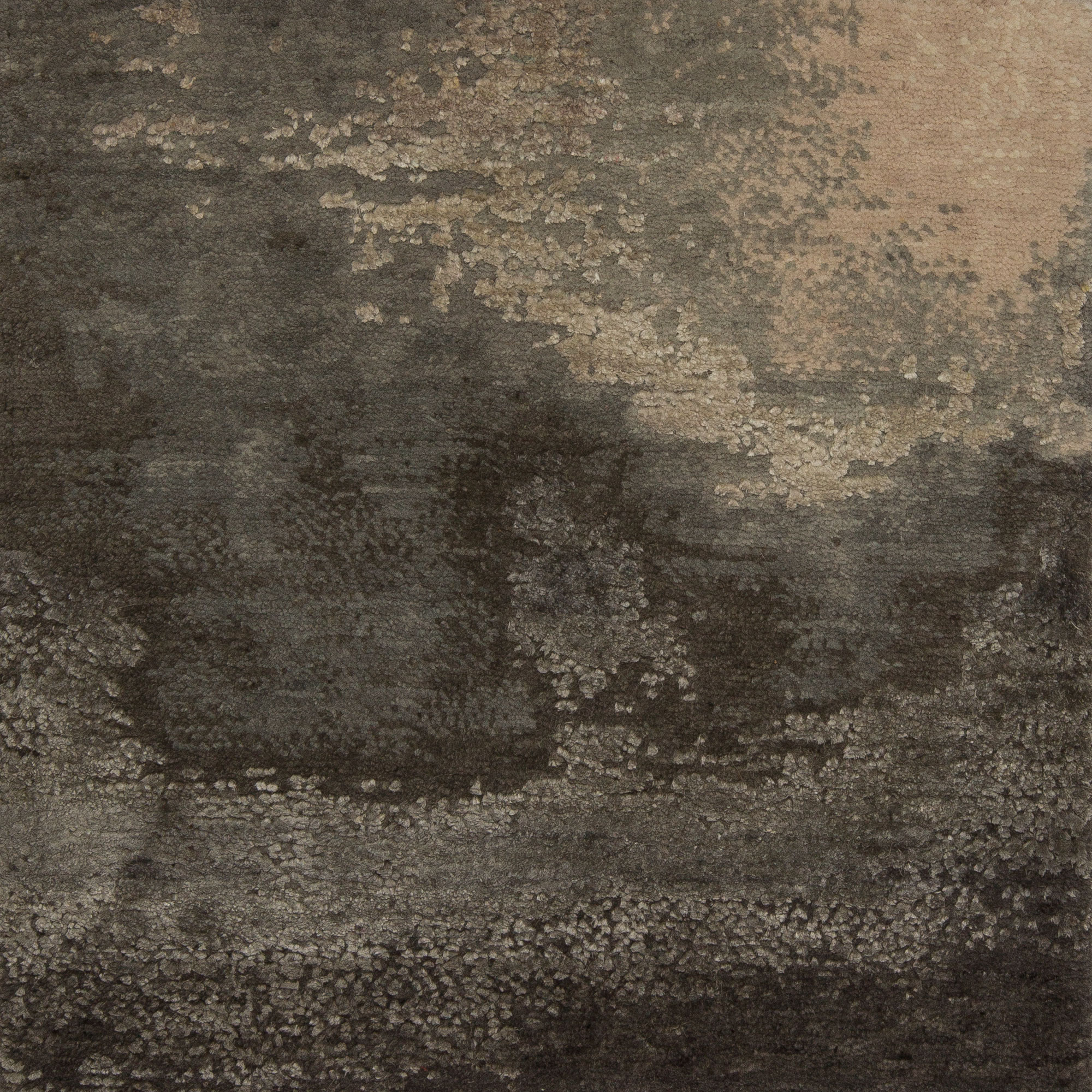
When homeowners ask about rug durability, they are usually trying to solve a practical problem: which rugs can handle real life without losing their shape, surface, or visual balance. In luxury interiors, that question is not just about toughness. It is about how custom rugs are built, how they age in specific rooms, and whether their construction supports the way a space is actually used.
A durable rug is not necessarily the thickest, densest, or most expensive one. It is the rug whose materials, pile structure, edge treatment, and backing work together for the demands of a particular room. A silk rug may be exquisite in a formal sitting room with controlled traffic, while a wool rug with a thoughtful weave and stable finishing may be better suited to a family room that sees daily movement. The real issue is not whether a rug can survive for years in the abstract, but whether it will continue to look composed under the conditions of light, furniture weight, foot traffic, and cleaning. That is why rug durability should be judged as a design decision, not a marketing label.
Wear resistance and perceived durability are not the same thing
Wear resistance refers to how well a rug’s fibers and structure resist physical breakdown. Perceived durability is what the rug appears to be doing over time: staying flat, keeping its outline, maintaining color clarity, and avoiding the sagging or fuzzing that makes a piece look tired before it is truly worn out. A rug can be structurally sound and still look damaged if the pile has crushed unevenly under a sofa front or if the fringe has become untidy at the edges. Likewise, a visually robust rug may be hiding weak construction if the backing or finish was never designed for lasting use. In a luxury home, both forms of durability matter because appearance and performance are inseparable.
This distinction is especially important with custom rugs, where the design is often tailored to a room’s exact dimensions and furnishing plan. A correctly sized rug can distribute wear more evenly because chairs sit properly on the surface, circulation paths are rational, and the eye reads the piece as integrated rather than improvised. Poorly scaled rugs tend to fail visually first, even when their materials are decent, because the furniture arrangement forces unnecessary stress at the edges or leaves awkward strips exposed to traffic. That is why scale and proportion belong in any durability conversation. A well-proportioned rug is less likely to show premature fatigue simply because it is functioning within the room instead of fighting it.
Which constructions age best in high-use rooms
Construction is the foundation of long-term performance. Hand-knotted rugs are often valued for their resilience because each knot is individually tied into the foundation, creating a stable structure that can age gracefully when made with good materials and proper density. Hand-tufted pieces can also perform well, but they depend heavily on the quality of the latex, secondary backing, and finishing, which means shortcuts in manufacture are more likely to appear over time as shedding, edge distortion, or surface instability. Flatweaves are another strong option for active rooms because they avoid pile crush and usually show traffic differently, although they require careful attention to weave tension and finishing so they do not ripple or curl at the edges.
Material choice matters just as much as method. Wool remains one of the most dependable fibers for everyday use because it has natural elasticity, a forgiving hand, and good soil resistance when properly maintained. It also tends to recover better from compression than many delicate fibers, which is why it is often specified for living rooms, bedrooms, libraries, and family spaces. Silk, on the other hand, offers extraordinary sheen and detail but is less forgiving in high-traffic zones, especially where shoes, pets, or frequent furniture movement are involved. Blends can be excellent when they are intentional rather than cost-driven, but the best choice still depends on the room’s activity level and the visual effect the designer wants to preserve.
A practical way to judge the most durable construction is to ask how the rug will behave after years of use, not after the first installation. Will the surface flatten in the same places every day? Will the corners remain stable beneath changing temperatures and cleaning cycles? Will the pattern still read clearly once the pile has softened? These questions are especially relevant in open-plan interiors, where rugs must handle repeated use while also supporting zoning, acoustics, and furniture definition. In such rooms, a rug that is structurally sound but visually chaotic under wear can undermine the entire layout.
Finishing details that influence longevity
Many rugs fail at the edges before the field shows serious wear. That is why rug finishing deserves as much attention as fiber and weave. Binding, serging, hand-overcast edges, and well-executed fringe treatments help hold the structure together and keep the perimeter from fraying, stretching, or curling. If the finishing is too light for the size or traffic level of the rug, the piece can start looking tired even when the central field is still intact. In a refined interior, that kind of failure is noticeable because the eye reads the rug as architecture, not just soft furnishing.
Rug backing is another practical detail that often gets overlooked. A backing must support the face of the rug without creating stiffness, slippage, or premature cracking. In some constructions, the backing is part of the rug’s inherent build; in others, it is a layer added to stabilize the piece after tufting or finishing. Either way, the goal is the same: preserve shape and reduce stress at points where the rug meets the floor, furniture legs, and routine vacuuming. A poor backing can make even a beautiful rug behave badly, especially in rooms with temperature shifts, radiant heat, or heavy rotation of furnishings.
Finishing also affects how a rug ages aesthetically. Dye saturation at the edges, consistent trimming, careful shearing, and clean transitions between pile heights help the design remain legible as the rug softens. This matters in patterned custom rugs because a complicated motif can become visually muddy if finishing is uneven. It also matters in restrained, low-contrast schemes where every line has to carry weight. Good finishing is not decorative garnish. It is the reason a rug continues to look intentional after years of use.
How to read durability by room type
Living rooms: Look for wool or wool-rich constructions that balance comfort and structural stability. If the room includes a large sofa, coffee table, and side chairs, the rug should extend far enough to hold the furniture in a coherent field, not just frame it. That reduces localized wear and helps the room feel composed rather than sectional.
Dining rooms: Prioritize a rug that can handle chair movement without snagging or fraying at the edges. Low-to-medium pile or a tight hand-knotted surface usually performs better than a plush texture here because chairs glide more predictably and crumbs are easier to manage. The rug should also be large enough that chairs remain on the rug when pulled back, otherwise the perimeter takes unnecessary punishment.
Bedrooms: Durability is still important, but the wear pattern is usually gentler and more localized. Softer materials can be appropriate if the rug is not exposed to heavy foot traffic from adjacent circulation routes. In these rooms, feel and visual quiet often matter as much as resistance, so the best choice may be a construction that balances softness underfoot with enough stability to stay flat around the bed.
Entrances and transitional spaces: These areas need the most honest evaluation. A beautiful rug that cannot tolerate grit, wet shoes, or repeated turning of the body at a threshold is the wrong choice, no matter how refined the design. Flatweaves, tightly built wool rugs, and pieces with strong edge finishing tend to be better candidates than delicate piles or highly fragile fibers.
Family rooms and media rooms: Expect compression from seating, repeated circulation, and occasional spills. Choose a construction that can handle cleaning and recovery without visible distortion. If the room is also acoustically demanding, a rug with enough body to soften sound is useful, but density should not come at the expense of maintenance or resilience.
A realistic example: one room, three very different durability outcomes
Consider a large sitting room with two sofas facing each other, a pair of lounge chairs, and a low coffee table. One option is a silk-forward rug with a delicate surface and crisp pattern; it may look spectacular on installation day, but the area beneath the coffee table and the paths between seating zones will likely reveal compression and sheen changes quickly. A second option is a thick tufted rug with a substantial face but weak edge finishing; that piece may feel luxurious at first, yet it can begin to ripple or shed around the perimeter after repeated vacuuming and furniture shifts. A third option is a hand-knotted wool rug with controlled pile height, stable edge treatment, and an intentional pattern scale matched to the room; this one may not look the most dramatic at first glance, but it is the most likely to age with dignity because the construction supports the use case.
That example shows why durability should be evaluated alongside interior design decisions rather than after them. The right rug is not simply the one that survives longest. It is the one whose structure, texture, and visual rhythm remain coherent in the specific architecture of the room. In a disciplined design scheme, longevity is a function of fit.
What to ask when specifying custom rugs for long-term use
When working with custom rugs, it helps to ask concrete questions instead of relying on general assurances. What fiber is carrying the load of the rug’s daily wear? How is the backing constructed, and what does it contribute to stability? What type of finishing is used at the edges, and is it appropriate for the room’s traffic? Is the pile height chosen for comfort, or is it also compatible with how furniture will move across the surface? These are the details that separate a beautiful floor covering from a genuinely durable one.
It is also useful to think about maintenance before the rug is made. Some surfaces tolerate routine vacuuming and rotation better than others. Some colors disguise wear patterns more effectively, while others reveal every change in nap direction or surface compression. A disciplined designer specification workflow considers these issues early, especially when the rug is meant to anchor an important room for many years. Doris Leslie Blau often approaches these decisions through the lens of construction first, then pattern, then palette, because the order matters when performance and beauty must coexist.
Room-by-room durability checklist
- Confirm the rug’s use zone: formal, family, transitional, or high-traffic.
- Match fiber choice to exposure: wool for versatility, silk for controlled settings, flatweave for active circulation.
- Check edge finishing for strength, especially in large-format rugs.
- Evaluate rug backing or foundation stability if the construction relies on a secondary layer.
- Set the size so furniture sits correctly and wear is distributed evenly.
- Ask how the surface will age under light, cleaning, and chair movement.
- Make sure pattern density and pile height suit the room’s actual rhythm, not just its aesthetic.
Used well, this checklist turns durability from a vague promise into a usable design tool. It helps narrow the field quickly and prevents expensive mistakes, especially in rooms where the rug is expected to do both visual and practical work. A rug that fits the room’s scale, construction demands, and maintenance reality will usually outlast a more fragile alternative chosen only for initial impact. That is true whether the interior leans quiet and restrained or richly layered and expressive.
FAQ
What parts of a rug fail first?
Usually the edges, corners, and areas under the heaviest furniture or repeated foot traffic show wear first. In many rugs, those zones reveal problems before the field does because they absorb the most mechanical stress. Fraying, curling, pile crush, and uneven fading are common early signs that the rug’s construction or finishing is not suited to the room.
Does a denser rug always last longer?
No. Density can improve stability and help a rug feel substantial, but it does not guarantee long life. A dense rug with poor backing, weak finishing, or unsuitable fiber can age badly, while a more moderate construction made with quality materials and careful workmanship may perform better for years.
How can I tell if a rug is built for real use?
Look beyond the surface. Ask how it is constructed, what fiber is used, how the rug backing supports the structure, and how the edges are finished. Then consider whether the size, pile height, and pattern scale suit the room’s traffic and furniture layout. A rug designed for real use feels coherent in all of those details, not just attractive on first glance.
Are custom rugs better for durability than ready-made rugs?
They can be, because custom rugs allow the construction, size, and finish to be specified for the room rather than adapted afterward. That said, durability depends on the choices made within the custom process. A well-specified made-to-order rug can outperform a standard size, while a poorly planned custom piece can still wear out quickly.
Choosing a durable rug is ultimately about judgment: reading the room, understanding the construction, and insisting that beauty serve everyday life. If you are weighing materials, finishes, or scale for a specific interior, Doris Leslie Blau can help translate those needs into a thoughtful rug specification with specialist guidance.