

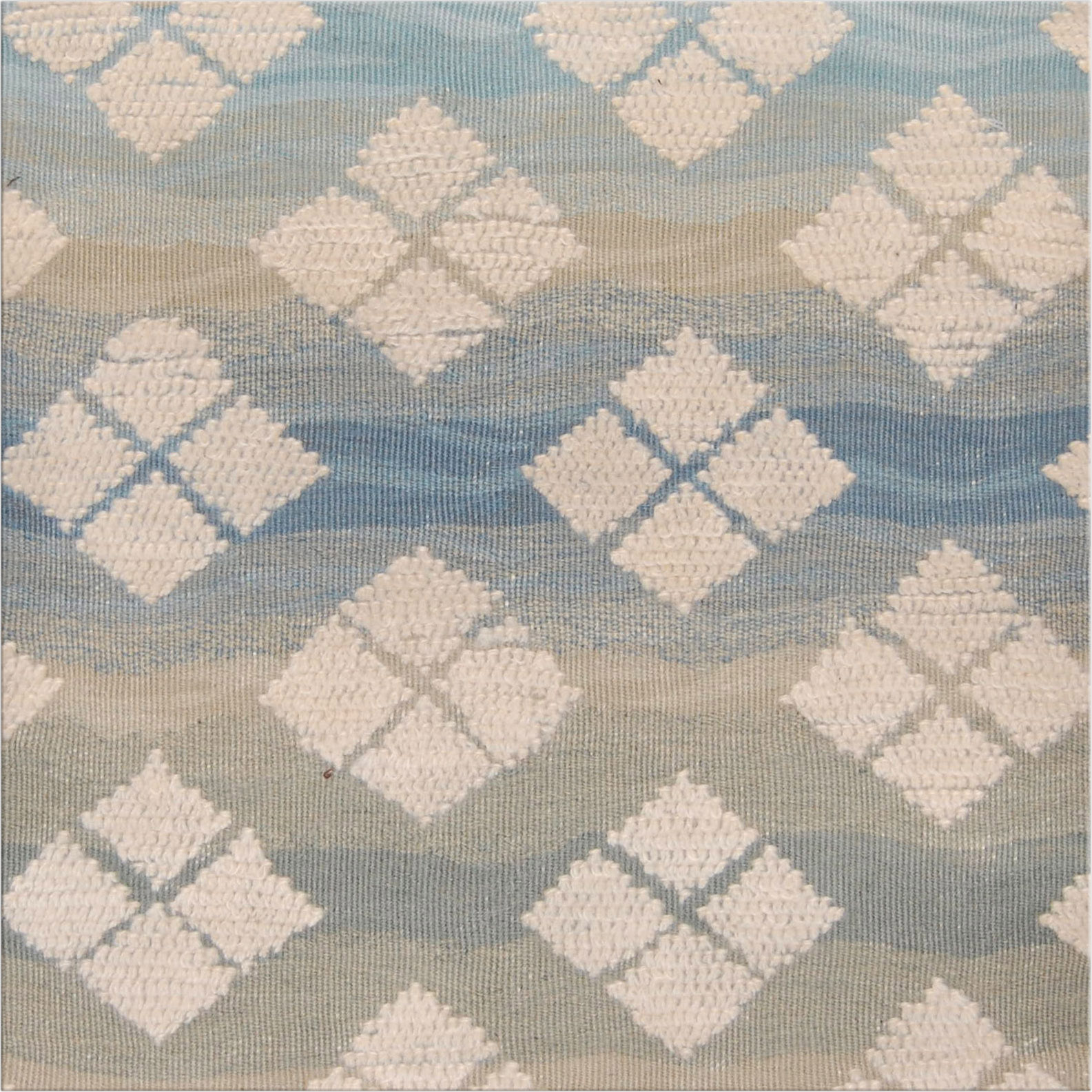
An exterior setting can be as composed as a drawing room when the rug is specified with the same level of precision as the architecture around it. For terraces, loggias, and covered outdoor rooms, the right surface has to manage sun, moisture, movement, and visual scale while still delivering the refinement expected from interior-grade design. The best custom rugs for outdoor space are not simply “weatherproof”; they are engineered and proportioned to harmonize with paving, glazing, furniture lines, and the way people actually use the area across a season. This is where material science and tailoring meet, producing luxury outdoor rug ideas that feel deliberate rather than decorative.
Outdoor living asks for a different type of logic than an indoor scheme, because a terrace is never static in the way a sitting room can be. Light shifts harder, wind moves textiles more aggressively, and humidity or standing water can turn a beautiful floor covering into a maintenance problem if the construction is wrong. Yet the goal is not to reduce design to pure utility. A well-specified terrace rug material can create the same sense of room boundaries, balance, and comfort that an indoor carpet provides, while still handling UV exposure, drainage, and seasonal use. The most successful projects begin by defining the exposure level: fully open sky, partially covered loggia, or a protected outdoor room with only limited weather intrusion. That distinction determines everything from fiber choice to pile height, backing type, and how the rug is finished at the edges. In luxury settings, the expectation is not only durability but a finish that looks intentional under close inspection.
What makes an outdoor rug different from an indoor rug
An outdoor rug is expected to tolerate conditions that would damage many interior textiles within weeks. Sunlight is the most obvious threat because repeated UV exposure can dull color, embrittle fibers, and make a once-crisp pattern appear tired. Moisture is equally important, but not only in the form of rain; condensation, wet footwear, garden irrigation, and damp evening air can all affect performance. For that reason, construction matters as much as appearance, and the rug must be designed with drainage in mind so water does not sit trapped in the structure. Indoor carpets are often built for softness, acoustic absorption, and a more protected environment, while outdoor versions need quicker drying, less fiber memory, and a lower risk of mildew. The ideal piece still feels elevated underfoot, but it is calibrated for the realities of open-air living rather than a climate-controlled room.
There is also a difference in how the rug must behave visually in relation to the architecture. Outside, a rug has to anchor furniture that may be lighter, more modular, or spaced differently than in an interior arrangement. It needs enough visual weight to read from both near and far, especially on large stone or concrete terraces where the floor plane can feel expansive and hard. Texture also has to be considered carefully, because very plush constructions can trap debris and slow drying, while extremely flat constructions may look too casual for refined entertaining. The sweet spot often sits between tailored flatweaves and tightly controlled looped surfaces that can deliver definition without excess bulk. For clients exploring custom rugs, this is where a made specification becomes valuable: size, border proportion, color density, and surface character can all be aligned with the exact proportions of the setting.
Choosing fibers that resist sun, moisture, and mildew
Material selection is the core technical decision in any exterior rug project, and it should be approached with the same seriousness as choosing stone or upholstery. Among all-weather fibers, the best options tend to be those that combine dimensional stability with low moisture absorption and reliable colorfastness. Solution-dyed synthetics are often favored because the pigment is integrated into the fiber rather than applied only at the surface, which improves UV resistance and helps colors retain depth over time. Polypropylene is widely used in outdoor applications because it sheds moisture efficiently and resists staining, though quality varies significantly depending on fiber density and finishing. Polyester can deliver a softer hand and stronger color saturation, while advanced performance blends can offer improved texture without sacrificing resilience. In a luxury context, the question is never merely “what survives,” but “what survives elegantly,” because a terrace rug material should still present with clarity, balance, and a tactility appropriate to fine design.
Moisture performance depends not only on the face fiber but also on the structure that supports it. Open weaves and low-profile constructions dry faster than dense, cushion-heavy rugs, which is useful in climates with frequent afternoon showers or high humidity. Mildew resistance is enhanced when the rug can breathe from below, so ventilated backing systems, raised platforms, or careful spacing from impermeable surfaces all matter. On covered loggia installations, the risk may be lower, but the rug still needs to handle condensation and the occasional splash without losing form. It is worth noting that a good outdoor rug should also avoid excessive abrasion from moving furniture, because chairs and dining tables often shift more frequently outside than they do indoors. This is why custom rugs are often specified with a balance of performance and structure, rather than a one-size-fits-all texture that can seem either too flimsy or too industrial for the setting.
Color science is another technical factor that designers should not overlook. Deep navy, charcoal, and forest tones can be dramatic, but they may show salt residue, dust, and fading patterns more readily if the dye process is weak. Lighter neutrals can feel architectural and refined, but they need enough tonal complexity to avoid appearing flat when exposed to bright sun. A quality outdoor rug often uses heathered blends, linear striations, or patterned variation to disguise the inevitable changes that occur through a season of use. If the terrace receives direct light for many hours a day, a proof of UV resistance from the manufacturer is not a luxury; it is a baseline requirement. For projects that demand exacting standards, custom-made rugs allow the design team to specify not only dimensions but also the fiber system and finish most appropriate to the exposure level.
Sizing rugs for terraces, balconies, and outdoor dining
Scale is one of the most common sources of disappointment in outdoor design, because a rug that is technically durable can still feel visually wrong if it is undersized. On a terrace, the rug should usually connect furniture groupings rather than float awkwardly beneath them, and in dining areas the chairs should remain on the rug even when pulled back. That requirement often pushes the size larger than clients expect, especially where circulation paths need to remain clear around the perimeter. Balconies, by contrast, often benefit from a more tailored approach with narrower proportions, especially if the goal is to define a reading corner or a pair of loungers rather than a full seating composition. In all cases, the rug edge should relate to the architecture rather than fight it, with enough breathing room between the textile and fixed boundaries so the surface feels intentional. For anyone planning custom rugs for outdoor space, proportion is as important as pattern, because the best design will look calm even before the furniture is fully styled.
Outdoor dining requires especially careful planning because the table footprint alone does not determine the rug size. Chairs move outward during use, and if the rug is too tight, legs catch on the edge or sit half on, half off, creating instability and wear. A more generous outline supports hospitality and keeps the composition orderly when guests are seated or when the table is set for entertaining. This is where custom sizing becomes a practical advantage, because standard rectangles or rounds rarely match the exact dimensions of a terrace, a pergola, or a long narrow loggia. A made specification can also address unusual constraints such as drain covers, built-in planters, step transitions, or sliding door tracks. In luxury outdoor entertaining, those details are not minor; they shape the way people move, pause, and gather. The right rug supports circulation rather than interrupting it, and that sense of ease is one of the clearest markers of high-level design.
It is also helpful to think in terms of zones rather than isolated objects. A seating area may need one generous rug, while a secondary lounge perch or breakfast nook may benefit from a smaller companion piece that echoes the material or motif of the main installation. On larger roofs or garden terraces, this layered approach can create rhythm without visual clutter, especially when the flooring below is uniform. For projects that require exact measurement and a bespoke fit, the custom area rugs route allows the layout to be resolved with precision instead of compromise. The result is not just a floor covering but a spatial tool: it frames conversation, defines edges, and softens the hard geometry of outdoor construction. Done well, the rug feels as though it belongs to the architecture from the outset.
Pattern and color ideas for open-air settings
Pattern in an outdoor setting should be considered in relation to distance, brightness, and reflection. Because terraces often receive intense natural light, intricate motifs can either become beautifully crisp or visually busy depending on their scale and contrast. Larger geometric patterns tend to read well from afar and can help anchor modern furniture with clean lines, while restrained stripes or basketlike weaves create structure without overstatement. In a loggia, where the light may be filtered and shadows more layered, a slightly more nuanced pattern can add depth without overpowering the room-like setting. The goal is to create a surface that feels edited, not loud, and that can stand beside stone, wood, bronze, and glass with equal confidence. Luxury outdoor rug ideas often succeed when they borrow the discipline of interior design but adapt the color values for stronger daylight and more active use.
Color should also respond to the mood of the adjacent landscape. If the view is green and expansive, a rug with mineral tones, clay notes, or weathered neutrals can keep the space grounded while letting the garden remain dominant. If the setting is urban, bolder contrast may be useful to sharpen the terrace against neighboring facades and skyline reflections. For seaside properties, a palette that references sand, shell, smoke, or sun-bleached blue can feel natural without becoming themed. The key is to avoid simplistic tropical effects or over-bright novelty colors that can age quickly under UV exposure and strong visual conditions. A sophisticated outdoor palette usually relies on nuance, with multiple related tones instead of a single loud statement. That approach also makes seasonal styling easier, because cushions, lanterns, and tableware can change without making the rug feel visually disconnected.
Texture can be used as a pattern language in its own right. Ribbed surfaces, subtle herringbone effects, or low-relief striations can introduce movement and depth while remaining practical for easy cleaning. This is especially effective in minimal settings where the architecture is already doing much of the visual work. If the terrace furniture is sculptural, a quiet rug can provide the necessary grounding without competing for attention. If, however, the setting is more restrained, a stronger motif may be the element that gives the area identity and cohesion. The best custom rugs often balance these choices precisely, because a custom plan can calibrate scale, contrast, and edge treatment to suit the exact personality of the space. For clients who want a tailored result rather than a generic outdoor accessory, that design control makes a visible difference.
Maintenance routines that preserve appearance through the season
Maintenance is not glamorous, but it determines whether an outdoor rug remains attractive after the first month of use or through an entire season. Regular clearing of surface debris matters because leaves, pollen, and fine grit can settle into the weave and abrade fibers over time. Light vacuuming or brushing helps preserve the pile direction and prevents buildup that can make the rug look dull even when it is structurally sound. If the rug becomes wet, drying it fully and allowing airflow underneath is essential, especially in shaded or humid areas where moisture can linger. Stains should be addressed promptly with a mild cleaner appropriate to the fiber type, because letting organic residue sit can increase the risk of discoloration. These routines are straightforward, but they protect both the visual finish and the technical performance of the rug, which is exactly what clients expect from a premium installation.
Rotation can also extend the life of a rug, particularly in spaces where one side receives more intense sun or foot traffic than the other. In outdoor dining areas, the chair zones may age faster than the perimeter, and shifting the rug slightly during a season can distribute wear more evenly. Protective pads or breathable underlays may be useful on hard terraces to reduce friction and improve drainage, provided they do not trap moisture. If the rug is under a pergola or partial roof, it still needs periodic inspection because dust and atmospheric moisture can accumulate in ways that are easy to overlook. For a particularly refined result, many owners pair the rug with a broader care plan that includes furniture maintenance, cushion storage, and seasonal washing routines. That integrated approach is what keeps the entire composition coherent rather than treating the floor covering as an isolated object. A beautiful outdoor room depends on disciplined upkeep as much as on design selection.
Storage during harsher weather is worth planning in advance, even when the rug is engineered for outdoor use. Year-round exposure can be appropriate for some installations, but only if the climate, exposure, and construction are all aligned. In regions with snow, freeze-thaw cycles, or prolonged wet seasons, rolling and storing the rug during the most demanding months may preserve appearance and dimensional stability. The important thing is to avoid improvisation after damage has already occurred. A well-chosen piece can be highly resilient, but it still benefits from thoughtful stewardship. This is another reason why specialist guidance matters: the right recommendation depends on whether the space is a rooftop terrace, shaded loggia, coastal veranda, or fully open courtyard. Custom rugs in these contexts are most successful when performance is considered as part of the original design brief, not as an afterthought.
FAQ
Can a custom rug be used outdoors year-round?
Yes, in many cases, but the answer depends on exposure, climate, and construction. A custom rug can be made with all-weather fibers, drainage-conscious structure, and UV-resistant coloration so it performs well in a covered loggia or a protected terrace. If the site is fully exposed to heavy rain, intense sun, snow, or standing water, year-round use becomes more dependent on maintenance and regional conditions. Even the best exterior rug benefits from periodic inspection, drying, and cleaning to preserve its finish. For a year-round installation, the specification should be matched carefully to the exact setting rather than assumed by category alone.
What is the best material for a terrace rug?
The best terrace rug material is usually one that combines low moisture absorption, strong UV resistance, and easy drying. Solution-dyed synthetic fibers are often favored because they hold color well and resist the effects of repeated sun exposure. Polypropylene is commonly used for durability and practical upkeep, while higher-end performance blends can deliver a more refined hand and better textural nuance. The “best” choice also depends on whether the terrace is open, partially covered, or adjacent to water, because drainage and airflow matter almost as much as the fiber itself. In luxury settings, the ideal material is the one that balances technical reliability with the visual language of the architecture.
How do I keep an outdoor rug from fading?
Fading is minimized through a combination of material selection, placement, and care. Start with a rug made from UV-resistant, solution-dyed fibers, since the color will generally withstand sunlight better than surface-applied dye. If possible, reduce constant full-sun exposure by using shade structures, umbrellas, or architectural overhangs, especially during the most intense part of the day. Rotation can help even out color change if only part of the rug receives direct light, and periodic cleaning keeps the surface from appearing dull. For exterior projects that need a more exacting result, a specialist can recommend custom rugs designed specifically for the exposure level of the site.
When a terrace, balcony, or loggia is treated as an extension of the interior, the rug becomes a structural part of the composition rather than an accessory. The most successful outdoor installations combine technical confidence with exacting scale, subtle patterning, and a palette that feels aligned with the surrounding architecture. If you are developing a project that calls for tailored proportions, resilient materials, and a refined finish, a specialist consultation can help translate the setting into the right made specification. Doris Leslie Blau can guide the selection of custom rugs for spaces that need both weather resistance and elevated design discipline.