

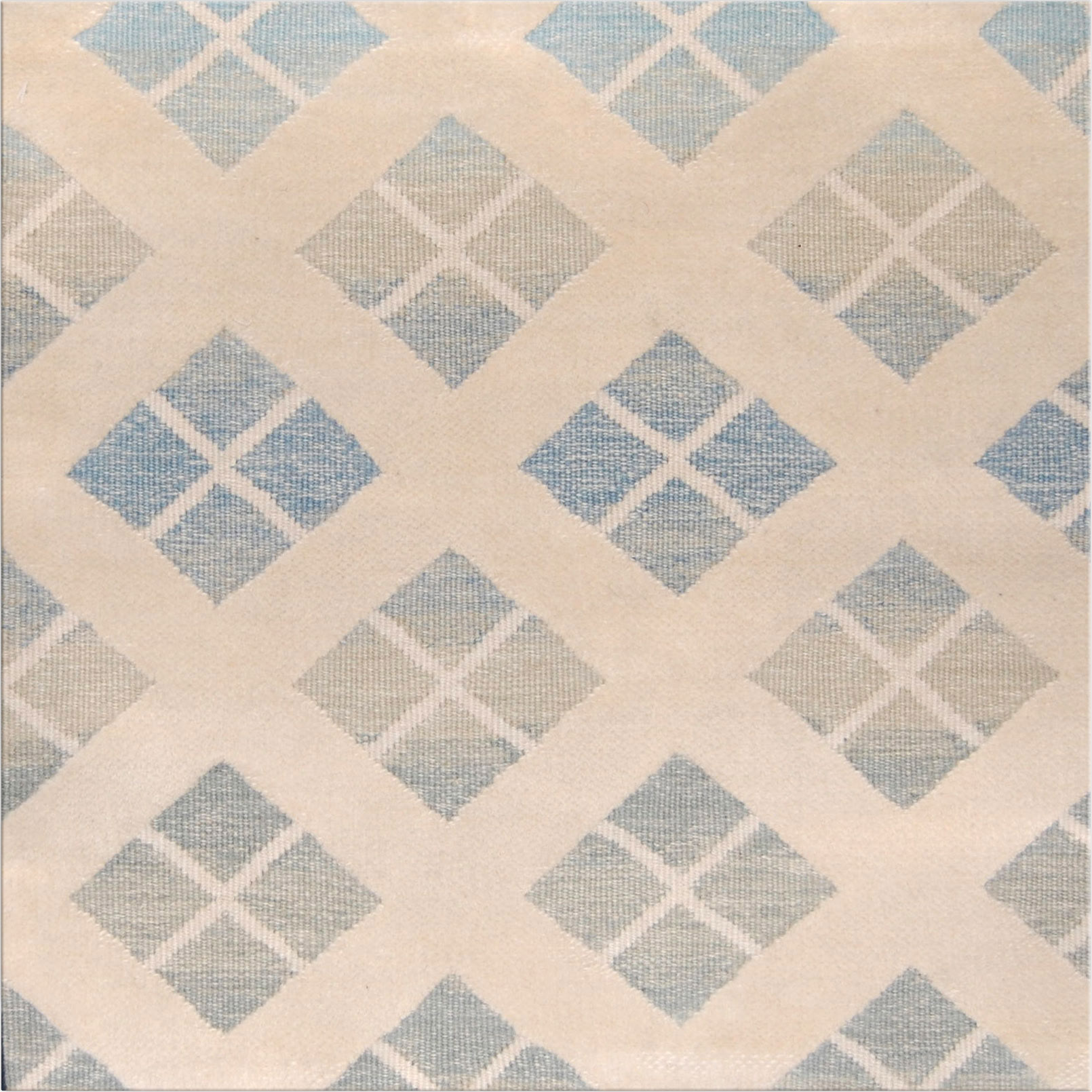
The material you choose for a rug affects far more than color or texture. It determines how the surface reflects light, how the pile compresses underfoot, how the piece ages, and how much care it will require over time. For custom rugs, these decisions are especially consequential because the fiber, weave, knot density, and finishing details are not fixed by a stock template; they are specified to suit the room, the architecture, and the client’s expectations. A well-designed rug is not simply decorative, it is a calibrated object with a specific tactile and visual performance. Understanding how materials behave is the fastest way to make a smarter commission.
At Doris Leslie Blau, the best custom rugs are approached as a balance of aesthetics and engineering. Wool can create structure and depth, silk can sharpen detail and introduce luster, cotton can stabilize construction, viscose can amplify brightness, and modern blends can be used to tune handle and maintenance. The point is not that one fiber is universally superior, but that each one contributes a different property to the finished piece. That is why the question of the best material for custom rugs should never be answered in isolation from the room, the intended use, and the desired level of maintenance. A dining room, a formal salon, and a private bedroom call for very different material strategies.
How material changes the entire character of a rug
Fiber choice sets the first and most obvious tone, but its influence goes deeper than appearance. Wool typically offers body, resilience, and a soft matte richness that reads as grounded and architectural. Silk, by contrast, produces a finer surface with a reflective quality that can make pattern appear almost drawn in light rather than woven in yarn. Cotton often appears behind the scenes as the structural backbone, keeping foundation, warp, and weft consistent and stable. When a designer specifies custom rugs, the material palette becomes a design language in itself, shaping whether the final piece feels tailored and quiet or luminous and dramatic.
Color behaves differently depending on fiber performance, which is one reason material choice can completely alter the same palette. A deep indigo in wool will appear denser and more subdued than the same dye rendered in silk, where sheen lifts the hue and adds dimensionality. In hand-knotted rugs, this difference is especially visible because each knot catches light from slightly different angles, creating movement across the field. Even a restrained neutral can appear warmer, cooler, or more metallic depending on the yarn and finishing. For clients comparing wool vs silk rug options, the real distinction is not just softness but how each material interprets light, tone, and pattern scale.
Material also influences proportion and visual weight. A dense wool pile in a large-format room can anchor furniture and give a space a sense of permanence, while a silk-forward surface can create elegance without bulk. Recycled or regenerated fibers may be specified when a designer wants a more matte, contemporary reading or a particular sustainability profile. The key is that rug construction and fiber are inseparable; a beautiful pattern can feel flat if the yarn is too uniform, and a modest motif can become extraordinary when the pile, twist, and finish are precisely tuned. For that reason, choosing custom rugs should involve as much discussion of texture and light as of color and scale.
Comparing wool, silk, cotton, viscose, and blends
Wool remains the most versatile luxury rug fiber because it offers an unusually strong combination of softness, recovery, and durability. High-quality wool has natural crimp, which helps the pile spring back after compression and contributes to excellent wear in moderate-to-heavy use. It also accepts dye well, producing a rich chromatic depth that works in both traditional and contemporary designs. In custom rugs, wool is often chosen when the goal is a surface that feels substantial, looks refined, and can handle daily life without appearing fragile. If the priority is longevity with a classic hand, wool is often the baseline against which other materials are measured.
Silk occupies the opposite end of the expressive spectrum. It allows for precise drawing in the design, especially in areas where fine linework, shading, or delicate gradients are desired. Because silk fibers are thinner and more reflective, they create a luminous sheen that changes with the angle of the room’s light, making the rug feel animated throughout the day. The tradeoff is that silk is less forgiving in high-traffic settings and can show wear more readily than wool. For a collector who wants visual drama, exceptional detail, and a more formal hand, silk can be worth the investment, especially when integrated strategically rather than used indiscriminately across the entire field.
Cotton is often underestimated because it rarely acts as the star material, yet it is essential to rug construction. It lends stability to the foundation, helps control the precision of the weave, and can be used in the pile for a cleaner, more tailored finish in certain designs. Cotton also has a crispness that supports geometric clarity, which is useful when edges and motifs need to read sharply. Viscose, meanwhile, is selected for its bright sheen and silk-like appearance at a lower cost, but it requires careful placement because it can be more vulnerable to moisture and crushing. Blends are most effective when each fiber is assigned a role, rather than simply mixed for convenience, which is why the best custom rug material strategies are always intentional.
Recycled fiber and regenerated yarns have become increasingly relevant for clients seeking a modern performance profile with a sustainability narrative. These materials can be engineered to reduce waste while still achieving convincing texture and color saturation. They are not interchangeable with wool or silk, and they should not be presented as such, but they can be excellent in projects that prioritize practicality, consistency, or specific environmental goals. A knowledgeable designer will evaluate how the fiber ages, how it responds to cleaning, and how it will look alongside adjacent finishes such as stone, wood, and upholstery. In other words, fiber selection is less about ranking materials and more about matching the material to the architecture of the interior.
Understanding weave, knot count, and finishing techniques
Weave structure and knot density shape the rug as much as the fiber itself. In hand-knotted rugs, a higher knot count can support more intricate patterning and finer transitions, but the number alone does not guarantee quality. The balance between knot density, yarn fineness, and design resolution determines whether the rug will feel crisp, plush, or restrained. A very dense field in wool may appear velvety and controlled, while the same density in silk can feel almost engraved. This is why technical specifications matter when commissioning custom rugs: they determine whether the material can fully express the intended drawing.
Pile height is another decisive factor in both appearance and maintenance. A shorter pile exposes more of the design and can make the rug read sharper and more formal, while a taller pile creates a deeper, softer hand and can help mute acoustics. Lower pile also tends to be easier to maintain in active spaces because debris sits closer to the surface and can be removed more readily. A thicker pile can feel luxurious underfoot, but it may also trap dirt and show directional shading more visibly. When clients ask how to choose custom rug material, the honest answer is that pile height should be considered alongside fiber because the two together define the lived experience of the piece.
Finishing is where a rug shifts from technically correct to visually complete. Shearing can level the surface and sharpen the motif, while washing can soften the hand and slightly relax the yarn for a more settled appearance. Sheen can be enhanced or moderated depending on the finishing sequence, especially in silk or silk-blend pieces where reflective quality is part of the design intent. Fringing, binding, edge reinforcement, and blocking also matter because they affect the durability of the perimeter and the final visual precision. A finished rug should not merely look attractive in a showroom; it should present a coherent material logic that supports both beauty and longevity.
Designers working on a custom installation should pay close attention to how construction interacts with scale. Large-format rugs with fine patterning demand tighter execution because any inconsistency becomes more noticeable over a broad field. Conversely, a more painterly design may benefit from a slightly softer construction that allows tonal shifts to read naturally. The relationship between wool, silk, and finishing is especially important in projects where the rug must bridge multiple functions, such as defining a seating area while also supporting antiques or sculptural furniture. When construction is calibrated correctly, the rug becomes a structural element in the room rather than a surface afterthought.
Selecting fibers by room use and lifestyle
For living rooms and family rooms, the smartest choice is usually a material that balances resilience with visual richness. Wool is often the first recommendation because it handles compression well, masks light wear, and still offers enough softness to feel luxurious. If the room receives strong daylight, a wool or wool-dominant rug can keep reflections more controlled than a high-sheen surface. For clients who want a more polished effect, silk accents can be introduced in pattern highlights rather than across the entire field. This approach gives the rug depth without sacrificing practicality, which is often the ideal formula for custom area rugs in active interiors.
Bedrooms invite a different conversation because the tactile experience matters even more. Here, silk, fine wool, or carefully chosen blends can create a quieter, more intimate atmosphere, especially when the rug sits beneath the bed and is experienced in layers rather than full exposure. In these spaces, sheen can be used to soften the lighting and give the floor a subtle glow, but the pile should still be chosen with maintenance in mind. A bedroom rug is usually exposed to less abrasion, which opens the door to more delicate materials and more nuanced craftsmanship. That is where custom rug design can be especially rewarding, because the piece can be tuned to a slower, more personal rhythm of use.
Dining rooms, hallways, and entrances require the most disciplined material decisions. These are areas where chairs move, shoes track in grit, and edges receive more stress than in other rooms. Dense wool constructions with carefully finished borders are typically the safest choice, especially when knot density supports a low-to-medium pile that will not snag or mat excessively. Silk should be limited or avoided in these environments unless used in a protected or highly formal setting. For these applications, the best material for custom rugs is the one that preserves elegance under pressure, which is to say a fiber and construction combination that can stay composed under real-world conditions.
For clients with children, pets, or frequent entertaining, maintenance should be part of the initial design brief rather than an afterthought. A practical custom project considers stain visibility, pile resilience, and how often the rug will need rotation or professional cleaning. Natural fibers can still be appropriate, but they should be chosen with a clear understanding of how they perform in the intended context. A rug in a quiet library can be more delicate than one beneath a breakfast table, even if both are visually aligned with the same aesthetic. Thoughtful commissioning means matching the material to the lifestyle, not just to the mood board.
Questions to ask before commissioning a custom piece
Before any order is placed, the first question should be what the rug needs to do in the room. Is it meant to anchor furniture, introduce light, soften acoustics, or act as a collector-level statement? Once that function is clear, material selection becomes far more precise. The second question is how the piece will be used day to day, including traffic levels, furniture movement, and exposure to sun or spills. These practical factors determine whether wool, silk, cotton, viscose, or a blend is appropriate, and they also shape the knot density, pile height, and finishing strategy. A successful commission is never purely aesthetic, because performance is built into the object from the start.
It is also important to ask how the design will age. Some fibers develop patina beautifully, while others are meant to remain visually crisp and require more careful upkeep. A rug that begins with pronounced sheen may soften over time, while a densely woven wool piece may become even more elegant as it settles into the room. Clients should request clarity on maintenance expectations, including vacuuming, spot treatment, professional cleaning intervals, and any sensitivities related to dye or fiber. If the rug is part of a larger interior scheme, it is also worth considering whether the piece should echo nearby upholstery or contrast with stone and wood finishes. These are the details that separate a generic purchase from a custom rug design with lasting value.
Finally, the commissioning conversation should include sampling and scale review. Fiber swatches, construction notes, and finish references help ensure that the final piece matches the intended effect under actual lighting conditions. A sample of silk can look very different next to a wool sample in daylight, and a color that appears restrained on paper may read much brighter in a room with reflective surfaces. For clients exploring custom carpets or other tailored floor coverings, this stage is where assumptions are tested and refined. It is also the moment to align artistry with practicality, so the finished rug feels inevitable rather than approximate.
FAQ
Is silk worth it in a custom rug?
Silk is worth it when the design depends on fine detail, luminous contrast, or a more formal visual register. It excels in pieces where sheen is part of the aesthetic, and it can make colors appear deeper and more dimensional. It is not the most practical choice for high-traffic areas, so its value depends on placement and purpose. In many commissions, silk performs best as an accent fiber rather than as the sole material. When used strategically, it can elevate a rug without making it overly delicate.
Which fiber is most durable for luxury interiors?
Wool is usually the most durable all-around fiber for luxury interiors because it offers resilience, softness, and strong visual longevity. It recovers well from compression and tends to tolerate daily use better than silk or viscose. High-quality wool also accepts dye beautifully, which helps maintain richness over time. For especially active rooms, a well-constructed wool rug with controlled pile height is often the most reliable solution. Durability, however, should always be judged alongside the intended use of the space.
How do knot density and pile height affect quality?
Knot density affects the level of detail a rug can support, while pile height influences both hand and maintenance. Higher knot density can allow finer pattern resolution and a more precise overall finish, but it should be matched to the yarn and design rather than treated as a stand-alone metric. Lower pile often looks sharper and is easier to care for, while higher pile feels softer and more plush. The best combination depends on whether the rug needs to read as architectural, tactile, or highly decorative. Quality comes from the balance of these variables, not from any single number.
Choosing material for custom rugs is ultimately an exercise in editing. The best results come from understanding how wool, silk, cotton, viscose, and modern blends behave under light, underfoot, and over time. When fiber, weave, knot density, and finishing are aligned, the rug performs as both an object of beauty and a durable part of the interior. For clients seeking a piece that is tailored to architecture, lifestyle, and long-term wear, the most valuable next step is a specialist conversation. A consultation can turn material intelligence into a floor covering that feels precise, personal, and built to last.