

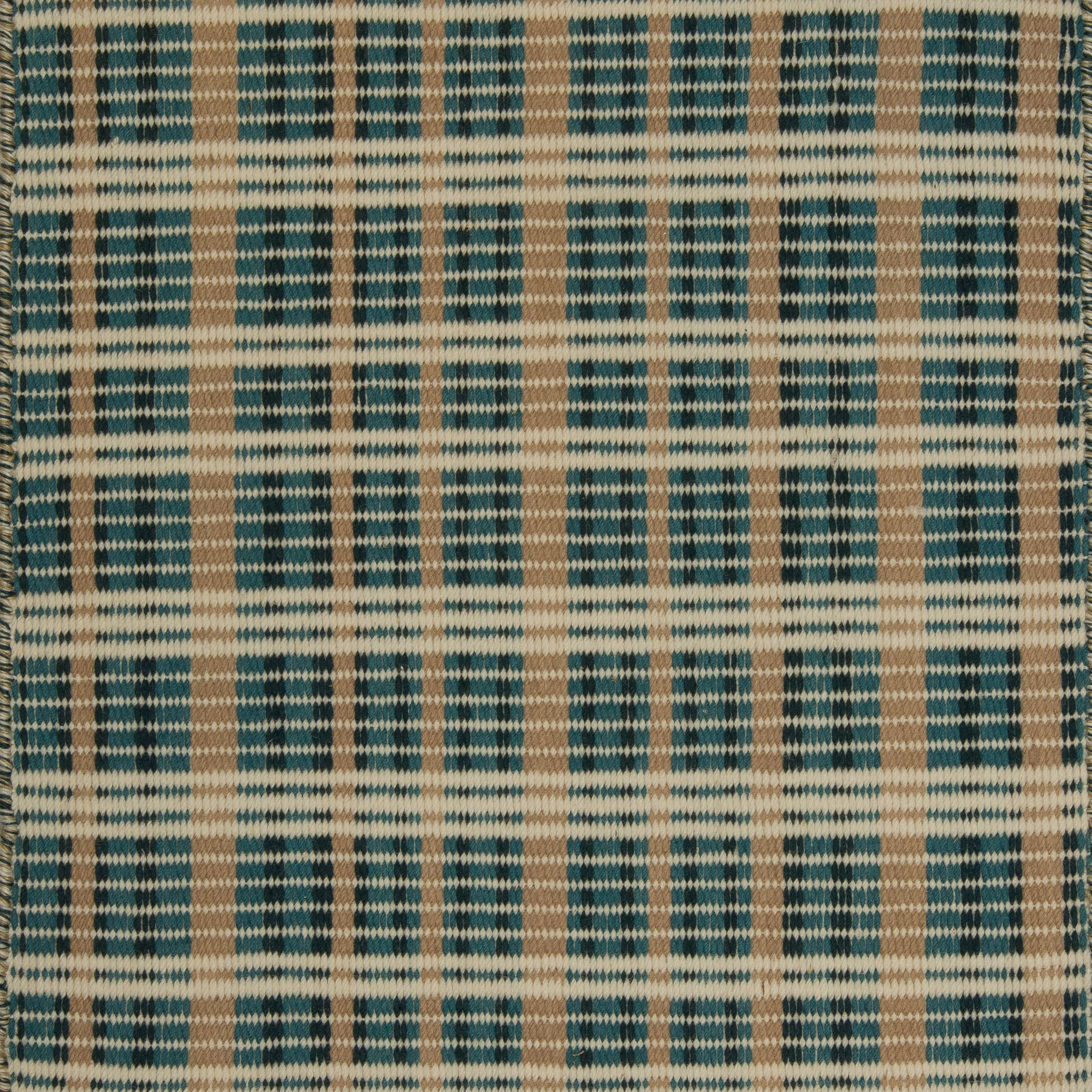
Silk rugs behave differently from wool, and that difference is exactly why designers specify them with care. Their surface can catch daylight, pull pattern forward, and shift the mood of a room from one hour to the next. For anyone considering custom rugs for a refined interior, silk offers precision rather than comfort in the casual sense: it can sharpen architecture, flatter palette choices, and add a controlled glow where the room needs definition. Used well, it becomes less of a decorative luxury and more of a spatial instrument.
Silk reads as luminous because its fibers reflect light along a smoother, more continuous surface than wool. Wool diffuses light, which softens outlines and tends to hide small irregularities in weave; silk does the opposite, making detail more legible and sometimes more unforgiving. In a hand-knotted rug, that change in reflection can make borders appear crisper, medallions more dimensional, and negative space more intentional. This is one reason silk is often chosen when the design brief calls for a rug that behaves almost like a fabric rendering of architecture.
The difference becomes even clearer in daylight. A silk field may appear cool and silvery in a north-facing room, then warmer and more saturated under late-afternoon sun. That shifting quality is not a defect; it is part of the material’s appeal, but it should be planned for rather than discovered by accident. When the room relies on steady color reading—say, to coordinate stone, upholstery, and painted millwork—silk can either support the palette beautifully or expose a mismatch that a matte fiber would have hidden.
Why silk reads differently from wool in daylight
The most useful way to think about silk is as a light-responsive surface, not just a fiber. Its luster can make a rug seem slightly lighter in value than its dye formula suggests, especially where pile direction changes or hand-knotting creates natural variation. Wool, by contrast, tends to hold color with a denser, more absorbent appearance, which is why many rooms use wool for grounding and silk for accent. On a practical level, this means silk is best specified when the room benefits from visual movement and a more formal register, while wool remains better for some of the heavy lifting in busy interiors.
That light response can also affect how a rug anchors furniture. In a seating arrangement with low upholstery and strong window exposure, a silk rug may create a subtle halo beneath the conversation area, helping the zone feel intentional without using a high-contrast border. In a more enclosed room, the same sheen may feel denser and more jewel-like, which can be useful if the design needs a sense of enclosure. Designers often test silk against both natural and artificial light because overhead fixtures, lamp placement, and even bulb temperature can alter whether the rug reads as luminous, pale, metallic, or simply reflective.
How sheen can sharpen or soften pattern
Silk is especially effective when pattern needs precision. Fine outlines, nested borders, and restrained geometric motifs can gain depth because sheen gives each transition between motif and ground a slightly different visual weight. In an elaborate pattern, however, too much gloss can make the design feel restless, particularly if the room already contains polished stone, lacquered furniture, or mirrored accents. The right balance depends on whether the rug should act as a focal point or as a quiet counterweight to other surfaces.
Sheen can also soften pattern when the viewer is at an angle rather than directly above it. That is one reason silk rugs often feel so nuanced in real rooms: the motif may be crisp from one doorway and subdued from a nearby sofa. This shift creates visual rhythm, but it can be distracting if the pattern is already very dense. For that reason, a cleaner layout, a more disciplined border, or a larger field of open ground may be preferable when the goal is sophisticated restraint rather than ornament for its own sake.
Pattern density matters as much as material. A silk rug with a small-scale allover motif can read elegant in a formal library, yet the same amount of detail in a narrow corridor may become visually busy once it begins catching light from multiple directions. In contrast, a broader motif with generous spacing can allow sheen to work as a highlight rather than a noise source. When specifying custom rugs, this is where drawings, room photos, and a clear sense of furniture placement become indispensable, because the same design can either calm or complicate the architecture depending on its scale.
Where silk is best used, and where it may be too delicate
Silk excels in rooms where the floor is meant to be viewed and experienced rather than heavily lived on. Formal living rooms, private studies, bedrooms, dressing areas, and low-traffic sitting rooms are all strong candidates, especially when the room composition depends on tone-on-tone layering or the interplay of light and shadow. In those settings, silk can reward careful placement by helping a rug read as part of the architecture instead of a separate object dropped into the room. It is particularly effective when the room has restrained furnishings and enough breathing room for the rug’s surface to be appreciated from multiple angles.
There are, however, many spaces where silk can be too delicate for the way the room is actually used. Family zones with frequent spills, entry halls with grit from shoes, and dining rooms where chairs move constantly are rarely ideal places for a fully silk construction unless the rug is designed with very careful expectations. That does not mean silk has no place there, but it may need to appear as a detail within a mixed-material piece rather than as the dominant fiber. In those situations, a hybrid approach often makes more sense, pairing silk highlights with a more resilient foundation so the visual effect remains luxurious without becoming fragile in practice.
Traffic level is only part of the calculation. The way furniture is used matters too: a rug under a reading chair may be fine with silk, while a rug under the front legs of a swivel seat that pivots all day will show wear faster. Pet claws, wheeled furniture, and frequent cleaning can all alter the surface more quickly than owners expect. If the room requires durability first and polish second, a custom rug with silk detailing rather than full silk content may offer the right compromise.
Placement, proportion, and the role of sheen in the room
Silk is rarely just a material choice; it is a composition choice. Because sheen can visually expand or contract the surface, proportion should be checked carefully against the furniture layout and sightlines. In a room with an oversized sectional, a silk rug that is too small may disappear under the glare of upholstery and windows, while one that extends properly beyond the seating group can create a more grounded field. The rug should support the architecture of the room, not merely decorate the center of it.
Light direction is equally important. A rug placed perpendicular to a bank of windows may reveal more contrast between pile directions, while a rug aligned differently may appear calmer. That can be useful if the goal is to zone an open-plan living area without adding physical barriers. In a larger room, silk can help mark a destination—a reading corner, a piano area, a formal conversation zone—because the surface itself becomes a subtle visual cue. For design teams working through custom-made rugs, this is where scale sketches and furniture plans do real work rather than serving as optional extras.
Silk also interacts strongly with neighboring materials. Against walnut, it can look cooler and more refined; against pale oak, it may feel more dramatic and contrast-driven; beside stone with a honed finish, it can create a useful dialogue between matte and reflective surfaces. These are not abstract effects. They determine whether a room feels crisp, hushed, sumptuous, or overdesigned. The most successful interiors usually keep one or two materials in a clearly reflective register and let the rest remain quietly absorbent so the room does not lose depth.
Rug sheen, rug patina, and how silk changes over time
One of silk’s most interesting qualities is the way it develops a lived surface without necessarily looking worn in a crude sense. What designers sometimes call rug patina is not simply aging; it is the accumulation of subtle directional changes, compression, and light behavior across the pile. In silk, that effect can be especially pronounced because the fiber shows movement so readily. A rug that begins with an exacting sheen may later read with more softness, which can be desirable in rooms meant to feel collected rather than pristine.
This is why silk needs to be specified with a long-term view. A rug that looks perfect in a showroom under controlled lighting may behave differently once it sits under pendant lights, near a glazed wall, or in a room where daylight shifts across the floor all day. The finish may mellow, the contrast may blur slightly, and the pattern may take on a more atmospheric quality. For many interiors, that change is not a problem at all; it is part of how the rug gains character. But it should be expected, not treated as a surprise.
Careful owners often think of silk less as a high-maintenance novelty and more as a material with a refined operating range. When that range is respected, the rug can remain beautiful for many years while still acquiring the kind of soft, nuanced presence that gives a room depth. This is one reason designers frequently weigh silk as part of a larger material strategy rather than in isolation. The right pairing of pile height, pattern, and placement allows the rug to age gracefully instead of looking simply tired.
Care and placement notes for silk rugs
Routine care matters, but it should be realistic. Regular vacuuming with a gentle setting, immediate attention to spills, and periodic rotation are basic measures that help preserve the surface. Heavy suction, aggressive brushing, and improvised spot cleaning can disturb the pile or alter the sheen unevenly. Because silk highlights any change in direction, maintenance should be approached as preservation of the surface’s visual balance rather than just removal of dirt.
Placement can reduce wear before it starts. Use silk where direct abrasion will be limited, and consider underlay or furniture protection where legs might leave marks. If the room gets intense sun, window treatments may help prevent uneven fading or unwanted contrast changes. In spaces where people tend to walk diagonally across the rug, the pattern may show paths more quickly; in those cases, a more structured layout or a mixed-material construction can be more practical than a pure silk field. The goal is not to avoid use, but to align use with the material’s strengths.
When the project calls for a very specific finish, many clients and designers turn to custom-made rugs so the material, scale, and visual handling can be tailored to the room rather than adjusted after the fact. That approach is especially valuable with silk, where the placement of a motif, the proportion of border to field, and the degree of sheen all affect how the room is read. Doris Leslie Blau often works with clients who need that level of specificity because the difference between a good silk rug and the right one can be as much about proportion as about beauty.
A practical example: when silk improves the room and when it doesn’t
Consider a neutral living room with tall windows, low seating, and a pair of lacquered side tables. A wool rug might feel too matte against so many smooth surfaces, while a fully glossy floor covering could become visually dominant. A silk rug with a restrained pattern could solve that problem by introducing enough light play to connect the elements without overwhelming them. The same rug, however, would be a poor choice for a media room where people move snacks, shoes, and blankets constantly; there the material would be asked to perform in a way that undermines its best qualities.
This is the design lesson silk teaches most clearly: a beautiful rug is not necessarily the rug that does everything. It is the rug that does one thing exceptionally well, in the right room, with the right support from architecture and furnishings. When that balance is achieved, the surface can look calm, dimensional, and quietly exacting rather than precious. That is why silk continues to matter in serious interior design: not as a shortcut to luxury, but as a disciplined way of shaping how a room receives light.
FAQ: Silk Rugs
Is silk always too fragile for homes?
No. Silk is not inherently impractical, but it is best used where traffic is controlled and care is consistent. Bedrooms, formal sitting rooms, private offices, and other lower-wear settings are often excellent candidates. In busier rooms, silk is usually better as an accent within a mixed-material rug rather than the only fiber.
Why does silk look different from one angle to another?
Silk reflects light in a directional way, so the pile can appear lighter, darker, or more saturated depending on where you stand and how the fibers lie. This angle shift is part of what gives the rug its depth. It can also make the same rug feel more formal or more subdued as daylight changes across the room.
How much maintenance does a silk rug need?
Silk rugs need attentive but manageable care: gentle vacuuming, prompt spill treatment, periodic rotation, and protection from excessive abrasion or harsh cleaning methods. They do not require constant intervention, but they do benefit from thoughtful placement and a realistic expectation of use. The more controlled the room, the easier the maintenance tends to be.
Can silk rugs work with custom rugs in larger rooms?
Yes, especially when the room needs sheen, pattern clarity, or a more refined focal point. In larger spaces, the key is proportion: the rug must be scaled to the furniture and the circulation around it so the sheen feels intentional rather than scattered. Custom sizing can make a significant difference in how silk performs visually.
For rooms where the floor covering must do more than fill space, silk can be a remarkably precise design choice. Doris Leslie Blau approaches that kind of specification with an eye toward light, proportion, and the realities of everyday use, helping clients choose the right material expression for the room they actually live in. If you are considering silk or other custom rugs, expert guidance can make the difference between a beautiful object and a truly resolved interior.