

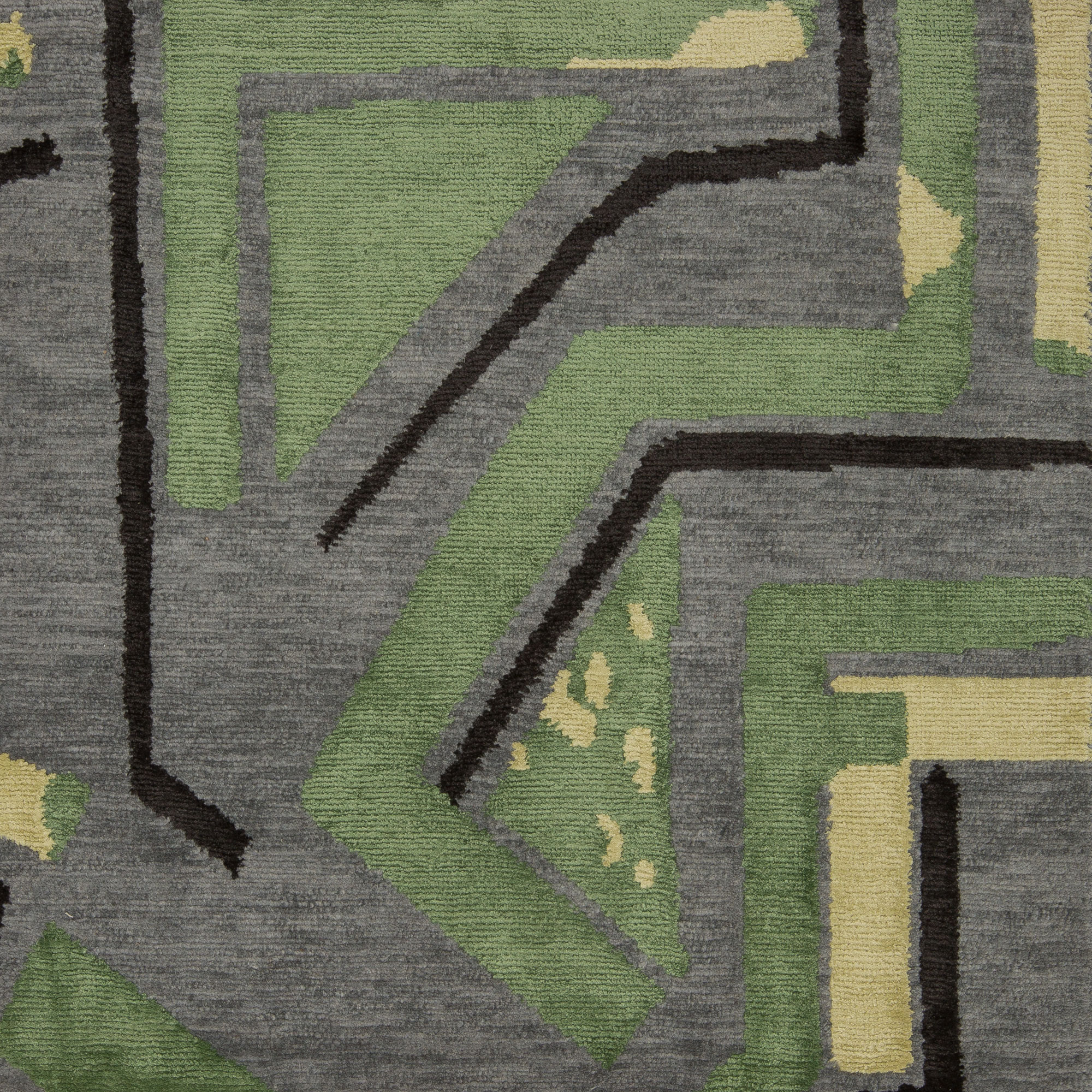
A foyer has a demanding job: it must welcome people, protect the floor, and establish the first visual note of the home without slowing movement or making the entrance feel compressed. The right custom rugs solve that balance by matching the architecture rather than fighting it. In a well-planned entry, proportion matters as much as pattern, and a rug that is too small or too dense can make even a generous hall feel awkward. The goal is not to fill the foyer; it is to edit it with precision.
Unlike living rooms or bedrooms, foyers rarely allow for casual sizing. Door swing, baseboards, sightlines, and the route to the stair or main corridor all influence what will work, which is why custom area rugs are often the most practical answer. A foyer rug should feel intentional from the threshold and still leave enough breathing room for coats, bags, wet shoes, and steady traffic. When it is scaled correctly, the entry appears composed before a single piece of furniture is considered.
That is especially true in homes where the foyer serves as a transition zone rather than a destination. Some entries are narrow and long, others are square and compact, and many open directly into a larger interior, where any rug immediately affects the whole spatial read. A good design decision starts with the path people actually take, not with the floorplan alone. The rug should guide movement, clarify the room’s footprint, and support the architecture in a way that feels quiet rather than overworked.
Measure the path from door to main circulation
The first measure is not the room’s total square footage but the usable travel path. From the front door, identify where someone naturally steps, pauses, turns, or moves toward the main circulation route, and map the rug to that sequence. If the entry door opens inward, the rug must stop short enough to avoid catching on the swing, while still covering enough surface to create a visual landing zone. In many homes, that means a carefully sized rectangle or oval that leaves a clean border of exposed floor around it.
For foyers with a direct line to a hallway, stair, or gallery wall, the rug should support that axis instead of competing with it. A runner in a narrow entry can work beautifully, but only when the width allows open floor on both sides and the length reaches the point where the traffic pattern begins to broaden. In a square foyer, the rug often benefits from being centered under the main pendant or chandelier so the eye reads the space as one complete composition. This is where scale and proportion become design tools rather than afterthoughts.
A practical example helps: imagine a compact vestibule that opens into a longer hall. A small mat near the door may seem safe, yet it can make the floor look chopped up and leave too much visible border to feel deliberate. A larger made-to-order piece, cut to fit the actual walking zone, creates a calmer entry and avoids the “floating postage stamp” effect that plagues many standard sizes. That adjustment is one of the clearest advantages of custom rugs, because the room stops dictating terms and starts responding to the architecture.
Decide whether the foyer should feel expansive or intimate
Not every foyer should read the same way. Some entries are meant to feel airy and open, allowing the eye to travel straight through to the rest of the house, while others should create a more intimate arrival, especially in older homes with lower ceilings or enclosed vestibules. The rug should reinforce that decision. A visually lighter weave, a restrained pattern field, and a generous border can help a small foyer feel less crowded, while a denser composition can add warmth and presence in a large but under-furnished entrance.
Pattern density is particularly important. A high-contrast allover motif may bring life to a plain entry, but if the foyer is already tight, it can amplify visual noise. In that case, a softer ground color with a controlled border or a subtle geometric layout often performs better because it frames the space without overpowering it. By contrast, a foyer with tall ceilings and strong architectural trim can handle richer ornament, especially when the rug echoes a detail in the millwork, mirror frame, or nearby stair rail.
Material also changes the feeling of scale. Wool with a low to medium pile tends to sit neatly in the room and offers enough structure for formal entries, while a more textured construction can make a spacious foyer feel grounded and inviting. Silk is usually best used with restraint in an entry because it can create a luminous effect but is less forgiving in high-traffic conditions. Many designers specify hand-knotted rugs for foyers because the construction supports crisp pattern definition and long-term use, both of which matter when the rug is expected to perform daily.
Select finishes that welcome dirt without looking utilitarian
An entryway must tolerate real life, yet a foyer should not look like a utility zone. The trick is choosing finishes that disguise everyday soil while preserving a refined surface. Medium-toned grounds, layered coloration, and heathered textures tend to handle dust and minor marks better than very pale solids or sharply contrasting light fields. The aim is not camouflage for its own sake; it is visual resilience that lets the foyer stay polished between cleanings.
Fiber choice matters here as well. Wool remains one of the most reliable options because it balances softness, resilience, and a naturally forgiving surface. A tightly woven custom rug with a low pile will usually hold its shape better than a lofty construction near a door, where moisture, grit, and frequent turning can flatten fibers unevenly. In homes with pets or heavy family traffic, the rug’s structure should be discussed as carefully as its color, because durability is part of the design brief, not an exception to it.
Color temperature deserves attention too. Warm neutrals can soften a stone or marble foyer, while cooler tones can sharpen a dark wood floor or echo a more modern interior palette. If the entry receives strong daylight, colors may read lighter and patterns may appear more pronounced; under warm artificial light, the same rug can feel deeper and more intimate. That is why sample evaluation in the actual foyer is so useful: a rug that looks balanced in a gallery or studio can behave differently once it sits under sconces, pendant lighting, or direct sun.
Coordinate the rug with console, mirror, and lighting
The foyer rarely consists of a rug alone. It is usually framed by a console, a mirror or artwork, and one or more light fixtures, which means the rug has to work as part of a vertical composition. If the console legs are delicate, a busier rug below can supply visual weight and keep the grouping from floating. If the furniture is substantial, the floor covering may need a quieter palette so the entry does not feel overloaded. Every object in the room should contribute to a single arrival sequence rather than competing for attention.
In square foyers, the relationship between chandelier and rug is particularly important. Centering the rug beneath the overhead fixture can give the space a stable core, but only if the furniture arrangement allows a proper border of open floor. In narrow halls, a long rug can draw the eye forward and make the pendant appear more balanced in relation to the room length. The best result often comes from aligning the rug with the console or door axis first, then checking how that alignment interacts with the light source and wall art.
Mirror scale should also inform the rug choice. A large mirror multiplies whatever sits below it, so a highly patterned rug can become more active than expected once reflected. Conversely, a calm rug can give a dramatic mirror or framed artwork a cleaner stage. This is where custom area rugs become especially useful, because the dimensions and visual density can be tuned to the furnishings already planned for the entry rather than forcing the rest of the room to adapt to an off-the-shelf size.
Choose shape with the architecture, not against it
Shape can solve problems that color alone cannot. Rectangles are the most straightforward choice for long foyers and hall-like entries because they respect the room’s flow, while ovals and rounds can soften an angular plan or ease the transition in a square vestibule. A round rug beneath a central chandelier can feel especially effective in a compact entry with symmetrical walls, since it interrupts hard edges and creates a clearer focal point. The form should be read as part of the floor plan, not as an isolated style decision.
In foyers with unusual wall jogs, shallow recesses, or double-door openings, a custom shape may be the difference between a well-fitted room and a compromised one. Standard rectangles often leave awkward slivers of exposed floor that make the arrangement feel accidental. A tailored outline can follow the usable zone more elegantly, whether that means a slightly narrowed rectangle, a shaped oval, or a piece sized to nest with adjacent thresholds. This architectural problem solving is one of the strongest arguments for custom rugs in entries with nonstandard proportions.
For homes that want a more collected look, antique-meets-modern styling can work beautifully in the foyer. An older-inspired pattern in a restrained palette can lend depth without making the entry feel formal in a heavy-handed way. In contrast, a cleaner contemporary pattern with disciplined spacing can quiet a richly detailed stair, paneled wall, or ornate console. The key is to let one element lead and let the rug support it with texture, scale, and clarity.
Practical specification points designers check before ordering
Before committing to a foyer rug, it helps to review a few technical details that often get overlooked in the excitement of choosing a pattern. These small decisions determine whether the piece feels seamless in daily use or perpetually slightly off. A designer will usually think through the following factors together rather than one by one, because they affect each other in practice.
- Door clearance: Confirm that the pile height and edge treatment will not interfere with the door swing.
- Traffic direction: Mark the main path so the rug supports movement from the threshold to the next room.
- Border space: Leave enough exposed floor around the rug to keep the entry from feeling crowded.
- Light exposure: Evaluate how daylight and evening lighting change the color and contrast.
- Maintenance level: Match fiber and construction to the actual use of the foyer, not an idealized one.
These checks are especially important when selecting entryway custom rugs for homes that see daily comings and goings, seasonal weather, or frequent entertaining. A foyer has to perform under pressure, but it also sets expectations for the rest of the house. When it is carefully specified, the rug looks like it was always meant to be there, and that sense of fit is what makes the entry feel composed.
For clients who are refining several rooms at once, the foyer can also become the anchor point for the broader flooring scheme. A corridor rug, stair landing, or adjacent salon may borrow from the same palette, texture family, or border logic, creating continuity without monotony. That is one reason designers often begin with the entry: it clarifies the home’s visual language and helps every next decision feel more resolved.
FAQ
How big should a foyer rug be?
A foyer rug should be sized to the usable walking area, not just the open floor in the room. Leave enough exposed floor around the perimeter so the entry feels intentional and the rug does not crowd the door swing, walls, or adjacent circulation. In many foyers, a custom size works best because it can match the exact transition zone from the threshold to the next room.
Should the rug stop before the door?
Yes, it should stop far enough before the door to avoid catching on the swing and to preserve a clean landing area at the threshold. The exact clearance depends on the door’s movement, the pile height, and whether there is a sill or hardware that projects into the space. A properly measured custom rug can be cut to respect that clearance without sacrificing coverage.
What shape works best in a square foyer?
Square foyers often work well with a round, oval, or carefully centered rectangular rug, depending on the architecture and furniture placement. A round or oval shape can soften the geometry and emphasize the central light fixture, while a rectangle can create a more structured, formal feel. The best choice depends on whether the room needs visual relief, symmetry, or a stronger directional cue.
Are custom area rugs better than standard sizes for entryways?
They usually are when the foyer has unusual dimensions, an awkward door swing, or specific furniture that needs to align with the floor covering. Standard sizes can work in straightforward rooms, but they often leave too much border or miss the circulation path. Custom area rugs allow the entry to feel tailored to the architecture instead of adjusted around a compromise.
When a foyer is treated with that level of care, it stops being a pass-through and becomes a confident introduction to the home. Doris Leslie Blau approaches entries with the same attention to proportion, material, and craftsmanship that serious interiors demand, whether the brief calls for a subtle foundation or a more expressive composition. If you are refining an entry and want expert guidance on scale, construction, or placement, a specialist consultation can help narrow the options with far more precision than size charts alone.