

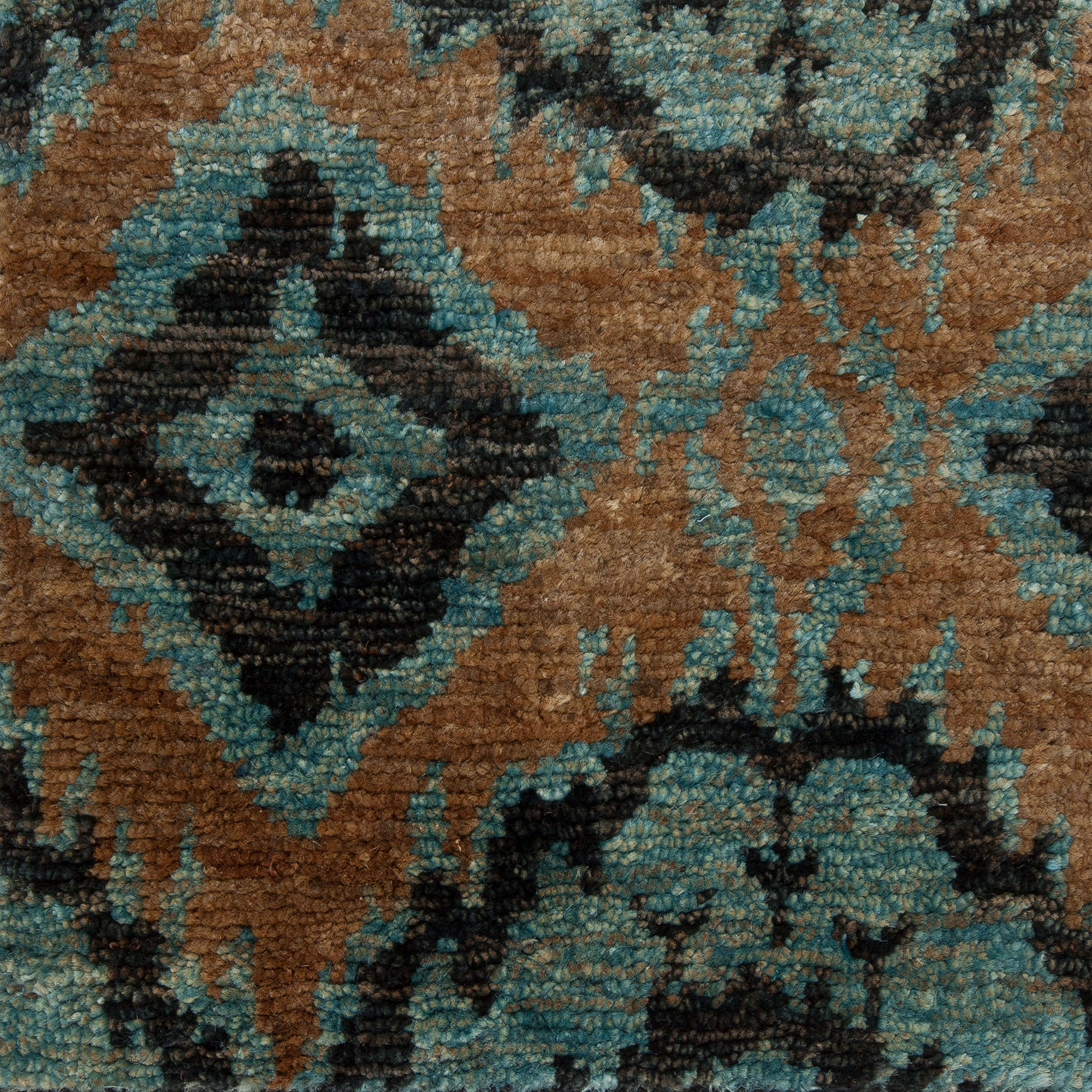
Even the finest furnishings can look unsettled when the rug is undersized, misaligned, or chosen without regard for the room’s architecture. With custom rugs, those problems are easier to solve because scale can be tailored to the layout instead of forcing the layout to adapt to a standard size. The result is not simply a bigger rug, but a room that reads as deliberate, balanced, and calm.
Rug size mistakes are often subtle, which is why they show up so clearly in expensive rooms. A space may have beautiful furniture, quality upholstery, and strong materials, yet still feel visually hesitant if the rug fails to support the plan. The eye notices edges, gaps, and awkward clearances before it notices fabric labels or craftsmanship. That is why proportion matters as much as pile, weave, or color. When the foundation is off, everything above it feels slightly unsettled.
Designers often treat the rug as the anchor that determines how a room is read from the doorway. If the anchor is too small, too narrow, or inconsistently placed, the furniture grouping looks temporary rather than intentional. This is especially true in large living rooms, primary bedrooms, and dining spaces where standard dimensions rarely match the architecture. In those cases, custom oversized rugs can resolve the mismatch without forcing compromises in furniture layout. The room becomes easier to furnish, not harder.
1. Choosing a rug that is too small for the seating plan
The most common rug size mistake is also the most damaging: the rug floats in the middle of the room and fails to connect the seating pieces around it. When only a coffee table sits on the rug, the sofas and chairs appear to hover outside the composition, which breaks the visual conversation between them. In an expensive room, that gap reads as a planning error rather than a stylistic choice. The furniture may be excellent, but the room does not feel grounded.
A better approach is to let the front legs of the main seating pieces sit comfortably on the rug, with enough border visible that the field still feels intentional. In larger rooms, all major seating pieces may need to rest fully on the rug to keep the arrangement from scattering. The right answer depends on the scale of the room, the depth of the sofa, and whether the plan is compact or open. If a standard size cannot achieve that relationship, custom area rugs solve the problem cleanly. The rug should connect the group, not merely occupy its center.
2. Leaving uneven borders that weaken the room edges
Uneven visible borders are another reason a room can feel off, even when the rug itself is beautiful. If one side leaves a generous band of floor while the opposite side nearly touches the wall, the composition looks accidental. This happens frequently when rugs are selected before final furniture placement or when the room is not measured from the actual architectural centerline. In asymmetrical rooms, the error becomes even more noticeable because the eye has fewer stable reference points.
The correction is not always symmetry for its own sake. Sometimes the room needs a deliberate offset to account for fireplace depth, circulation paths, or a window wall that pulls the eye in one direction. What matters is that the borders feel planned, not improvised. In practice, this means measuring the rug against the furniture grouping and the room envelope together, rather than treating each element separately. A well-sized rug creates even visual pressure around the seating area, which helps the room feel composed.
3. Ignoring threshold and circulation clearance
Rug size errors often begin at the edges of the room, where doors swing, walkways narrow, or transitions to adjacent spaces become awkward. A rug that lands too close to a doorway can catch visually and physically, especially in homes with heavy traffic or shallow clearance. Likewise, a rug that ends too early before a passage leaves the room looking segmented, as if the flooring stopped before the plan did. In luxury interiors, those interruptions are especially noticeable because the surfaces around them are usually highly considered.
Before specifying the rug, it helps to map the real movement pattern of the room. Where do people enter, pause, turn, or pass through? Which edges need to remain free for comfort and safety? This is where custom rugs are often the most practical choice, because the dimensions can be adjusted to honor circulation without shrinking the furnished zone. A rug should frame the experience of moving through the room, not complicate it.
4. Misjudging how much larger should a rug be than furniture
Many homeowners ask how much larger should a rug be than furniture, and the answer depends on the type of furniture arrangement, but the principle is consistent: the rug should extend beyond the group enough to make the composition feel unified. In a living room, that usually means the rug is larger than the main seating footprint on all relevant sides, not merely equal to the coffee table area. In a dining room, the rug should be generous enough that chairs remain on the rug even when they are pulled back. If the rug barely clears the table or slips under the sofa by an inch or two, the room can feel penny-pinched rather than polished.
The easiest way to avoid this mistake is to measure the furniture group first and then decide on the visual margin the room needs. A narrow margin may work in a compact urban apartment, while a grand room often needs more breathing room around the set. The size should account for the visual weight of the furniture, not just its outline on paper. This is one reason designers often favor made-to-order rugs for unusual layouts: the rug can be scaled to the actual group instead of to a standard inventory chart. When scale is right, the furniture feels intentional and the floor plane reads as part of the design.
5. Treating every room as if it needs the same border
One of the quieter rug size mistakes is applying a single rule across the entire house. A formal living room, a relaxed family den, a long gallery hall, and a primary bedroom each ask for a different relationship between rug and architecture. The same border that works in one setting may feel too tight or too loose in another. Repeating the same dimension simply because it was successful once can make a house feel less tailored, not more cohesive.
Instead, think in terms of function and visual density. A room with significant upholstery, drapery, and pattern may need a larger rug field to prevent the composition from becoming crowded. A quieter room with fewer pieces can sometimes tolerate a more restrained border, provided the rug still anchors the main route of movement. This is also where material matters: a dense wool rug with low pile can visually expand a room, while a heavier pattern or higher pile may require more generous dimensions to keep the floor from feeling compressed. Scale should follow the room’s content, not a template.
6. Underestimating the impact of unusual room shapes
Rectangular rugs are often forced into rooms that are not truly rectangular, and the mismatch shows immediately. Long bays, angled walls, wide openings, and L-shaped plans can make a standard rug look stranded or oddly centered. In these situations, the room is not asking for a decorative object; it is asking for a tailored ground plane. That is especially true in open-plan interiors, where one poorly scaled rug can make adjacent zones feel disconnected.
The correction may involve a custom oversized rug that follows the furniture cluster more than the room perimeter. In some cases, a slightly unconventional proportion works better than a standard rectangle because it respects the usable zone instead of the architectural shell. A dining area tucked into a larger room, for example, may need a rug that extends farther than expected to keep chairs from slipping beyond the edge. With custom rugs, the size can respond to the actual use of the space rather than to a catalog limit. That flexibility often determines whether the room feels expertly planned.
7. Ignoring how pile, pattern, and material change visual size
Size is never only about measurements on a tape. Pattern density, contrast, pile height, and material all affect how large a rug appears once it is installed. A very busy motif can make a rug read smaller than it is, especially in a room with strong architectural lines or dark furniture. By contrast, a restrained field with subtle movement can feel expansive because the eye travels across it without interruption. That is why rug proportion should be considered alongside surface character, not after it.
Material choice also changes the visual effect. Wool tends to offer clarity and structure, while silk or silk blends can introduce light reflection that softens edges. A thicker pile adds presence but can also make the rug feel more enclosed if the room is already full of volume and texture. For rooms where proportion is already tight, a flatter construction may help the floor plane read larger and more composed. The best correction is not always a larger rug; sometimes it is a smarter material decision paired with precise sizing.
How to correct these mistakes without overfurnishing the room
The fastest way to improve rug proportion is to assess the room from the furniture outward, not the wall inward. Start with the seating group, table, or dining set, then determine how much visual margin it needs to feel anchored. After that, check circulation paths, doorway clearances, and transitions to adjoining spaces. If the room still feels unsettled, look at border consistency and the visual weight of the rug’s pattern. These adjustments usually solve more problems than simply buying a larger rectangle at random.
For homeowners furnishing complex rooms, the smartest move is often to commission custom area rugs that answer the space directly. That approach is especially useful when standard dimensions fall between sizes, when a room has unusual architecture, or when furniture placement is fixed by sightlines and circulation. It also gives more control over fiber, border treatment, and pattern placement, all of which influence how the rug reads once installed. Doris Leslie Blau frequently works with clients who need that level of specificity because the difference between adequate and correct is often measured in inches, not feet.
Practical correction guide by room type
- Living rooms: Make sure the rug supports the full seating relationship, not just the coffee table. The front legs of major pieces should feel comfortably connected to the field.
- Dining rooms: Allow enough rug extension so chairs remain on the rug when pulled out. Tight edges create both visual and functional imbalance.
- Bedrooms: Keep the rug generous enough to reach beyond the bed and anchor the bedside zone. A rug that stops short of the nightstands can make the room feel unfinished.
- Open-plan spaces: Use the rug to define a zone clearly without slicing the room into fragments. The rug should organize circulation, not compete with it.
Why proportion errors are so noticeable in expensive rooms
Highly finished rooms have fewer distractions, which means proportion becomes more visible. Fine stone floors, custom millwork, and tailored upholstery can make a sizing error look sharper because the surrounding details are already disciplined. In a simpler room, a wrong rug may pass unnoticed; in a refined one, it feels like a lapse in judgment. That is why rug selection should be treated as part of the room’s architecture, not as a finishing accessory. When the rug is right, it quietly supports every other decision.
The best rooms rarely announce the rug; they simply seem settled. You feel where to stand, where to sit, and where the eye should rest. That clarity comes from scale, border control, and material choices working together. If a room feels expensive but slightly off, the problem is often not the furniture at all. It is the floor plan beneath it.
FAQ
What is the most common rug sizing mistake?
The most common mistake is choosing a rug that is too small for the furniture group. When the rug does not connect the main pieces, the room looks fragmented and the seating arrangement feels incomplete. In most cases, a larger or custom-sized rug solves the issue more effectively than rearranging the furniture.
Why do some rooms feel smaller after adding a rug?
Rooms can feel smaller when the rug has a busy pattern, a heavy pile, or borders that interrupt the floor plane. A rug that is too small can also compress the room by creating a tiny island in the center. Correct sizing and a material that suits the room’s light and traffic level usually restore a sense of openness.
Can one rug size work for different furniture layouts?
Sometimes, but only if the room dimensions and furniture groupings are very similar. In practice, different layouts often need different rug widths, lengths, or visual margins to feel balanced. That is why many designers prefer custom rugs when rooms are flexible, irregular, or likely to be rearranged over time.
How do I know if a rug should be larger or just more tailored?
If the rug fails because it does not reach enough of the seating or dining group, it probably needs to be larger. If the scale is close but the room still feels off because of odd borders, pattern density, or room shape, the solution may be a more tailored design rather than simply adding inches. Measuring the room and furniture together is the most reliable way to decide.
When proportion is the priority, the rug stops being guesswork and starts functioning as part of the room’s structure. If you are refining a difficult layout or considering a made-to-order piece, Doris Leslie Blau can help you evaluate scale, material, and placement with a more exacting eye. The right guidance often turns a good room into one that feels complete from the floor up.