

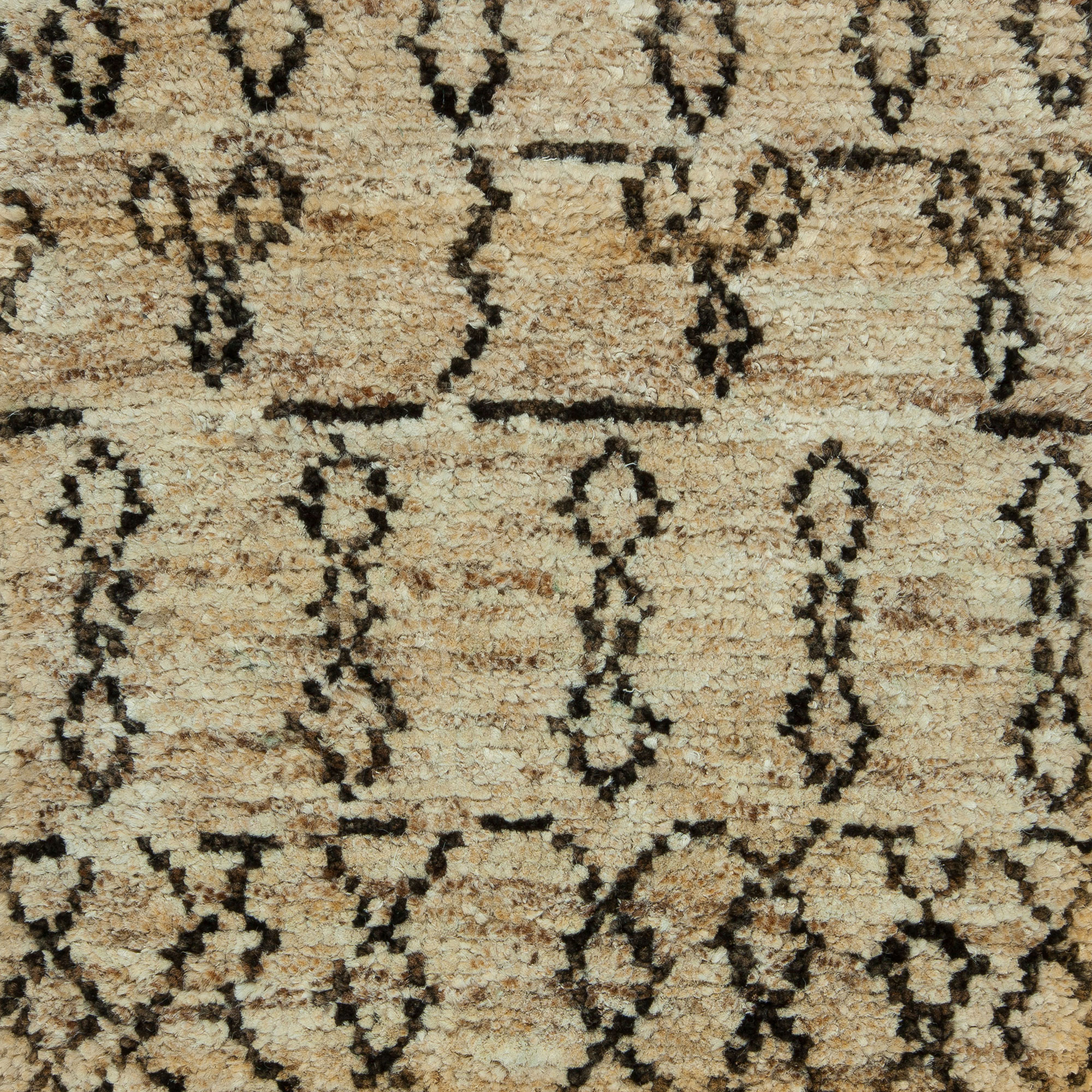
An entryway has a short script and high expectations: it must absorb dirt, set a tone, and survive constant movement without looking tired. Well-chosen custom rugs do all three by aligning scale, material, and pattern with the realities of the foyer rather than treating it like a decorative afterthought. For a home that sees deliveries, guests, children, and daily departures, the right rug is less about softness underfoot and more about control—of traffic flow, visual balance, and maintenance.
The foyer is the one room that rarely gets a second chance. A rug placed here is judged immediately, often before anyone notices the architecture or the furniture, which is why entryway custom rugs need a sharper brief than bedroom or living room pieces. They must work with door swings, threshold transitions, ceiling height, and the line of sight from the front door into the rest of the home. If the rug is too small, the entry feels accidental; if it is too delicate, it begins to look worn before the season changes. Doris Leslie Blau often approaches these pieces as practical design elements first and decorative surfaces second.
That distinction matters because foyer rugs are asked to manage conditions other rooms never see. They collect grit from shoes, face slush and moisture, and sit directly in the path of repeated turning, stopping, and pivoting. In that setting, rug durability is not an abstract feature; it is a direct consequence of fiber choice, pile height, weave structure, and how much of the floor the rug is allowed to cover. A successful entry rug is one that looks composed even when life is not.
Size the rug around doors, sightlines, and traffic flow
The first decision is not pattern or color, but footprint. An entry rug should respond to the width of the hall, the swing of the door, and the natural path a person takes from outside to inside. In a narrow foyer, a runner that leaves a clean border on both sides often feels more intentional than a small centered rectangle, because it visually lengthens the space and guides movement. In a square entry, the rug should be large enough to anchor the arrival zone without crowding the baseboards or competing with adjoining rooms.
Clearance around the door is non-negotiable. If a rug brushes the door, it will curl, wear unevenly, and undermine the clean opening and closing action that makes an entry feel calm. The same principle applies to console tables, umbrella stands, and coat storage: the rug should support the arrangement rather than be pinched beneath it. A useful rule is to think in terms of breathing room, not just coverage. Leaving visible floor at the perimeter can sharpen the composition, but too much exposed floor makes the rug feel undersized and temporary.
Consider the sightline from the front door into the next room. If the entry opens directly into a living space, the foyer rug should act as a visual introduction, not a competing scene. A rug that aligns with the axis of the space creates order instantly, while one placed off-center can make an otherwise elegant hall feel improvised. When the entry is unusually long, a larger format can also help prevent the “runway” effect, where the floor reads as a corridor rather than a deliberate threshold. The right proportion does more for the room than an ornate motif ever could.
Choose construction that handles dirt and wear
Materials and construction determine whether a rug can stand up to real entryway use. Wool remains a strong choice because it naturally resists crushing, has enough body to hide minor soiling, and holds pattern clearly over time. Low-pile hand-knotted rugs are especially effective in foyers because they offer enough texture to feel substantial without creating a surface that catches on shoes or traps debris in long fibers. For homes with heavy traffic, a denser weave usually outperforms a lofty hand-tufted construction, even when the latter looks plush at installation.
Fiber blend matters as much as fiber type. A rug with too much sheen may reveal every scuff in bright daylight, while one with a very matte surface can disguise wear but lose definition in a dim entry. Silk is beautiful for refinement and detail, but in a true threshold space it is usually best reserved for restrained accents or areas where footfall is lower. Natural fibers with a controlled pile height often offer the best balance of composure and maintenance, especially when the entry receives seasonal moisture and daily abrasion. Rug durability in this context is not about indestructibility; it is about graceful aging.
Backing and edge finishing also deserve attention. A well-executed border helps a rug retain its shape at the points where traffic pressure is highest, particularly near the door and along the most common walking line. Hand-bound edges, reinforced selvedges, and a stable foundation reduce the chance that the rug will ripple or telegraph wear unevenly. For households that want a more tailored result, the advantage of working with custom rugs is that the construction can be aligned with the entry’s exact demands, from weave density to proportion to border treatment.
Use pattern to make a compact entry feel deliberate
Pattern is especially useful in a foyer because it can manage scale, conceal the inevitable traces of traffic, and create a composed first impression without adding clutter. Dense, all-over motifs are often effective in high-use entries because they break up the visual field and mask minor marks between cleanings. That does not mean the pattern needs to be loud. A disciplined geometric, a finely drawn floral, or a softly variegated field can give a compact entry more presence than a highly saturated design, especially when the surrounding architecture is already active.
Pattern density should be matched to the architecture. In a house with paneled walls, prominent millwork, or a highly articulated staircase, a quieter rug often feels more appropriate because the room already has visual rhythm. In a spare apartment foyer with plain walls and simple trim, a stronger motif may supply the structure the architecture lacks. The goal is not to conceal the room but to give it a readable order. A good entry rug should make a narrow or awkward space look planned, not busy.
Color works the same way. Mid-tones tend to be the most forgiving in foyers because they balance stain concealment with visual clarity; very pale rugs can look elegant but require stricter care, while very dark rugs can show dust and lint. Warm neutrals, muted blues, tobacco, olive, and softened reds are often useful in homes where the entry opens onto a broader palette. If the adjoining rooms are relatively calm, the rug can provide a slightly richer note at the threshold; if the rest of the house already carries strong color, a quieter field helps the entry feel composed rather than argumentative.
Coordinate with console tables and lighting
Entry rugs do their best work when they are considered alongside the furniture and lighting that frame them. A console table should feel anchored by the rug, not stranded on the floor beside it, and the visual weight of the table should be proportional to the rug’s width. In a long foyer, a narrow console paired with a runner can establish a steady rhythm that prevents the hall from reading as blank circulation space. In a wider vestibule, a larger rug beneath or in front of the console can define the arrival zone and make room for a lamp, mirror, or bowl without feeling crowded.
Lighting changes how a rug reads at the front door. Strong daylight can flatten subtle texture, while evening lighting can enrich color and emphasize pile variation. That means the entry rug should be selected with real conditions in mind, not under ideal showroom lighting. If the foyer is lit from above by a pendant or chandelier, pattern clarity becomes more important because the rug may be seen from a height and at an angle. If wall sconces or a lamp create pools of warmth, a more nuanced weave or border can be appreciated from closer range.
For homes that use the entry as both a practical checkpoint and a designed moment, the composition should feel resolved from several distances. Seen from outside, the rug should read as part of the architecture. Seen from the console, it should support the furniture without competing. Seen in motion, it should guide the body naturally into the home. That is where custom-made rugs excel: they can be adjusted to the room’s proportions, the placement of a table or mirror, and the traffic pattern that a standard size rarely accommodates cleanly.
Practical design cues for foyers that work hard
- Choose a lower pile for easier door clearance and cleaner movement in and out.
- Favor dense weave structures that resist crushing in the main traffic path.
- Let the rug extend enough to define the entry, but not so far that it interrupts adjacent rooms.
- Use mid-tone color or layered pattern if the space must hide daily soil and wear.
- Match the rug’s visual scale to the console, mirror, or lighting plan rather than treating each piece separately.
A useful real-world scenario is a townhouse entry that opens directly into a stair hall and a sitting room. In that case, a custom rug can be shaped to support the landing area, allow the front door to clear comfortably, and visually connect the hallway to the next space without crowding the base of the stairs. A stronger border may help the rug feel finished, while a restrained all-over motif can keep the entry from becoming visually noisy. The result is a foyer that appears intentional even when coats, boots, and bags are part of the daily picture.
Another common case is a small apartment vestibule where the challenge is not size alone but compression. Here, a carefully proportioned rug can prevent the entrance from feeling like a leftover patch of floor. A narrow format with a disciplined motif often reads better than an overdecorated piece that breaks the room into smaller fragments. When the rug is tuned to the architecture, the entry can feel calm rather than cramped, even when the footprint is modest.
Care choices that preserve the first impression
Even the best entry rug needs a maintenance plan. Regular vacuuming, prompt attention to moisture, and occasional rotation help preserve the field where footfall is heaviest. In high-traffic foyers, the most visible wear usually appears not across the entire surface but in defined paths: just inside the door, at the turn toward the main room, and in front of the console or bench. If those zones are watched closely, the rug will retain its clarity much longer. A thoughtfully chosen wool rug with stable construction can age with dignity, but only if care is consistent.
Preservation also includes environmental judgment. Direct sunlight can shift color over time, so the entry’s exposure should influence both palette and material selection. Moisture from weather, umbrellas, and wet shoes argues for surfaces that dry quickly and do not hold dampness in a deep pile. Where the foyer acts as the home’s dirt management zone, a more durable rug should be paired with sensible thresholds, mats, or seasonal habits that keep grit from cutting into the foundation. Good maintenance is not glamorous, but it is part of good design.
FAQ
Should an entry rug be low pile?
In most foyers, yes. A low-pile rug clears doors more easily, feels more stable underfoot, and tends to hold up better where shoes turn and stop. It also makes vacuuming simpler, which matters in a space that collects dust and debris quickly. A slightly more textured low pile can still feel rich without becoming cumbersome.
How large should a foyer rug be?
Large enough to define the arrival area, but never so large that it interferes with the door swing or crowds circulation. The right size depends on the width of the hall, the placement of furniture, and whether the entry opens directly into another room. A runner often suits long, narrow foyers, while a larger rectangle can work in square or landing-style entries.
What pattern hides wear best?
Patterns with moderate to high detail usually disguise wear most effectively because they break up the surface and reduce the visibility of small marks. Soft geometric repeats, all-over motifs, and subtly variegated designs are especially useful in high-traffic entries. Very sparse patterns can show soiling faster, especially in light colors.
Are foyer rugs different from living room rugs?
They should be, because the conditions are different. A foyer rug needs stronger rug durability, easier maintenance, and a more exact response to door movement and traffic flow. Living room rugs can often prioritize softness or scale in a way that entry rugs cannot. The entry is a working zone, so its rug has to perform like one.
When the entry has been measured with care and the material is matched to the way the house is used, a rug becomes more than surface decoration. It organizes arrival, absorbs the first demands of the day, and sets a quiet standard for the rooms that follow. For guidance on custom rug design, material selection, or a foyer that needs a more precise fit, Doris Leslie Blau can help shape a solution that feels considered from the threshold inward.