

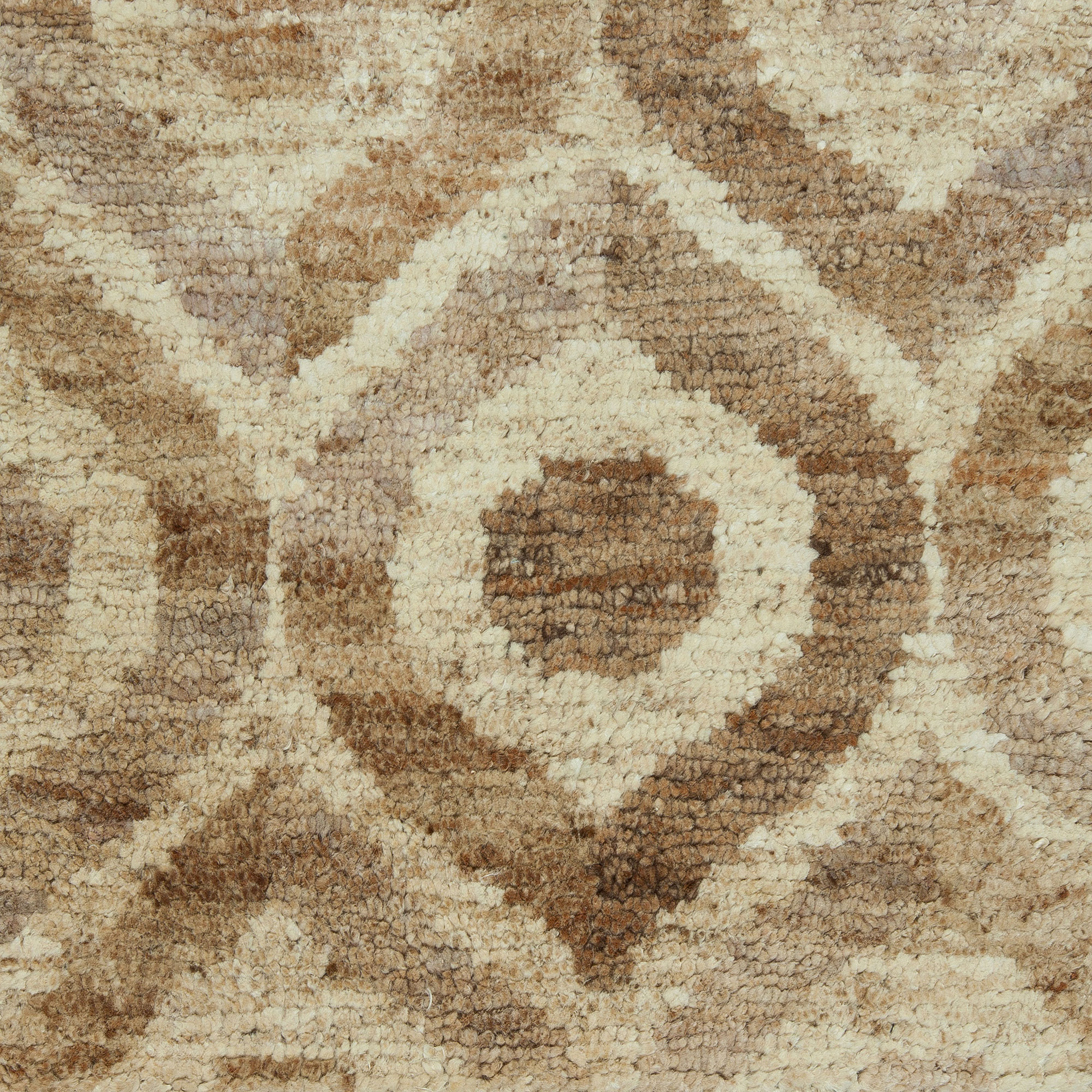
Ordering custom rugs should feel precise, not improvised. The most successful commissions begin with a brief that tells the studio what the room needs to do, how the rug should sit in the architecture, and what kind of visual weight it should carry once the furniture is in place. When those details are clear, the design conversation becomes much more efficient and the final piece is far less likely to miss on scale, color temperature, or pattern density.
Many clients assume a good moodboard is enough, but a rug brief has to translate inspiration into measurable decisions. A gallery or studio needs to know whether the rug is meant to anchor a seating group, soften a long corridor, define zones in an open-plan interior, or hold its own beneath a more decorative scheme. That is where custom rugs succeed: they can be calibrated to the room rather than forced into it. The more specific the brief, the more accurately the studio can guide pile height, weave, edge finish, and pattern scale.
Think of the brief as a working document rather than a creative pitch. It should combine plan, palette, material expectations, and a short description of how the room is used day to day. A formal dining room with low daylight and frequent chair movement asks for different construction than a bedroom rug meant to feel quiet underfoot. If you give the studio those practical cues early, the first concept is more likely to land within the right range, which shortens the rug approval process and reduces unnecessary revisions.
Translate room plans into design requirements
The most useful rug brief starts with the room itself. A scaled floor plan, even a simple one, tells the studio where the rug must relate to walls, door swings, fireplace openings, built-ins, and furniture groupings. Without those dimensions, pattern ideas can be attractive but still fail at the most basic level: the rug may appear too narrow, too crowded, or incorrectly positioned under the furnishings. For custom area rugs, proportion is not a finishing detail; it is the design foundation.
Include the exact dimensions of the space and, if possible, the intended rug size or the dimensional range you are considering. In a seating area, note how far the front legs of sofas and chairs should sit on the rug, or whether you want all major pieces fully contained. In a bedroom, identify the foot-of-bed clearance and how much rug you want to show on either side. In a dining room, make sure the rug extends far enough for pulled-out chairs to remain fully on the field, since too small a rectangle can make the whole arrangement feel tense.
It helps to describe architecture as well as furniture. A rug in a room with strong moldings, stone flooring, or a central axis may need a quieter border or a more measured pattern repeat so it does not compete with the envelope. By contrast, an open-plan loft or a long gallery-like hallway may benefit from a more pronounced directional design that visually organizes circulation. This is one reason specialist guidance matters; a studio can read the room as a composition, not just as a container for a beautiful textile.
A simple way to organize the plan information
- Room dimensions and ceiling height
- Furniture layout with clear measurements
- Fixed elements such as fireplaces, doors, stairs, and built-ins
- Desired rug size or allowable size range
- Primary function of the room: entertaining, family use, sleeping, circulation, or zoning
Describe the visual job of the rug in the scheme
A rug can be a background support, a structural divider, or the main visual event. If that role is not stated clearly, the studio has to guess how bold the design should be, and that is where many briefs go off course. A room built around a sculptural sofa, expressive art, or a strong architectural shell may call for a rug that recedes in tone but provides richness through texture. Another room may need the opposite: a pattern with enough rhythm to set the tone for the entire interior.
When you explain the visual job, avoid vague words such as “dramatic” or “neutral” unless you define them. Dramatic might mean high-contrast color, oversized scale, or a dense border. Neutral might mean low saturation, a layered monochrome palette, or a restrained motif with a visible hand. If the project leans toward quiet luxury and restraint, say whether the aim is visual softness, tonal coherence, or a sense of depth without overt pattern. If it is more expressive, indicate whether the energy should come from geometry, color, or artisanal texture.
It also helps to explain what the rug must do at eye level. In a room with strong daylight, some colors can flatten or shift; in evening light, a silk detail may become much more pronounced. A studio can use that information to adjust sheen, contrast, and weave structure. This is especially relevant for handmade rugs, where the same motif can feel completely different depending on looped texture, cut pile, or the amount of abrasion the surface is expected to handle.
For interior designers, the best briefs often include one sentence about hierarchy. Is the rug meant to lead the room, support a statement chair, or bridge competing finishes? That single decision shapes everything from border width to motif density. A room with a lot of visual noise usually needs the rug to organize rather than add another layer of interruption. In a simpler room, a rug can carry more character without overwhelming the composition.
Provide references for texture, color, and edge finish
A strong moodboard to rug design process does not rely on pretty images alone. A useful board shows not only the aesthetic direction but also the material intelligence behind it. Include references for textile feel, surface depth, color temperature, and edge treatment so the gallery can distinguish between a rug that should read crisp and architectural versus one that should feel soft and atmospheric. These are different design languages, and they lead to different construction choices.
Color references should be precise about undertone. A beige that leans pink, mushroom, gray-green, or golden will behave differently beside walnut, oak, limestone, lacquer, or marble. The same is true for darker palettes, where a charcoal with blue undertones can feel elegant and cool while a brown-black can read warmer and more grounded. If you are working from fabric swatches or paint chips, include them together, not separately, so the studio can assess how the rug will sit against the surrounding materials.
Texture references are equally important. If the room already contains velvet, polished stone, and lacquer, the rug may need a more tactile surface to balance all that reflectivity. If the scheme is heavily textured elsewhere, the rug might be better as a flatter field with a controlled motif. The edge finish matters too. A border that is intentionally crisp can give a room structure, while a softer binding or hand-finished perimeter can reduce visual weight. These choices often seem minor until the rug is placed in the room, when they become central to the overall reading.
Do not overfill the board with unrelated inspiration. Five to ten highly relevant references are usually more useful than a large collage of competing ideas. One image may explain the pattern scale, another the color balance, and another the finish or sense of movement you want. If you need to narrow the direction further, ask the studio which references should lead and which should merely inform the composition. That is how a good gallery conversation becomes a design process rather than a guessing game.
What a practical reference set might include
- One or two room images showing the intended mood
- Fabric and paint references with clear undertones
- Close-ups of textures you want to echo or avoid
- Examples of border proportions, if edge finish matters
- Any antique, modern, or heritage rug collections that feel directionally relevant
If you are ordering through Doris Leslie Blau, a curated conversation can help separate decorative preference from construction reality, especially when comparing custom rugs against existing antique or contemporary pieces in a room. That distinction is often what turns a promising concept into a rug that actually works.
Set expectations for revisions and approval
The rug approval process is smoother when revision stages are discussed at the start. A good brief should state what you need to approve: scale drawings, color strike-offs, weave samples, border studies, or a full visual rendering. It should also define what aspects are fixed and what can still shift. For example, the overall motif may be set, while the border thickness or color depth remains open after sample review. That kind of clarity prevents the conversation from restarting at every stage.
Ask the studio how they present options and what they need from you to move forward decisively. Some clients approve best by comparing two tightly edited directions side by side, while others need one concept refined through texture and color samples. Either way, the brief should say who is making the final call and what that person values most: fidelity to the reference image, material performance, or exact coordination with the room. Without that guidance, approvals can stall because each participant is evaluating a different criterion.
It is also wise to define the threshold for acceptable variation. Handmade rugs naturally involve small differences in tone and hand character, which is part of their appeal, but the studio needs to know where precision is non-negotiable. If the rug has to align with millwork, a fireplace centerline, or a specific art placement, say so early. If the room is more relaxed, you may allow more visual softness in the final result. This is not about lowering standards; it is about distinguishing craftsmanship from error.
For projects with pets, children, frequent entertaining, or high foot traffic, approval should include a durability conversation as well as an aesthetic one. A beautiful sample is only useful if the construction suits the room’s actual use. Pile height, fiber choice, and surface density all affect how the rug will wear, clean, and age. If preservation is important, ask for care guidance alongside the concept review so the final selection supports the long-term life of the piece.
What to include in a rug brief before you contact the studio
A concise brief can be surprisingly complete if it covers the right information. The goal is not to write an essay; it is to give the studio enough structure to respond intelligently. A designer-grade brief usually includes room dimensions, furniture layout, preferred size range, design role, palette direction, texture goals, traffic level, and any constraints tied to architecture or maintenance. Once those pieces are in place, the conversation can focus on refinement instead of clarification.
- Room type and how it is used
- Scaled plan or accurate measurements
- Furniture positions and fixed architectural elements
- Color palette, material references, and preferred undertones
- Design references that explain pattern scale and mood
- Construction priorities such as pile height, weave, and edge finish
- Approval steps and who signs off at each stage
When the brief is well written, the studio can move quickly from general intent to a design that respects the room’s proportions and atmosphere. That is particularly valuable in bespoke carpets and made-to-order commissions, where every adjustment carries weight. A thoughtful brief protects the project from avoidable revisions and makes the collaboration feel more exacting, which is usually what clients want when they are investing in something meant to live with the architecture.
One realistic example: how a brief changes the outcome
Imagine a long living room with two facing sofas, a stone fireplace, and a pair of large windows that wash the floor with afternoon light. If the brief simply says “neutral rug,” the studio has very little to work with. But if the brief says the rug should quiet the stone, anchor the seating, and avoid competing with a strong coffee table, the direction becomes clearer. Add a note that the room feels cool in tone and needs softness underfoot, and the material conversation may shift toward wool with a subtle lustre rather than a highly reflective surface.
Now compare that with a library or study where the rug is supposed to add energy without looking heavy. The same gallery might recommend a denser pattern, a firmer weave, or a border that frames the furniture more decisively. In both cases, the room is not asking for “a nice rug”; it is asking for a specific visual and functional response. That is the level of detail that makes custom rug design effective in serious interiors.
Why precision matters before production begins
Once a concept is approved, changes become more consequential. That is why the early brief should anticipate the decisions that are hardest to reverse, such as size, orientation, palette direction, and construction character. The more exact the communication before production, the less likely you are to face a near-miss that looks good in isolation but wrong in the room. A rug can be beautifully made and still fail if it does not respect circulation, daylight, or the geometry of the furnishings.
For clients and designers alike, the best result usually comes from pairing inspiration with disciplined information. Mood gives the rug personality; measurements give it authority. Texture gives it tactility; the brief gives it clarity. When those parts are aligned, the studio can design with confidence and the final piece will feel as though it belongs to the room from the start.
FAQ
What should be included in a rug brief?
Include the room dimensions, furniture layout, intended rug size or size range, the role of the rug in the scheme, visual references, color undertones, texture preferences, and any practical requirements such as traffic, maintenance, or architectural constraints. If the project involves custom rugs, the studio will also benefit from notes on edge finish, pile height, and how precisely the rug must align with the room.
How much visual reference is enough?
Enough reference is usually less about quantity and more about clarity. A small set of focused images, swatches, and material cues is often more effective than a broad moodboard filled with mixed directions. If the references agree on scale, palette, and atmosphere, the studio can read them quickly and turn them into a coherent proposal.
How do I communicate a custom pattern clearly?
Describe the pattern in terms of scale, repeat, directionality, contrast, and how much movement you want the eye to feel across the surface. If possible, show a marked-up plan or reference image that explains whether the pattern should frame furniture, run lengthwise, or remain centered on the room’s axis. Clear pattern communication also helps the approval process because everyone can evaluate the same visual priorities.
Should I talk about durability in the first meeting?
Yes. Durability affects material, weave, and pile height, so it should be part of the brief from the beginning. A family room, dining room, or hospitality setting usually needs a different construction conversation than a low-traffic bedroom or formal sitting room. Early discussion protects both the look of the rug and its long-term performance.
For projects that call for precision, it is worth working with specialists who understand how rugs behave in real interiors, not just on presentation boards. Whether you are refining a brief for a gallery visit or shaping a concept for a bespoke commission, thoughtful guidance can save time and sharpen the result. Doris Leslie Blau can help translate room plans, references, and material priorities into a rug direction that feels specific, balanced, and ready for the architecture it will live in.