

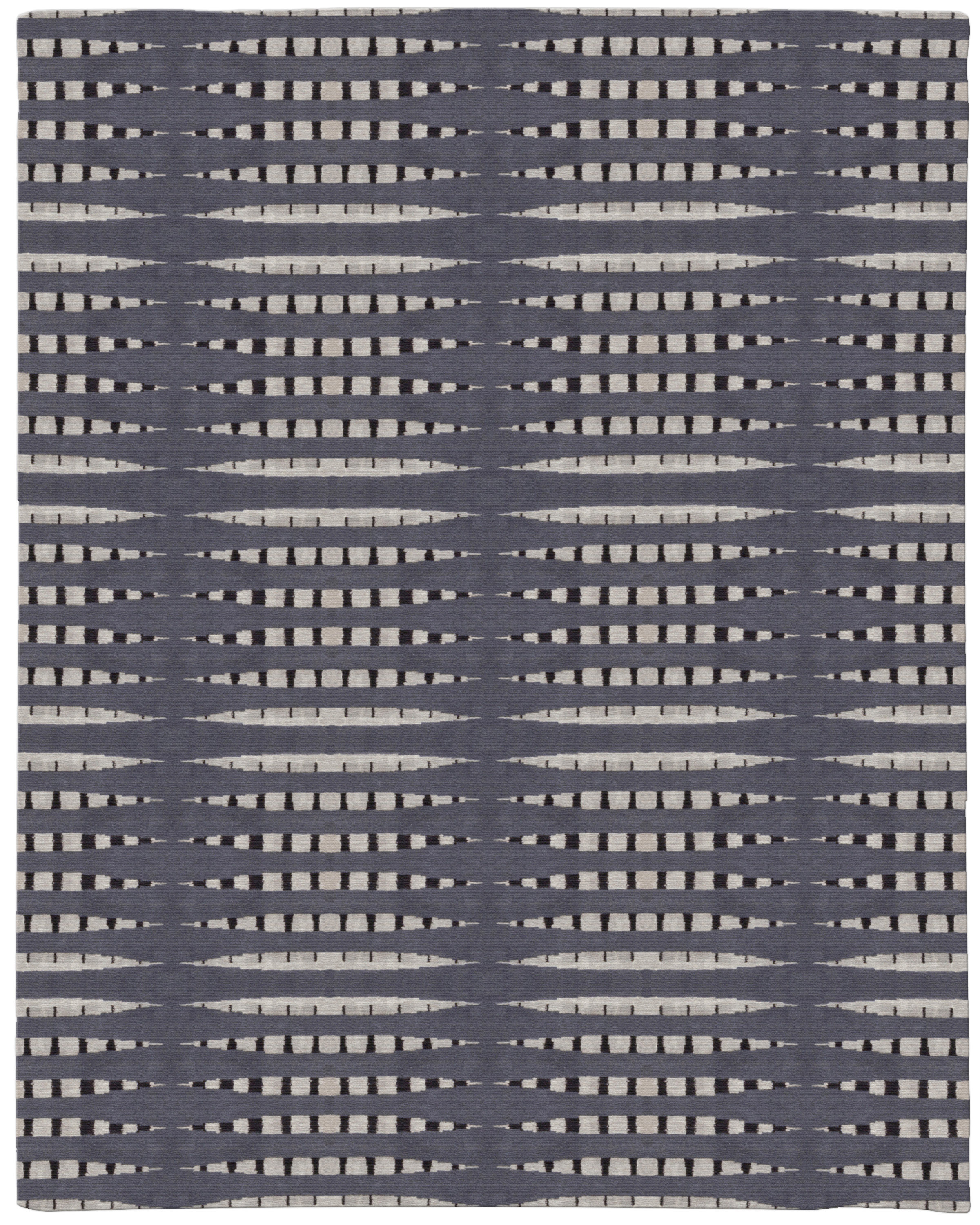
When clients compare custom rugs, pile height is one of the first details that quietly changes everything: how the rug feels underfoot, how clearly the pattern reads, how much maintenance it demands, and where it belongs in the plan of a room. A low pile can sharpen a pattern and handle heavier use; a high pile can bring softness and depth, but it also behaves differently in traffic and furniture layouts. Understanding rug pile height is less about choosing what sounds best and more about matching construction to the way a room is actually lived in.
In practical terms, pile height is the visible length of the fibers above the rug foundation. That measurement influences texture, visual weight, and even the way light sits on the surface. A cut pile with a shorter height tends to look more tailored and refined, while a taller pile creates a softer, more cushiony surface with a richer tactile impression. In custom rugs, pile height can be specified alongside fiber content, knot density, and weave structure, which makes it a design decision rather than a generic product characteristic. For interiors that need both precision and durability, pile height should be considered with the same care as size and palette.
Define pile height in clear terms
Pile height refers to the length of the yarn or fiber that stands above the backing of the rug. It is not the same as thickness overall, since construction methods, fiber type, and density all affect how substantial a rug feels. A low-pile rug may be tightly woven and slim, while a high-pile rug can appear visually fuller even if the structure beneath is not especially thick. In design conversations, it helps to separate pile height from softness, because the two are related but not interchangeable. Fiber quality, twist, finishing, and density all affect the final hand and recovery under use.
As a rough framework, low pile is usually chosen for a cleaner profile and easier movement of furniture, medium pile offers a balanced feel and a bit more surface presence, and high pile creates a more tactile, relaxed impression. The exact ranges vary by construction, so it is better to think in relative terms than in rigid numbers. A dense low pile may feel firmer and more tailored than a loose medium pile, while a plush high pile may read luxurious but not necessarily structured. That is why rug texture should always be evaluated in relation to the room, not in isolation on a sample table.
Explain how pile affects pattern clarity and foot feel
Pile height has a direct impact on how pattern is perceived. On a low pile surface, borders, geometric motifs, and fine drawing tend to appear crisper because the light reflects more evenly across the plane. This is especially useful for rugs with detailed ornament, where the goal is to preserve line and definition rather than create softness through surface variation. High pile, by contrast, absorbs and diffuses light, which can blur small-scale motifs and make large forms feel more atmospheric. If the design depends on precision, lower pile is usually the stronger choice.
Underfoot, the difference is equally important. High pile generally feels more forgiving and padded, which many people associate with rug softness. Yet softness is not only a function of height; a finely spun wool rug with medium pile can feel more pleasant than a taller construction with a rougher fiber or a looser finish. Low pile often gives a firmer, more controlled step, which can be ideal when the room is meant to support movement, circulation, and frequent use. For homes where tactile comfort matters but the rug also needs to support a crisp design language, medium pile often provides the most versatile balance.
Match pile choice to room traffic and furniture
The right pile height depends heavily on how the room functions. In a living room with low coffee tables, lounge seating, and clear sightlines, a medium pile can provide comfort without interfering with table stability or making the room feel overstuffed. In a hallway, entry, or family room with constant movement, low pile is usually the more practical choice because it handles traffic better and keeps the floor plane visually calm. In a bedroom, where traffic is lighter and barefoot comfort matters more, a higher pile can be appealing if the construction still allows for a clean finish around the bed and casegoods.
Furniture layout matters as much as foot traffic. A high-pile rug can make chair legs sink slightly or catch when pulled across the surface, which is why it is rarely the first recommendation for dining rooms. Low pile works more smoothly under dining tables, desks, and any area where casters, chair glides, or repeated movement are part of daily use. For open-plan interiors, pile height also helps define zones: a lower, more tailored rug can support the architectural clarity of the room, while a higher pile can soften a private seating corner or reading area. The goal is not simply to choose the most durable surface, but to support proportion, circulation, and the intended sense of finish.
Consider a long living-and-dining room with walnut furniture, pale walls, and substantial daylight. If the dining side uses chairs that are frequently moved and the seating side needs warmth without visual clutter, a mixed approach may be best: a lower pile under the dining setting and a medium pile in the lounge zone, coordinated through construction and color rather than by forcing one surface to do every job. In a custom rug specification, that kind of nuance is often what makes the room feel composed instead of improvised. For homeowners and designers refining those decisions, the custom-made rugs process allows pile height to be balanced with size, fiber, and the exact use of the room.
Outline care and maintenance differences
Maintenance changes significantly with pile height. Low-pile rugs are generally easier to vacuum, quicker to spot clean, and less likely to trap dust deep within the surface. They also tend to show less compression from routine use, which helps them keep a neater appearance in rooms where chairs move often or people walk in and out with shoes on. Medium pile requires a little more attention, but it still offers a manageable balance between comfort and upkeep. High pile needs the most deliberate care, because debris can settle deeper and the surface may show directional marks or flattening in paths of frequent use.
Rug texture also affects how maintenance should be approached. Dense constructions may resist visible wear better, but they can also hold onto particles if the pile is especially tall or open. Delicate fibers, such as silk or silk-blend surfaces, often magnify the visual effect of pile height, which means they benefit from gentler handling and more careful placement away from heavy traffic. Wool is often favored because it offers resilience, pleasant hand, and good recovery, but even wool behaves differently depending on how the fibers are spun and trimmed. In other words, care is not just about fiber type; it is about the relationship between fiber, pile, and room use.
For owners who want a rug to retain its intended shape and finish, rotation, routine vacuuming, and prompt attention to spills matter more as pile height increases. Tall pile may show footprints, shading, and directional changes, especially in sunlight, which can be beautiful when expected and frustrating when not. Low pile is usually more forgiving in these respects, but it can still show soil and wear at the same pace if the material choice is wrong. That is why specification should consider the room’s maintenance habits honestly. A rug that looks ideal but asks for more care than the household will provide is rarely the right luxury solution.
Low, medium, and high pile: a practical comparison
- Low pile: Best for traffic, crisp pattern, easy chair movement, and rooms that need a cleaner architectural profile.
- Medium pile: Best for balanced comfort, versatile styling, and rooms that need both softness and structure.
- High pile: Best for plush feel, quiet surfaces, and lower-traffic areas where tactile richness is a priority.
That comparison is useful, but it should not be read as a fixed rulebook. A low-pile rug in an exceptional fiber can feel more luxurious than a high pile made from a less refined yarn. A medium pile with strong density can bridge the gap between performance and comfort in a way that suits many interiors. The most successful custom rug decisions usually come from looking at the room from multiple angles: how it is entered, where the furniture lands, how light falls across the floor, and how much visual emphasis the rug should carry. When those variables are clear, pile height becomes a tool rather than a compromise.
How pile height interacts with materials and craftsmanship
Construction changes the way pile height behaves. A hand-knotted rug with a low or medium pile can preserve pattern integrity with remarkable precision because the knot structure supports sharper drawing. A hand-tufted or more plush construction may create a softer surface faster, but the resulting texture can be less crisp depending on the density and finishing. In handcrafted work, finishing is crucial: clipping, washing, and shearing all influence how much the pile opens or tightens visually. This is why two rugs with the same nominal pile height may feel quite different in the same room.
Material choice also shapes the experience of rug softness and texture. Wool typically offers resilience, warmth, and a naturally forgiving hand, which makes it a dependable foundation for low, medium, and even some high-pile designs. Silk introduces luster and a more delicate touch, but its visual effect is especially sensitive to pile height because even slight changes in the surface catch the light. Blends can be useful when a design needs both sheen and stability, though the balance must be assessed carefully. The best custom rugs are rarely judged by one feature alone; they are specified as a system of pile, material, and structure working together.
Choosing pile height by room type
Bedrooms often suit medium to high pile because the sensory priority is comfort, not frictionless movement. In a primary bedroom with a generous bed footprint, a medium pile can feel substantial enough to frame the furniture without making the room difficult to clean or visually heavy. Living rooms are more variable and depend on the arrangement. If the layout is formal and the rug must anchor tailored upholstery, low to medium pile is often best; if the room is intended to feel relaxed and enveloping, a fuller surface may be appropriate. Dining rooms usually favor low pile because chair clearance and cleanup are more important than plushness.
Home offices, libraries, and studies also benefit from lower or medium pile because rolling chairs, desk bases, and focused sightlines require a surface that behaves predictably. In these rooms, pile height should support the furniture rather than compete with it. If the floor plan is expansive or unusually shaped, custom rug sizing guide principles matter as much as pile height, because proportion will determine whether the rug feels grounded or adrift. For interiors with strong architectural character, a more restrained pile can help the floor recede and let the materials in the room do the talking. That restraint is often what creates the most composed result.
What to remember before specifying a custom rug
Before choosing pile height, think about three questions: how the room is used, what furniture sits on the rug, and how much maintenance the household will realistically support. Then consider how much visual texture you want to introduce. Some rooms benefit from a subtle, low profile that lets pattern and proportion lead; others call for a more tactile surface that softens hard materials like stone, lacquer, or polished wood. There is no universal best pile height, only the best answer for the room’s function and the design intention behind it.
If you are evaluating custom rugs for a specific interior, it helps to review pile height alongside fiber, weave, and scale rather than as a stand-alone choice. A well-specified rug can sharpen a dining room, calm a large living space, or make a bedroom feel more intimate without sacrificing practicality. The most effective results come from treating the floor covering as part of the architecture of the room, not an afterthought. For tailored guidance, Doris Leslie Blau approaches each project with that level of design precision and material awareness.
FAQ
Is higher pile always softer?
No. Higher pile often feels plusher, but true softness depends on fiber quality, yarn twist, density, and finishing as much as on height. A dense medium-pile wool rug can feel more comfortable and refined than a looser high-pile construction. When evaluating rug softness, it is best to handle samples in person if possible and compare how the surface springs back after pressure.
What pile height is best for a dining room?
Low pile is usually the best choice for a dining room because it allows chairs to move more easily and keeps crumbs and spills from settling deeply into the surface. It also helps the rug sit more cleanly under the table, which matters for both stability and visual order. If the room is formal and highly used, a denser low pile will generally outperform a taller, softer surface.
Does low pile always wear better?
Not always. Low pile can be more practical in high-traffic areas, but wear also depends on fiber, density, weave, and how the rug is used. A poorly made low-pile rug may show damage faster than a well-crafted medium-pile rug. Durability comes from the full construction package, not height alone.
Can pile height change how a pattern looks?
Yes. Lower pile usually makes outlines, borders, and detailed motifs read more clearly, while taller pile softens edges and can make the design feel more atmospheric. This matters especially with fine geometric or traditional patterns, where visual precision is part of the appeal. If the pattern is central to the room, pile height should be chosen with that in mind.
For projects that require more than a standard solution, a thoughtful conversation about pile height can clarify the entire rug brief. If you are weighing comfort, traffic, and visual detail for a specific room, Doris Leslie Blau can help guide the choice with specialist insight and a deep understanding of custom rugs, materials, and craftsmanship.