

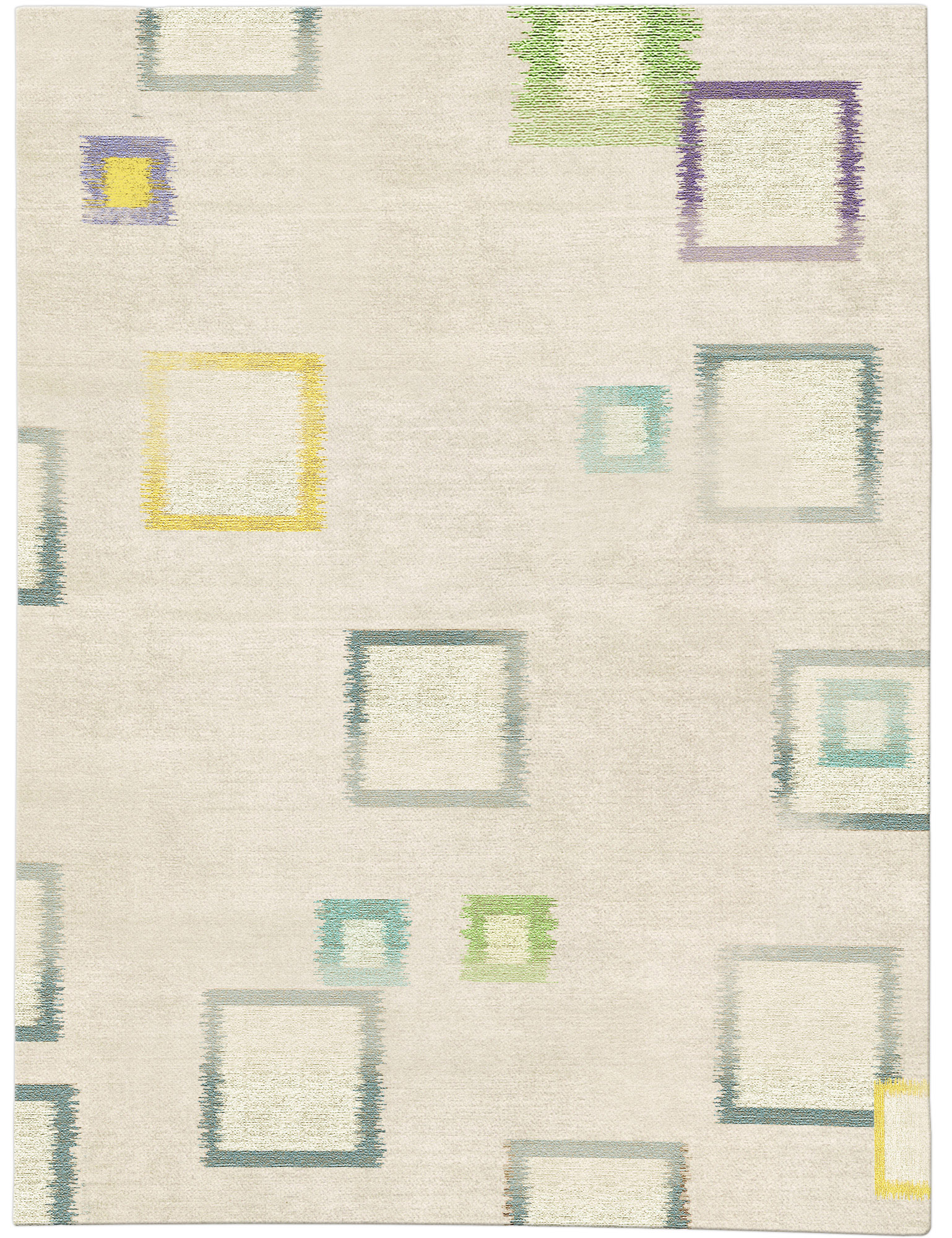
Antique rugs can bring depth, age, and visual memory to a modern room, but they only work when the rest of the space is edited with precision. The goal is not to make a contemporary interior look historic; it is to let the rug read as intentional against crisp architecture, restrained furniture, and a clear palette. With the right approach, custom rugs and antiques can both serve the same purpose: creating a room that feels composed rather than decorated by accident.
Many homeowners are drawn to antique rugs in modern rooms because they want character without clutter. A worn field, softened border, or faded dye can add the kind of complexity that new surfaces often lack, but those same qualities can disappear if the room is too busy. Modern architecture tends to amplify contrast, which is useful if the rug has strong pattern logic, but less forgiving if the piece is fragile, visually dense, or already reduced by age. The trick is to think like a designer specifying proportion, not like a collector trying to display every beautiful thing at once.
Balance patina with cleaner architectural elements
Antique rugs usually work best when the room around them is structurally calm. Clean-lined millwork, simple window treatments, flat-front case goods, and quiet upholstery give patina room to breathe. If the rug carries abrash, worn medallions, or a softened perimeter, the surrounding architecture should not compete with those nuances; it should frame them. That is especially important in open-plan interiors, where the rug may need to define a seating zone while still reading clearly from across the room.
One of the most common mistakes is pairing a highly decorative antique with equally ornate lighting, carved furniture, and layered art. The result is not richer; it is noisier. In transitional interiors, contrast should be deliberate, with one or two old-world notes balanced by larger surfaces that are visually quiet. If the architecture is already minimal, the rug can carry more pattern density, but if the room includes paneling, fluted details, or statement stone, the floor covering often needs a lighter hand.
Color temperature matters here as well. Warm wood floors can make faded reds, saffron, and tobacco tones feel grounded, while cooler concrete or pale oak often benefits from rugs with softened indigo, sand, or gray-washed fields. The clearer the architectural language, the easier it is for an antique to read as a focal point rather than a relic. This is one reason why designers often consider vintage-inspired custom rugs when they want age, but with a more controlled palette and a cleaner visual edge.
Choose furniture and art that support the rug rather than crowd it
A rug is not a backdrop if it has strong history, and modern furniture should respect that fact. Low-profile seating, simple leg lines, and modest upholstery texture help the floor covering stay visible, especially when the antique has a compact repeat or a border worth seeing. Chairs and sofas with visible clearance beneath them create air, which is useful because the eye needs negative space to process pattern. Without that breathing room, even a beautiful antique can appear compressed.
Scale is the first decision to get right. If the rug is small relative to the seating group, it will look like an afterthought; if it is oversized and highly patterned, it may overpower restrained furniture and flatten the room. In a living area, the front legs of the sofa and chairs should usually land on the rug, while a broader seating arrangement may require a more generous border of open floor around the group. In dining rooms, the rug must extend far enough beyond the table to keep pulled-out chairs on the textile, which is where a tailored approach often outperforms a found antique.
Art should also work in service of the rug’s visual rhythm. If the carpet is intricate, hang a few larger-scale pieces with more open composition rather than a dense salon wall. If the rug is faded and subtle, artwork can introduce sharper contrast, but only if the frames and placement do not create more fragmentation. A room feels intentional when the eye can move from one plane to the next without catching on competing details every few feet.
A practical example
Imagine a compact urban sitting room with white plaster walls, a tailored gray sofa, black steel shelving, and a late-19th-century Heriz with softened rust and navy. The rug can look striking if the coffee table is simple, the lamps are slender, and the art is limited to one large canvas instead of several smaller pieces. Add a textured throw or a patterned cushion, and the room shifts from edited to crowded. In this kind of setting, restraint does not mean coldness; it means allowing the antique to do the expressive work.
Use color repetition to unify old and new
Color is the most reliable bridge between antique and contemporary pieces. When a rug’s faded terracotta appears again in a leather chair, or a washed blue border is echoed in a ceramic lamp, the room begins to feel composed rather than assembled. Repetition does not have to be literal or heavy-handed. It can be subtle: a rug’s undertone repeated in oak cabinetry, a pale ivory motif carried into linen drapery, or a charcoal line picked up in a side table base.
In transitional interiors, the best palette strategies usually rely on a controlled range of three to five major tones. That does not mean the room has to be monochrome; it means each major surface should reinforce the others. If the antique rug contains many colors, choose the one that best suits the room’s light and use that hue several times in small but visible ways. A repeated note of madder, celadon, or indigo can stabilize a historic pattern and keep it from looking isolated on the floor.
Light exposure also changes how an antique reads. South-facing rooms can intensify warm dyes and make faded areas appear more intentional, while cooler north light can flatten color and make the rug feel older than it is. If the room receives strong daylight, the surrounding finishes should be slightly quieter so the textile does not compete with glare. In darker rooms, a more luminous palette or a rug with a brighter ground can help preserve clarity.
When custom is the smarter answer than a fragile antique
Not every room is suited to a true antique. If the space needs an unusual size, a precise runner length, a highly specific border proportion, or a palette that fits existing finishes, a custom-made piece may solve the problem more elegantly than forcing an antique to work. This is especially true in homes with expansive great rooms, narrow circulation paths, or architectural features that demand exact alignment. A tailored rug can capture the mood of age without the structural compromises that come with a fragile textile.
There are also practical reasons to consider custom rugs instead of relying on an antique that is too delicate for daily use. Households with pets, children, or frequent entertaining often need a rug that can handle traffic without feeling precious. In those settings, a hand-knotted reproduction or a design developed from historical references can offer the same visual weight, but with construction, size, and material choices adjusted to the room’s real demands. Wool may be the right answer for resilience; silk can be reserved for more formal low-traffic settings; and pile height can be tuned to keep ornate pattern legible without excess fragility.
Custom also becomes useful when the room needs a specific kind of silence. An antique may be too fragmented, too faded, or too active for a highly architectural room, even if it is beautiful on its own. A made-to-order carpet can borrow the language of antique pattern while reducing contrast, simplifying the field, or enlarging the motif so it reads more cleanly from a distance. For designers working within a strict scheme, that level of control is often more valuable than the romance of authenticity alone.
Material, construction, and wear: what matters most
If the rug will live in a modern room, construction should be evaluated as carefully as appearance. Hand-knotted rugs usually hold shape better over time, which matters when the piece must sit under furniture edges or anchor a large open plan. Fiber choice changes the visual effect too: wool gives body and clarity, while silk can add sheen but may be too reflective if the room already has glossy finishes, stone, or metal. A low-to-medium pile often reads more crisply in contemporary settings because it preserves pattern definition and keeps the rug from feeling plush in an overly traditional way.
Wear patterns should also be considered as part of the design, not as an afterthought. A gently abraded field can be compelling in a quiet room, but heavy edge loss or uneven thinning can throw off proportion and make furniture placement feel unstable. If the room uses a very clean architectural language, the rug should be in good enough condition to match that discipline. Otherwise the contrast between refined structure and obvious wear can become distracting instead of sophisticated.
For households that want the look of age without the maintenance burden, hand-knotted rugs made to spec can be particularly effective. They allow for decisions about binding, foundation, dye character, and finish that are hard to control in a one-of-a-kind antique. That makes them valuable in rooms where a historic reference is desired but the floor covering must still perform like a contemporary furnishing. In other words, the right rug should support the room’s architecture rather than forcing the architecture to accommodate the rug.
How to keep an antique rug from feeling dated
The most effective way to avoid a dated look is to avoid literal period styling around the rug. You do not need matching antiques, carved walnut, or heavy drapery to justify a historic textile. Instead, pair the rug with current silhouettes, edited surfaces, and a few tactile materials such as linen, bouclé, lacquer, matte plaster, or honed stone. This combination preserves freshness while still respecting the rug’s age and density.
Pattern scale also matters. If the carpet has a small, busy repeat, keep nearby fabrics more open and less micro-patterned. If the rug’s design is larger and more architectural, you can introduce broader stripes or textured solids elsewhere without creating visual friction. Think of the floor covering as one layer in a composition, not as a decorative theme that every other object must echo. That mindset keeps the room from looking overly curated or nostalgic.
Finally, give the eye a place to rest. In a room with an antique rug, this might mean a blank wall, a simple pendant, or a sofa in a disciplined neutral rather than another object with strong ornament. Modern rooms often benefit from this kind of restraint because it lets history read as depth rather than pastiche. The antique becomes a point of continuity, not a costume piece.
Design choices that help antique rugs read clearly
- Use larger, calmer furniture forms so the rug can remain visible from multiple angles.
- Repeat one or two rug colors in upholstery, art, or accessories to create continuity.
- Choose a rug size that respects the seating or dining layout instead of shrinking to fit a leftover zone.
- Let one material dominate the room, then use the rug to introduce contrast in texture or age.
- In high-use areas, consider custom rug design when the antique is too fragile or too small for the plan.
FAQ
How do I keep an antique rug from feeling dated?
Pair it with contemporary furniture, quiet wall finishes, and a restrained palette. The goal is to make the rug appear intentional within the room’s current architecture, not to surround it with equally historical pieces. Repeating one or two colors from the rug elsewhere in the space also helps it feel integrated rather than isolated.
Can modern furniture work with ornate pattern?
Yes, and often that contrast is what keeps the room balanced. Clean-lined sofas, simple tables, and minimal lighting give ornate pattern enough space to register clearly. The key is to avoid adding too many competing details at the same time.
When should I commission a custom rug instead?
Consider a made-to-order rug when the room needs an unusual size, when the antique you like is too delicate for the traffic level, or when the palette needs to be more controlled. Custom is also the better choice if you want the look of historical pattern with more predictable scale, fiber, and durability. For many modern rooms, that level of precision solves the design problem more cleanly than searching for the perfect antique.
Are vintage-inspired custom rugs a good alternative to antiques?
They can be, especially in transitional interiors where you want warmth and pattern without the uncertainty of age-related wear. A well-designed custom rug can borrow from antique structure while adapting the color, proportion, and finish to the room. That flexibility is useful when the rest of the interior is already highly specific.
Used thoughtfully, antique rugs bring gravity to modern rooms without making them feel heavy. If you are weighing age against practicality, Doris Leslie Blau can help you think through size, materials, and pattern direction with the eye of a specialist, whether the answer is a rare antique, a tailored hand-knotted piece, or another approach shaped to your architecture.