

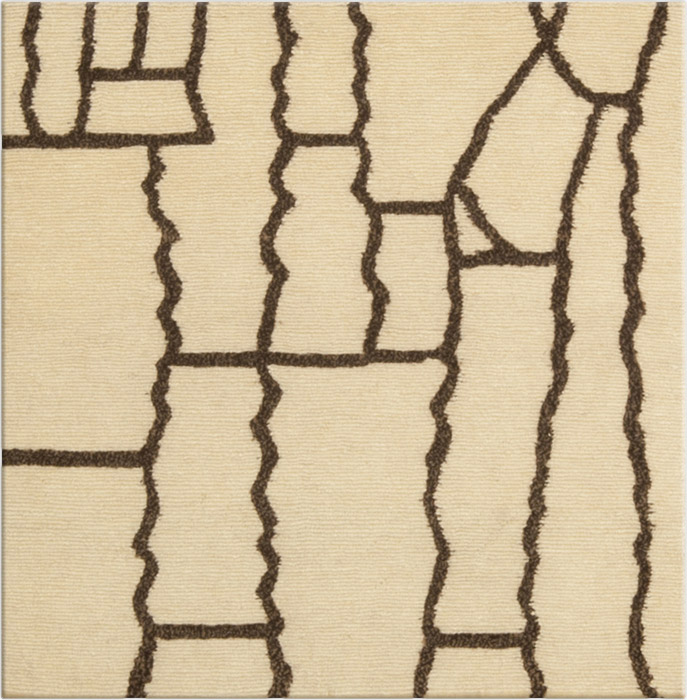
The entry sets the tone for a home before a guest reaches the living room, which is why custom rugs for foyers have to do two jobs at once: absorb the practical abuse of daily comings and goings while keeping the arrival sequence composed. In a compact hall, a rug can prevent the floor from feeling abruptly hard and echoing; in a larger foyer, it can organize a sequence of doors, consoles, and sightlines so the space feels intentional rather than leftover. The best entryway custom rugs are not chosen for decoration alone. They are specified for scale, construction, and the kind of wear a threshold actually sees.
That balance matters because foyers are not gentle rooms. Shoes track in grit, umbrellas drip, pets pause and pivot, and coats get shrugged off in the first few steps inside. A well-chosen rug has to protect the floor beneath it, reduce noise, and still look crisp after repeated use. When the material, pile height, and pattern density are chosen with that reality in mind, foyer rugs can perform like quiet architecture rather than a soft afterthought.
Size the rug around doors, sightlines, and traffic flow
Entry rugs fail most often when they are sized by instinct instead of by circulation. A foyer rug should sit far enough from swinging doors that it never catches at the threshold, and it should leave clear walking space so the entry reads as a passage rather than an obstacle course. If the foyer opens directly to a stair hall or a view into another room, the rug’s edges should support that axis instead of competing with it. In practice, that often means choosing a shape and footprint that echo the architecture: a runner for a narrow hall, a rectangular rug for a squared foyer, or an oval when the room has softer geometry and no hard corner needs emphasis.
Scale is especially important in homes where the entry serves multiple functions. If there is a console table, a bench, a mirror, and a pair of sconces, the rug should be broad enough to anchor the grouping without making the area feel crowded. Too small, and the furnishings look adrift; too large, and the floor loses its necessary breathing room. For foyers that open into an open-plan interior, a custom size can help define the entry as its own zone while preserving a seamless transition into the rest of the home. For precise proportions, many designers begin with a custom rugs consultation so the dimensions can be adapted to the room rather than the other way around.
One practical way to judge size is to map the movement path first and the furniture second. Stand at the front door and note where feet naturally land, where the eye travels, and where a door leaf swings. The rug should support that path, not force it to detour. If the front door opens inward, leave enough clearance so the rug does not sit in the sweep of the door; if a side door or closet door shares the space, account for that too. In a foyer, proportion is not abstract design theory. It is what keeps the room feeling calm every time someone walks through it.
Choose construction that handles dirt and wear
Rug durability begins with construction, and entryways are no place for delicate choices made only on appearance. Low-pile hand-knotted rugs are often a strong fit for foyers because they present a neat profile, allow doors to clear easily, and resist the crushed look that can appear in taller pile under constant foot traffic. A tighter weave tends to hold pattern definition better over time, which is useful in spaces that get seen several times a day. Wool is frequently favored for its resilience, natural soil resistance, and ability to look refined even when the room is busy.
Fiber choice should follow the way the foyer is used. A formal front hall with limited daily traffic may support a more textured or decorative surface, while a family entry with school bags, boots, and wet umbrellas benefits from a sturdier structure and a forgiving color range. Silk content can introduce luminosity, but in an entry it is usually best kept in moderation or reserved for accents, since the area’s wear pattern is less forgiving than that of a quieter room. Hand-knotted rugs offer a particularly useful combination of density and repairability, which matters in spaces where the goal is not just a polished look on day one, but long-term usefulness.
Backing and finish also affect performance, even though they are often overlooked in favor of pattern. A well-made rug should lie flat, stay stable underfoot, and be finished cleanly at the edges so the perimeter does not curl or fray with frequent use. If the foyer is prone to moisture or heavy grit, the rug should be easy to lift and maintain as part of a regular care routine. Good rug durability is not about making the surface indestructible; it is about matching the rug’s construction to the room’s actual demands so the piece ages with dignity instead of looking tired too soon.
What materials tend to work best?
- Wool: durable, resilient, and practical for daily traffic.
- Wool-silk blends: suitable when a touch of sheen is desired and the entry is not overly exposed.
- Natural fibers with tight construction: useful when the brief calls for texture and a grounded, informal character.
Use pattern to make a compact entry feel deliberate
Pattern is one of the most effective tools in a foyer because it can introduce order instantly. In a compact entry, a rug with controlled contrast helps define the room without requiring extra furniture or ornament. Smaller-scale geometric motifs, restrained medallions, and allover patterns with clear repetition can disguise everyday dust and scuffing while keeping the floor visually composed. If the entry receives strong natural light, pattern also helps manage the shifting way the surface is perceived throughout the day, softening the visibility of traffic marks that a plain field might reveal more quickly.
Color should be chosen with both the house and the season in mind. A pale rug can feel fresh in a formal entry, but it will register every trace of dirt more quickly than a mid-tone ground. Deeper neutrals, muted blues, tobacco, charcoal, and softened greens often offer better practical performance while still reading polished. In homes where the rest of the interior is relatively quiet, the foyer can carry a slightly more expressive pattern to establish identity at the threshold. In homes with already active finishes, the rug should be quieter, letting the architecture and furnishings lead.
The best entryway custom rugs rarely shout. They establish rhythm. That rhythm can come from a border that frames the room, a subtle abrash that adds depth, or a repeat that gives the eye enough structure to register the space as finished. In a small foyer, pattern can also help compensate for limited square footage by creating a sense of intentional containment. The room then feels designed, not improvised, which is exactly what a first impression should accomplish.
Coordinate with console tables and lighting
A foyer rug works best when it relates to the objects above and around it, not just to the floor plan. A console table should sit in conversation with the rug’s edges, either centered along a wall or offset in a way that feels deliberate. If the table is slender and architectural, the rug can be slightly more decorative; if the table is substantial or has a strong material presence, the rug should support it with enough visual weight. The goal is to avoid a tug-of-war between hard surfaces and textile pattern.
Lighting changes how rug color and texture read, so the entry scheme should be considered as a whole. Warm lamps and sconces can enrich wool and deepen muted tones, while cool daylight from sidelights may sharpen contrast and make pattern appear more graphic. If the foyer is dark, a rug with too much tiny detail may disappear, whereas a rug with clear motifs and a balanced field will still register when the light is low. In brighter entries, the same rug might reveal more subtle shifts in pile and weave, which can be desirable if the design brief calls for a layered, textural look.
When the furniture and lighting are aligned, the rug becomes the organizing plane that ties them together. This is especially useful in homes where the entry is narrow or underfurnished and risks feeling accidental. A carefully specified piece can make even a modest threshold feel architected, because it gives the eye a clear landing point and a sense of sequence. For designers working through rug scale, material, and placement, the most efficient path is often to pair the right construction with a measured layout rather than trying to solve everything through color alone.
Practical care considerations for high-traffic foyers
Even the best foyer rugs need a care plan. Entryways collect abrasive grit, and if it is left in the pile it will wear fibers down from the base over time. Regular vacuuming, prompt attention to moisture, and seasonal rotation where appropriate can make a meaningful difference in how the rug ages. In households with pets or children, a slightly more forgiving pattern and a tightly woven surface will usually be easier to maintain than a highly delicate composition. The idea is not to treat the rug as precious furniture, but to choose one whose beauty can survive ordinary life.
If the entry opens to exterior conditions, consider how the rug will perform through weather changes. Winter salt, spring mud, and summer humidity all affect maintenance, and the front hall should be designed with those shifts in mind. An entry rug that is easy to lift, clean, and inspect will be more useful over the long term than one that only looks ideal in a photograph. In that sense, rug durability is inseparable from design intelligence: the better the piece fits the room’s use pattern, the less maintenance feels like a compromise.
For homeowners comparing made-to-order options with stock sizes, the distinction is often most obvious in a foyer. A standard rug may work in a simple rectangle, but the margin for error is small when a door swing, stair turn, or console depth must all be accounted for at once. Custom-made rugs allow the proportions to match the room precisely, which can also reduce awkward gaps where dirt collects or sightlines break unexpectedly. That level of adjustment is especially valuable in older homes, where openings are rarely perfectly symmetrical and the charm of the architecture lies in those irregularities.
When custom sizing is worth it
Not every entry needs a bespoke solution, but many foyers benefit from one because the room is doing more than a typical hallway. If the space is unusually narrow, if doors are offset, if there is a visible transition from stone or wood flooring to another surface, or if the owner wants the rug to align with a console and mirror, custom sizing removes the guesswork. It also allows the designer to fine-tune the relationship between the rug and the room’s trim, which can be surprisingly important in a small space where a few inches alter the entire reading of the entry. A tailored piece can be discreet, but it will rarely feel generic.
Doris Leslie Blau often approaches foyer rugs as problem-solving objects first and decorative objects second, because that is how they earn their place at the threshold. The right piece can calm a busy entry, support the architecture, and hold up under daily use without looking overly utilitarian. When those conditions are balanced well, the foyer does not merely announce the rest of the home; it prepares the transition into it. That is where thoughtful specification pays off, especially for interiors that need both polish and endurance.
Frequently Asked Questions
Should an entry rug be low pile?
In most foyers, yes. A low-pile rug tends to handle door clearance better, collect less visible debris, and maintain a cleaner profile under frequent foot traffic. It also makes sense in a room where the rug needs to support circulation rather than feel plush underfoot.
How large should a foyer rug be?
The rug should be large enough to ground the main circulation path and any key furniture, but not so large that it blocks door swings or crowds the walls. In a small foyer, that may mean leaving more exposed floor than you would in a living room. In a larger entry, the rug can be scaled up to define the zone more fully, especially if the room includes a console table or bench.
What pattern hides wear best?
Patterns with moderate contrast, layered texture, or an allover repeat tend to disguise wear better than flat, solid fields. Small-scale geometry, softened medallions, and tonal patterning are often strong choices for foyers because they mask grit while still reading composed. Very high-contrast designs can be effective too, but they should be chosen carefully so scuffs do not stand out too sharply.
Are foyer rugs different from other custom rugs?
They often are, because the entry has a unique mix of foot traffic, dirt exposure, and door movement. A foyer rug usually needs to be more durable, lower profile, and more carefully sized around architecture than a rug in a quieter room. The design still matters, but function has to lead the specification.
For a foyer that needs the right balance of proportion, material, and resilience, specialist guidance can make the difference between a rug that simply fits and one that truly works. Doris Leslie Blau can help refine the right scale, construction, and design direction for a polished arrival experience that holds up day after day.