

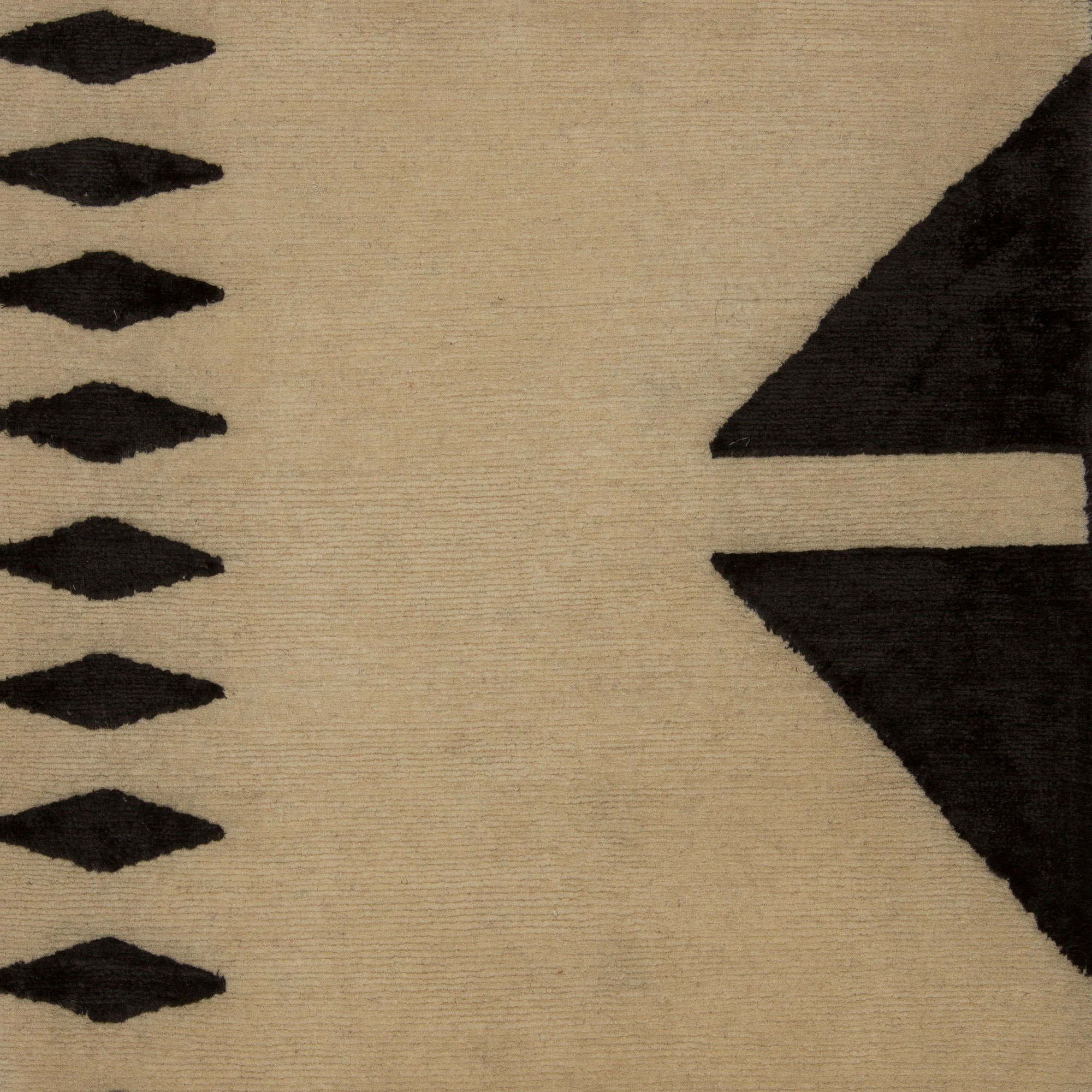
When people compare custom rugs, they usually focus on color, pattern, pile, and scale. Yet the layer you rarely see can shape almost everything you feel underfoot: how the rug settles, how it wears, how it responds to a chair leg, and how confidently it performs in a room. Understanding rug backing is less about technical jargon and more about making a better specification for the way a space actually lives.
For designers and homeowners alike, the visible face of a rug is only part of the story. The backing, foundation, and finishing details influence stability, flexibility, and the way a textile interacts with the floor beneath it. In a room with heavy furniture, strong daylight, or frequent foot traffic, those hidden choices can matter as much as the fiber itself. That is why Doris Leslie Blau often approaches rugs as complete objects, not just decorative surfaces, especially when working through made-to-order or gallery-selected pieces.
Define backing and its role in structure and stability
Rug backing is the construction layer or layers beneath the visible pile that help a rug keep its form and behave properly in use. In hand-made pieces, there may not be a separate “backing” in the synthetic sense, but there is still structure: warps, wefts, knots, foundation materials, and finishing that collectively determine the rug’s integrity. In machine-made and some tailored constructions, backing can include textile, latex, felt, or other stabilizing materials added after the face has been created. The important distinction is that backing is not an accessory; it is part of the rug’s engineering.
For a buyer evaluating custom rugs, the question is not whether the hidden layer exists, but what it is doing. A stable foundation keeps edges aligned, helps the rug lie flatter, and reduces the tendency for curling or distortion over time. It also affects how densely the pile sits, how the rug flexes when walked on, and how the entire piece handles tension when furniture is moved. In a well-made floor covering, the visible design and the concealed structure work together, which is why construction questions belong in the earliest stages of designer specification.
How backing affects feel, movement, and longevity
The first thing many people notice is hand-feel. A rug with a substantial backing can feel firmer and more grounded, while a lighter construction may drape more fluidly and show greater natural movement at the edges. Neither is inherently better; the right choice depends on the room, the pile, and the intended aesthetic. For example, a low-profile wool rug in a dining room may benefit from a stable foundation that keeps chair movement controlled, whereas a softer bedroom rug may be specified for a more cushioned underfoot experience.
Backing also influences how the rug behaves when weight is distributed unevenly. Under sofas, beds, and console tables, the hidden layer helps resist rippling and localized stress, especially along traffic paths where repeated compression is expected. That matters for rug durability, but durability is not only about toughness in the abstract. It is about whether the textile maintains its proportions, edge definition, and visual clarity after months or years of use in a specific setting. In other words, good construction preserves both performance and presentation.
There is also a practical relationship between backing and rug finishing. The quality of edge binding, serging, hem treatment, or fringe detailing can either reinforce the structure or reveal weakness along the perimeter. A carefully finished rug with well-resolved backing will sit more cleanly, resist fraying, and age with dignity. Poor finishing can make even a beautiful pattern look unsettled, especially in rooms with strong daylight where irregular edges and surface waviness become more noticeable.
Compatibility with floors and underlay needs
Backing should always be considered in relation to the floor beneath it. On hardwood, certain backings may need an underlay to prevent movement and protect the finish from abrasion. On stone or polished surfaces, the wrong construction can allow slippage or create uneven contact that telegraphs into the rug’s appearance. In carpet-over-carpet situations, low-profile or highly structured rugs often perform better than thick, cushioned ones, because the goal is usually visual order rather than extra loft.
Underlay is not only about safety. It can improve acoustics, support the rug’s edges, and make a thinner custom piece feel more substantial without changing the textile itself. For a library, hallway, or open-plan living room, that extra stability can be the difference between a rug that looks composed and one that drifts every time the room is used. Designers specifying custom-made rugs often think of underlay as part of the total system, not an afterthought added once the rug has already been selected.
Floor compatibility also affects maintenance. A rug that sits too tightly against a sensitive surface can trap dust, impede airflow, or create wear patterns in the wrong places. Conversely, a rug with the correct interface can be lifted, cleaned, and repositioned more predictably. For clients who value preservation, especially in rooms with antiques, polished finishes, or delicate millwork, the relationship between backing and floor should be resolved before the rug is fabricated or installed.
Trade considerations for different room types
In a dining room, the best backing is often one that supports controlled movement and keeps the rug visually disciplined under a table. Chair legs create repeated stress at the same points, so a construction that resists distortion is critical. Low-to-medium pile works particularly well here because the hidden structure has less textile bulk to manage, and the overall assembly can stay flatter. If the room has a patterned rug, keeping the edges crisp is just as important as resisting wear.
In a bedroom, the priorities shift toward comfort, quiet, and visual softness. Backing still matters, but the ideal solution may allow for a more tactile, relaxed surface that complements the room’s slower pace. Here, underlay can add a sense of generosity underfoot without forcing the rug to look overly thick or bulky. A designer planning a layered bedroom scheme may favor warmer fibers, subdued pattern density, and a construction that supports calm proportions rather than high-performance rigidity.
For hallways, entryways, and transitional spaces, the hidden layer must work harder. These are friction points where shoes, bags, pets, and directional traffic all create stress. A rug with weak structure can shift, buckle, or show edge wear quickly, even when the design itself is strong. In hospitality and commercial interiors, backing decisions become even more consequential because there is less tolerance for movement, less time for maintenance, and more need for consistent presentation across large spans of floor.
Open-plan rooms raise another set of questions because the rug is often used to define zones. Here, backing affects not just durability but also visual boundaries. A rug that lies perfectly flat can sharpen the transition between seating and circulation areas, while a less stable construction can blur the arrangement and weaken the intended architecture of the room. This is where scale and proportion intersect with material science: the right backing helps the rug function as a spatial anchor rather than a loose decorative field.
Material choice, pile height, and hidden construction
The face fiber and the backing should always be evaluated together. Wool, for example, has natural resilience and can handle a wide range of settings, but its performance changes depending on density, weave, and finish. Silk can create extraordinary surface detail and luminosity, yet it usually asks for more careful placement because the visible fiber is often chosen for refinement rather than rugged use. A rug’s hidden layer should support the chosen material honestly, not fight against its nature.
Pile height also changes the equation. A high-pile rug can feel luxurious, but if the foundation is not well resolved, the surface may appear less precise and more difficult to maintain. Low-pile and flatweave constructions often benefit from tighter structural control because there is less depth to disguise irregularities. For this reason, many designers use construction as part of the room’s visual language: a thick, plush rug for a quieter sitting room, a flatter, more technical build for a circulation space, and a balanced middle ground for most living areas.
Pattern matters as well. Dense motifs can disguise minor settling, while large-scale geometry or plain fields reveal every shift in alignment. If a rug is intended to sit beneath a low sofa profile or alongside architectural stonework, the hidden construction should reinforce straightness and proportion so the eye reads the composition cleanly. This is especially important in rooms that rely on restraint, where any waviness in the floor covering can interrupt the calm of the design.
What to ask when specifying a rug
Trade buyers, architects, and detail-oriented homeowners should ask direct questions about how the rug is built, not only what it looks like. Ask whether the piece is hand-knotted, hand-tufted, woven, or otherwise constructed, and ask how the foundation is stabilized at the edges. Ask whether underlay is recommended for the intended floor, whether the rug will sit under furniture, and how the construction responds to cleaning or rotation. Those answers are not just technicalities; they determine whether the rug will meet the needs of the room.
It is also wise to ask how the design will age. Some constructions are highly forgiving, while others require closer attention to light exposure, placement, and rotation. If a room receives direct sun, if pets will use the space, or if the rug will sit beneath heavy pieces, those facts should inform the specification from the start. A well-considered rug can still be beautiful in a demanding setting, but it has to be built for the context, not merely admired in isolation.
For clients comparing handmade rugs with tailored floor coverings, the best approach is usually to think in terms of use cases rather than categories alone. A rug that looks impeccable in a showroom may behave differently once it is placed in a family room, a long gallery hall, or a formal lounge with tight furnishings. That is where the experience of a specialist matters: translating material knowledge, room scale, and practical use into a specification that supports the design as a whole.
Why hidden construction matters as much as visible design
The most successful rugs do not ask the room to choose between beauty and function. They use hidden structure to support a visible design that feels settled, proportionate, and ready for daily life. Whether the goal is a tailored wool ground for a formal sitting room, a softer piece for a bedroom, or a technically sound solution for an unusually shaped space, backing and finishing shape the final result in ways that are easy to underestimate until something goes wrong. Once you know what to look for, the difference becomes obvious.
That is why serious rug selection often begins with questions about construction, not just color. In a luxury interior, the invisible parts of an object are not secondary; they are part of its quality. If you are evaluating custom rugs for a new project or refining an existing room, a conversation about backing, floor compatibility, and finishing can save time, protect the floor, and improve the long-term look of the space. Doris Leslie Blau’s gallery expertise is especially useful here, because the right guidance turns a beautiful textile into a dependable design decision.
FAQ
Does backing affect how a rug lies on the floor?
Yes. The backing influences flatness, edge stability, and how evenly the rug settles over the floor surface. A well-resolved construction helps prevent curling, rippling, and shifting, especially in rooms with active traffic or heavy furnishings. If the rug is underspecified for the space, those issues often show up quickly along the perimeter or in the center field.
Can backing influence durability?
Absolutely. Durability is shaped by the full construction, including the foundation, finishing, and how the rug is intended to be used. A stable backing can help a rug withstand repeated movement, furniture pressure, and routine cleaning with less distortion. It is one of the most important factors behind long-term performance, alongside fiber choice and pile density.
What should trade buyers ask about hidden construction?
Ask how the rug is made, what stabilizes the structure, whether an underlay is recommended, and how the rug will behave in the intended room. It is also worth asking about edge finishing, rotation needs, and any placement limitations related to sunlight or traffic. Those details help determine whether the rug is a good fit for the project rather than simply a good-looking sample.
Do all custom rugs need underlay?
Not always, but many benefit from it. Underlay can improve grip, support the rug’s structure, and protect certain floors from wear. The need depends on the rug’s construction, pile height, floor finish, and room use, so it should be considered as part of the overall specification rather than assumed by default.
For tailored guidance on materials, construction, and placement, a specialist conversation can be the most efficient way to move from concept to a rug that truly suits the room.