

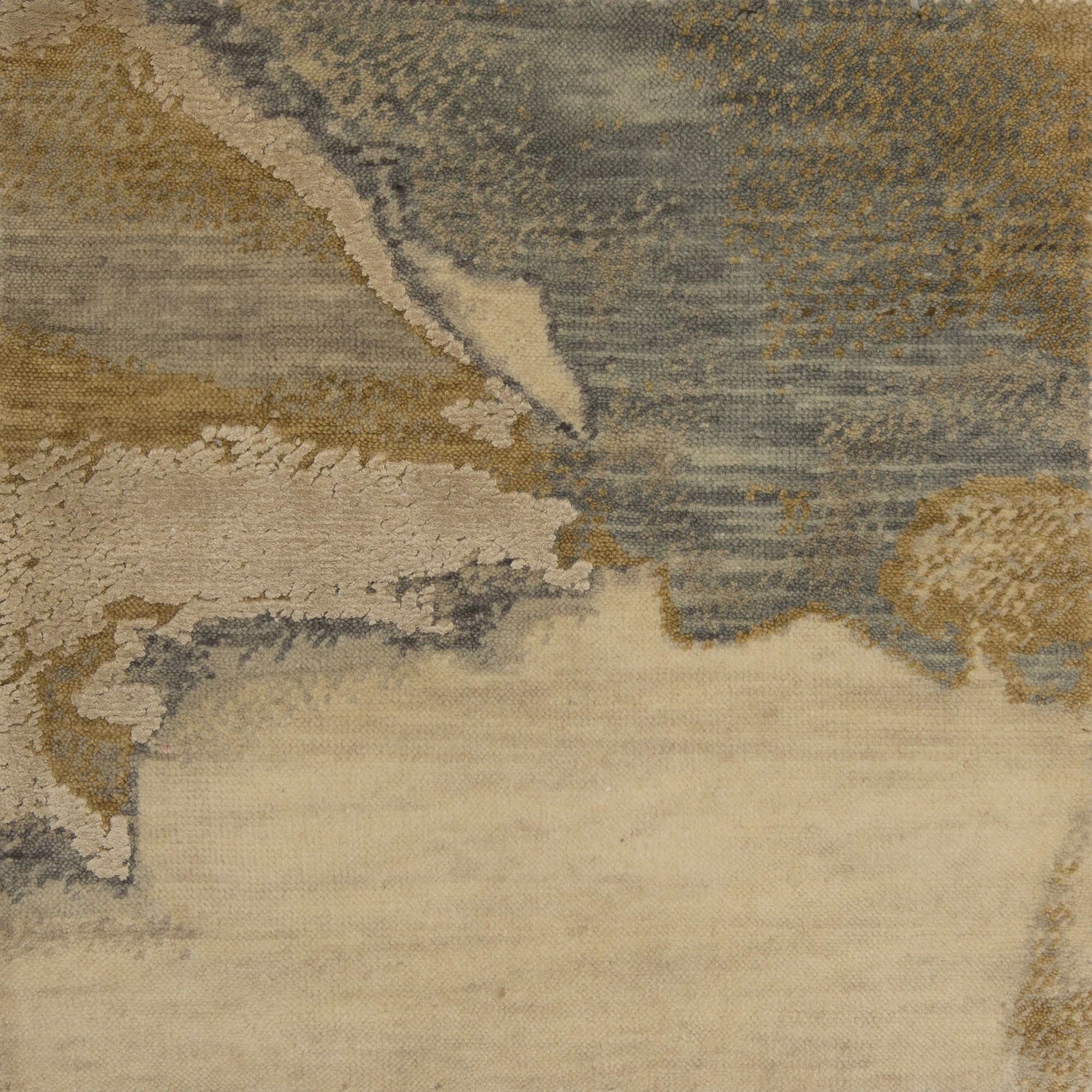
Designing with custom rugs starts long before color or pattern. The first decision is spatial: how the rug will relate to the sofa, chairs, tables, and circulation paths so the room feels intentional rather than assembled piece by piece. When a rug is sized and placed to support the furniture plan, it creates structure under the room’s visual weight, helping the seating group read as one composition. That is the practical heart of how rugs support furniture plans, and it is often the difference between a room that feels balanced and one that feels slightly adrift.
For designers and homeowners alike, the question is rarely whether a rug is decorative enough. The real challenge is whether it can carry the room’s geometry without competing with it. A rug may need to ground a conversation area, define a path through an open-plan interior, or bridge two finishes that would otherwise feel disconnected. With thoughtful custom rug design, the floor becomes part of the plan instead of a leftover surface that happens to sit beneath it.
Read the plan for anchor points and circulation
Before choosing dimensions, look at the room as a diagram of anchors and movement. The anchors are the largest visual weights: sofa, pair of chairs, sectional return, fireplace, coffee table, dining table, or bed. Circulation is everything that must stay open: door swings, pathways to adjacent rooms, and the practical route someone takes to cross the space without stepping over a corner of furniture. If the rug ignores these lines, the room may look elegant in photographs but awkward in daily use.
In a typical living room, the seating arrangement should usually determine the rug’s field, not the walls alone. A rug that is too small often isolates the coffee table and leaves the outer pieces floating in unrelated zones. A rug that is oversized can be equally problematic if it swallows the architectural proportions or blocks necessary movement. The best approach is to map the furniture first, then decide which edges of the rug should support the grouping and which edges should give circulation room to breathe.
For open-plan interiors, this step matters even more because the rug often functions as a visual boundary. It can signal “conversation area” without erecting a hard barrier, which is especially useful when one large room has multiple uses. If you are working with a dining zone adjacent to a seating area, the rug must establish a precise perimeter so the two functions are legible. That is where custom rugs have an advantage: they can be made to the exact footprint the layout requires, rather than forcing the layout to adapt to a standard size.
Set the rug to support the dominant seating group
The dominant seating group is the one that organizes the room’s main conversation or daily use. In a formal living room, that may be a sofa facing two chairs and a coffee table. In a family room, it may be a sectional, lounge chair, and ottoman. The rug should support that group by linking the pieces visually, usually by allowing at least the front legs of the primary seating to rest on the rug so the arrangement feels connected rather than scattered.
That said, “all legs on” is not always the best solution. In smaller rooms, partial placement can preserve floor space and keep the room from feeling cramped. In larger rooms, a rug may need to be scaled generously enough to define the seating island without creating a moat effect around it. The guiding principle is proportion: the rug should be big enough to unify, but not so dominant that the furniture appears to be floating in a textile field with no relationship to the architecture.
Pattern and pile height should also reinforce the seating plan. A high-contrast pattern can help a large arrangement read as one composed figure, while a quieter surface can be more effective when the furniture already includes strong shapes or upholstery. Low-to-medium pile is often the most practical in seating areas because it allows tables to sit stably and keeps the room visually calm. In a room with sculptural furniture, a restrained rug can do more work than an ornate one because it gives the forms around it room to register.
Here, material choice matters as much as scale. Wool brings resilience and a grounded hand, silk or silk-blend accents introduce sheen and finer detail, and hand-knotted construction can support a design that needs precision at a custom size. If you are comparing material options, a serious conversation about fiber, traffic, and light exposure is part of responsible designer specification. For rooms that require durability without sacrificing refinement, many clients start by considering custom rug design as a way to align construction with the actual life of the room.
Resolve overlaps with consoles, tables, and passageways
One of the most common planning mistakes is treating every piece of furniture as if it should sit on the rug equally. Consoles, sideboards, and entry tables usually work better at the perimeter, where they can relate to the rug without interrupting its main field. If a console sits behind a sofa, the rug should generally stop before the console becomes visually entangled with the primary seating zone. That separation keeps the composition legible and avoids a cluttered center of gravity.
Coffee tables and ottomans require different treatment because they sit at the center of the conversation cluster. The rug should usually extend far enough beyond them that they do not appear to perch at the edge of the design. When the rug is custom-sized, you can account for table depth, chair pull-back, and leg clearance rather than relying on a stock rectangle that may miss the spatial logic by several inches. Those inches matter, especially in refined rooms where asymmetry is noticeable immediately.
Passageways are where many otherwise beautiful layouts fail. If a rug crosses a major walkway, it should do so with intention and sufficient clearance so it does not create a trip hazard or a visual snag. In long rooms, a rug can be used to slow the eye and establish zones, but its edges should align with architecture or furniture lines rather than slicing through the room at random. In these cases, the rug is not just a surface treatment; it is part of the architectural problem solving.
A useful way to test the layout is to stand at the room’s main thresholds and imagine how the rug will read in motion. Does it frame the seating area, or does it interrupt the route to another room? Does it anchor the furniture or merely sit beneath it? These questions are not abstract; they determine whether the rug reads as part of the plan or as an afterthought laid down at the last minute.
Check how the rug reads from multiple viewpoints
A room is experienced from more than one position, and a rug should work from each of them. From the doorway, it may need to establish a clear boundary and a sense of order. From the sofa, it should feel aligned with the coffee table and the surrounding chairs. From across the room, the rug’s pattern and border should help reinforce the room’s geometry rather than fight it. This is where visual rhythm becomes a design tool, not just a decorative effect.
Consider an example: a rectangular living room with a fireplace on one short wall, a sofa centered opposite it, two lounge chairs angled inward, and a narrow circulation route along one side to another room. A rug that is too small will make the chairs feel detached from the sofa, while a rug that extends too far into the passageway will compress the circulation route. The better solution may be a custom-sized rug that reaches just beyond the front legs of the seating group, leaves the side passage clear, and uses a border or restrained pattern to register the room’s long axis. In that scenario, the rug does not merely sit beneath the furniture; it organizes the room’s reading from every angle.
Lighting also affects how the rug is perceived. Natural light can flatten or intensify pattern depending on direction, while evening lighting may deepen tone and soften contrasts. A wool rug with subtle texture can feel more grounded in bright daylight, whereas a more luminous surface may be preferable in a lower-light room where the floor needs a little visual lift. Because the rug will be seen under changing conditions, the safest choice is not the one that photographs best once, but the one that maintains coherence throughout the day.
Acoustics should not be ignored either, especially in rooms with hard flooring, tall ceilings, or minimal upholstery. A rug with adequate density can reduce echo and help a furniture grouping feel settled in the space. This is one reason why how rugs support furniture plans is not just a visual question; it is also about comfort and sound. The room should look unified, but it should also feel composed when people sit, talk, and move through it.
Choose construction and detail to match the room’s use
Construction influences both the lifespan and the visual authority of the rug. Hand-knotted rugs are often chosen for their detail, clarity of pattern, and long-term durability when properly specified, while other constructions may suit different use cases or softer visual effects. In a room where the rug must sit under substantial furniture, precise weaving can help the border, field, and scale remain coherent even at large dimensions. For custom rugs, this precision is especially valuable because unusual room sizes often call for exacting execution.
Texture should be selected with the room’s furnishings in mind. A highly patterned rug can support plain upholstery, but if the room already includes patterned drapery, textured walls, or distinctive upholstery, the floor may need to act as a stabilizing plane. A quieter rug with tonal variation can keep the room from feeling overworked. Conversely, if the furniture is intentionally minimal, the rug can introduce depth and character without adding bulk to the visual field. The goal is not to decorate every surface equally, but to distribute attention with discipline.
Color palette coordination is equally important. A rug does not need to match the sofa, but it should relate to the room’s temperature and contrast structure. Warm woods, cool marble, brass, lacquer, and painted millwork all influence how a rug will be read. In a room with mixed finishes, a rug that threads together two or three of the dominant tones can do more for unity than one that simply repeats the most obvious upholstery color. That restraint often reads more luxurious because it appears considered rather than literal.
When the plan is unusual, let the rug solve the problem
Not every room is a clean rectangle with a simple seating set. Some spaces are L-shaped, some have alcoves or inset bays, and some need to accommodate oversized furniture, a piano, or a pair of opposing conversation groups. In those rooms, standard sizing usually forces compromises that weaken the layout. A custom rug can be drawn around the furniture plan so the room feels tailored instead of patched together.
This is also where the relationship between border, field, and room edges becomes especially important. A border can help define an irregular footprint, while a field pattern can create calm inside a more complex plan. If the room contains several focal points, the rug should decide which one is primary and which ones are secondary. That decision is design, not convenience, and it is often what separates a professionally resolved room from one that merely contains expensive objects.
For designers managing multiple moving parts, the rug should be reviewed alongside the furniture plan, not after it. Seat depth, table diameter, door swing, and clearance lines should all be considered before finalizing dimensions. When those measurements are integrated early, the rug becomes a structural tool rather than a decorative correction. That workflow is the essence of custom rug design: it treats the floor covering as a fitted element of the room’s architecture and lifestyle.
Practical checks before ordering
- Confirm which furniture pieces should touch the rug and which should remain outside it.
- Measure circulation paths so the rug does not interrupt movement between zones.
- Check the room from the main doorway, the seating area, and any adjacent sightline.
- Match pile height and fiber choice to traffic, light exposure, and the room’s acoustic needs.
- Review border and pattern scale against the largest furniture forms, not only against the floor plan.
FAQ
Can one rug unify several pieces of furniture?
Yes, if the rug is sized and placed to relate to the dominant grouping rather than to each item individually. A single rug can visually connect a sofa, chairs, ottoman, and coffee table when it is large enough to create one shared field. The key is to keep the arrangement legible: the rug should support the cluster, not turn every object into a separate island.
How do I decide where the rug should stop?
Start with the furniture that defines the room’s main function, then check the circulation paths that must stay open. The rug should generally end where the seating plan ends and where movement needs to remain comfortable. In custom rug design, those stopping points are set by proportion, clearance, and sightlines rather than by a fixed standard size.
What if the plan changes after the rug is ordered?
If the furniture arrangement shifts, the rug may still work if the original size was generous and the design is flexible enough to live with new groupings. This is why it helps to plan with some margin around the likely future layout, especially in rooms that evolve over time. A thoughtful consultation can help you anticipate those changes before the rug is made.
For rooms that need a more exact fit, Doris Leslie Blau approaches rugs as part of the room’s structure, not just its finishing layer. If you are refining a layout, shaping a difficult footprint, or specifying a rug for a complex seating plan, experienced guidance can make the difference between a good result and one that feels truly resolved. When the furniture plan is doing serious work, the rug should be designed to meet it with equal precision.