

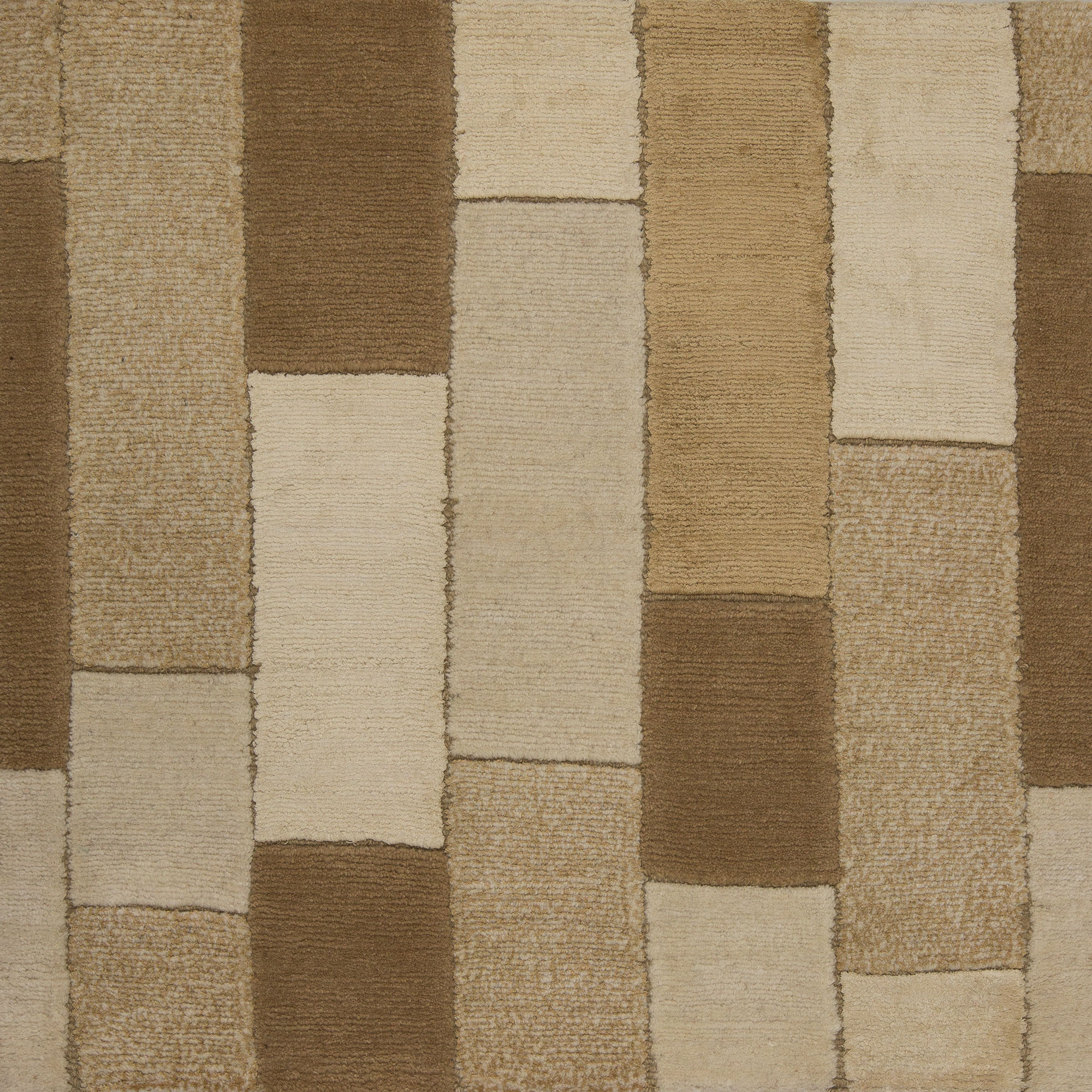
Mid-century modern rooms rely on clarity: low furniture, open floor area, and shapes that feel intentional rather than decorative for its own sake. The right rug should support that discipline, which is why custom rugs can be such a useful design tool in these interiors. They allow you to control scale, tone, and pattern density with far more precision than standard sizes usually permit. In a room that already has strong lines, the rug should organize the composition, not compete with it.
Mid-century modern is often reduced to a look made of walnut, tapered legs, and starburst accessories, but the style is more useful when you think of it as a spatial language. It values clean edges, visual balance, and a deliberate relationship between furnishings and negative space. That makes rug selection especially important, because a rug is often the largest soft surface in the room and the one most capable of correcting proportion. A well-chosen piece can make a low sofa feel anchored, a seating group feel complete, or a broad room feel edited rather than empty.
For this reason, geometric rugs and tonal rugs both have a place in mid-century inspired interiors. Geometry brings order, but tone brings restraint, and the best rooms usually need both. If the pattern is too busy, it can fight the architectural simplicity of the space; if the color is too flat, the room can lose warmth. The goal is not to recreate a period set piece, but to use pattern and material in a way that respects the architecture and the way people actually live in the room.
Identify the mid-century traits that still work today
The most durable mid-century traits are not the ones that look most obviously vintage. They are the ones that understand structure: low profiles, uncluttered sightlines, and an emphasis on honest materials. A rug that works in this setting usually has a clear silhouette and a pattern that reads from across the room without becoming visually loud. That may mean a disciplined grid, a broken stripe, a soft lozenge, or an abstract field with controlled contrast.
Mid-century interiors also reward a sense of restraint in texture. Walnut furniture, leather seating, and polished wood floors already provide a fair amount of visual information, so the rug does not need to add another competing layer of complexity. Wool with a clean hand, a dense weave, or a carefully trimmed pile can contribute structure while staying calm. In many rooms, the smartest move is not a vivid motif but a surface that introduces depth through weave, shade variation, or subtle directional movement.
It helps to separate “mid-century” from “retro.” Retro often means obvious nostalgia, while mid-century modern, at its best, is about proportion and utility. A rug can reference the era through geometry, but it should still feel current in tone and tailored to the room’s size. That is one reason many designers turn to custom rugs when the space calls for a specific balance of pattern and restraint. With a made-to-order approach, the rug can be adjusted to the exact furniture grouping instead of forcing the layout to adapt to the rug.
Use pattern to organize open, low furniture arrangements
Open-plan living and dining areas often expose every compositional problem at once, which is why a rug becomes a planning tool rather than a finishing touch. In a mid-century setting, the rug should define zones without erecting visual barriers. A geometric layout can guide the eye from sofa to chair to table, while still leaving the room feeling spacious. The pattern should be scaled to the furniture, not to the floor alone, because too-small motifs can look fussy under broad low seating.
Think about how the furniture sits on the rug. A sectional with a long chaise may need a broader field with a pattern that stretches horizontally, while a compact conversation area can support a more compact repeat. If the room contains multiple wood tones and a mix of straight and curved furniture, a rug with measured geometry can act as the stabilizing element. The effect is strongest when the pattern aligns with the room’s architecture: ceiling beams, window mullions, fireplace massing, or the long axis of a rectangular space.
Pattern density matters as much as pattern type. In a room with sculptural chairs and a low credenza, a high-contrast rug can become the loudest object, which may be useful if the rest of the room is very quiet. More often, though, the better choice is a design that has enough rhythm to prevent the floor from feeling blank, but enough softness to let the furniture breathe. This is where geometric rugs with softened edges, layered outlines, or tonal shifts can outperform rigid, high-contrast motifs.
Keep the palette warm and grounded
Mid-century color is often described in terms of avocado or mustard, but the most usable palettes for contemporary rooms are usually warmer and more measured. Think tobacco, caramel, sand, oat, clay, olive, rust, and softened charcoal. These colors sit comfortably beside teak and walnut, and they keep a room from feeling overly themed. A rug in these tones can ground glossy finishes and prevent glass, metal, or lacquer from making the space feel cold.
Tonal rugs are especially effective when the furniture already introduces strong shape. A rug in layered neutrals, warm taupes, or muted earth shades can provide visual depth without adding another hard edge to the room. That does not mean color should disappear; it means color should be integrated into a broader material conversation. A subtle amber undertone in wool, a clay-colored border, or a faded olive field can shift the mood of the room in a way that feels architectural rather than decorative.
Light exposure should influence your palette choice. A south-facing room can carry richer brown, terracotta, or moss tones without losing brightness, while a north-facing room may need lighter camel, bone, or soft gray-beige to keep the floor from feeling heavy. If the room receives strong afternoon sun, a rug with gentle tonal variation will often age more gracefully than one with very crisp contrast. Color that sits slightly below eye-level in saturation tends to support the mid-century vocabulary of calm structure and warm materials.
Choose materials that support the style, not just the palette
Mid-century inspired rooms tend to benefit from rugs that feel composed rather than plush for plushness’ sake. Wool remains one of the most practical fibers because it offers resilience, warmth, and a natural ability to hold defined pattern. In a seating area with clean-lined furnishings, a medium or low pile often looks more disciplined than a deeply shaggy surface. The rug should feel tactile, but not so soft that it visually collapses the crispness of the room.
Construction affects the entire reading of the space. Hand-knotted rugs often provide the precision and durability needed for rooms where the rug must serve as both anchor and visual counterpoint. In larger spaces, a tighter weave or a denser hand can help the pattern stay legible from a distance, while still allowing the surface to feel refined up close. If the room includes heavy traffic, dining chairs, or pets, pile height and fiber selection become part of the design decision, not merely a maintenance issue.
Texture can also substitute for ornament. A tonal wool rug with subtle striation may support a mid-century room better than a graphic piece with a strong repeat if the furniture is already expressive. Silk content, when used carefully, can introduce a subdued sheen that reflects light in a controlled way, but it is usually best reserved for spaces where wear is modest and the design calls for more dimension. The right construction should reinforce the room’s sense of order while providing enough softness to make the floor feel inhabited.
Show how to avoid making the room feel retro for its own sake
The easiest way to make a mid-century room feel dated is to match every object too literally. If the sofa, coffee table, lighting, and rug all quote the same decade with equal volume, the room loses tension and starts to feel like a showroom vignette. A better approach is to let the rug carry only one or two references: perhaps a disciplined geometry and a warm, grounded palette. Then balance that with contemporary restraint in upholstery, art, or lighting so the room reads as edited rather than reenacted.
Another useful tactic is to soften the rug’s mid-century references through proportion. A slightly enlarged repeat, a border that is thinner than expected, or a pattern that fades at the edges can make a familiar motif feel current. Likewise, a rug with a very strong period color can sometimes be reined in by keeping the surrounding materials calm and architectural. The room becomes more convincing when the rug helps create structure rather than trying to announce a style label.
Consider a practical example: a living room with a long walnut console, two low lounge chairs, a cream sofa, and a brass lamp. A sharply patterned rug with too many colors would make the seating area feel busy, especially if the room already has art and books. A better solution might be a custom rug design in sand, clay, and muted cocoa with a faint linear or block motif that echoes the furniture’s geometry. The rug would define the seating zone, warm the floor, and still allow the room to feel current, quiet, and well measured.
For rooms that need precision, tailored dimensions often matter more than the motif itself. A rug that stops too short under the sofa or misses the front legs of the chairs will weaken the whole composition, regardless of how attractive the pattern is. This is where a custom rug sizing guide can be especially helpful during the specification process, because it clarifies how the rug should relate to circulation paths, furniture depth, and the overall footprint of the room. In mid-century interiors, that relationship is part of the design, not an afterthought.
A practical checklist for selecting the right rug
- Measure the seating group first, then decide how much floor should remain visible around it.
- Match pattern scale to furniture scale, especially when working with low-profile sofas and chairs.
- Choose warm neutrals or softened earth tones if the room needs grounding rather than contrast.
- Keep pile height and texture in balance with the amount of wood, leather, or metal already in the room.
- Use geometry to clarify layout, not to overwhelm the architectural simplicity of the space.
FAQ
What colors suit mid-century rugs?
Warm, grounded colors usually work best: camel, tobacco, sand, olive, rust, cocoa, and softened charcoal. These tones pair naturally with walnut, teak, leather, and brass without making the room feel costume-like. If the room is very bright, deeper earth tones can add gravity; if it is dim, lighter neutrals keep the floor from disappearing. The right palette should support the furniture rather than competing with it.
How geometric should the pattern be?
The answer depends on how much visual activity the room already has. If the furniture is sculptural or the architecture is busy, a quiet geometric rhythm is often enough. If the room is minimal, a stronger repeat can provide definition and energy. In most cases, the best mid-century rug uses geometry that is clear at a distance but softened in detail.
Can a mid-century rug still feel subtle?
Yes, and often that is the strongest choice for contemporary interiors. A subtle rug may rely on tonal variation, a low-contrast repeat, or texture rather than bold color. It can still read as mid-century because the structure is there, even if the pattern is understated. Subtlety is especially effective when the room already has strong lines or rich materials.
Are custom rugs useful for mid-century rooms?
They are especially useful when the room has an unusual footprint, a large open plan, or furniture that needs exact anchoring. Mid-century design depends heavily on proportion, so a rug that is made to the right size and pattern scale can improve the entire room. When standard dimensions feel close but not quite right, a tailored solution is usually the more disciplined answer.
Mid-century modern rooms succeed when every element feels considered, and the rug is often the piece that makes that clarity possible. Whether the room calls for geometric rugs, tonal rugs, or a quieter custom-made composition, the best choice will always respect scale, warmth, and the way the furniture sits in space. Doris Leslie Blau can help translate those decisions into a rug that feels tailored to the room rather than simply placed within it. If you are refining a space that needs structure without excess, specialist guidance can make the difference between a nice room and a convincingly resolved one.