
This article explores the resurgence of Art Deco custom rugs, focusing on how vintage-inspired patterns and modern techniques converge to create luxurious vintage chic flooring. Drawing on historical motifs, advanced weaving technologies, and curated material palettes, we detail the essential characteristics that define true Art Deco style. We also examine the specialized processes behind authentic reproductions and offer practical styling advice for integrating these statement pieces into contemporary interiors. Whether you prefer bold geometric rug designs or subtle metallic accents, this deep dive equips collectors and designers with actionable insights to commission, select, and style made-to-order rugs that honor the past while embracing today’s innovations.

Art Deco emerged in the 1920s as a celebration of luxury, modernity, and the machine age, characterized by its embrace of geometry, symmetry, and sumptuous materials. In the context of custom rugs, this period’s aesthetic translates into precise repetition of motifs like chevrons, sunbursts, and stepped forms. Designers at Doris Leslie Blau reference original archives and period photographs to identify authentic proportional systems, then adapt them into bespoke templates that retain the era’s sense of balance and glamour. Through a combination of archival research and client collaboration, each made-to-order rug becomes both a faithful homage and a personalized interpretation, seamlessly blending vintage appeal with contemporary requirements for scale, color, and durability.
Characteristics of Art Deco Rug Designs
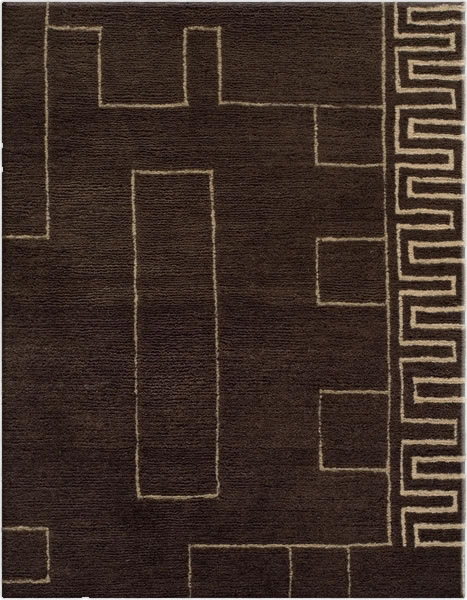
The defining trait of an Art Deco rug lies in its geometric rigor and stylized ornamentation. Designers often employ quadrant divisions, radiating arcs, and triangular tessellations to create visual rhythm across the surface. Bold lines intersect at exact angles—typically 45 or 60 degrees—producing a dynamic interplay of positive and negative space. Motifs such as sunbursts or zig-zags are frequently arranged in mirrored pairs, reinforcing the symmetrical ethos fundamental to the style. The overall effect is a sense of forward momentum and opulence, encapsulated in a flat-weave foundation that can be accentuated with selective cut-pile highlights, creating both texture and depth without overwhelming the pattern’s structure.
Color palettes for Art Deco custom rugs favor high-contrast combinations, often juxtaposing onyx black with gold leaf, emerald green with ivory, or deep navy with brushed metallic threads. Hand-applied metallic yarns—typically a blend of silk and metallic-wrapped polyester—catch ambient light, highlighting key geometric features. Precise dye-lot controls ensure that adjacent pattern elements maintain consistent hue and saturation, which is critical when working with expansive areas of single color. Subtle gradient shifts can also be introduced via over-dyeing techniques, allowing designers to achieve a slight patina effect reminiscent of period textiles while maintaining the sharp edges emblematic of the movement.
An Art Deco rug’s tactile quality is just as important as its visual impact, and material choices play a pivotal role. New Zealand wool remains a premier option for its natural luster, resilience under traffic, and ability to hold complex dyes. Designers often integrate fine Tencel or silk-blend accents at a 1–2 inch pile height to enhance reflectivity, contrasting with a 0.3–0.5 inch cut-pile wool base. Loop-pile borders or low-profile kilim-weave sections can be combined to articulate distinct zones within the design, reinforcing the geometry without introducing color distractions. Rug edges are typically reinforced with hand-sewn serging in a complementary tone, preserving the integrity of the piece over decades of use.
Modern Techniques for Authentic Reproductions
Today’s bespoke rug ateliers employ advanced digital tools to translate vintage Art Deco patterns into precise production plans. Computer-aided design (CAD) software allows artisans to map each knot or tuft location at a granular level, ensuring that intricate motifs scale accurately, whether the rug measures 5 x 8 feet or 12 x 15 feet. Digital jacquard looms programmed with hand-validated color profiles produce test swatches, which are then adjusted for pile density, knot count—commonly 160 knots per square inch for high-definition motifs—and yarn tension. This rigorous process guarantees faithful reproductions of original designs while accommodating bespoke dimensions and client-specific color adjustments.
Sustainability and durability are equally critical in modern production. Many ateliers now source traceable, mulesing-free wool certified by the Responsible Wool Standard (RWS) and utilize pH-neutral reactive dyes to minimize environmental impact. Dye bath parameters—temperature, pH, and immersion time—are meticulously documented to ensure consistent color fastness and minimal shrinkage. Advanced rinsing and finishing protocols, including neutralization baths and mechanical softening, yield a rug that feels plush yet resists matting. The result is a piece of vintage chic flooring that marries ecological responsibility with the technical demands of high-traffic interiors.
In addition to digital mapping and sustainable material selection, traditional hand-finishing techniques remain integral to achieving authentic Art Deco flair. Expert rug finishers employ hand-tufting guns to add sculpted details, trims, and raised borders that cannot be replicated by machine alone. Each rug undergoes a multi-stage quality inspection: yarn-by-yarn examination for color consistency, edge reinforcement checks, and hand-trimming to ensure uniform pile height. These rigorous quality-control measures transform a technical reproduction into a genuine artisan object, preserving the sense of craftsmanship that defined the original Art Deco movement.
Styling Tips for Art Deco Interiors
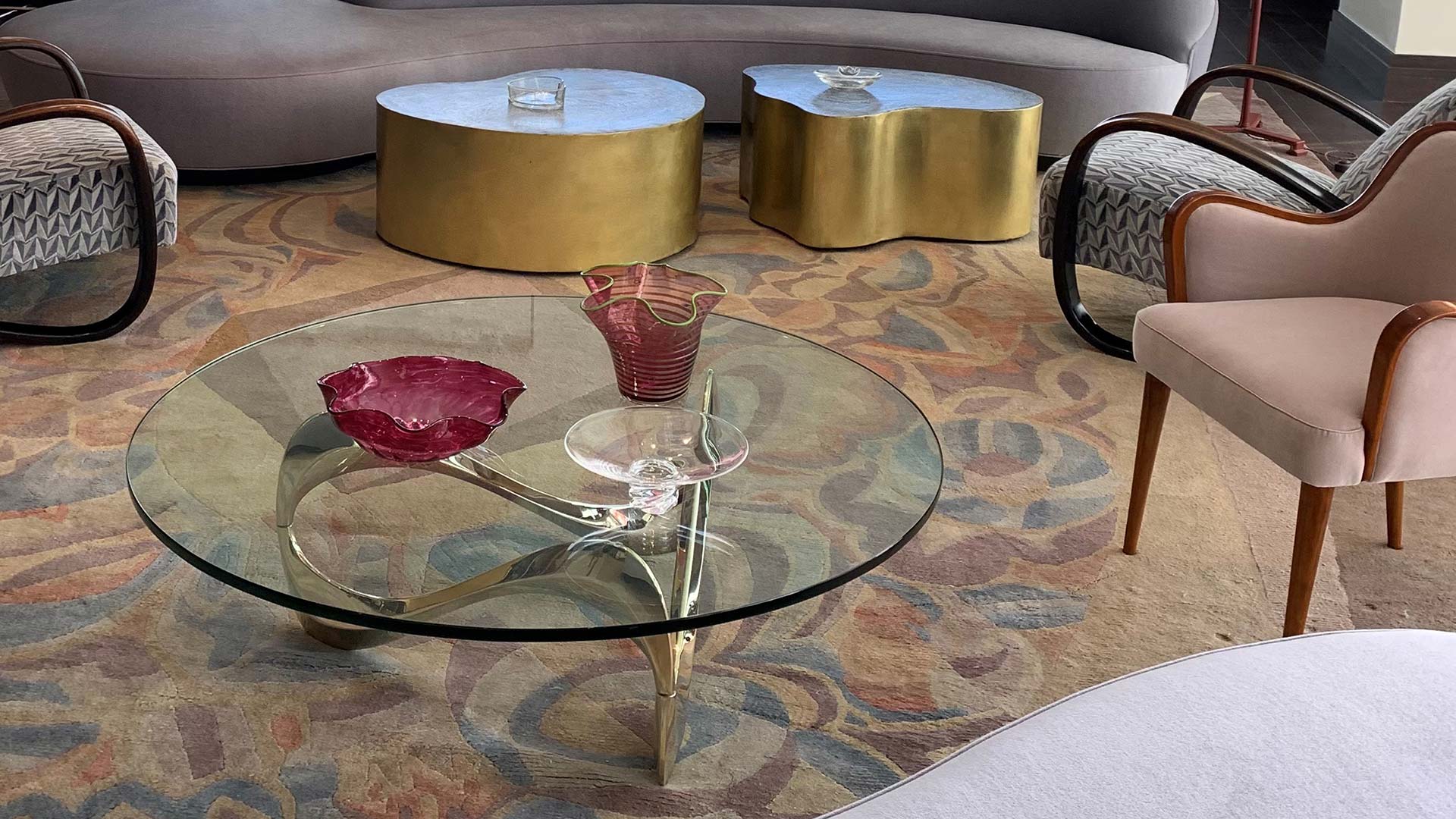
Layering an Art Deco rug in a living space requires thoughtful integration with existing furniture and architectural elements. Choose an open-plan area where a statement rug can define seating zones, positioning sofas and chairs entirely on the rug to anchor the arrangement. Pair the rug’s bold geometry with streamlined bespoke furniture that echoes the era’s emphasis on polished metal accents—such as a lacquered coffee table with brass inlays or a sculptural chrome-legged console. Maintain visual harmony by limiting competing patterns; allow the rug’s linear forms to remain the focal point, while selecting upholstery in solid colors or tone-on-tone textures that complement the rug’s dominant hue.
Window treatments can either reinforce or contrast your rug’s motif. For an immersive Art Deco environment, commission custom draperies in heavyweight jacquard with vertical stripe patterns or subtle geometric embossing. Select lining and interlining fabrics that provide sufficient backlighting control, ensuring that the rug’s metallic threads remain the room’s visual highlight rather than competing with wallcovering reflections. If a softer approach is desired, sheer panels in muted neutrals can filter natural light while allowing the rug’s color saturation to set the tone for the space. Balance is key: heavy drapes ground the look, while sheers imbue the room with a lighter, airier interpretation of vintage chic flooring.
Lighting choices significantly impact how geometric rug designs are perceived. Install adjustable, recessed LED fixtures with a CRI (Color Rendering Index) above 90 to capture the true tones of dyed wool and metallic accents. A strategically placed floor lamp or picture light can highlight sectional motifs, casting gentle shadows that accentuate the pile’s cut-and-loop interplay. Incorporate reflective surfaces—mirrored cocktail tables or polished brass side lamps—to amplify the rug’s sheen without overwhelming its form. Accessorize with minimalist sculptures or abstract art in complementary colors to tie the palette together, ensuring that the rug remains the centerpiece of a cohesive, museum-quality interior.
FAQ
What defines an Art Deco rug?
An Art Deco rug is defined by its precise geometric motifs, symmetrical patterns, and high-contrast color schemes. It often incorporates angular forms like chevrons, sunbursts, and stepped silhouettes, executed in materials such as New Zealand wool, silk blends, or metallic yarns. The style emphasizes bold lines and lavish textures, combining flat-weave foundations with selectively raised cut-pile accents to create dynamic visual effects that capture the elegance of the 1920s and 1930s.
Can I customize an Art Deco pattern?
Yes, customization is fundamental to made-to-order Art Deco rugs. Ateliers use CAD systems to scale original designs to client-specific dimensions, adjust color palettes to suit individual interiors, and even blend multiple archival motifs into a single cohesive composition. Clients can specify pile height, fiber content, dye intensity, and border treatments to ensure the final rug perfectly complements both the space and the homeowner’s personal taste.
Which materials suit Art Deco styles?
Ideal materials for Art Deco rugs include high-grade New Zealand wool for its durability and dye affinity, silk or Tencel accents for luxurious sheen, and eco-friendly synthetic blends for cost-effective alternatives. Metallic-wrapped fibers add a subtle shimmer that enhances geometric highlights, while natural or synthetic backing materials—such as cotton canvas or viscose-rich foundations—provide stability. The combination of these materials ensures both visual impact and long-lasting performance in high-traffic environments.
To bring a custom Art Deco rug into your interior, schedule a specialist consultation with our design team. We’ll guide you through material selections, color harmonies, and pattern adaptations to create a one-of-a-kind piece that embodies both historic authenticity and modern functionality. Elevate your space with a flawlessly executed design that reflects your personal style and honors the timeless allure of Art Deco.