

Discover how bespoke rugs can anchor minimalist modern living spaces by combining precise scale, material innovation, and tailored pattern design to create environments that balance restraint with tactile depth.
Integrating a precisely tailored custom rug into a modern living room transforms an austere space into an environment with both richness and restraint. At Doris Leslie Blau, our design atelier has curated countless projects; learn about our heritage on the About Doris Leslie Blau page. A bespoke carpet in a minimalist context serves as a focal anchor, subtly delineating seating zones while maintaining the open, uncluttered ethos that defines contemporary design. Material selection, weave density, and pile height can be calibrated to complement furnishings crafted from sleek metals, glass surfaces, and sculptural forms. Our studio employs expert artisans who hand-knot each strand using ethically sourced wool or premium silk blends, ensuring unparalleled durability and tactile allure. Clients often find that a low-pile rug with a refined color gradient enhances natural light reflection, amplifying spatial volume without detracting from the furniture’s sculptural integrity. When a custom rug is specified with proprietary dye formulas, the result is a one-of-a-kind statement piece that integrates seamlessly into a neutral palette or adds a measured accent to monochromatic schemes. Through meticulous planning documented in our interior-design-portfolio, we guide homeowners from conceptual sketches to finished installation for a cohesive outcome. Discover the advantages of bespoke textiles at our custom rugs collection.
Why Choose Bespoke Rugs for a Modern Living Space?
Bespoke rugs offer unmatched precision in scale, proportion, and chromatic nuance, qualities that mass-produced alternatives rarely achieve. In a contemporary living room, the ability to tailor the dimensions to within millimeters ensures that each piece integrates seamlessly under coffee tables or around sectional sofas without unsightly overlaps or wasted margins. Customization extends to edge finishing—options like a knife-edge hem or hand-fringed borders can be specified to echo architectural details or the tailored upholstery on bespoke seating. For interiors defined by minimalist geometries, a rug’s linework and motif must adhere to strict compositional guidelines; commissioning a unique piece permits collaborative refinement of pattern scales, ensuring that a grid motif aligns perfectly with a room’s axial alignments. The artisan selection process at Doris Leslie Blau includes a consultation on pile density, dye saturation, and substrate backing, guaranteeing acoustic benefits and footfall durability tailored to each family’s lifestyle. Furthermore, commissioning directly from our atelier reduces environmental waste common in large-scale manufacturing by crafting only the required square footage. As an introduction to our custom rugs catalog, clients receive digital mood boards and hand-drawn schematics, fostering transparency and precision before production commences.
Beyond aesthetic considerations, bespoke carpets contribute functional advantages in modern living spaces distinguished by open floor plans. The right rug can define activity zones—separating reading nooks from conversation areas—without erecting physical barriers that contradict minimalist ideals. By specifying low-pile rugs, designers ensure easy maintenance and a consistent surface plane that complements the angular lines of contemporary furniture. Alternatively, clients seeking subtle depth may opt for selectively elevated pile heights in central motifs, providing a tactile journey from perimeter to core. Our material selection process includes performance testing for stain resistance, pile recovery, and underfoot warmth, critical factors in climates that range from temperate to high-humidity environments. Each bespoke carpet is laid over breathable jute or natural latex backings to promote airflow and mitigate mold risk beneath large glazing and over polished concrete floors. When installed by our trained specialists, the result is a tailored composition that emphasises both architectural intent and a cohesive material palette, ensuring each piece in the living room interacts harmoniously.
Material Selection: Low-Pile vs. High-Pile Bespoke Carpets
Choosing between low-pile and high-pile bespoke carpets in a modern living room hinges on both functional requirements and aesthetic aspirations. Low-pile rugs, defined by fibers measuring under six millimeters in height, offer a sleek, unobtrusive surface that allows furniture legs to settle firmly while preserving a streamlined silhouette. This flat profile not only facilitates furniture movement during cleaning or rearrangement but also enhances the reflection of ambient light, a priority in interiors that leverage natural illumination for their primary aesthetic. Conversely, high-pile carpets with fiber lengths exceeding ten millimeters introduce sculptural depth and a sumptuous tactile experience underfoot, creating zones of warmth within an otherwise minimal framework. In open-plan layouts, selective use of high-pile zones can demarcate lounging areas or reading corners without resorting to visual clutter or additional screens. Both pile types can be custom-dyed to coordinate with the room’s color temperature, whether in cooler grays and blues for a polar minimalism or warmer taupe and sand hues that complement matt walnut furnishings. Detailed pile-density charts and tactile swatches are provided during the design phase, enabling clients to assess density, spring-back, and fiber twist firsthand before committing to a final specification.
A nuanced understanding of material performance underpins carpet selection for contemporary interiors. Wool remains a cornerstone in bespoke rugs for its natural resilience, moisture-wicking capability, and inherent flame retardancy, attributes that satisfy both luxury and safety codes. For clients seeking an ultra-contemporary sheen and a smooth hand-feel, a blended composition of silk or Tencel fibers may be integrated into central pattern elements, adding a subtle luminescence that responds dynamically to artificial and natural light sources. Meanwhile, performance synthetics such as PET derived from recycled bottles can be woven into low-pile backdrops to achieve enhanced stain resistance and UV stability, an advantage in sun-drenched living rooms. Layered backing systems—combining jute for eco-friendliness and a natural latex layer for dimensional stability—ensure that the carpet maintains structural integrity across seasonal humidity fluctuations. At Doris Leslie Blau, each bespoke carpet adheres to rigorous environmental and quality benchmarks, with certifications like OEKO-TEX® Standard 100 providing clients full transparency regarding chemical use and material sourcing. This comprehensive approach ensures that the chosen pile height contributes not only to style objectives but also to long-term durability and ease of maintenance.
Designing Geometric Patterns for Minimalist Aesthetics
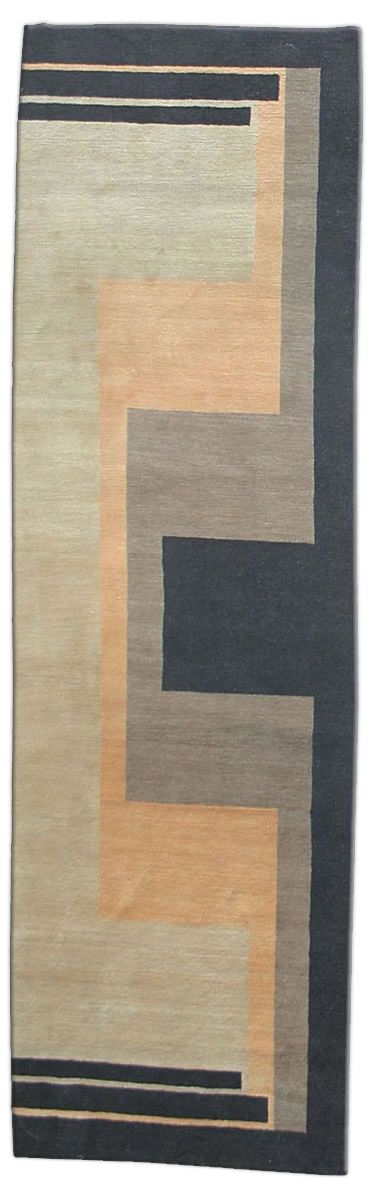
In minimalist modern living spaces, geometric patterns serve as a controlled framework for visual interest, creating order without overcrowding. When applied to custom rugs, precision geometry must be calibrated to the room’s gridlines and architectural axes, ensuring that parallel lines run congruently with window mullions and door jambs. Our design team employs CAD software to generate vector-based pattern templates, enabling exact scaling and rotation before translating the design into hand-drawn weaving instructions. Clients select from an extensive palette of neutrals or introduce a singular accent hue, such as a muted terracotta or deep charcoal, to maintain minimalist restraint while establishing focal contrast. The clarity of geometric patterns on a low-pile rug provides a sharp, graphic presence that interacts dynamically with modern furniture silhouettes, reinforcing a sense of spatial continuity. To guarantee crisp line definition, our master weavers utilize a double-knot technique in high-twist wool fibers, preventing yarn migration and preserving pattern integrity over decades of foot traffic. By integrating subtle asymmetries or micro-variations in line thickness, we also introduce a handcrafted nuance that distinguishes a bespoke piece from factory reproductions.
Beyond the primary pattern, border treatments and negative space play essential roles in achieving a minimalist balance. A narrow, halo-like border can frame the geometric field, acting as a visual buffer between the motif and surrounding floor, while expansive negative space shifts the composition’s center of gravity, contributing to an airy appearance. Custom-rug commissions often include mock-ups that simulate border width against the furniture layout, allowing clients to fine-tune proportions before weaving begins. Color-blocked intersection points or graduated line weights can be specified to animate the composition subtly, infusing dynamic energy without disrupting the overarching minimal ethos. Moreover, our team can integrate low-relief embossing techniques to impart three-dimensional emphasis on selected geometric elements, providing depth when natural light casts shadows across the rug’s surface. This approach enriches the tactile dialogue between carpet and architectural shell, elevating what might otherwise read as a flat plane into a layered visual gesture. Each design phase culminates in a detailed quality assurance protocol, verifying that loop density, pile tension, and pattern alignment adhere to our stringent specifications.
Integrating bespoke custom rugs into a modern living room demands a considered approach to scale, materiality, and geometry that few off-the-shelf solutions can match. From the precise dimensioning that aligns with custom millwork to the selection of low-pile rugs for maintenance ease or high-pile sections for textural warmth, each decision influences both function and aesthetic coherence. Meticulous craftsmanship—ranging from specialized double-knot weaving for pattern definition to eco-conscious backing systems—ensures that a custom carpet will remain both beautiful and resilient through years of daily use. The interplay of geometric patterns and negative space can subtly articulate architectural features, drawing the eye while preserving minimalist restraint. Leveraging our extensive interior-design-portfolio, clients can visualize how bespoke carpets interact with furnishings, finishes, and lighting strategies unique to their space. Engaging with the bespoke process at Doris Leslie Blau offers a collaborative journey, complete with digital mock-ups, artisanal swatches, and in-person consultations leading up to installation. Ultimately, a custom rug transcends mere floorcovering to become a cohesive anchor that unites material, form, and atmosphere within any modern living environment. For further inspiration, browse our custom rugs collection to witness the full range of design possibilities tailored for modern living spaces.
FAQ
How do bespoke rugs enhance a minimalist living room?
Bespoke rugs function as strategic anchors in minimalist living rooms by delineating functional zones without adding visual clutter. Customized to precise dimensions, they integrate directly under furniture groups, clarifying pathways and seating arrangements while preserving negative space that is fundamental to minimalist design. The ability to select specific pile heights, from low-pile rugs to subtle high-pile accents, ensures that the surface plane aligns cohesively with adjacent architectural elements like recessed baseboards and floating shelves. Personalized color palettes allow a rug to either blend seamlessly into neutral surroundings or introduce an accent hue in a controlled manner. Geometric patterns can be scaled to echo room proportions, reinforcing architectural axes and grid layouts. Ultimately, a handcrafted carpet becomes more than decoration; it serves as an integral spatial device that enhances visual harmony and invites tactile engagement within a modern environment.
What materials are best for a modern bespoke rug?
Selecting materials for a modern bespoke rug involves balancing aesthetic qualities with performance criteria. Wool remains the material of choice for its natural resilience, insulating properties, and stain resistance, while silk accents can impart a subtle sheen and heightened tactile contrast. For sustainability and enhanced durability, recycled PET fibers derived from post-consumer bottles may be incorporated into low-pile backgrounds to provide UV stability and ease of cleaning. Custom silk-wool blends can be concentrated in pattern highlights, leveraging the light-reflective qualities of silk to accentuate geometric motifs. Underfoot comfort and noise reduction are further optimized through the choice of backing materials, such as jute for breathability or natural latex for dimensional stability. Environmental certifications like OEKO-TEX® Standard 100 ensure that all fibers and dyes meet stringent non-toxic standards, aligning material choices with both design ambitions and eco-conscious values. The bespoke process includes detailed performance testing on each fiber composition, giving homeowners confidence in long-term wear and maintenance.
How to maintain a low-pile custom carpet?
Maintaining a low-pile custom carpet in a modern living space requires adherence to specific care guidelines to preserve both appearance and structural integrity. Regular vacuuming using a suction-only setting or a brushless attachment prevents fiber distortion and keeps dust from embedding between tightly woven loops. Spills should be addressed immediately: blot the affected area with a clean, damp cloth and neutral pH cleaners recommended by your rug specialist, avoiding excessive moisture that can compromise natural fiber backs. Rotating the rug every three to six months ensures even wear, especially in high-traffic zones adjacent to seating and entryways. Professional deep cleaning is advised annually, employing methods such as low-moisture rotary shampooing or dry solvent cleaning to remove ingrained soils without over-saturating the backing. Transparent stain-protection treatments can be reapplied biennially, reinforcing resistance against everyday mishaps while maintaining the subtle profile characteristic of low-pile rugs.
To explore how a bespoke carpet can elevate your minimalist living environment, we invite you to schedule a specialist consultation at our central atelier. In this session, we’ll analyze your space’s architectural drawings, propose precise dimensioning, and recommend optimum pile heights—from low-pile rugs to selective high-pile introductions. We’ll provide physical fiber swatches and digital mock-ups to ensure that your chosen geometric patterns align perfectly with your furnishings and window layouts. Our specialists will also outline maintenance protocols and material specifications tailored to your household’s lifestyle. By engaging early in the design process, you secure seamless integration with lighting schemes, color palettes, and furniture footprints. Contact our dedicated team to begin the collaborative journey toward a modern living room defined by exceptional craftsmanship, bespoke customization, and enduring style.