

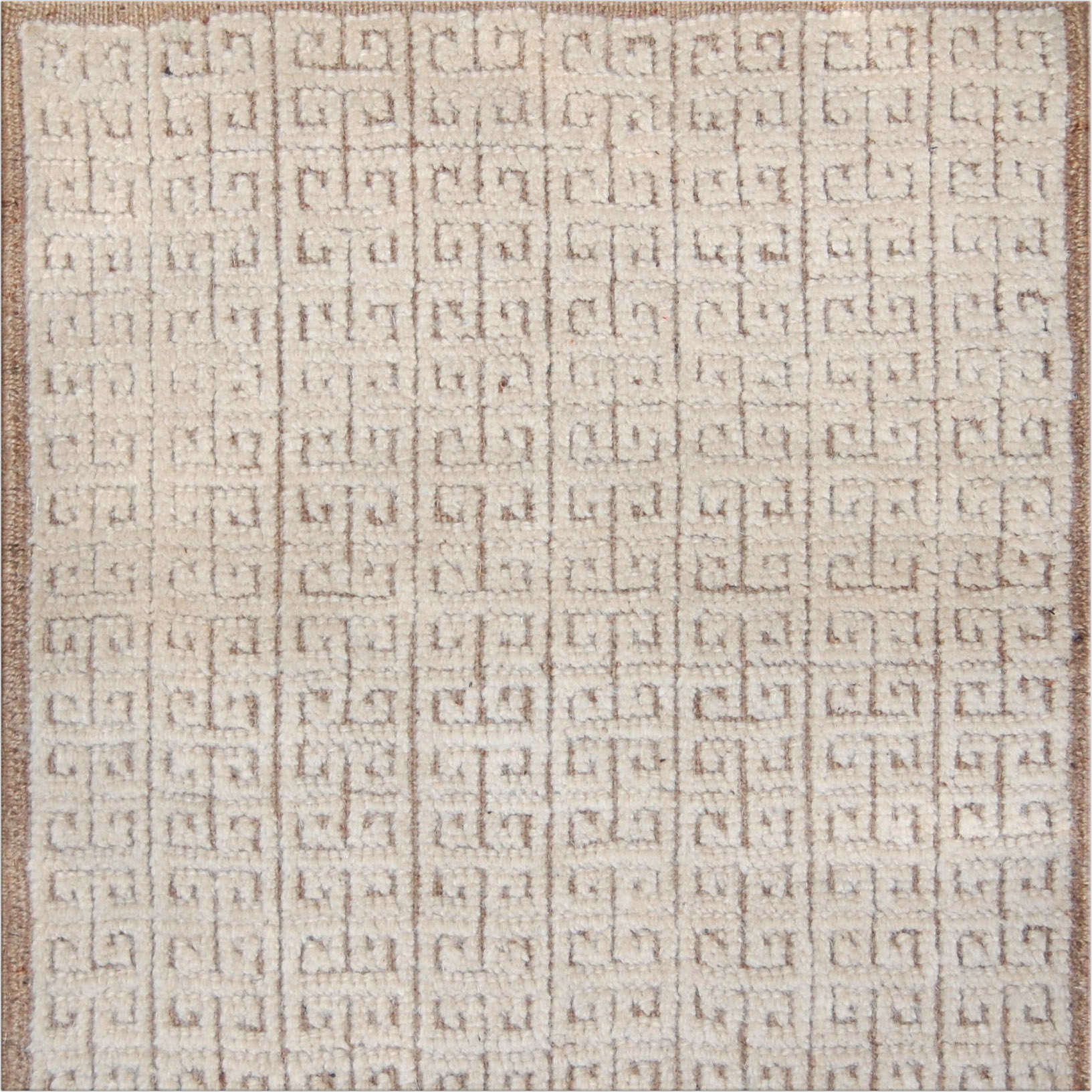
Quiet luxury rugs succeed when they do not rely on obvious contrast, decorative flourish, or a loud central motif to earn attention. The best custom rugs for this look use proportion, texture, and carefully moderated color to create depth that reveals itself gradually. In a room built around limestone, pale oak, plaster, or soft upholstery, the rug should feel intentional and composed, not invisible. That difference comes down to how the surface is constructed, how the pile catches light, and how the palette behaves next to architecture rather than competing with it.
Restraint is often misunderstood as absence, but in floor covering terms it is really about control. A neutral rug can still have visual intelligence if it offers a nuanced handfeel, a layered ground, or a shift in tone that becomes visible as you move through the room. This is why quiet luxury rarely looks convincing when the rug is treated as an afterthought; the piece needs to be specified with the same discipline as upholstery or millwork. At Doris Leslie Blau, that kind of precision is where custom rug design becomes especially valuable, because the subtle decisions are what keep a room from feeling generic.
Define what quiet luxury means in floor covering terms
In rugs, quiet luxury is not a synonym for beige. It is a design condition where the eye registers quality before it registers pattern, and where the surface feels composed rather than printed. The most successful versions are often tonal, but they are not monotonous: a field might shift from flax to mushroom, or from pearl to taupe, with enough movement to keep the piece alive in changing light. This is especially important in interiors that already depend on restrained materials, because a rug that is too flat can make the entire room feel unfinished.
Scale matters here as much as color. A quiet rug placed under a large seating arrangement should visually anchor the furniture without introducing a hard edge or a busy border that interrupts circulation. In an open-plan room, a rug can act as a zoning tool while still feeling calm, provided its visual rhythm is measured against the architecture. The goal is not to hide the rug, but to make it read as a refined surface plane that belongs to the room’s structure.
Material also defines whether quiet luxury feels credible or merely minimal. Wool brings body and softness, while silk introduces a gentle reflectivity that can make a near-solid field feel dimensional. Blends, loop-pile structures, and hand-knotted construction can all produce a more nuanced result than a visually plain machine-made rug. For designers specifying custom rugs, the construction method is often the real source of sophistication, because it determines how the color sits in the pile and how the edges soften into the room.
Use texture, pile, and subtle contrast to add depth
The fastest way to prevent a neutral rug from looking generic is to make texture do the work that pattern would normally do. A low cut pile can provide a crisp, tailored reading, while a higher or mixed pile introduces shadow and softness that become visible as natural light changes. Loop-and-cut combinations are especially effective for warm minimalist rugs because they create barely perceptible relief rather than graphic contrast. When the surface is designed well, the rug seems to shift throughout the day without ever looking restless.
Subtle contrast can also come from fiber selection rather than from color alone. A wool field with a silk highlight will not necessarily look shiny; instead, it can give the impression of depth, almost like fabric seen under layered daylight. In a room with matte plaster walls and pale oak floors, this kind of restrained luminosity keeps the composition from feeling dusty or one-note. It is a small distinction, but it matters: the best tonal rugs are usually not the flattest ones, but the ones with the most carefully controlled surface variation.
If the room is architecturally calm, texture can be slightly more articulate. A hand-knotted rug with a subtle abrash effect, a heathered yarn, or a finely broken ground pattern can introduce visual rhythm without breaking the quiet palette. In contrast, if the furniture is already textural, the rug should usually be calmer so the room does not become overworked. The right balance depends on what else is competing for attention at eye level, because a floor covering should support the composition rather than becoming another unrelated texture in the mix.
When a nearly solid rug still feels rich
A rug can appear almost solid from a distance and still reward close inspection. That happens when the pile direction, knot density, or yarn mixture creates slight tonal variation that the eye reads as softness and depth. It is the same reason a well-tailored wool coat looks richer than a flat synthetic one in the same color. For interiors that lean toward warm minimalism, this kind of discreet complexity is often more effective than a visible motif because it allows the room to feel serene without becoming blank.
Show where tonal rugs can feel rich instead of plain
Tonal rugs are most convincing when the rest of the room already has a clear material hierarchy. In a setting with stone, oak, linen, and brushed metal, a rug in related hues can tie the composition together without producing visual noise. The trick is to avoid a one-note match; if the floor, sofa, and rug all sit at the same value and temperature, the room can lose depth. Instead, aim for a tonal relationship that is close enough to feel harmonious but varied enough to preserve separation between surfaces.
Color temperature is central to this. Warm minimalist rugs work particularly well in rooms where the architecture has creamy plaster, honeyed wood, or travertine tones, because the palette can move slightly warmer without becoming heavy. In cooler interiors with pale stone or ash wood, a tonal rug can still read luxurious if it carries enough gray in the base to prevent yellowing. The most common mistake is choosing a neutral that looks beautiful in isolation but drifts too far once it is placed next to walls, upholstery, and daylight.
Think of tonal color as a relationship, not a single swatch. A sand-colored rug beside oak might need a muted olive cast to feel anchored, while a mushroom field under a camel sofa might benefit from a darker heathered border or an almost-invisible change in knot shading. Those variations do not need to announce themselves; they only need to give the eye something to settle into. That is the difference between a room that looks intentionally edited and one that simply lacks contrast.
Quiet luxury also benefits from selective emphasis. A rug can remain restrained overall while still featuring a slightly denser perimeter, a softened medallion impression, or a tonal frame that defines the furniture group. In long rooms, that framing effect can help a seating arrangement feel settled rather than adrift. In bedrooms, a tonal rug with more texture near the bed can add intimacy without forcing the whole floor into a decorative role.
Offer a palette strategy for wood, stone, and plaster interiors
Rooms built from natural materials need rugs that respect both undertone and finish. Wood floors often have more color in them than people expect, so a rug should either echo that warmth or intentionally quiet it, depending on the desired atmosphere. If the goal is calm sophistication, the rug can bridge between floor and upholstery by picking up the middle value of the room rather than matching the floor exactly. This keeps the composition from becoming overly orange, overly gray, or visually fragmented.
Stone interiors require a different approach because they can flatten quickly if every surface sits in the same pale register. A rug beside limestone, marble, or travertine usually benefits from a little more softness in the pile or a slightly deeper tonal core so the floor does not disappear into the architecture. The color does not need to be dark, but it should be anchored enough to create a visible resting place for furniture. In these rooms, the rug’s job is often to prevent the furniture from feeling like it is floating in a pale field.
Plaster walls and ceilings can either absorb or amplify warmth, so the rug has to be judged in relation to light. South-facing rooms may allow cooler taupes, putties, or silvered neutrals without losing comfort, while north-facing rooms often need warmer undertones to avoid a washed-out effect. That is why sample viewing at different times of day is so important when specifying custom rugs: a color that feels perfectly balanced at noon may read dull at dusk. The most durable palette strategy is one that keeps the room coherent in both bright and low light.
If the space uses a lot of pale finish materials, consider introducing subtle contrast through value rather than hue. A slightly darker neutral can make a seating area look more grounded, while a rug that is almost the same color as the floor can work if its texture is significantly richer. Either approach can support quiet luxury, but the decision should be based on the room’s architectural weight. A substantial room with high ceilings can take more tonal depth, while a smaller space often benefits from a lighter rug with careful surface relief.
Design for proportion, not just appearance
Even the most beautiful rug will look unresolved if the scale is wrong. Quiet luxury depends heavily on proportion because when pattern is minimal, size and placement become the main visual tools. A rug that ends too soon beneath a seating group can make the room look tentative, while one that is oversized in the wrong way can overwhelm the furniture and erase the intended calm. The best result usually comes from extending the rug far enough to define the conversation area while preserving balanced margins around the room.
This is especially important in open-plan interiors, where rugs do the work of architecture. A tonal rug can help separate dining, living, and circulation zones without forcing the eye to jump from one statement to another. Here, a restrained surface is an advantage because it lets the room read as a whole while still giving each area a clear function. The effect is subtle but powerful: instead of a decorative object, the rug becomes a spatial tool.
For large rooms with minimal furniture, a custom approach is often the most satisfying because standard sizes rarely handle unusual proportions gracefully. Wide expanses, offset fireplaces, built-in benches, and asymmetrical seating groups all influence how a rug should be cut and finished. When the plan is specific, the rug can be tailored to the architecture rather than forced to adapt after the fact. That is one reason made-to-order rugs often feel more expensive, even when their visual language is deliberately restrained.
Practical choices for durability, comfort, and maintenance
Quiet luxury should still function in real life, especially in homes with children, pets, or frequent entertaining. A neutral rug that is too delicate for the room will quickly undermine the idea of ease, so durability needs to be part of the specification from the start. Wool remains a strong choice because it offers resilience, softness, and excellent visual depth, while silk is best used where tactile effect matters more than heavy wear. In higher-traffic rooms, a denser weave and a medium pile usually provide the best balance between refinement and practicality.
Maintenance also affects how “quiet” a rug looks over time. Very pale solids can reveal wear patterns quickly, while overly fuzzy textures may begin to look unkempt before the room has changed at all. A disciplined neutral with some internal variation tends to age better because small shifts in tone or pile movement are less obvious. For anyone building a long-term interior, care and preservation should be considered part of the design brief, not an afterthought once the rug is already in the room.
In family settings, a textured tonal rug can be a smarter choice than a perfectly smooth one because it handles everyday use with more grace. The surface can mask minor changes in traffic patterns while still reading polished enough for formal spaces. This is one of the reasons quiet luxury is not a style of empty perfection; it is a style of well-judged resilience. A rug that can support the rhythm of daily life while still looking composed is usually the most elegant option of all.
For designer specification, it helps to think in terms of use case first and color second. A dining room rug may need a firmer surface and cleaner edge definition, while a bedroom rug can justify more softness and a warmer handle. Library spaces, dressing rooms, and sitting rooms each call for a slightly different balance of touch, visual depth, and maintenance tolerance. Those decisions are where custom rugs become genuinely useful, because the final piece can be shaped around function without sacrificing the restrained mood that defines the room.
Frequently Asked Questions
How do I keep a neutral rug from feeling dull?
Choose a rug with layered tone, not just a single flat color. Texture, pile direction, fiber mixing, and subtle value shifts all help a neutral surface feel alive. A rug that sits close to the room’s palette but differs in sheen or relief will usually look richer than one that simply repeats the floor color.
What textures read as refined rather than flat?
Hand-knotted construction, loop-and-cut combinations, low-relief patterning, and wool-silk blends often read as refined because they create depth without visual noise. The key is moderation: too much irregularity can look rustic, while too little can look printed. A polished texture should feel deliberate, tailored, and quiet under changing light.
Can a quiet rug still be a focal point?
Yes, but the focal point is usually based on scale, surface quality, or proportion rather than bold pattern. A large tonal rug can command attention because it organizes the room so effectively, or because its material detail becomes noticeable up close. In a restrained interior, that kind of calm dominance is often more sophisticated than a decorative centerpiece.
Are tonal rugs better in minimalist interiors?
They can be, especially when the room already has strong architectural lines or a limited material palette. Tonal rugs help maintain visual continuity, but they need enough texture or tonal movement to avoid appearing unfinished. In a well-composed minimalist room, the right rug should support the architecture while still adding warmth underfoot.
If you are refining a room that needs quiet presence rather than decorative noise, the most effective rug is usually the one designed around the architecture, the light, and the way the space is used. Doris Leslie Blau can help shape that balance through specialist guidance, material knowledge, and design direction tailored to the room rather than the trend. For a more resolved result, it is worth approaching the selection with the same care you would give to upholstery, stone, or joinery.