

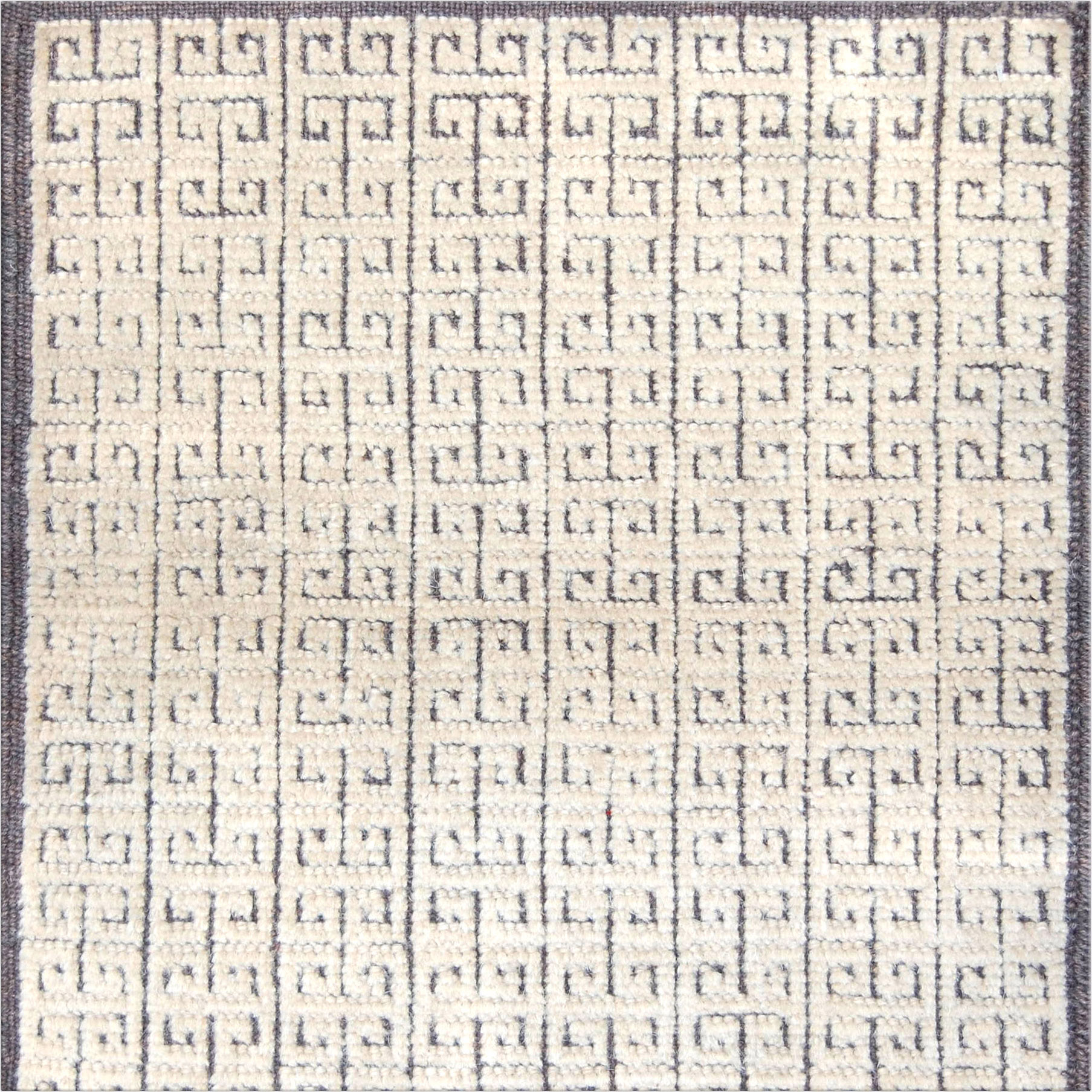
Hand-knotted custom rugs are defined by how they are made, and that production logic shapes everything from clarity of pattern to the way the border sits on the floor. For designers and homeowners comparing luxury options, the difference is not only about craft pedigree; it is about how the rug will perform in a room, how precisely it can be tailored, and how much nuance the finished piece can hold. Doris Leslie Blau often approaches this question through construction first, because the best result depends on matching the weave to the architecture, the use case, and the visual goal.
Many people begin by looking at color or pattern, but with hand-knotted work, the weave determines the entire experience. The density of the knots, the fiber used, and the way the edge is secured all influence the visual sharpness of the design and the tactile character underfoot. That is why hand-knotted custom rugs are often specified for projects where proportion, restraint, and material integrity matter as much as appearance. A rug that looks subtle in a showroom can read very differently once it is scaled to a large dining room or a long gallery corridor.
Explain the knotting process in plain language
Hand-knotting is a slow, deliberate process in which individual knots are tied onto vertical warps, one by one, to build the rug from the foundation upward. The knot structure can vary by region and tradition, but the essential point is that the image is created through construction rather than printed or punched into a backing. Because the design is built stitch by stitch, the weaver can control detail, line weight, and surface variation with a degree of precision that other luxury constructions usually cannot match. This is one reason hand-knotted rugs are so closely associated with bespoke work: the method supports a level of adaptation that feels architectural rather than merely decorative.
In practical terms, this means the rug can be planned around the room instead of forcing the room to adapt to a fixed format. A designer can specify dimensions, border width, field scale, and even how much visual quiet the surface should have. For a seating arrangement with low-profile furniture, a finer knot count may allow a more articulate pattern without visual noise. For a larger room with stronger sightlines, a hand-knotted surface can be calibrated to hold its own without looking busy.
The process also leaves room for material intelligence. Wool brings resilience and a soft matte structure; silk introduces luster and sharper line definition; blended compositions can balance sheen with wear. Because the rug is built by hand rather than cut from a machine-formed template, the maker can respond to the intended use, light exposure, and desired texture in ways that matter to long-term satisfaction. This is where custom rugs become more than a size solution: they become a way to control the entire relationship between object and interior.
Compare hand-knotted with tufted and flatweave construction
Tufted rugs are made by inserting yarn into a pre-formed backing, which allows for faster production and often a softer initial feel, but the surface and structural logic are different from knotting. Because the pile is not individually tied into a foundation, tufted pieces typically do not offer the same control over design refinement or the same longevity profile in demanding interiors. They can be useful in certain projects, especially when speed or cost parameters are tight, but they generally do not provide the same level of finish quality expected in a highly specified luxury setting.
Flatweaves, by contrast, have no pile at all. Their appeal lies in their visual lightness, crisp edges, and often lower profile, which can be very effective in dining areas, layered rooms, or spaces where doors and furniture need to glide cleanly. They are often easier to move and can be ideal for warmer climates or casual family spaces. Yet when a project calls for depth, sculptural texture, or a more substantial sense of presence, hand-knotted construction has an advantage because it can create a richer surface and more nuanced dimensionality.
For trade clients, the decision often comes down to what the room needs to do. A minimalist penthouse living room with pale stone and tailored upholstery may benefit from the quiet definition of a fine hand-knotted rug, while a breakfast area with frequent movement might be better served by a flatter, easier-cleaning structure. Neither construction is inherently superior in every case. The right choice depends on whether the design problem is softness, depth, durability, or visual clarity.
Discuss durability, detail level, and edge finishing
Durability in hand-knotted rugs is tied to the way the rug is built from its foundation, not just to the apparent thickness of the pile. Because each knot is secured into the warp and weft structure, a well-made piece can tolerate years of use when properly specified and maintained. That said, durability is not a single attribute; it depends on material, knot density, traffic level, and placement. A hand-knotted silk rug in a sun-filled entry will behave differently from a wool rug in a library with controlled foot traffic.
Detail level is where hand-knotting becomes especially compelling. Fine lines, subtle shading, abrash-like tonal shifts, and complex borders can be rendered with far more control than in most mechanically accelerated methods. This matters in rooms where pattern is meant to complement architecture rather than dominate it. A hand-knotted rug can hold a restrained design without looking blank, or support an expressive motif without losing definition at the edges.
Rug finishing is equally important, because the best weave can be undermined by weak edges or poorly resolved transitions. Good finishing should look intentional, not merely tidy. Selvedges should be even, bindings should sit neatly along the perimeter, and fringe, if present, should appear integrated rather than decorative afterthought. At the corners, the rug should lie flat and feel balanced; waviness, bulk, or irregular tension can signal rushed finishing or an issue in the construction stage. In luxury specifications, these details matter because they determine how the rug frames the furniture and how it ages visually over time.
What good finishing looks like on the floor
- Edges remain straight and stable, without rippling or twisting.
- Border lines meet the field cleanly, especially in geometric or formal patterns.
- Fringe or binding is consistent from end to end, with no obvious crowding.
- The rug lies flush enough to avoid catching under doors or lifting at corners.
- The back of the rug appears orderly, which often reflects disciplined knotting and finishing.
Describe when trade clients should prioritize hand-knotting
Hand-knotting becomes the priority when the rug needs to do more than cover the floor. In projects with a strong architectural envelope, a bespoke layout, or an unusual room size, the method gives the designer the flexibility to solve proportion problems elegantly. It is also the preferred choice when the surface needs to look composed from a distance but still reward close viewing with texture and subtle variation. For formal living rooms, primary bedrooms, libraries, and hospitality spaces with a refined identity, the added control is often worth the longer production logic.
This is especially true when the project involves large-scale rooms, complex furniture groupings, or mixed-material interiors. Imagine an open-plan living and dining area with pale oak flooring, a low sectional, and a long dining table nearby. A standard-size rug may either disappear or interrupt the plan, but a custom hand-knotted piece can be sized to anchor both zones while maintaining visual continuity. The designer can specify the border width so it does not compete with millwork, and the color can be tuned to bridge warm wood, upholstered neutrals, and reflected daylight.
Trade clients should also prioritize hand-knotting when the brief calls for long-term value and preservation. A rug that is expected to remain in place for years, possibly across several furniture arrangements, benefits from a construction method that can stand up to time while retaining design clarity. In that context, the higher labor investment is not simply an indulgence; it is part of the performance spec. It is also where material guidance, weave knowledge, and installation judgment become essential, which is why many designers rely on specialist support during selection and planning, especially when comparing heritage rug collections, contemporary palettes, and room-by-room needs.
For homes with pets, children, or frequent entertaining, the answer is not automatically to avoid hand-knotting. Instead, it is to specify wisely. A dense wool construction in a balanced pile height may be much more practical than a delicate silk-heavy surface, even within the hand-knotted category. In other words, hand-knotting offers a framework for precision, but the final performance still depends on how intelligently the rug is designed for the setting.
How hand-knotted rugs support better design decisions
Design flexibility is one of the strongest reasons clients choose hand-knotted custom rugs. The piece can be adjusted to fit an awkward room, a very long hallway, a layered salon, or a niche hospitality setting where standard dimensions would look improvised. Beyond sizing, the weave allows for control over pattern density, border placement, palette temperature, and tactile emphasis. That means the rug can either recede into the architecture or act as a calibrated visual anchor, depending on the intent.
In interior design terms, this flexibility helps resolve common problems that have little to do with decoration and everything to do with proportion. A rug that is too small can make furniture appear disconnected, while one with overly active pattern can make a calm room feel fragmented. With a hand-knotted specification, the designer can address those issues at the production stage rather than trying to compensate after the fact. That is why many professionals consider it the most adaptable choice when the room has unusual scale or when the palette must be carefully controlled.
There is also a tactile advantage. Hand-knotted surfaces tend to carry subtle irregularities that give a room depth without visual clutter. In quieter interiors, that may be the difference between a floor covering that simply matches and one that genuinely belongs. In more expressive rooms, the method supports nuanced pattern movement and material contrast without sacrificing refinement.
If you are comparing options for a project, it helps to look beyond the sample and think through use, light, and layout together. A rug that seems understated on a table can become a dominant field once it is expanded beneath a sofa group. Similarly, a finish detail that looks minor in isolation may determine whether the piece reads as tailored or merely expensive. That is the level of judgment that separates a well-chosen rug from one that is only visually appealing at first glance.
FAQ
Why do hand-knotted rugs usually cost more?
Hand-knotted rugs usually cost more because they require significantly more labor and time to produce than tufted or machine-made alternatives. Each knot is tied individually, which increases craftsmanship hours and allows for a finer level of control over pattern and structure. Material quality, knot density, and finishing standards also influence cost, since these factors affect both the complexity of the weaving and the overall durability of the piece.
How can I spot the signs of good finishing?
Look for straight edges, consistent borders, and corners that lie flat without curling or excess bulk. Fringe or binding should appear even and integrated, not loose or visibly uneven from end to end. A carefully finished rug will also sit cleanly on the floor and align well with nearby furniture, which is often the first sign that the construction and edge treatment were handled with discipline.
Are hand-knotted rugs always more durable?
Not always. Hand-knotting offers a strong structural foundation, but durability still depends on fiber choice, pile height, density, and how the rug is used. A wool hand-knotted rug in a living room may be more practical than a delicate silk piece in a busy entry, even though both are hand-knotted. The method creates the potential for longevity; the specification determines whether that potential is realized in a particular room.
When does a flatweave make more sense than hand-knotting?
A flatweave can be the better choice when a project needs a lower profile, easier movement under doors, or a lighter visual footprint. It is often well suited to casual rooms, layered interiors, and dining spaces where a thinner construction helps chairs move smoothly. If the goal is texture depth, greater surface presence, or a more tailored custom format, hand-knotting usually offers more design latitude.
For designers, decorators, and homeowners weighing luxury options, the question is not simply whether a rug is handmade. It is whether the construction, finishing, and scale are aligned with the room’s architecture and the way the space will actually be used. If you need help assessing those variables, Doris Leslie Blau can provide specialist guidance on materials, weave selection, and made-to-order design so the rug feels resolved from the first placement onward.