

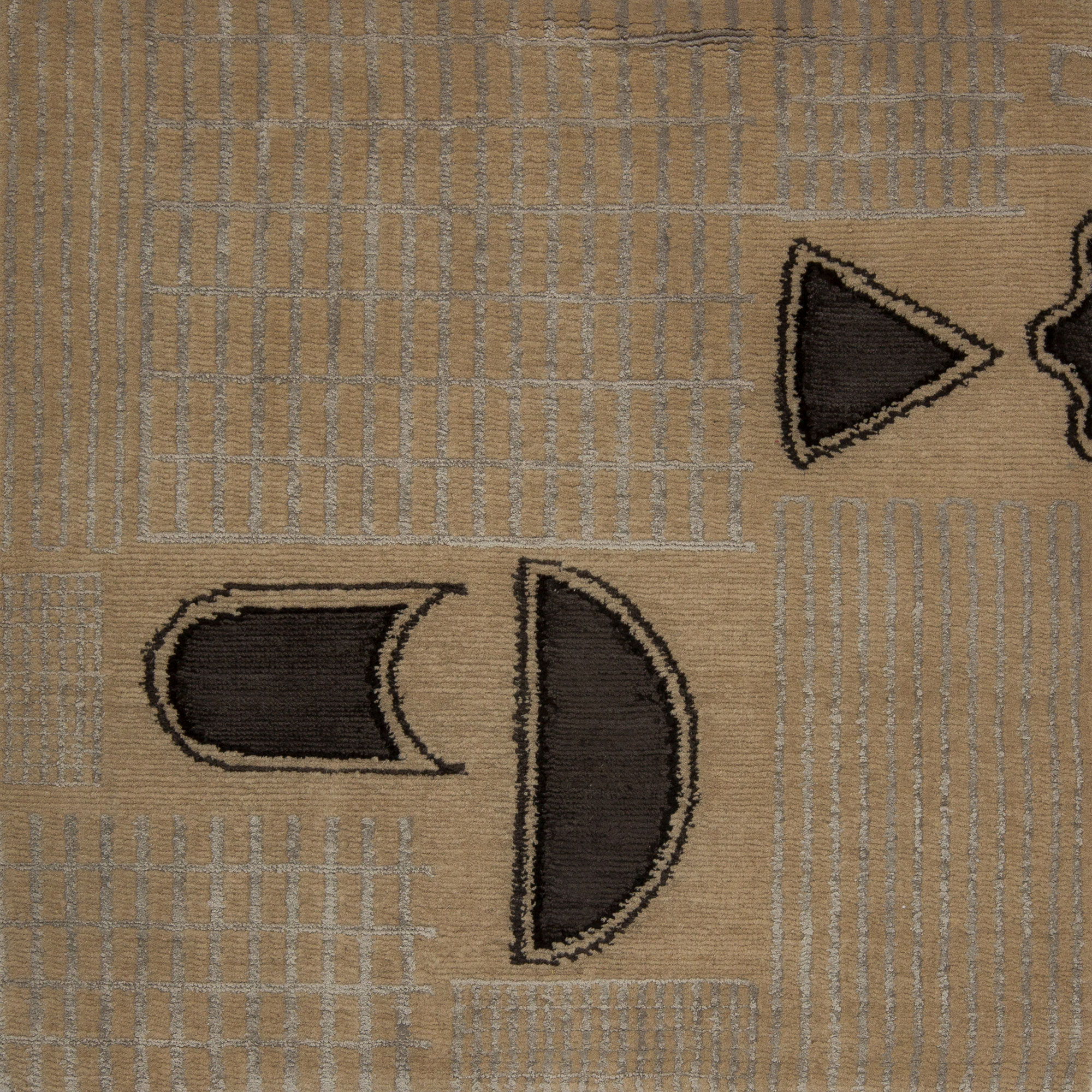
When people ask how much larger a rug should be than furniture, they are usually trying to avoid one of the most common rug size mistakes: a room that feels either cramped or overcommitted. In a formal setting, the rug is not an afterthought beneath the seating arrangement; it is part of the architecture of the room, shaping borders, circulation, and visual balance. The right answer depends on the furniture footprint, the amount of exposed border you want, and how disciplined the room is meant to feel. For custom rugs, that calculation becomes even more precise because the dimensions can be tailored to the exact proportions of the room rather than forced into a standard size.
Explain the relationship between rug border and furniture footprint
In a formal room, the border around a rug functions almost like a frame around a painting. If the rug is too small, the furniture can look stranded on a floating island with no visual support. If it is too large, the perimeter may disappear into the walls and the room can lose definition, especially when the architecture already has strong moldings, paneling, or built-ins. The goal is not simply to make the rug bigger; it is to make the space read as intentional, with enough border to define the composition and enough coverage to anchor the seating.
A useful way to think about it is to measure the furniture footprint first, then decide how much visual breathing room the room needs around that footprint. In formal spaces, that margin is usually more controlled than in casual family rooms. Designers often aim for a rug that extends beyond the main seating pieces so the arrangement feels unified, but they also want the rug edge to remain visible as a deliberate line. The rug should support the layout, not compete with it.
Give practical margins for sofas, chairs, and tables
For sofas and lounge chairs, the front legs should generally sit on the rug, and in more formal compositions the back legs often follow if the scale allows. A practical margin is to allow the rug to extend at least 6 to 12 inches beyond the outer edges of the main furniture grouping on each side, though larger rooms often benefit from even more. If the room is generous, a border of 18 inches or more can feel properly tailored rather than accidental. Smaller margins are possible, but they require confidence in proportion and a very disciplined layout.
Dining tables need a different calculation because chairs must remain fully on the rug even when pulled out. A formal dining rug usually extends about 24 inches beyond the table on all sides, and sometimes more if the chairs are substantial or upholstered. That extra allowance is not decorative excess; it prevents chair legs from catching the edge of the rug and gives the table a finished frame. For long rectangular tables, matching the rug shape to the table shape often produces the most composed result, particularly in rooms with symmetrical lighting or classical architecture.
Occasional tables, such as center tables or cocktail tables, should never dictate rug size on their own. The seating group is the true measure. A coffee table may sit neatly in the middle of a composition, but it is the sofas and chairs around it that determine whether the room has the right proportion. If the furniture arrangement is formal, the rug should read as a stable field beneath it, not as a small island just large enough to hold the table.
A quick visual rule for seating groups
- Allow the rug to extend beyond the outer furniture line so the arrangement feels contained.
- Keep the border even on all sides whenever possible; asymmetry is harder to justify in a formal room.
- Make sure the rug is large enough that at least the front legs of the seating pieces rest on it.
- For larger formal rooms, consider whether the border should be wide enough to show the room’s architecture, not just the furniture.
Show how formality changes sizing expectations
Formality changes what “large enough” means. In a relaxed space, a rug can be slightly looser, with more casual overlap or a softer relationship to the walls. In a formal room, the rug has to look measured, which usually means cleaner symmetry, more precise centering, and a border that feels like it was planned in relation to the architecture. This is one reason why custom oversized rugs are so useful in formal interiors: standard dimensions often miss the exact edge conditions that make a room feel refined rather than merely furnished.
The more architectural the room, the more exact the rug proportion needs to be. A salon with tall ceilings, symmetrical windows, or elaborate millwork usually benefits from a rug that echoes that order. If the border is too narrow, the arrangement can feel compressed. If the border is too broad without enough rug presence under the furniture, the room can feel ceremonial in a way that undermines comfort. Formality is not about making everything larger; it is about making every dimension deliberate.
Pattern and material also affect how the rug reads at scale. A dense motif can visually enlarge the rug’s footprint because the eye perceives more activity across the surface, while a quieter field of wool may appear calmer and more contained. Low pile heights and finely resolved patterns often suit formal rooms because they preserve clean sightlines under furniture. Heavier textures can still work, but they need the right proportion so the room does not feel visually weighted toward the floor.
Offer a quick formula for buyers and designers
If you want a fast starting point, begin with the furniture group and add border deliberately. Measure the full outer width and depth of the seating arrangement, then add 12 to 24 inches to each side for a formal living room, depending on the room’s size and the visual weight of the furniture. For dining rooms, add roughly 24 inches beyond the table on every side so chairs stay comfortably on the rug when pulled out. These are not rigid rules, but they are reliable starting points that reduce the most common rug size mistakes.
Another practical formula is to think in layers: footprint, border, circulation. The footprint is the furniture group itself. The border is the visible rug perimeter beyond the furniture. Circulation is the amount of clearance needed for movement around the arrangement without making the rug feel undersized. In formal rooms, the circulation zone often benefits from being clearly separated from the rug edge, because that separation helps the room feel composed and not visually crowded.
Here is a simple decision sequence that works well in the design process:
- Measure the full furniture layout, not just the largest sofa or table.
- Decide whether the room should feel intimate, balanced, or expansive.
- Add enough rug border to support that mood without hiding the rug’s perimeter.
- Check that chairs, table legs, and front sofa legs sit comfortably on the rug where needed.
- Confirm that the rug still leaves a clean frame within the room’s architecture.
What to watch for in formal layouts
One of the most common mistakes is using the room dimensions instead of the furniture layout to choose rug size. A room may be large, but if the seating group is compact and the rug is too expansive, the arrangement can lose intimacy. The opposite mistake is even more common: selecting a rug that fits neatly under the coffee table but fails to relate to the full seating group. In formal interiors, that error is obvious because the room’s symmetry gives the eye more structure with which to judge proportion.
Another issue is ignoring the scale of surrounding finishes. Dark wood floors, elaborate borders, strong wall colors, and tall draperies all affect how much rug is needed before the room feels balanced. A rug that looks generous in a minimalist room can appear undersized in a traditional salon with visual density at every edge. This is why designers often look beyond the furniture and consider the entire envelope of the room before specifying size. The rug should hold its ground against the architecture, not disappear beneath it.
Material selection can also influence how a size reads. A hand-knotted wool rug with a firm weave tends to hold a sharper edge and can appear more structured than a plush cut-pile carpet. Silk details may introduce sheen that enlarges the visual presence of the rug, especially under strong daylight or chandelier light. If the room receives a lot of light, that reflective quality can make a moderately sized rug seem more substantial, while in low light a rug may need greater physical scale to register with the same authority. The best custom rug design takes these effects into account before the final dimensions are set.
How formal furniture changes the proportions
Formal furniture usually has clearer geometry, heavier frames, and more disciplined spacing than casual upholstery. That means the rug must often be proportioned with greater precision to avoid awkward gaps between chair legs, table edges, and rug borders. Deep skirts, carved legs, and generous arms all increase the visual footprint of the furniture, which in turn affects how much rug is needed to make the grouping feel complete. A slim contemporary sofa and a skirted traditional sofa may occupy the same nominal width, yet they do not read the same way once placed on a rug.
This is especially important in rooms that mix antique and modern pieces. A restrained modern sofa paired with more ornate chairs can look disjointed if the rug is too small, because the pieces do not visually merge into a single composition. In those cases, a slightly larger rug or a more expansive custom area rug plan can act as a unifying field. The rug becomes the shared ground that allows different furniture languages to coexist without visual competition.
For formal entertaining spaces, the rug should also respect sightlines. You want the room to read cleanly from the doorway, across the seating arrangement, and toward architectural focal points such as a fireplace or window wall. If the rug is too tight, it can make the furniture feel clustered. If it is proportioned correctly, the room feels calm, legible, and quietly authoritative. That is the real test of formal sizing: whether the room looks settled the moment you enter it.
When custom sizing is the smarter solution
Standard rug sizes work well only when the room and furniture happen to align with them. Formal rooms rarely cooperate that neatly. Odd room widths, oversized sofas, dual seating zones, and irregular architectural features often create the exact conditions where made-to-order rugs become the most practical answer. With custom area rugs, the border can be calibrated to the room instead of compromised by a standard dimension that is close but not quite right.
This is particularly useful when you want consistency across multiple rooms. A formal living room, adjacent library, and dining room may each need a different proportion, but they may still need to feel related in palette, construction, or border treatment. A custom specification allows those rooms to share a design logic while preserving the proper scale in each one. That is often the difference between a house that feels furnished and a house that feels composed.
Designer-led specification also helps avoid costly rug size mistakes before they happen. A precise plan can account for baseboards, door swings, fireplace setbacks, chair clearance, and the visual weight of the furniture itself. It can also address material questions, such as whether a hand-knotted wool field or a wool-and-silk blend better suits the room’s use and lighting. For formal interiors, those decisions are part of proportion, not separate from it.
FAQ
Is there a universal rule for rug extension?
There is no single rule that works for every room, but a reliable starting point is to extend the rug beyond the main furniture group so the layout feels anchored and balanced. For seating, that usually means at least the front legs of sofas and chairs on the rug, with more border in formal rooms. For dining rooms, the rug should extend far enough that chairs remain fully on the rug when pulled out. The exact amount depends on the room’s size, furniture scale, and how formal the composition needs to feel.
How does formal furniture change the proportions?
Formal furniture tends to have stronger outlines, deeper frames, and more visual weight, so the rug often needs to be sized with greater precision. A skirted sofa or substantial armchair can make a rug seem smaller than it is if the border is too tight. In a formal room, the goal is usually a measured border that frames the arrangement and respects the architecture. That is why proportion matters as much as the numeric dimensions.
Should the rug always sit under all front legs?
In most seating arrangements, yes, the front legs of the major pieces should sit on the rug because it visually unifies the group. In more generous formal rooms, designers may place more of the furniture on the rug, including back legs, if the scale supports it. The important thing is that the seating reads as one composition rather than a collection of separate items. If the rug only catches a coffee table, it is usually too small.
What are the biggest rug size mistakes in formal rooms?
The most common mistakes are choosing a rug based on the room instead of the furniture, leaving too little border around the seating group, and ignoring chair clearance at dining tables. Another common issue is using a standard size that nearly fits but leaves the composition feeling awkward or unresolved. Formal rooms show these errors quickly because they rely on symmetry and proportion. A carefully planned rug avoids those problems by matching the scale of the layout from the start.
Choosing the right rug size for a formal room is less about memorizing a single rule and more about reading the relationship between furniture, architecture, and intended mood. When the proportions are correct, the rug gives the room clarity, structure, and restraint. If you are weighing dimensions for a formal layout, a specialist can help translate the floor plan into a tailored rug specification that feels resolved from every angle. Doris Leslie Blau brings that kind of design guidance together with deep expertise in custom rugs, so the final result is not merely large enough, but properly considered.