

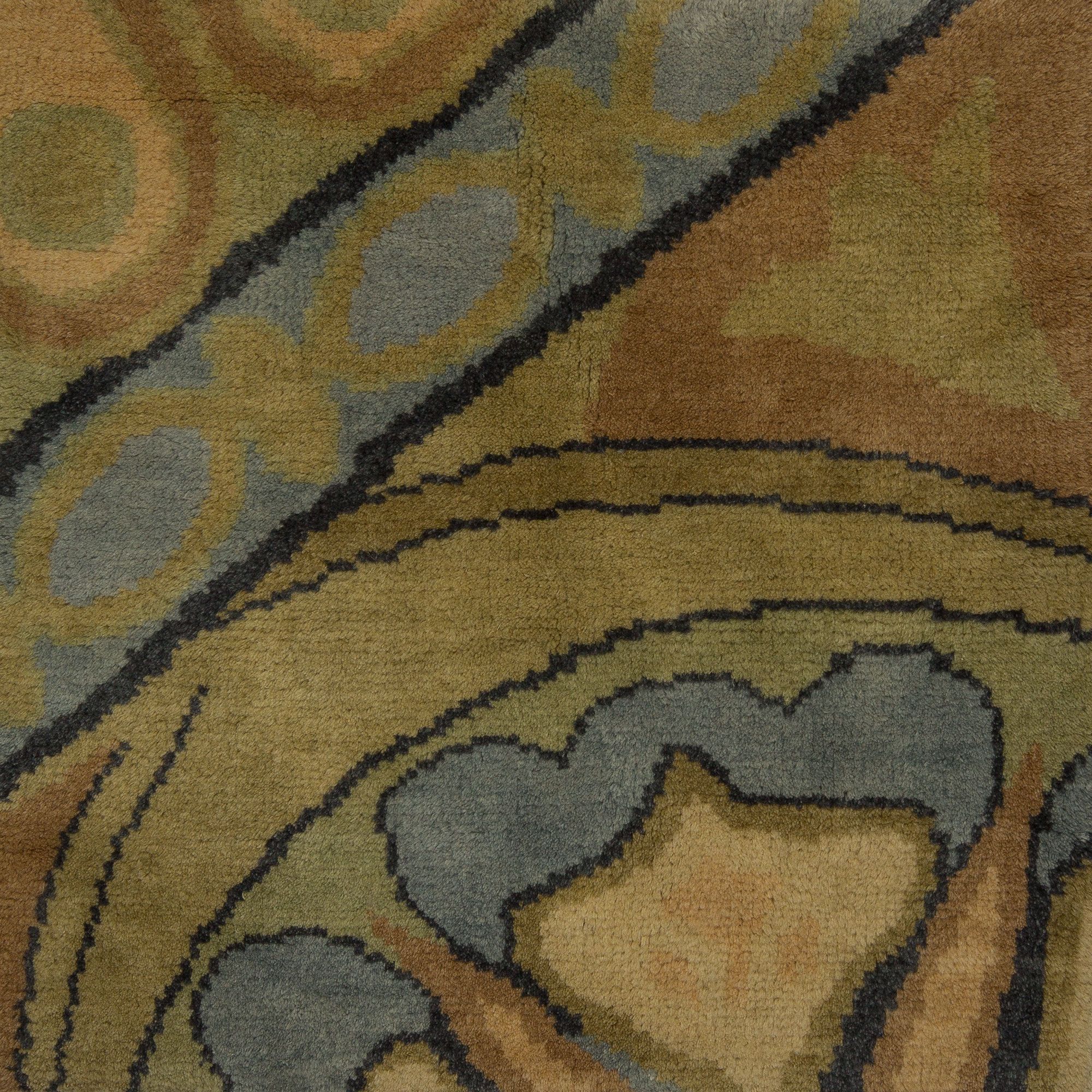
Luxury rugs are often judged as if they belonged in untouched rooms, but the reality is different: they live under dining tables, beside sofas, at the foot of beds, and in hallways where shoes, sunlight, and daily movement all take their toll. Preserving custom rugs in a real home is less about guarding them from life and more about setting up habits that slow wear in the right places. That means paying attention to traffic patterns, rotation, light exposure, and the way furniture loads the pile over time. If you want a rug to age well, you need to think like a designer and care for it like a textile.
For homeowners who choose custom rugs, preservation starts at the specification stage, but it continues long after installation. Material, weave structure, pile height, and placement all influence how a rug behaves in use, especially in rooms that serve several purposes. A wool rug in a family room will not age like a silk-accented piece in a formal sitting room, and a hand-knotted rug under a heavy sectional needs different oversight than a smaller accent rug in a low-traffic study. The goal is not to avoid living on the rug; it is to keep the rug visually balanced, structurally supported, and easy to maintain for years.
Set care habits that suit the room’s traffic
Not every room asks the same thing from a rug, which is why care should begin with traffic, not with a calendar reminder alone. Entry zones, family rooms, kitchens, and pathways tend to compress fibers faster than bedrooms or formal lounges, and the difference shows first at the edges and in the lanes between furniture. In high-traffic areas, a denser weave and a lower or medium pile usually hold their shape more reliably because they resist crushing and reveal less wear at the surface. In quieter rooms, a more delicate construction can perform beautifully, but it still benefits from regular vacuuming and occasional inspection.
A good daily habit is to prevent the kind of dirt that becomes abrasive. Fine grit, especially in city homes, works like sandpaper when it settles into the pile and is then walked across repeatedly. Vacuuming with care removes that grit before it cuts into the fibers, but the method matters: use a suction-only setting or a height-adjusted head if the rug has a sensitive weave, fringe, or longer pile. For hand-knotted rugs, vacuum in the direction of the pile when possible, and avoid aggressive beater bars that can pull at the foundation. These small routines are what preserve rug durability without making the rug feel untouchable.
Cleaning habits should also reflect how the room is used. Under a dining table, crumbs and small spills are inevitable, so it is smarter to address them immediately than to assume a deep clean later will solve everything. In a living room, the accumulation is often less visible but more persistent: dust, skin oils, and airborne particles collect where people sit and move their feet. If you are specifying custom area rugs for a busy family room, ask yourself whether the pattern is doing enough visual work to disguise minor aging, while the construction still supports routine maintenance.
Manage sunlight, furniture pressure, and rotation
Sunlight is one of the most underestimated causes of uneven aging. Natural light can soften dyes over time, but it rarely fades a rug uniformly because windows, doors, and furniture cast different shadows throughout the day. A rug placed near a south-facing window may keep its color in the center while the exposed border slowly changes tone, creating a halo effect that becomes obvious only after months. Even when fading is subtle, color shifts can alter the balance of a room, especially if the rug was selected for its relationship to wall color, upholstery, and wood finish.
Rotation is one of the simplest forms of preservation, yet it should be used with a designer’s eye rather than as a rigid rule. If a sofa, coffee table, or bed is centered on the rug, pressure points are usually more severe along the front edge and at the primary approach path, so rotating the rug can redistribute wear. In asymmetrical rooms, or where light comes from one side, a half-turn every six to twelve months is often more useful than frequent random adjustments, because it lets the rug wear more evenly without disrupting the furniture arrangement. For antique pieces or rugs with directional motifs, rotation should be slower and more deliberate so the visual composition still reads correctly.
Furniture pressure creates another form of aging: compression. Heavy legs can flatten pile, bruise the weave, or leave permanent dents if they remain in one position for years. That does not mean the rug is damaged beyond repair, but it does mean the load should be managed thoughtfully. Use broad furniture cups or pads where appropriate, and if a room contains a large sectional or dining set, check the contact points when you rotate the rug so the same areas are not always carrying the weight. In rooms where the layout rarely changes, a well-considered custom rug design can account for this by placing the most resilient materials under the most demanding zones.
Placement should also respond to sightlines. A rug that runs too far under a sofa may protect the floor, but it can also trap dust in the hidden field and make maintenance awkward. A rug that ends awkwardly before the furniture edges may experience more edge curl and more visible traffic lines because people step on and off it at the perimeter. Good proportion helps the rug wear more gracefully because the load is distributed where the room actually functions. If you need help judging those relationships, a custom-made rugs resource can be useful when you are deciding how scale, border width, and furniture placement should work together.
In open-plan interiors, rotation and light management become even more important because the rug often acts as a visual anchor between several zones. A rug under a seating area may receive almost no wear in the center but substantial wear along one circulation edge where the eye path and footpath overlap. In that case, the answer is not simply to replace the rug when one side looks tired; it may be to shift the furniture slightly, adjust lighting, or rotate the rug so the most exposed edge is no longer taking the full brunt of the room’s movement.
Spot early signs of wear before they become problems
The most useful preservation habit is learning to read the rug before damage becomes visible from across the room. Early wear often appears as a change in sheen rather than a clear hole or tear: the pile starts to look flatter in walking lanes, certain colors look slightly duller, or a border begins to distort where people step in and out of the space. These changes are not always urgent, but they are informative. They tell you where the room is asking more of the rug than the current setup can comfortably support.
Edge wear deserves close attention because it often reveals structural stress before the center does. A border that curls, frays, or begins to separate can indicate vacuum strain, moisture exposure, or repeated footfall at a doorway. Fringe issues are another early warning sign, especially on hand-knotted rugs, because loose or pulled fringe can signal that the foundation needs attention. If a rug starts shedding more than expected, or if a previously even surface begins to look lumpy, it may be time to inspect the underside rather than treating the issue as a surface-only problem.
Color and pattern changes can also expose hidden wear. Dense pattern can mask some aging, but it can also make inconsistencies more apparent once they appear, because a small flattening in one area interrupts the rhythm of the design. Solid-color or low-contrast rugs, by contrast, tend to reveal traffic paths through texture first. This is one reason designers think carefully about material and construction in relation to a room’s use: a rug intended for a quiet bedroom may be beautiful in a fine wool-silk blend, while a hall or den may ask for a more resilient field and a pattern that tolerates the realities of daily life.
If you have pets or children, early inspection becomes even more valuable. Claw marks, small spills, and toy impact can leave tiny but cumulative scars that are easier to address when caught early. A regular visual check every time you rotate the rug is usually enough: look at the corners, the most walked-on lane, the area beneath coffee tables, and any spot where sunlight falls consistently. That is the practical side of rug durability; it is less about one heroic cleaning and more about noticing small changes before they settle into the textile.
Explain when professional care is worth it
Professional care becomes worthwhile when ordinary maintenance is no longer able to restore balance without risk. That includes visible staining that has sat too long, odor that suggests moisture has penetrated beyond the surface, persistent shedding, distortion at the edges, or fading that appears stronger on one side of the rug than the other. A specialized cleaner understands fiber behavior, dye stability, and backing construction in a way that a standard household routine does not. For valuable handmade rugs, that expertise matters because the wrong process can do more damage than the original problem.
Professional cleaning is also the right choice when the rug’s value is tied to its construction, not just its appearance. Hand-knotted rugs, silk accents, and complex mixed-fiber pieces often need cleaning methods that account for tension, dye migration, and the particular way dirt settles into the pile. If a rug has been in a home for several years and still looks good at a glance, that does not necessarily mean it is clean enough beneath the surface. Soil trapped in the foundation can continue to abrade fibers even after the top layer seems tidy, which is why preservation sometimes requires more than vacuuming and spot treatment.
There is also a preservation case for professional assessment before a problem is obvious. A seasonal inspection can help identify weak spots in advance, especially if the rug is located in a room that gets strong light or heavy use. Designers and collectors often treat this kind of check as part of the object’s long-term stewardship: not because the rug is fragile in a dramatic sense, but because good textiles respond best to timely attention. In homes that are genuinely lived in, maintenance schedules should be based on use, not sentiment.
For clients building a room around a statement piece, the most practical path is often to pair a well-chosen rug with a clear care plan from the beginning. Doris Leslie Blau frequently approaches rugs as both design objects and working surfaces, which means the right recommendation should consider more than color and pattern. It should also reflect how people move, sit, eat, and gather in the room, because those habits determine how a rug will age in real life.
Preservation is a design decision, not just a maintenance task
When a rug is selected well, preservation becomes easier because the piece is already suited to the room’s scale, light, and use. A rug that is too small will show more edge wear as people step around it. A rug that is too delicate for the room will demand constant correction. A rug with a thoughtful material mix, balanced pile height, and proportional layout can absorb daily life without losing its shape or clarity too quickly. That is the quiet advantage of working with rugs as part of the architecture of the room, rather than as afterthoughts.
In practical terms, longevity comes from a combination of restraint and attention. Rotate on a schedule that reflects light and traffic. Keep grit out of the fibers. Watch for compression and edge changes. Choose professional care when the rug needs more than surface cleaning. Those steps are simple, but together they protect the visual and structural integrity of a rug far better than occasional dramatic intervention. If you are planning a new room or reassessing an existing one, it can be worth speaking with specialists who understand how a rug will perform once it leaves the showroom and begins its real life at home.
Frequently asked questions
How often should I rotate a rug?
For most lived-in rooms, rotation every six to twelve months is a sensible starting point, but the right interval depends on light exposure, furniture placement, and how much foot traffic the rug receives. If one side sits near a bright window or a heavily used passage, you may want to adjust sooner. The goal is to distribute wear evenly rather than wait until one edge looks visibly tired.
What causes luxury rugs to age badly?
The most common causes are uneven sunlight, repeated pressure from furniture, embedded grit, moisture problems, and poor placement relative to traffic patterns. A rug can also age badly if the material or construction is too delicate for the room it lives in. In many cases, the issue is not a single mistake but a combination of small stresses that accumulate over time.
Can careful placement extend rug life?
Yes. Placement has a major effect on rug durability because it determines how weight, light, and traffic are distributed across the surface. A rug centered properly under furniture, protected from direct sun where possible, and sized to match the room’s circulation paths will usually wear more evenly. Good placement also makes maintenance easier, which helps the rug stay in better condition over the long term.
For homeowners, designers, and collectors who want a rug to remain beautiful in daily use, the best next step is often a conversation about material, scale, and care rather than a one-size-fits-all rule. Doris Leslie Blau can help guide that decision with gallery-level expertise and a practical eye for how rugs live in real interiors.