

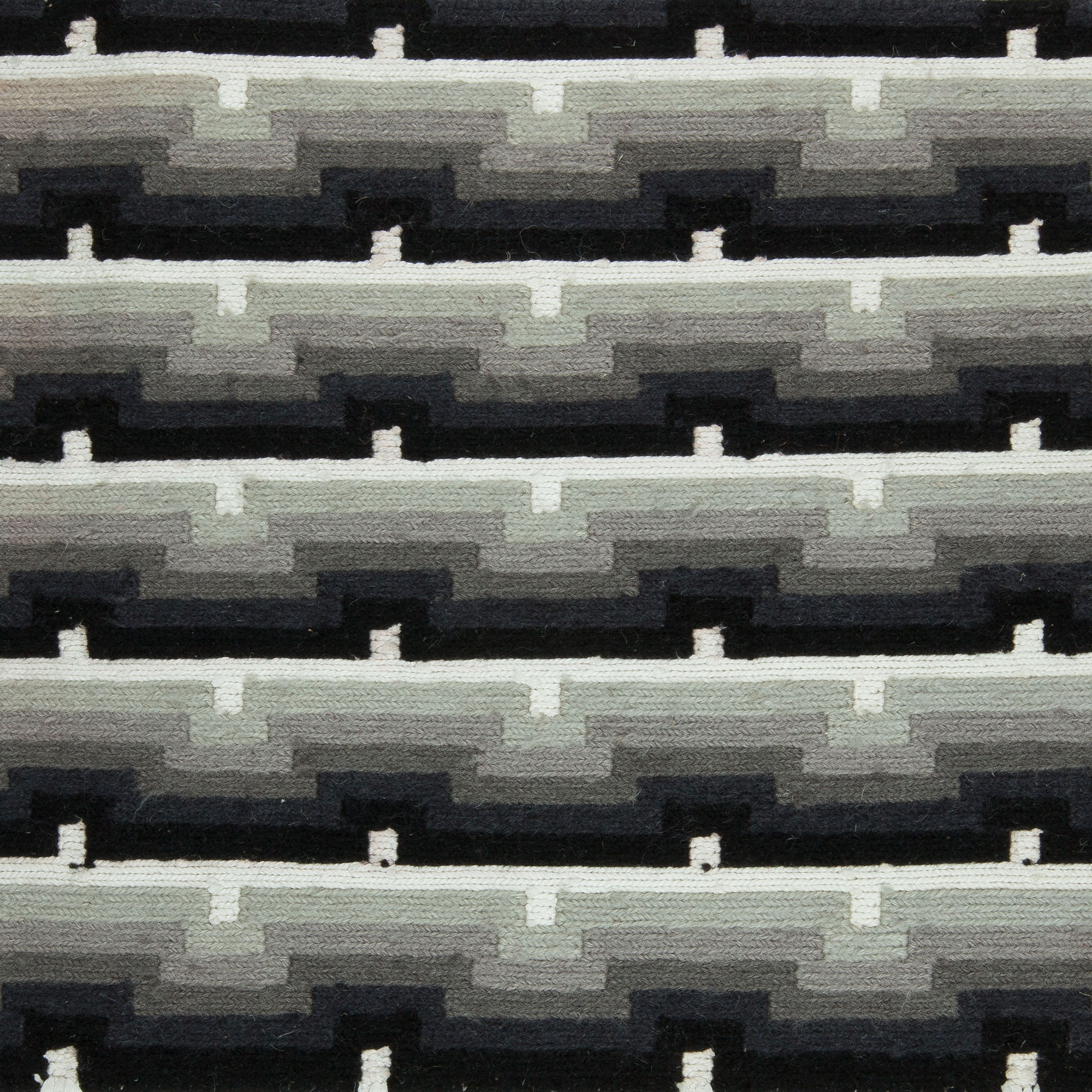
Antique rugs can give contemporary interiors depth, but they work best when the room around them is edited with intention. The goal is not to make a modern space look old; it is to let age, pattern, and material character sit comfortably beside cleaner architecture. When that balance is right, the room feels collected rather than crowded, and the rug reads as a deliberate focal point instead of a competing relic. For homeowners, designers, and anyone comparing antique pieces with custom rugs, the question is less about style and more about proportion, palette, and use.
An antique rug brings visual information that a new floor covering often does not: softened dyes, directional wear, a border with history, and pattern that has already settled into its own rhythm. In a modern room, those qualities can be powerful, but only if the surrounding elements give the eye a place to rest. A minimal sofa, a well-scaled coffee table, and a controlled palette can make age feel fresh rather than fussy. That is why antique rugs in modern rooms often succeed in transitional interiors, where the furnishings are streamlined but not sterile, and where texture is allowed to carry part of the design load.
Balance patina with cleaner architectural elements
When an antique rug is highly patterned or visibly worn, the room should not add more noise at the architectural level. Wall paneling, heavy drapery, elaborate millwork, and multiple busy finishes can make the floor feel overloaded before any furniture is placed. Instead, let the shell of the room work quietly: smooth plaster, simple baseboards, restrained cabinetry, and clear sightlines all help the rug read as an intentional layer. This is especially effective in apartments and townhouses where original moldings, tall windows, or restored floors already bring enough character.
Color also affects whether the rug feels anchored or adrift. A modern room with strong white walls and dark, clean-lined furniture can give an antique piece clarity, because the contrast lets the rug’s softened tones stand out without fighting the rest of the scheme. If the architecture is already richly detailed, consider choosing a rug with a more disciplined palette or a pattern that has been visually quieted by wear. In both cases, the most successful arrangement is one where the room’s strongest surfaces are not all speaking at once.
Scale matters here as much as style. A rug that is too small under modern furniture looks accidental, and antique pieces are especially vulnerable to that mistake because their visual complexity magnifies proportion issues. Ideally, the rug should extend far enough to unify the seating area or define the dining zone, rather than floating as a decorative island. In open-plan interiors, a carefully measured rug helps establish boundaries without needing extra walls, which is one reason antique rugs remain useful in contemporary layouts.
Choose furniture and art that support the rug rather than crowd it
Furniture selection should respond to the rug’s density, not just its color. If the rug has an ornate medallion, a crowded border, or many small-scale motifs, bulky upholstered pieces with skirted bases and carved legs can make the composition feel overworked. Sleeker silhouettes, visible legs, and lower profiles allow more of the rug to remain visible, which preserves the visual intelligence of the pattern. A modern sofa in mohair, linen, or leather can be a useful counterpoint because it brings material depth without adding another layer of ornament.
Art deserves the same discipline. A wall filled with aggressive pattern, high-contrast abstraction, or overly saturated color can compete with the rug’s field and border, especially if both are meant to be focal points. When the carpet is historically rich, the art can be quieter, larger, or more spatially open so the room does not fragment into too many attention centers. The best result often comes from treating the rug as the low anchor and the art as the upper counterweight, with the furniture acting as the quiet middle layer.
One practical example is a living room with a 19th-century Persian rug, a contemporary stone coffee table, and a pair of angular sofas. If the sofas are upholstered in a tone drawn from the rug’s faded background, and the table is simple enough to reveal part of the field, the composition feels coherent rather than thematic. Add one or two restrained objects—ceramic, bronze, or glass—and the room gains age and polish without crossing into staging. This is the kind of editing that keeps antique pattern legible in contemporary settings.
Use color repetition to unify old and new
The fastest way to make an antique rug feel intentional in a modern interior is to repeat one or two of its colors elsewhere in the room. That does not mean matching everything to the border, but rather borrowing a background tone, a softened accent, or even a muted contrast that appears in upholstery, pillows, drapery trim, or a painted casegood. Repetition creates visual continuity, and continuity is what prevents historic pattern from feeling dropped in. In rooms with strong daylight, choose colors based on how they shift in natural light, since aged wool can look different at noon than it does in the evening.
Neutral rooms benefit most from this approach because antique rugs often introduce the first meaningful color story in the space. A rug with faded terracotta, moss, and indigo can guide the selection of a velvet chair, a lacquered side table, or a piece of artwork without turning the room into a matched set. The trick is to echo the rug’s temperature rather than its exact hue: a warm ivory on the walls, for example, can make a cooler border feel more dimensional, while a smoky blue accent can pull the entire room into balance. This method works particularly well in transitional interiors that need history without heaviness.
When the rug is especially ornate, color repetition can also be used to control attention. If the field contains many shades but one border color is especially clear, repeating that color in a nearby object can help the eye move around the room in a deliberate path. Designers often rely on this principle in sitting rooms and libraries, where layered materials are welcome but visual chaos is not. The goal is not symmetry; it is a conversation between surfaces that makes the rug feel chosen, not merely inherited.
Think about material, wear, and how the room is used
Not every antique rug belongs in every modern room, and that judgment often comes down to use. A delicate silk piece with historic value may be ideal in a formal sitting room, but it may not be the right answer for a family room, hallway, or space with pets and frequent traffic. Wool generally offers more resilience, while silk content adds sheen and refinement that can be beautiful in low-traffic areas but less forgiving under daily wear. Pile height matters too: a flatter, more compact surface tends to sit more cleanly beneath contemporary furniture than a deep pile that visually thickens the room.
Light exposure is another practical issue that becomes more important when the rug is old. Strong sun can exaggerate uneven fading or accelerate further color loss, especially near windows and glazed doors. In a room with significant daylight, the rug should be positioned thoughtfully, perhaps rotated periodically or placed where sunlight is filtered by drapery or UV protection. These are preservation decisions, but they also affect design clarity because a rug that ages unevenly can begin to look unstable in relation to the rest of the room.
Traffic and acoustics should also guide the choice. In a quiet formal room, an antique rug can absorb sound and add warmth under modern furniture with harder edges. In a busy circulation area, however, the same piece may be too fragile or too visually busy to perform well. This is where designers often weigh antique value against long-term function and decide whether the room needs an original textile, a restoration, or one of the many custom carpets available through a made-to-order process. For spaces that need the look of age with more predictable performance, custom rugs can be specified for scale, palette, and construction in a way that better suits the room’s use.
Show when a custom piece may be a better fit than a fragile antique
There are times when the smartest design move is not to force an antique into the room, but to commission a new rug that borrows the discipline of historic pattern without the liabilities of age. This is particularly true for oversized rooms, unusual layouts, or interiors that require exact dimensions under furniture. An antique rug may be too small, too narrow, too faded, or too delicate to do the job cleanly, even if the design itself is beautiful. In those cases, a well-considered custom rug can preserve the spirit of an older textile while giving the room the clarity it needs.
Custom rugs are also useful when a designer wants the mood of a vintage piece but needs a specific color temperature, a more durable fiber, or a controlled amount of pattern density. A hand-knotted wool rug can be designed with a softened medallion, an abrash effect, or a restrained border that feels informed by history without imitating wear. That approach is often ideal for clients who love antique references but need a rug to support everyday life, including children, pets, or frequent entertaining. In practice, the decision often comes down to whether the room needs an object with provenance or a textile that solves a spatial problem.
For hospitality settings, commercial lobbies, and large-scale residential projects, a new rug may offer even more flexibility. Pattern can be adjusted for circulation, maintenance, and furniture zoning, while the color can be calibrated to architectural finishes, lighting temperature, and the emotional tone of the room. That is where vintage-inspired custom rugs become especially valuable: they can echo historic character while meeting the practical demands of the space. Doris Leslie Blau often approaches this kind of project as a balance of craft and specification, not simply a style exercise.
Designer considerations for transitional interiors
Transitional interiors are often the easiest context for antique rugs because they already accept both restraint and ornament. The furnishings may be modern, but the room still allows for texture, patina, and one or two pieces with strong character. In this setting, the rug should not be asked to carry the entire design narrative alone. Instead, it should work with the architecture, upholstery, lighting, and art to create a layered room that feels edited over time.
One useful rule is to decide which element is meant to be the most visually active and let everything else support it. If the rug is the star, keep upholstery quiet and the coffee table sculptural but simple. If the art is bolder, select a rug with a more subdued field or a border that contains the movement. If the architecture is already expressive, such as a room with arched openings or strong beams, choose a rug with enough restraint to avoid competing with the envelope. This kind of hierarchy is what gives a room clarity, even when it includes antique pattern.
Designer specification also benefits from thinking in zones. In an open-plan living and dining area, one antique rug can define the seating arrangement while a second textile nearby may need to be calmer or more geometric so the room does not feel repetitive. In a bedroom, the rug can be placed to frame the bed and soften the floor, but it should not disappear under too much furniture mass. Every placement question is ultimately about whether the rug is contributing to the room’s logic or obscuring it.
FAQ
How do I keep an antique rug from feeling dated?
Keep the surrounding architecture and furnishings edited. Clean-lined upholstery, controlled wall color, and fewer competing patterns help the rug read as a deliberate historic layer rather than a nostalgic leftover. Repeating one or two colors from the rug elsewhere in the room also makes it feel current and integrated.
Can modern furniture work with ornate pattern?
Yes, and often very well. Modern furniture usually provides the visual calm that an ornate rug needs, especially if the silhouettes are low, the legs are visible, and the upholstery is not overly textured. The key is scale: if the furniture is too heavy or too small, the rug loses clarity.
When should I commission a custom rug instead?
Commission a new piece when the antique rug is too fragile, the size is wrong, the palette is close but not quite right, or the room needs a textile that can handle daily use. Custom rugs are especially helpful in open-plan rooms, unusual layouts, and family spaces where you want historic character with more predictable performance.
What type of room is best for an antique rug?
Rooms with moderate traffic, good natural proportion, and enough visual restraint to let the pattern breathe are ideal. Living rooms, libraries, and formal bedrooms often work well, while high-traffic entries and heavily used family spaces may require more durable construction or a custom alternative.
Placed with care, an antique rug does not compete with contemporary design; it sharpens it. The right room gives the textile room to breathe, and the right textile gives the room memory, texture, and a sense of depth that new materials alone cannot provide. If you are weighing an inherited piece, a collectible antique, or a made-to-order solution, Doris Leslie Blau can help you compare scale, material, and placement with the eye of a specialist.