

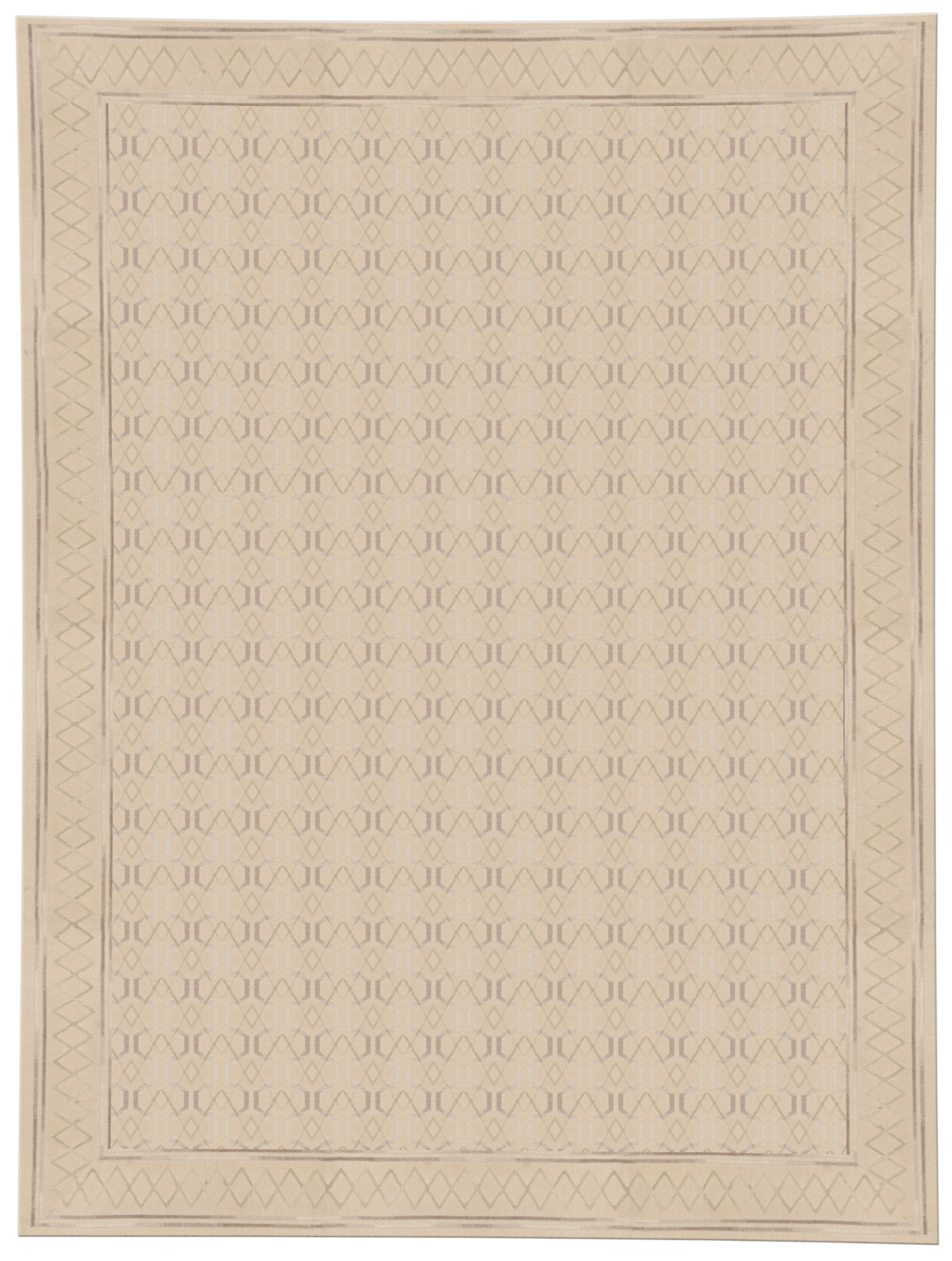
If the sofa, dining table, or heirloom chairs are already in place, the rug should work around them rather than force a new layout. That is where custom rugs become especially useful: they can be sized, shaped, and detailed to support the room you actually live with, not an idealized floor plan on paper. The goal is to solve for proportion, circulation, and visual balance while keeping the furniture that already matters. In practice, good custom rug design begins with reading the room as it exists today.
Many homeowners start with the wrong question: what rug style should I buy? A better question is how rugs support furniture plans that are already fixed by a favorite sofa, a vintage coffee table, a pair of inherited armchairs, or a dining set that must stay. Once those anchors are established, the rug can be designed to unify them, correct awkward spacing, and give the arrangement a cleaner edge. Doris Leslie Blau often approaches rug specification this way, because a made-to-measure textile can solve problems that standard sizes simply cannot.
Map the fixed furniture first
Before thinking about color or pattern, identify every piece that will remain in the room. Measure the full footprint of the sofa, chairs, tables, and any side pieces that have to coexist with the rug, then note how far they sit from walls, door swings, and walking paths. This is not only a measurement exercise; it is a way to see the room’s real geometry. A rug that is beautiful in isolation can still fail if it interrupts a door clearance or leaves one chair leg stranded in a visual no-man’s-land.
For living rooms, the longest piece usually sets the visual axis, but not always the rug’s final dimensions. A sectional, for example, may dominate the plan while a coffee table creates the true center of gravity. In dining rooms, the table governs the rug size, yet the chairs need enough margin to pull back without catching the edge. In bedrooms, a bed is the obvious anchor, but the rug must also respect benches, nightstands, and the path from the door. Good designers treat those pieces as fixed coordinates, then build the textile around them.
Find the ideal visual boundary around the grouping
Once the furniture is mapped, decide what the rug is meant to contain. A rug can frame an entire seating group, define just the conversation zone, or extend beyond the furniture to create a quieter field beneath the room’s perimeter. The best choice depends on how much visual weight the room needs. In a compact apartment, a rug that stops too short can make the furniture feel detached; in a larger room, an oversized rug can calm a loose arrangement and make the layout feel intentional.
Think in terms of edges and pauses. The rug should usually create a boundary that looks deliberate from the main viewing angle, whether that view comes from the doorway, the entry hall, or the sofa itself. If the room has a strong architectural axis, such as a fireplace or a window wall, align the rug to reinforce that line rather than fight it. This is one reason custom rug design is so valuable: the boundaries can be adjusted to the room’s actual focal points instead of forcing a stock rectangle to pretend it fits.
Use proportion, not symmetry, as the test
Symmetry is comforting, but it is not always the right standard. A room with an off-center fireplace, a mixed seating arrangement, or a deeply asymmetrical floor plan may still feel balanced if the rug is proportioned to the largest visual mass. In those situations, the right answer is rarely a perfectly centered rectangle with equal margins on every side. Instead, the rug should give the eye a stable field that quiets the irregularity without denying it.
For example, imagine a living room with a three-seat sofa on one side, a lounge chair and ottoman on the other, and an antique coffee table that must stay in the middle. A standard 9-by-12 may either swallow the space or leave too much bare floor where the room needs cohesion. A custom size can be drawn to include the front legs of the sofa and chair while leaving enough perimeter for walking circulation. That kind of tailoring is often the difference between a room that feels assembled and one that feels composed.
Adjust shape and border to work with the existing pieces
The shape of the rug matters as much as its size. Rectangles are the default, but they are not always the most intelligent answer when furniture placement is already unusual. An oval can soften a rigid seating group and improve flow around a curved sofa or rounded table. A square can stabilize a square room with a centered chandelier or a grid of chairs. Even a subtly shaped border can help the rug align with furniture that sits at an angle or with architecture that is not fully orthogonal.
Border treatment is another practical tool, especially when the rug must visually correct a room without overwhelming it. A narrow border can sharpen the perimeter and give the layout a neat, finished line; a wider border can create breathing room around busy upholstery or a richly patterned sofa. If the room already contains several strong materials, such as veined stone, lacquered wood, and textured linen, a restrained border may be the most effective way to keep the composition from becoming overworked. On the other hand, a more expressive edge can help a simple furniture plan feel considered rather than bare.
Let material support the layout
Construction should be chosen with the room’s use in mind, because scale alone will not fix a poor material decision. In a living room with frequent traffic, a hand-knotted wool rug offers resilience, structure, and visual clarity, especially beneath furniture legs. In a quieter sitting room, a wool-and-silk blend can introduce light-catching detail without sacrificing too much durability. Pile height also changes the way furniture sits: a lower pile tends to keep table legs stable and make chair movement easier, while a thicker pile can add softness but may feel less precise under heavier pieces.
Material and pattern should work together. Dense, highly articulated motifs can obscure the edges of a room, which may be useful if the furniture plan is irregular and needs visual smoothing. Larger-scale patterns, by contrast, can reinforce long sightlines and keep an expansive room from feeling empty. When the furniture already carries a strong profile, such as sculptural mid-century seating or a heavily carved antique table, the rug often performs best with a quieter rhythm. That does not mean it should disappear; it means the textile should support the furniture instead of competing with it for attention.
If the project calls for a more tailored solution, explore custom rug design early in the process so the dimensions, materials, and pattern scale are resolved before the room feels locked in by a standard size. This is especially useful when the room includes inherited pieces that cannot be moved, because the rug can be drawn around their exact footprint rather than adapted afterward.
Check circulation and balance after the rug is placed
After the rug arrives or is laid out as a full-size template, walk the room the way people will actually use it. Sit on the sofa, pull out a chair, open a door, and move between the primary destinations in the room. A rug can look correct from above while still failing at floor level if it catches chair legs or narrows a walkway to an uncomfortable pinch. The practical test is simple: the rug should clarify movement, not create hesitation.
Also check the room from multiple sightlines. What feels centered from the entry may appear too short from the sofa, and what looks balanced from one side of the dining table may feel lopsided from another. If the room is open-plan, the rug may need to negotiate with adjacent zones, such as a reading nook, a console wall, or a kitchen edge. In these cases, the rug’s job is to hold the furniture group together while still allowing the eye to travel naturally through the space. That is one of the quiet strengths of custom rugs: they can define a zone without making the room feel chopped into pieces.
Balance also depends on visual weight, not only on measurements. Dark upholstery, heavy wood, and large-scale pattern all add mass; light linen, open-legged furniture, and pale floors reduce it. If one side of the room feels heavier, the rug can compensate with a broader field, a calmer border, or a pattern that spreads visual activity more evenly. This is the kind of architectural problem solving that makes a room feel finished even when none of the furniture was bought together.
Common situations where a custom rug is the smartest choice
Some rooms are almost designed to resist standard sizes. A long narrow living room with one dominant sofa, a dining room with unusually spaced chairs, a bedroom with built-ins, or a family room anchored by inherited upholstery all benefit from a rug drawn to the actual arrangement. The same is true when a client wants to preserve a table that is slightly too large for a stock rug, or when the floor plan requires a nonstandard edge to maintain circulation. In these cases, the rug becomes a design tool rather than a finish at the end of the process.
- Unusual sofa lengths: A rug can be sized so the front legs land cleanly without leaving excessive empty floor at the sides.
- Mixed seating groups: The textile can define one conversation area even when chairs and sofas do not mirror each other.
- Antique or inherited pieces: A custom solution can accommodate dimensions that would otherwise dictate awkward compromises.
- Open-plan layouts: The rug can establish zoning without creating a hard visual stop between areas.
- Architectural obstacles: Columns, fireplaces, and built-ins can be negotiated through size, shape, and border decisions.
When the furniture is already chosen, the rug should do the work of editing. That means clarifying the room’s boundaries, reinforcing the most important axis, and giving each piece enough room to read properly. A thoughtful made-to-order textile does not compete with the furniture plan; it completes the composition.
FAQ
Can a rug be designed around a sofa I already own?
Yes. A rug can be sized to the sofa’s exact length, depth, and relationship to nearby chairs or tables, which is often the best option when the sofa is a fixed purchase or an heirloom piece. The key is to determine how much of the sofa should sit on the rug and how much floor should remain visible around the grouping. That decision depends on the room size, traffic pattern, and the other furniture in the layout.
What if my furniture placement is not symmetrical?
Asymmetry is common and does not prevent a successful rug design. In fact, a custom size can make an irregular layout feel more deliberate by aligning the rug to the dominant visual weight rather than forcing a false center. The goal is balance, not mirror image symmetry, so the rug may be slightly offset if that creates a better relationship between seating, circulation, and focal points.
Should the rug match the longest piece?
Not automatically. The longest piece often influences the rug, but the best size is usually determined by the full furniture grouping and the room’s circulation needs. A rug that simply matches the longest sofa or table can still leave the arrangement feeling under-framed. It is usually better to think about how the pieces relate to one another and how much visual boundary the room needs.
How do rugs support furniture plans in open-plan rooms?
They define zones without building walls. In an open-plan space, the rug can separate the living area from dining or circulation areas while keeping the overall interior cohesive. Scale, pattern density, and edge placement matter more here than in a closed room, because the rug must read clearly from multiple angles and coexist with surrounding finishes.
Designing a rug around existing furniture is a practical exercise, but it is also a chance to refine the room with precision. When the measurements, materials, and pattern are considered together, the result feels resolved rather than patched together. If you are working around a difficult layout, a treasured piece, or a room that needs a more exacting solution, Doris Leslie Blau can help guide the process with specialist consultation and gallery-level design insight.