

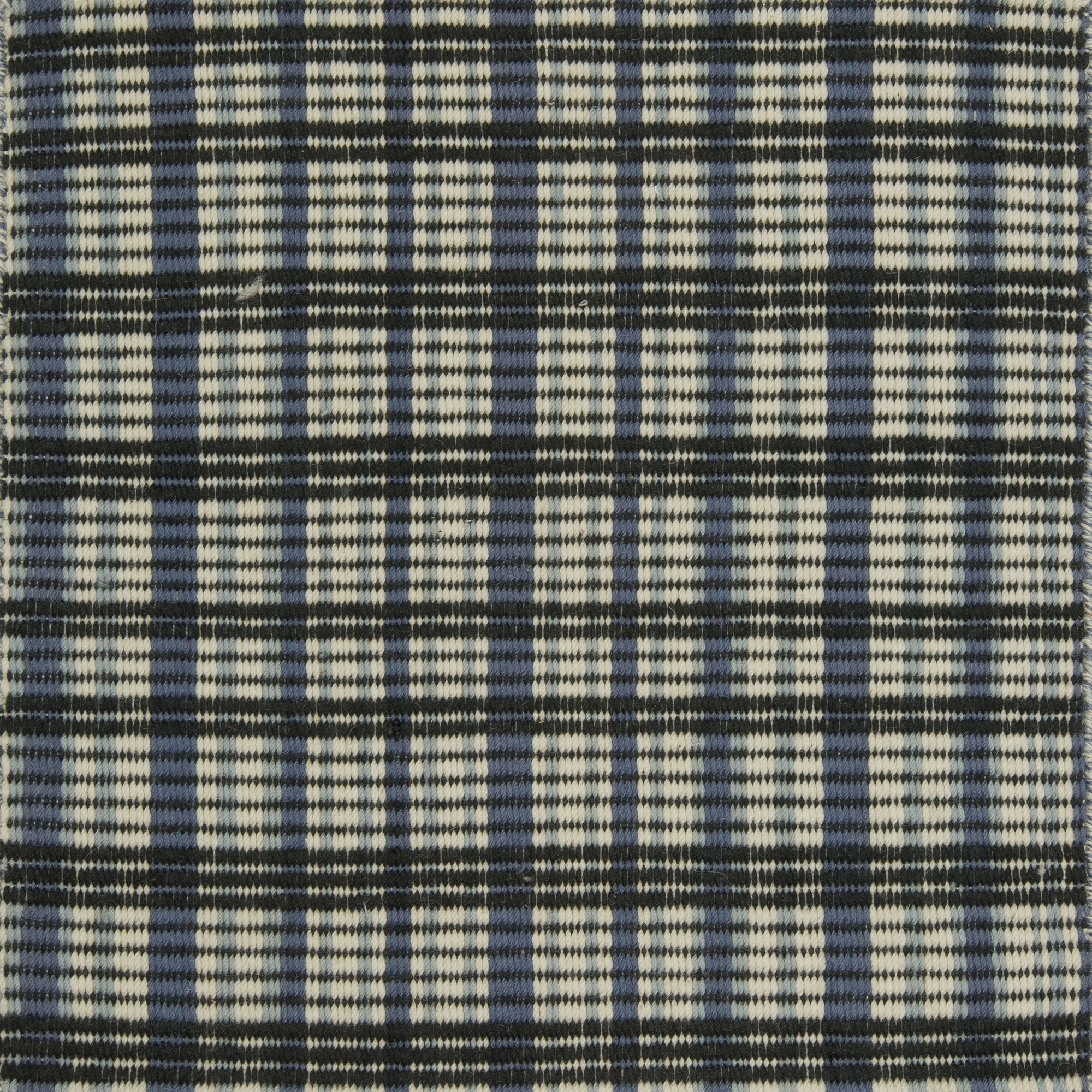
In a private office, the rug is doing more than softening the floor. It shapes acoustics, frames furniture, and signals the level of care in the room before anyone sits down. Well-chosen custom rugs can make executive meetings feel composed rather than improvised, especially when the room has hard surfaces, a strong desk presence, and frequent video calls. The goal is not to make the office decorative; it is to make it work with authority and restraint.
Private offices tend to fail in predictable ways. The room is often built from reflective materials such as glass, lacquer, stone, or painted drywall, then furnished with a substantial desk and a few chairs that never quite feel anchored. A rug can correct that imbalance by creating a visual field under the main seating arrangement and by absorbing enough sound to make conversation easier. In a setting where clients, partners, or counsel are sitting across from one another, that difference matters immediately.
Because the office is a place of decisions, the rug should support hierarchy. It should respect the desk as the primary object without isolating it from the rest of the room. It should also relate to the seating zone, whether that means two guest chairs opposite the desk or a fuller arrangement with a small table and side chairs. The most effective private office rugs usually feel tailored to the architecture, not dropped in as an afterthought.
Place the rug to support the desk and seating hierarchy
Start with layout, not pattern. The rug should extend far enough beyond the desk and visitor seating to make the room read as one composed zone, rather than a desk floating on a decorative island. In most executive offices, that means allowing the front legs of guest chairs to sit comfortably on the rug, with enough extra margin so chairs can move without catching at the edge. If the desk faces a seating area, the rug should visually connect those two positions and define the conversational territory between them.
Scale is especially important in smaller private offices, where a rug that is too modest can make the room look cramped and overfurnished. A larger field often feels calmer because it reduces the number of competing edges in view. That does not mean a room needs wall-to-wall coverage; it means the rug should be proportioned to the furniture grouping and the clearances around it. In a generous office, a larger bespoke carpet can also help balance long sightlines and keep a substantial desk from dominating the floor plane.
If the room has multiple uses, such as work, reading, and meetings, the rug should quietly zone those functions without visual clutter. A low-contrast border or a disciplined allover pattern can help the eye register one unified office rather than several small moments fighting for attention. For many designers, this is where custom carpets become useful, because size, border width, and field proportion can be set to suit the actual furniture plan. The result feels intentional in a way standard dimensions often cannot.
Choose materials that soften sound without looking casual
Acoustics are not a side issue in an office; they are part of the room’s performance. Hard floors can make even a well-furnished space sound sharp, especially when chairs scrape, feet move, or a speakerphone is in use. Rug acoustics improve most when the rug has enough density and fiber resilience to absorb impact noise, but not so much visual softness that the room starts to feel domestic. The right material choice should quiet the space while preserving a sense of formality.
Wool remains a dependable foundation for this kind of room because it offers body, durability, and a naturally refined surface. Hand-knotted rugs in wool can handle regular chair movement well, especially when the pile is kept moderate and the construction is tight. Silk can be introduced for sheen or detail, but in a private office it usually works best as an accent rather than the entire story, since too much luster can look ceremonial in the wrong light. For rooms with frequent use, a dense wool ground with controlled texture often provides the most balanced result.
Texture also affects how sound behaves. A cut pile with enough spring can soften the room more than a flat, thin weave, while a very plush surface may feel too relaxed for an executive setting. The best choice depends on how the office is used: client meetings, long desk hours, occasional presentation review, or all of the above. Custom rugs allow these variables to be considered together, so the room does not have to choose between acoustic comfort and visual authority.
Coordinate with cabinetry and wall finishes
A private office succeeds when the rug relates to the built environment rather than competing with it. If cabinetry is dark walnut, a rug with a deep ground and measured contrast can reinforce the room’s gravity. If the walls are pale and the millwork is crisp, a slightly warmer or more textured rug can keep the office from feeling overly severe. The goal is to create continuity among floor, furniture, and envelope so that no single surface feels unrelated to the others.
Color temperature deserves the same attention as color itself. Under cool daylight, grays can appear more blue and neutrals can turn flat; under warm artificial light, brown, camel, and taupe can become richer and more forgiving. This is why a rug should be considered in the actual light conditions of the office, not only in a studio photo or catalog setting. A carefully calibrated palette can make the room feel steadier throughout the day, which is especially important in spaces used for both concentrated work and formal conversation.
Pattern density should also reflect the architecture. A highly active motif may compete with wall paneling, framed art, or a strong wood grain, while a restrained field can let those surfaces breathe. In a room with detailed cabinetry or bookcases, a quieter rug often has more presence because it does not add unnecessary noise. Conversely, if the architecture is minimal, a subtle geometric or antique-inspired motif can supply the visual rhythm that keeps the room from feeling unfinished.
Designers often think in terms of hierarchy: what should be the first thing the eye reads, and what should support it? In a consultation office, the rug should usually support the desk and seating group, then defer to the architecture, not the other way around. That approach keeps the room from drifting into a decorative mood that feels out of place for serious work. It also makes it easier to choose custom area rugs that fit the room’s proportions instead of forcing the room to adapt to a fixed stock size.
Keep the room composed for video and in-person meetings
Many private offices now have to look polished both on screen and in person, which changes how rugs should be specified. On video, the rug may appear as a narrow band behind the chair or desk, so its color and pattern should remain legible without becoming distracting. If the rug is too bright, too contrast-heavy, or too busy, it can compete with faces and draw attention away from the conversation. A disciplined field, a restrained border, or a subtle allover design usually performs better in that kind of hybrid setting.
In person, the rug also helps manage the feeling of distance between people. A well-scaled rug can make a seating exchange feel contained and deliberate, which is useful in rooms where clients may already feel formal or guarded. The acoustic benefit is subtle but real: a less reverberant room feels easier to inhabit, and people tend to speak with less effort when the surfaces are not bouncing sound back at them. That is one reason rug acoustics should be treated as part of the room’s hospitality, not just its technical spec.
If the office doubles as a presentation room or a place for confidential discussion, consider how the rug behaves under different camera angles and light levels. A sheen-heavy piece may flash more than expected under overhead fixtures, while a matte wool surface usually reads more consistently. Pile height matters too, especially if rolling task chairs enter the space; a rug that is too thick can interfere with movement, while one that is too thin may not support the room visually. Good specification is about balancing those practical realities without making the office feel utilitarian.
Practical specifications to discuss before ordering
Before commissioning a rug for an executive office, it helps to define the exact furniture arrangement and how often the room changes use. Measure the desk, guest seating, clear walking paths, and any credenza, side table, or conference chair that may need to sit partly on the rug. Then think about whether the room needs more softness, more formality, or both. A designer-grade specification should account for chair glide, maintenance expectations, and the amount of visual contrast already present in the architecture.
- Desk and seating layout: confirm where the front legs of visitor chairs will land and how much clearance remains around them.
- Material choice: favor dense wool for most offices, with silk used selectively for emphasis or sheen.
- Pile height: keep it moderate if task chairs roll across the surface or if the room gets frequent foot traffic.
- Pattern scale: choose a scale that respects millwork, art, and cabinetry rather than competing with them.
- Color behavior: test the rug against both daylight and artificial light to avoid surprises.
For offices with unusual dimensions or a particularly strong architectural language, the made-to-order route is often the most efficient solution. It allows the rug to respond to the actual room, not an assumed template, and it prevents awkward compromises around furniture placement. A well-considered custom rug design can also account for border width, motif placement, and how much of the floor should remain visible along the perimeter. That level of precision is often what makes an office feel composed rather than merely furnished.
A realistic office scenario
Consider a narrow office with tall windows on one side, a wall of books and cabinetry on the other, and a substantial desk centered toward the back. The client seating sits opposite the desk, with enough circulation space to enter without crossing awkwardly in front of the chair. In that room, a rug with a restrained border and a quiet field would help gather the furniture into one confident composition. The pattern should not fight the architecture; it should slow the eye down and make the room feel deliberate.
If the same room had polished stone floors and glass partitions, acoustic needs would become even more important. A carefully sized rug could reduce the sharpness of footfall and conversation while also creating a visual threshold between public circulation and private discussion. In that kind of setting, a darker base with nuanced texture can feel more professional than a pale surface that reflects too much light. The room then reads as attentive and measured, not showy.
This is where Doris Leslie Blau’s perspective on materials, scale, and craftsmanship becomes useful for designers and owners alike. The right piece should support the room’s function first, then reward close looking with texture and proportion. Whether the brief calls for hand-knotted rugs with subtle variation or a more architectural custom-made solution, the objective is the same: to give the office a floor covering that belongs to the room’s purpose.
FAQ
What size rug works in an executive office?
The best size is the one that properly relates to the desk, guest seating, and circulation paths. In most executive offices, the rug should be large enough for the front legs of visitor chairs to rest on it with visual room to spare. If the office is spacious, a larger rug can help the furniture group feel grounded rather than isolated. The key is proportion, not a fixed dimension.
Do rugs help with sound in a private office?
Yes, especially in rooms with hard flooring, glass, or minimal wall treatment. A dense rug can reduce footfall noise and soften reflected sound, which makes conversation feel less harsh. The improvement is not the same as full acoustic treatment, but it is noticeable in meetings and on calls. Material density and pile construction influence how effective the rug will be.
Should the rug be formal or understated?
In most private offices, understated is the safer and more effective choice. Formal does not have to mean ornate; it can mean controlled color, balanced scale, and refined texture. A quiet rug often supports authority better than a busy one because it lets the desk, art, and architecture lead. The room should feel composed, not performative.
Are custom rugs worth considering for office spaces?
Yes, especially when the room has unusual dimensions, multiple seating zones, or a strong architectural identity. Custom rugs allow the scale, pattern, and material to be aligned with the furniture plan and the acoustics of the room. They also make it easier to coordinate with cabinetry, wall finishes, and the lighting conditions unique to the office. For a space meant to host serious discussion, that precision is often worthwhile.
For offices where presence, privacy, and comfort all matter, the rug should be specified with the same care as the furniture and finishes around it. If you are shaping a room that needs to support meetings without losing warmth, a specialist can help you weigh size, material, and proportion with far more precision than a catalog ever can. Doris Leslie Blau can assist with design guidance when a private office calls for something tailored rather than generic.