

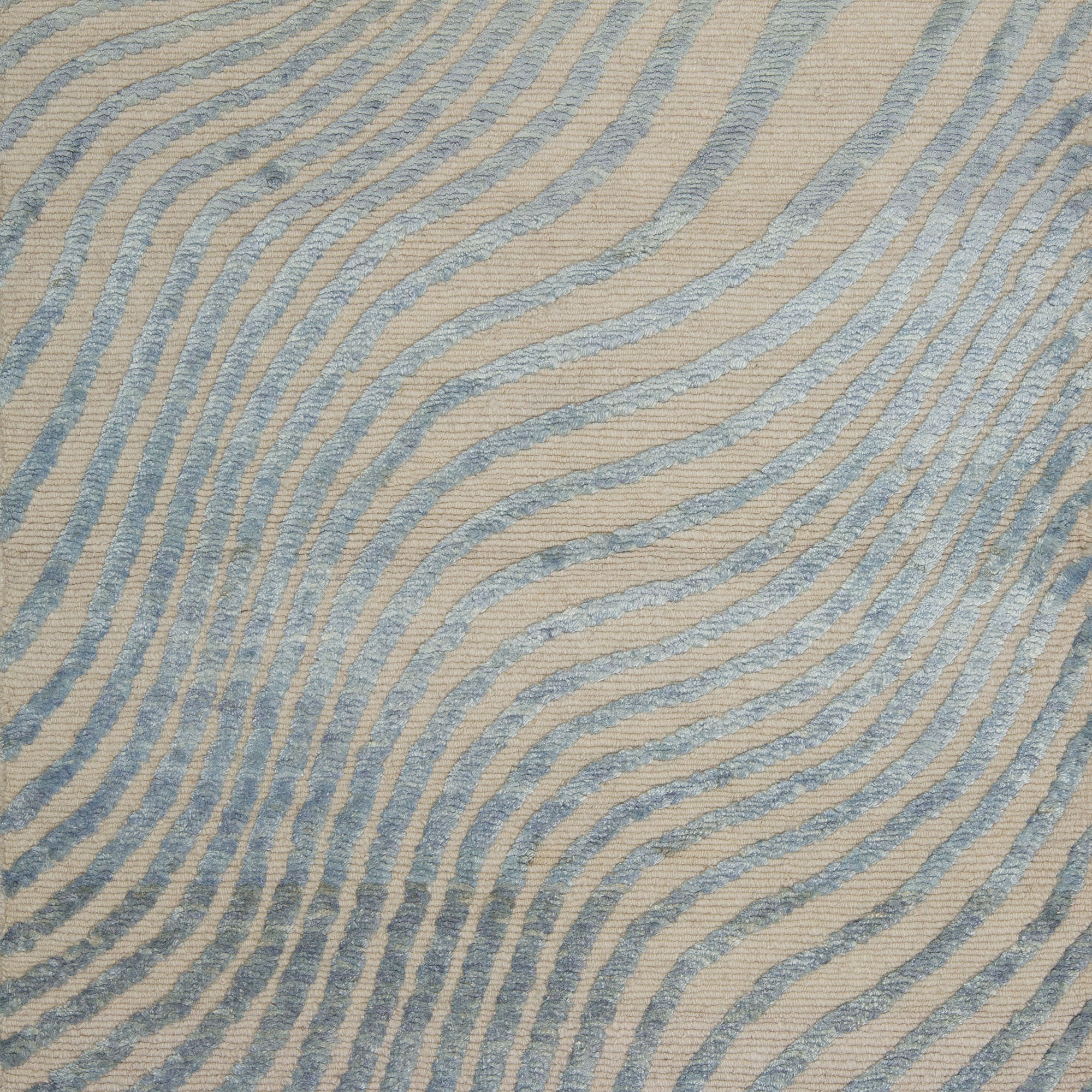
How to Choose Antique Rugs for a Living Room with Perfect Scale, Color, and Presence
Antique rugs can give a living room the architectural gravity that furniture alone rarely achieves, but only when scale, color, pattern, and placement are considered as part of the room rather than as separate decorative decisions. A carpet may be extraordinary in weave, provenance, and condition, yet still fail if it floats under a coffee table, fights the upholstery, or ignores the proportions of the architecture.
The best living room rug is not simply the one with the most beautiful border, the rarest weave, or the most appealing palette in a gallery setting. It is the one that organizes seating, softens acoustics, guides circulation, and creates a visual field generous enough to hold conversation, art, lighting, and daily use. In luxury living room design, especially in architectural interiors with high ceilings, long sightlines, or formal seating arrangement requirements, the rug often functions like a floor plan drawn in wool. It determines where the room begins, where people gather, and how the eye moves from one zone to another.
For designers and homeowners evaluating antique rugs for a living room, the essential question is not “Is this carpet beautiful?” but “Is this carpet correct for this room?” Correctness involves proportion, fiber, palette, condition, pile, pattern density, and the relationship between the rug and the furniture that will live on it. A room with neutral upholstery may need a faded Persian carpet with atmospheric color; a highly detailed interior may require a calmer open-field design; a large salon may need an oversized antique rug to avoid looking under-furnished. The discipline lies in recognizing how each attribute behaves once it enters the room.
Why the Living Room Demands More from an Antique Rug
A living room is usually the most visually scrutinized space in a residence. It may be used for entertaining, reading, family conversation, cocktails before dinner, or formal receiving, and each use places different demands on the rug. Unlike a bedroom carpet, which can be partially concealed by a bed, or a hallway runner, which is primarily about procession, the living room rug is exposed from multiple angles and frequently viewed from adjacent rooms. It must satisfy close inspection and long-distance composition at the same time.
This is why decorative antique carpets are so effective in living rooms when selected with discipline. Their age brings variation, oxidation, and depth of color that new carpets often struggle to replicate, particularly in large rooms where a flat expanse of modern dye can feel hard or visually thin. Patina helps an antique carpet absorb light rather than simply reflect it, which is especially valuable in rooms with lacquered furniture, polished stone, glass, or strong daylight. A hand-knotted wool rug with age can also introduce a tactile counterpoint to crisp upholstery, plaster moldings, and contemporary art.
At the same time, the living room reveals mistakes quickly. A rug that is too small makes even fine furniture appear stranded. A border that disappears under heavy sofas may sacrifice much of the carpet’s design logic. A busy field beneath carved furniture, patterned pillows, and complex drapery can produce visual noise rather than richness. Because the living room is often the space where architecture, comfort, and display converge, the carpet must be evaluated as a foundation, not an accessory.
Scale First: Sizing an Antique Carpet Around Seating, Circulation, and Architecture
Scale is the first decision because it cannot be corrected by styling. If the rug is undersized, no amount of beautiful upholstery or careful accessorizing will make the room feel properly grounded. For most living rooms, the rug should be large enough for at least the front legs of sofas and lounge chairs to rest on it, creating one connected conversation zone. In more formal rooms, especially those with pairs of sofas or four club chairs arranged symmetrically, placing all furniture fully on the carpet often produces the most composed result.
Living room rug placement should begin with the seating plan, not the rug inventory. Measure the ideal furniture grouping, including the depth of chairs when pulled into a conversational posture, then add enough perimeter for the carpet to frame the arrangement. A rug that ends exactly at the front legs of furniture can feel accidental; a rug that extends 8 to 18 inches beyond the main upholstery often appears more intentional, depending on room size. In grander spaces, that margin may increase, particularly when the carpet must hold side tables, floor lamps, and occasional chairs without fragmenting the composition.
Architecture also matters. In rooms with fireplaces, the rug should usually align with the hearth axis or seating axis unless there is a deliberate asymmetry in the plan. In rooms with bay windows, built-in bookcases, or a prominent doorway enfilade, the rug should respect the main sightlines rather than merely fill the center of the floor. A carpet that is beautifully scaled to furniture but awkwardly skewed against architectural elements will create tension that the eye may not consciously identify but will certainly feel.
Oversized antique rugs are particularly useful in open-plan interiors and large city apartments where the living area shares space with dining, library, or gallery functions. A large antique carpet can create a defined room within a room without relying on partitions. The key is to leave sufficient exposed flooring at the perimeter so the carpet feels placed rather than wall-to-wall by accident. In many refined interiors, a border of visible wood, stone, or other flooring around the rug gives the antique textile breathing room and clarifies the architecture.
As a practical example, imagine a 22-by-16-foot living room with two facing sofas, a pair of lounge chairs, and a central cocktail table. A 9-by-12-foot rug may seem substantial in isolation, but it will likely sit under the table with only partial contact beneath the seating, making the conversation area feel pinched. A 12-by-15-foot or larger carpet may be more appropriate because it allows the sofas and chairs to participate in one shared plane. If the room has a fireplace centered on the long wall, the rug should reinforce that axis rather than drift toward the nearest available wall.
Color as Atmosphere: Using Patina, Abrash, and Faded Dyes with Upholstery
Color in an antique carpet should be chosen for atmosphere as much as hue. Older dyes often present as layered rather than flat: madder reds soften into terracotta or rose, indigo can range from deep ink to weathered blue, and camel, ivory, saffron, celadon, and walnut tones may shift subtly across the field. Abrash, the natural variation in color caused by changes in wool, dye batches, or weaving conditions, can be one of the most sophisticated qualities in a living room rug. It prevents a large surface from appearing static and gives the floor a sense of age and movement.
Neutral upholstery is often the easiest partner for antique Persian carpets, Turkish carpets, Indian carpets, and European workshop pieces because it allows the rug to establish the room’s emotional temperature. A parchment linen sofa may look luminous with a pale Oushak or a softly oxidized Tabriz, while a greige bouclé sectional may need the depth of a charcoal, walnut, or tobacco-toned carpet to avoid becoming visually weightless. White upholstery paired with a high-contrast rug can be striking, but it requires attention to balance: if the rug contains dark navy, burgundy, or black, those notes should be echoed in art, metal finishes, lacquer, or smaller textiles.
Faded color is not the same as weak color. A washed or naturally mellowed antique carpet can control a room more powerfully than a bright one because its chromatic range is broader and less declarative. In rooms with strong daylight, faded dyes are especially valuable because they do not glare. In evening interiors, when lamps and sconces warm the room, an antique rug with gentle oxidation can become richer without looking newly saturated.
Palette coordination should also consider wood tone and wall color. Red-brown floors can intensify a carpet with similar undertones, sometimes beautifully and sometimes excessively. Pale oak, limestone, or painted floors may allow a stronger antique carpet to read more cleanly. If the walls are cool gray or chalk white, a rug with warm ivory, apricot, cinnamon, or soft gold can keep the room from feeling austere. Conversely, in a room with cream walls, brass lighting, and honey-toned antiques, a cooler blue, celadon, or slate field may provide necessary restraint.
Pattern Density and Furniture: When to Choose Medallions, Allover Designs, or Open Fields
Pattern density determines how the rug converses with furniture. A central medallion can be magnificent in a formal seating arrangement, particularly when the furniture plan is symmetrical and the cocktail table does not obscure the entire central motif. Medallion Persian carpets often suit rooms with a clear axis, such as a fireplace, pair of windows, or central chandelier. The danger appears when a large coffee table, ottoman, or irregular sectional covers the medallion so completely that the composition loses coherence.
Allover designs are often easier to use in contemporary and transitional living rooms because they distribute visual interest evenly. Herati, vine-scroll, lattice, palmette, and small-scale botanical patterns can tolerate furniture placement more forgivingly than a dominant central motif. They are particularly useful when seating is asymmetrical, when a room includes mixed chair types, or when the carpet will be partially concealed. An allover design also allows the border and field to remain legible even when the central area is occupied.
Open-field carpets, including certain Oushak, Khotan, Art Deco, and some European designs, can create calm under sculptural furniture. They work well when the room already contains strong shapes: curved sofas, dramatic lounge chairs, important tables, or large-scale artwork. However, an open field must still have enough variation in wool, color, or border structure to avoid reading as plain broadloom. In antique examples, the beauty often lies in subtle shifts of tone, softened drawing, and the relationship between an expansive field and a dignified border.
Pattern should be judged from standing height, seated height, and from the entrance to the room. A carpet that appears intricate when viewed close up may read as a quiet texture from the doorway. Conversely, a large motif that seems handsome in a photograph may feel oversized beneath delicate chairs. The correct pattern scale is tied to room scale: large architectural interiors can absorb bolder drawing, while compact living rooms often benefit from medium-scale pattern that provides richness without overwhelming the seating.
Materials and Pile Height: Wool, Silk Highlights, and Practical Luxury
A living room rug must be judged by touch as well as appearance. Wool remains the most practical and desirable fiber for many antique living room carpets because it has resilience, warmth, and natural soil resistance. A well-made hand-knotted wool rug can handle regular use when its foundation is sound, its pile is appropriate, and it is cared for properly. Wool also moderates acoustics, an important consideration in rooms with stone floors, large windows, or minimal window treatments.
Silk highlights or silk foundations can be exquisite, but they should be specified with realistic expectations. A silk-accented Persian carpet may add luminosity in a formal living room used primarily for entertaining, while an all-silk piece may be better suited to a low-traffic salon, library, or area where shoes and heavy daily use are limited. Silk shows light differently from wool, which can be advantageous in a room with controlled lighting but less forgiving in a busy family space. The decision should be based not on prestige alone but on how the room will actually be used.
Pile height affects both comfort and furniture stability. Very thick pile may feel luxurious underfoot but can make occasional tables less steady and may obscure crisp antique drawing. Very low pile can look refined and is often easier under chairs, but it should not be so worn that the foundation is compromised unless the intended effect is deliberately distressed and the condition has been professionally assessed. In a high-use living room, a carpet with even, healthy low-to-medium pile often offers the most balanced form of practical luxury.
Condition is central to material judgment. Antique does not automatically mean fragile, and restored does not automatically mean inferior. Expert conservation can stabilize edges, reinforce structure, and return a carpet to appropriate use without erasing its age. What matters is whether repairs are sympathetic, whether color restoration is discreet, and whether the carpet’s structural integrity matches the intended placement. A beautiful but vulnerable carpet may still be appropriate in a formal room; it may be wrong beneath a family’s primary seating area.
Pairing Antique Rugs with Contemporary, Traditional, and Transitional Interiors
In contemporary interiors, antique carpets introduce irregularity, handwork, and historical depth. The most successful pairings avoid forced contrast. A spare room with plaster walls, low upholstery, and bronze or blackened steel accents may benefit from a faded Persian carpet, a geometric Turkish design, or an Art Deco rug whose palette is restrained but not bland. The carpet should complicate the room slightly, adding a human register to clean architecture without disrupting the calm.
Traditional interiors can take greater ornament, but they still require editing. If the room includes carved wood, damask, bullion fringe, gilt mirrors, and patterned drapery, the rug may need a more spacious field or a softened palette. A heavily decorated room does not always call for the most elaborate carpet. Often, the better decision is an antique rug with enough drawing to belong but enough age and restraint to prevent the room from becoming visually congested.
Transitional interiors depend on proportion and tension. A clean-lined sofa, neoclassical chair, modern cocktail table, and antique rug can coexist beautifully if the rug’s color bridges the periods. For instance, a pale blue-gray and ivory carpet may connect contemporary upholstery with 19th-century wood furniture, while a rust and indigo carpet may lend strength to a room otherwise composed of cream, oak, and stone. The rug becomes the mediator among objects that do not share the same date or design language.
Architectural interiors with pronounced moldings, columns, arches, or paneling often require special attention to border scale. A narrow border may disappear in a large classical room, while a very broad border may compete with floor inlays or strong baseboards. The rug should be read against the architecture as a full composition, not merely against upholstery samples. If the room has a central ceiling feature, chandelier, or plaster medallion, the relationship between overhead geometry and rug geometry should be considered before finalizing placement.
Common Living Room Mistakes and How Doris Leslie Blau Would Resolve Them
The most common error is selecting a rug that is admired as an object but not tested against room scale. A collector may fall in love with a rare weave or palette, only to discover that it leaves too much exposed floor around the seating. The remedy is not to force the room to accept the wrong size, but to revisit the plan and determine whether a different antique carpet, an oversized format, or a layered approach is appropriate. In luxury interiors, discipline often means walking away from a beautiful piece that cannot serve the room.
Another frequent mistake is ignoring the border. Borders are not frames to be hidden; they are part of the carpet’s architecture. When a sofa covers one long border completely and chairs cover the opposite border unevenly, the carpet can look lopsided even if its dimensions are technically adequate. A better plan may pull furniture inward, choose a larger carpet, or select an allover design with a less dominant border.
Color mistakes often come from matching too closely. A beige sofa does not require a beige rug, and a blue painting does not require a blue field. Exact matching can flatten a room and reduce the antique carpet’s natural complexity. Instead, the palette should be related through undertone, intensity, and repetition. A warm neutral room can be strengthened by a carpet with muted terracotta, tobacco, or faded rose; a cool room may need oxidized blue, soft charcoal, or mineral green rather than another layer of gray.
A third mistake is choosing pattern without considering furniture footprint. Large cocktail tables, pairs of ottomans, and sectionals can conceal the very features that made the rug appealing. Before selecting a medallion carpet, map the table and seating positions over the design. If most of the central drawing will be hidden, an allover or open-field carpet may provide a more satisfying result. The goal is not to display every inch of the rug, but to preserve enough of its design logic for the room to read as intentional.
Doris Leslie Blau’s approach to resolving these issues begins with the room rather than with a generic size rule. The architecture, furniture plan, palette, traffic level, and desired atmosphere all influence the recommendation. A formal salon may call for a finely woven antique Persian carpet with a disciplined axis; a relaxed family living room may need a durable wool carpet with mellow color and forgiving pattern; an expansive penthouse may require an oversized antique rug capable of holding multiple seating elements. The best answer is specific to the room.
Care, Rotation, and Long-Term Preservation in High-Use Entertaining Spaces
Antique living room rugs can serve beautifully for decades when care is planned rather than improvised. Regular vacuuming with appropriate settings helps remove grit before it abrades the fibers. Beater bars should be used cautiously, especially on low-pile, delicate, or silk-accented carpets. Spills should be addressed promptly and professionally when necessary; rubbing aggressively can drive liquid deeper into the fibers or disturb old dyes.
Rotation is one of the simplest preservation tools. In rooms with strong sun exposure, repeated footpaths, or furniture pressure points, rotating the rug periodically helps distribute wear and fading. Window treatments, UV-filtering glass, and thoughtful furniture placement can also reduce uneven light damage. If a heavy sofa or table sits in the same position for years, the pile beneath it may compress; using appropriate furniture cups and adjusting placement slightly can lessen the effect.
Cleaning should be specialized, particularly for antique carpets with natural dyes, old repairs, silk highlights, or unusual foundations. A standard wall-to-wall carpet cleaning process is not suitable for valuable hand-knotted rugs. Before cleaning, the rug should be evaluated for dye stability, foundation strength, prior restoration, and fiber content. Proper washing can revive wool and remove embedded soil, but inappropriate cleaning can cause bleeding, distortion, or structural stress.
Long-term preservation also includes restoration decisions. Edge wear, fringe loss, small holes, and weakened ends should not be ignored, because minor issues can become more costly and more visually intrusive if allowed to progress. Conservation-minded repair respects the carpet’s age and construction rather than making it appear artificially new. In a living room, the ideal is a rug that remains usable, stable, and beautiful while retaining the evidence of handwork and time that made it desirable in the first place.
FAQ: Choosing Antique Rugs for a Living Room
Should all living room furniture sit on an antique rug?
Not always, but the rug should connect the main seating pieces convincingly. In many living rooms, placing the front legs of sofas and chairs on the rug is sufficient, provided the carpet extends beyond the furniture enough to look deliberate. In formal seating arrangements or large rooms, placing all major seating fully on the rug often creates a more composed and luxurious effect. The worst option is usually a rug that sits only beneath the coffee table, leaving the seating visually detached.
Are antique rugs durable enough for a frequently used living room?
Many antique rugs are durable enough for regular living room use, particularly well-constructed wool examples with sound foundations and even pile. Durability depends on age, weave, condition, fiber, prior restoration, and the intensity of use. A low-traffic formal living room can accommodate more delicate carpets, while a family room with pets, children, or frequent entertaining should favor resilient wool, forgiving pattern, and professionally assessed condition. Antique does not mean unsuitable; it means the choice should be informed.
What color antique rug works best with neutral sofas?
Neutral upholstery offers considerable freedom, but the best rug color depends on undertone and desired atmosphere. Warm neutral sofas often pair well with faded rust, camel, ivory, tobacco, soft gold, or muted rose, while cooler upholstery may suit oxidized blues, slate, celadon, charcoal, or pale mineral tones. A rug should not match the sofa too closely or the room may lose depth. The most successful palettes repeat selected rug colors in art, pillows, lampshades, or accessories without turning the room into a matched set.
What size antique rug is best for a luxury living room?
The best size is determined by seating dimensions, circulation, and architecture rather than by a universal rule. The rug should be large enough to hold the main conversation area, with furniture legs either fully on the carpet or at least securely connected by the front legs. Larger living rooms often require oversized antique rugs so the seating does not appear isolated in the center of the floor. Measuring the complete furniture arrangement before shopping is the most reliable way to avoid an undersized carpet.
Specifying with Confidence
Choosing an antique rug for a living room is a design decision, a material decision, and a spatial decision at once. The right carpet establishes room scale, gives color a nuanced foundation, supports the furniture plan, and brings hand-knotted craftsmanship into daily view. It should be beautiful as an object, but it should also perform as architecture underfoot. When those requirements align, the living room feels settled, intelligent, and deeply personal.
For homeowners, designers, and collectors comparing antique Persian carpets, decorative antique carpets, oversized formats, or quieter wool pieces for neutral interiors, specialist guidance can prevent costly compromises. Doris Leslie Blau brings gallery expertise, connoisseurship, and practical design judgment to the process, helping match exceptional carpets to the rooms where they will live with the greatest authority.