

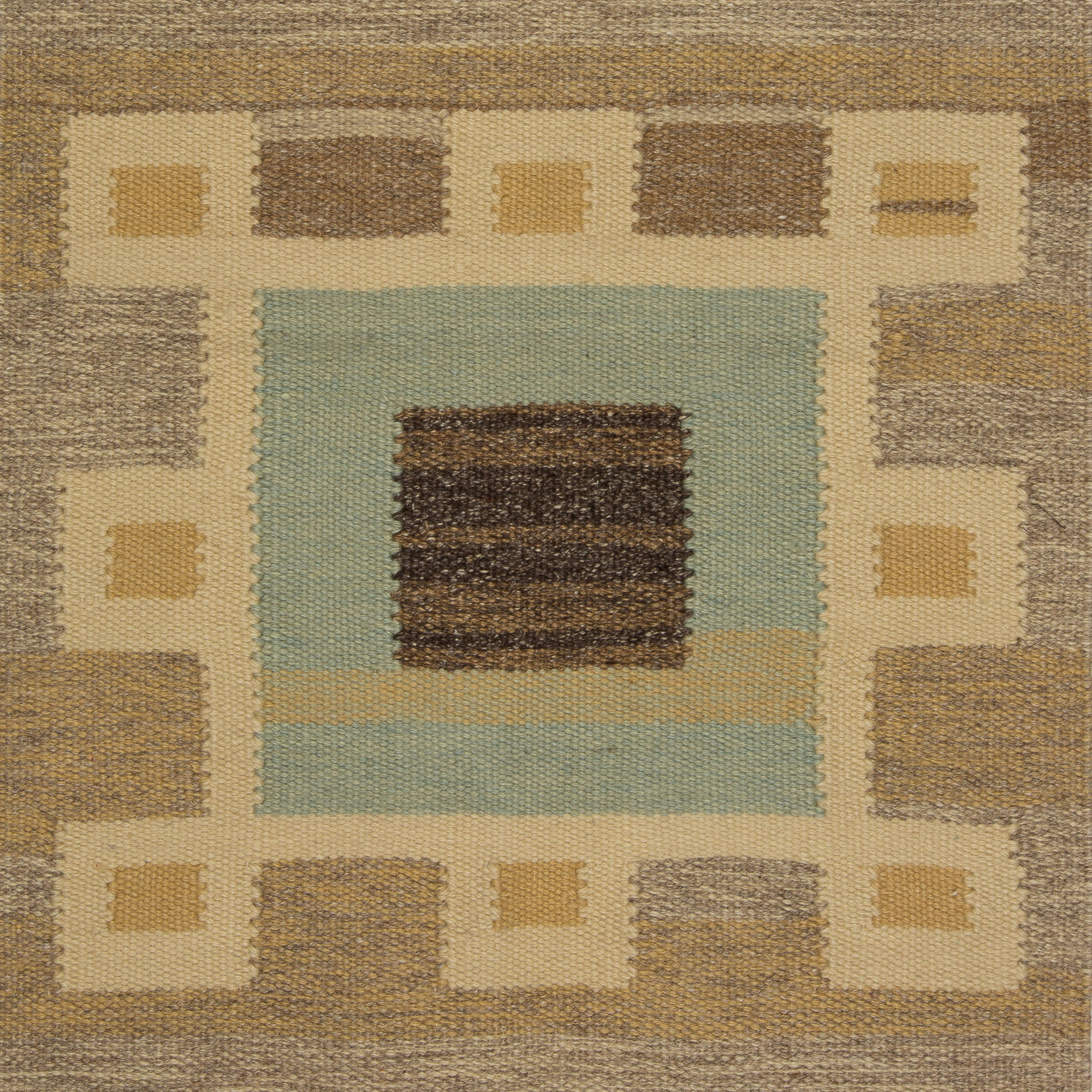
Long hallways can be the most easily overlooked part of a home, yet they often set the tone for everything that follows. With the right custom rugs, a passage becomes a measured sequence of color, pattern, and texture rather than a blank strip of transit. The goal is not to fill space for its own sake, but to give the eye a reason to move forward at a steady pace. When the proportions are right, even a narrow corridor can feel composed, architectural, and quietly considered.
A hallway is a special design problem because it is experienced in motion. Unlike a living room, where people linger and furniture anchors the composition, a corridor is read in fragments: one doorway, then another, then a shift in light, then a landing or bend. That means the rug cannot behave like a standalone object; it needs to support the hallway’s rhythm and reinforce its sightlines. In gallery-style hallway rugs, the floor is not background. It becomes a structural line that organizes the passage and gives the architecture a clearer cadence.
Treat the hallway as a visual sequence, not just circulation
The best hallway scheme starts by looking at the space as a sequence of moments. Where does the eye enter, where does it pause, and what appears at the far end? A runner or full-length rug can connect those moments by creating continuity underfoot, especially when the walls carry artwork, sconces, or millwork that already suggest a curated route. In that context, the rug is not a decorative afterthought but part of a larger composition where the floor as focal point works in conversation with the walls.
Scale matters here more than almost anywhere else. A rug that is too narrow will look hesitant, while one that is too wide can crowd baseboards and make the corridor feel pinched. Ideally, there should be enough border on both sides for the architecture to breathe, often a few inches of visible flooring depending on the proportions of the passage. In older homes with uneven walls or changing widths, custom rugs are especially useful because they can be shaped to the actual architecture rather than forcing the architecture to adapt to a stock size.
If the hallway turns, widens at a landing, or meets a stair hall, the rug plan should acknowledge those changes rather than ignore them. Designers often think in terms of adjacent thresholds: where does one visual field end and the next begin? A well-drawn rug layout can make the entire run feel resolved, even in a home with multiple junctions. This is where hallway runners become less about protection and more about proportion, giving each segment of the passage a clean, legible boundary.
Use length and repeat to create rhythm
Length in a corridor is not just a measurement; it is a design opportunity. Repetition across a long run can calm the eye, but it needs to be edited carefully so the hallway does not become monotonous. A restrained repeated motif, a border that runs parallel to the walls, or a linear field with subtle internal variation can create movement without visual noise. The most successful gallery-style hallway rugs use cadence, not clutter.
Pattern placement should respond to how the hallway is read. If there are door openings on both sides, the rug may need a quieter central field so the eye does not compete with all the interruptions. If the walls are largely uninterrupted and the corridor is long and straight, a more assertive repeat can help break the run into measured intervals. In that case, the rug functions almost like music notation, marking the passage in a way that feels deliberate rather than decorative for decoration’s sake.
Color repeat matters as much as motif repeat. A hallway with several framed works, painted doors, or paneled walls usually benefits from a palette that echoes one or two dominant tones rather than introducing an entirely new one. If the walls are warm white and the art leans cool, a rug with muted neutrals and a controlled accent can bridge the temperature shift. For more expressive interiors, a stronger rhythm of color can be effective, but it should still support the architecture rather than compete with every object in the hall.
Practical rhythm cues that designers often use
- Align pattern movement with the direction of travel to reinforce flow.
- Use borders to frame the corridor when the walls feel visually busy.
- Choose a repeat size that does not land awkwardly at every doorway.
- Keep the center field calm if the hallway already carries strong art or lighting.
Choose pattern that supports movement
Pattern in a hallway should do a specific job: guide the body through space without creating hesitation. Large-scale graphics can work beautifully in wider passages, but in a narrow corridor they can feel abrupt unless the motif is softened by color or texture. Smaller patterns, especially those with some irregularity, often feel more natural in a tight run because they create visual continuity at walking speed. The key is not whether a pattern is bold or quiet, but whether it reads cleanly from end to end.
For many interiors, handmade rugs with nuanced drawing are the best fit because they can carry complexity without becoming rigid. A hand-knotted construction, for instance, can offer crisp edges in the design while still retaining a depth that looks refined under changing light. Wool is often a strong choice for hallways because it balances resilience with a softened hand, and its surface tends to hold pattern well without appearing overly polished. When a client wants something more luminous, a modest silk accent or a wool-and-silk blend can sharpen details, though it is usually best reserved for lower-traffic passages or for homes where the hall is used more ceremonially than constantly.
Texture is just as important as motif. A low-to-medium pile generally performs better in a passage than a plush rug, because it allows doors to clear more easily and keeps the visual line crisp. In a gallery-like setting, the floor should read as composed and tailored, not thickened by excess softness. That does not mean the rug should feel flat; rather, it should carry enough surface variation to register underfoot and catch light in a subtle way. The best effect is often one of quiet tactility, where the hallway gains depth without losing clarity.
Consider a simple scenario: a long, straight hall connecting the entry to the private rooms of a home, with framed photography on one side and a pair of sconces every few feet. A tightly patterned rug with a narrow border could feel too active under all that visual punctuation, while a very plain runner might disappear. A middle path—a restrained geometric, a softened stripe, or a gentle allover motif—can introduce order while leaving room for the art to breathe. That balance is often what makes a passage feel intentional instead of merely finished.
Coordinate with art and lighting for a gallery effect
The gallery effect depends on coordination, not matching. Hallway art and rug pattern should share a level of formality, but they do not need to echo one another literally. If the walls carry bold contemporary work, the rug may need to be more restrained so the eye can process the pieces individually. If the art is quieter or more classical, a rug with subtle ornament can give the hall the measured refinement that a gallery wall often needs.
Lighting changes the reading of every fiber and color, especially in a corridor where natural light may shift from one end to the other. Warm sconces can pull a rug toward gold, beige, or rust notes, while cooler overhead light may emphasize gray, blue, or charcoal undertones. This is why a sample viewed in a showroom rarely tells the whole story. A rug that looks subdued on a flat surface can become much more animated once it is installed under directional light, particularly if the pile has hand-finished texture or a slight directional sheen.
It is also worth thinking about the hallway as a place of pause between rooms with different functions. An entry hall may need more durability and a stronger threshold presence, while an upper-floor passage may call for a softer, quieter composition that links bedrooms and private spaces. In both cases, the rug should acknowledge the architecture around it: door swing, moldings, stair landings, and the visual weight of adjacent rooms. Well-specified rugs do not merely fit dimensions; they help manage transitions so the home feels coherent from one end to the other.
For designers and homeowners working through these decisions, material choice and sizing often matter as much as color. If the goal is a long-term solution rather than a temporary cover, hand-knotted rugs can deliver the precision and longevity that a hall demands. When the proportions are unusual or the passage needs a specific border width, a specialist can help translate drawings into a tailored result that respects both the architecture and the daily use of the space. That level of attention is usually what separates a decent hallway from one that feels genuinely composed.
FAQ
How do I make a long hallway feel purposeful?
Start with proportion, then add rhythm. A rug that fits the hall accurately will immediately make the passage feel more resolved, and a pattern with a measured repeat can keep the eye moving without creating clutter. Pair that with art, lighting, or paneling that follows a consistent visual logic, and the hallway begins to read as a designed sequence rather than a leftover strip of circulation.
Should the runner match the art style?
It should coordinate with the art, not copy it. If the walls carry strong graphic pieces, choose a rug with quieter pattern density so the hall does not become visually overloaded. If the artwork is subdued, the rug can introduce a bit more texture or ornament, but it should still remain within the same tonal family or level of formality.
What pattern works in a narrow passage?
In a narrow hallway, smaller-scale or elongated pattern usually works best because it supports movement at walking speed. Slim borders, softened stripes, and discreet allover motifs can lengthen the corridor without making it feel busy. The most successful choices are those that read clearly from end to end and leave enough visual margin at the sides for the architecture to stay visible.
Are hallway runners always the right solution?
Not always. Hallway runners are ideal when the passage is long and linear, but an unusually wide hall, a landing, or a space with architectural turns may need a custom configuration instead. In those cases, the rug should respond to the actual shape of the room rather than forcing a standard format into a nonstandard plan.
If you are refining a corridor that should feel as considered as the rooms it connects, the next step is usually a specialist conversation about dimensions, materials, and pattern placement. Doris Leslie Blau can help translate a hallway’s architecture into a rug plan that feels measured, practical, and fully integrated with the home.