

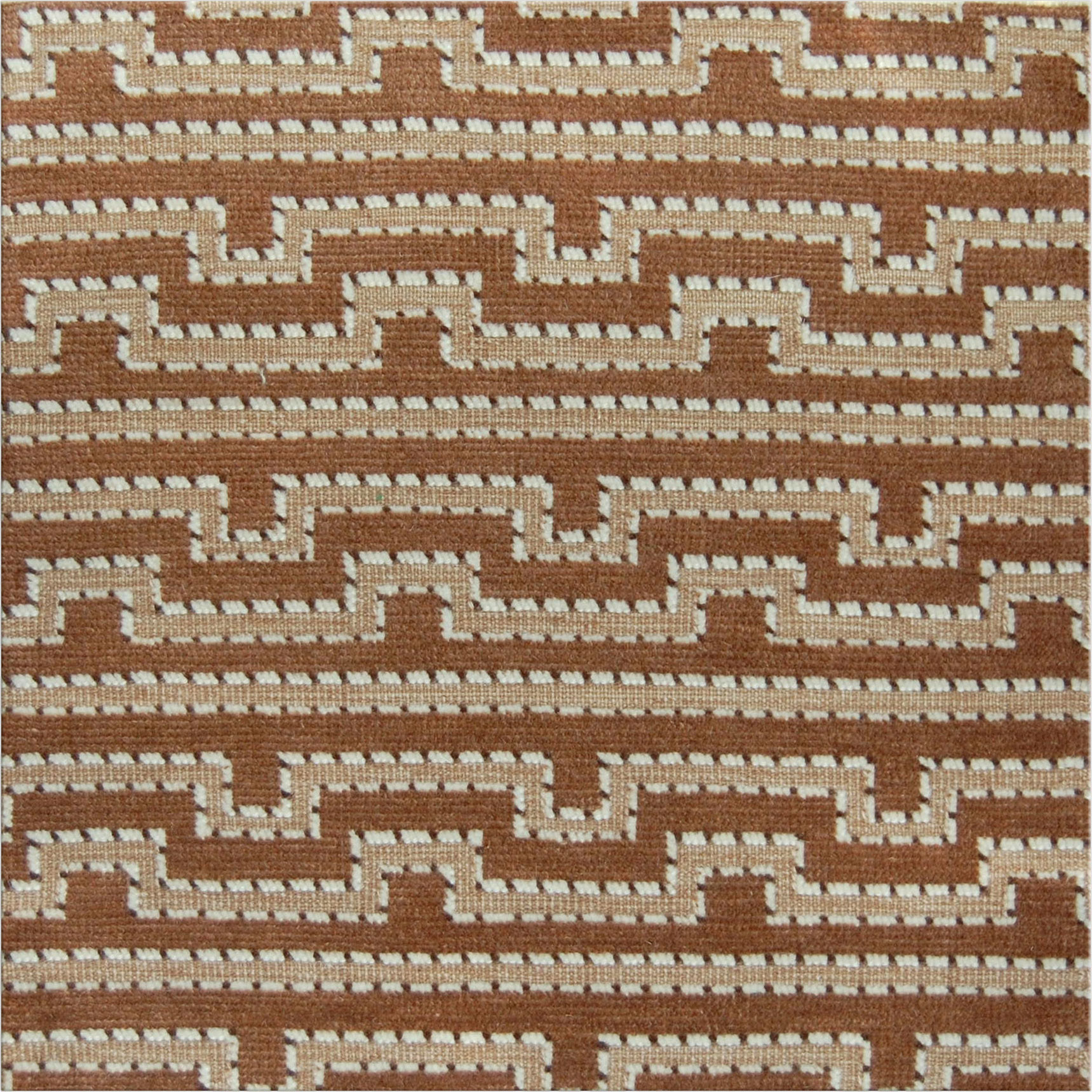
A coastal home does not need anchors, stripes, or literal nautical motifs to feel appropriate to its setting. The most successful interiors near the water often rely on restraint: considered fiber choices, disciplined pattern placement, and color palettes that hold their own in strong daylight. In that context, custom rugs become less of an accessory and more of a planning tool, shaping how a room wears over time, how it reads under glare, and how it feels when sand, humidity, and daily movement are part of the equation.
Designing for a shoreline property starts with a practical truth: light behaves differently there. Sun pours in from more than one direction, bounces off water, glass, and pale walls, and can flatten weak design choices within hours of the morning. A rug in that environment must do more than look attractive in a showroom; it needs enough structure to remain visually grounded while still feeling soft beneath bare feet. That is where custom rugs become especially useful, because dimensions, fiber density, pile height, and color balance can all be tailored to the realities of the space rather than forced into a standard size. In a bright coastal room, that level of control is not indulgent. It is the difference between a room that feels curated and one that feels temporarily furnished.
There is also the matter of scale, which is often underestimated in homes with generous openings and long horizontal views. A room facing the ocean tends to have visual competition from the landscape itself, so a rug must support the architecture without shouting over it. Overly small pieces can look precarious against wide expanses of glass, while overcomplicated motifs may read as clutter when seen from across a great room. A successful beach house rug idea usually starts with proportions that anchor seating and circulation zones cleanly, then uses subtle pattern or tonal variation to add depth. In a refined coastal retreat, the floor should feel composed, not decorated in fragments.
Designing for glare, sand, and constant daylight
Glare is one of the defining conditions of a sophisticated coastal interior, and it changes how every material performs. High-contrast designs can become visually harsh when intensified by reflected light, while delicate tonal shifts can disappear if they are too faint. For this reason, the best custom rugs for coastal home use are often planned with mid-value tones, layered neutrals, or gently broken patterns that keep their presence without overexposure. Sand introduces another challenge because it settles into pile, abrades fibers, and magnifies the need for regular care. A rug that is easy to maintain in a city apartment may behave very differently when tracked across by wet feet, beach bags, and outdoor living traffic. Durability, in other words, is not a secondary concern in salt-air interiors; it is a design criterion.
Daylight also changes a rug’s color story over the course of the day. What looks cool and luminous at 9 a.m. can appear washed out by afternoon, especially in rooms with broad glazing and minimal shade. To account for that, designers often favor dyes and constructions that retain tonal depth rather than depending on saturation alone. Natural fibers can be exceptional in this setting when they are chosen thoughtfully, because their surface texture gives even restrained colors a kind of visual grain that resists flatness. For clients seeking sunlight fade resistance, the conversation should include not just colorfastness but where the rug will sit, how much direct sun it receives, and whether the room’s window treatments will soften the exposure during peak hours. A well-planned rug becomes part of the daylight strategy, not a casualty of it.
For rooms that open directly to terraces, pools, or dunes, the floor covering should also support the pace of use. Coastal interiors often move quickly between indoors and out, which means the rug has to bridge informal living and polished presentation without seeming fragile. Low-to-medium pile constructions typically perform best because they read elegant while remaining manageable under high traffic. Dense weaving can help a rug maintain its shape in a room where furniture gets shifted for entertaining and doors stay open for much of the year. If the aesthetic goal is relaxed elegance rather than rustic ease, precision matters: the edges should be clean, the ground stable, and the hand of the piece intentionally controlled.
Best fibers and constructions for coastal conditions
Material choice is where coastal rug selection becomes genuinely technical. Wool remains one of the most reliable fibers for seaside homes because it offers resilience, spring, and natural soil resistance, all of which matter when a room sees constant movement. It also has a tactile softness that keeps a room from feeling overdone or hard-edged. In many custom area rugs, wool can be blended with silk or finely spun alternatives to create just enough luster without tipping into preciousness. For homes where the interior needs to feel calm rather than formal, that quiet richness is ideal. A dense wool foundation with a carefully moderated surface finish often outperforms trend-driven materials that may look beautiful but show wear too quickly.
Other natural fibers can be compelling when used with discipline. Jute and sisal bring structure and a dry, architectural texture that feels appropriate in light-filled rooms, though they are not always the most forgiving under moisture or heavy spills. Cotton can work well in flat weaves or as part of a broader construction, especially in guest rooms and less demanding areas, where comfort and washability may matter as much as longevity. For a luxury coastal interior rug, the key is matching material behavior to the specific room: a formal sitting room may benefit from plushness and nuanced pile, while a sunroom or covered veranda-style interior might call for a flatter, more resilient surface. In all cases, the best outcome comes from selecting a fiber story that aligns with use rather than appearance alone.
Construction matters just as much as fiber. Hand-knotted rugs offer exceptional control over detail, density, and longevity, which is why they remain the standard for rooms where design and performance need to coexist over many seasons. The structure can be adjusted to create a tighter, more durable face for active rooms, or a softer hand where the space is used more quietly. Flatweaves are useful when a lighter visual footprint is desired, especially in coastal homes with layered furniture and strong architectural lines. A carefully made rug should not feel tentative; it should sit with enough authority that the room seems fully resolved. If the brief requires a very specific dimension, weave character, or edge treatment, the value of custom rug design becomes even clearer, because the construction can be calibrated to the room’s exact demands.
There is a particular advantage to custom work in salt-air interiors: it allows the material conversation to remain precise. A client may want the organic tactility of natural fibers, yet still need the confidence of a rug that stands up to movement, humidity, and light. That balance is difficult to achieve with off-the-shelf options because standard sizes and standard constructions rarely reflect the complexity of real homes. Tailor-made rugs can incorporate denser borders, more forgiving pile heights, or more stable foundations depending on the room. They can also be designed to make maintenance simpler by controlling where texture changes occur. This is why custom carpets are often the better long-term choice in coastal properties; the aesthetic result is refined, but the thinking behind it is practical.
Soft palettes that feel elevated rather than themed
The most accomplished coastal interiors avoid obvious references and instead translate the atmosphere of the shore into tone, texture, and light. That means the palette should feel edited, not illustrative. Cream, chalk, driftwood gray, fog, stone, oat, and softened blue-green can all work beautifully when handled with enough tonal restraint. The danger lies in becoming too literal with shells, stripes, or high-key aqua, which can quickly turn elegant rooms into themed ones. A luxury coastal interior rug should feel like it belongs to a layered, architectural home first and a beach house second. When the palette is subtle, texture becomes the main event, and that is usually where the design gains its depth.
Muted color also helps the room age gracefully. In bright coastal settings, stronger pigments can feel too insistent because they compete with the light rather than harmonizing with it. Softer tones, by contrast, allow the room to register as calm even when the sun is intense and the windows are open. The best approach is rarely a perfectly flat neutral; instead, it is a neutral with movement, such as a variegated ground, a heathered surface, or a delicate abrash that creates interest without strong contrast. These qualities give the eye something to settle on, which is especially important in open-plan homes where rugs, upholstery, and wall finishes must coexist over long sightlines. A well-chosen palette can make the room feel more expensive without ever announcing itself.
Pattern can also be used to elevate rather than theme a coastal setting. Think less about literal motifs and more about abstracted structure: washed grids, softened medallion outlines, subtle stripes with irregular edges, or clouded borders that appear almost weathered by light. Such patterns relate to the coast in an atmospheric way rather than an illustrative one, which is more consistent with relaxed elegance. They also perform better over time because they hide minor changes in wear and the occasional trace of sand far better than highly uniform surfaces. For clients exploring custom rugs, this is often where the design conversation becomes most rewarding, since the pattern can be tuned to the architecture and the surrounding furnishings with great precision.
Pattern scale for open windows and long sightlines
Open windows create a visual condition that many interiors do not have to solve: the eye travels far, often from interior to exterior without interruption. In that setting, pattern scale matters enormously. Small, busy motifs can disappear into the visual field, while oversized gestures can become too dominant and break the calm continuity that makes a coastal room feel luxurious. A strong beach house rug idea usually balances those forces by using a pattern large enough to read from across the room but soft enough to remain in the background when you are seated close to it. That kind of calibration is difficult to achieve with mass-produced rugs because the relationship between repeat, room size, and furniture placement is not flexible enough.
In long, open-plan interiors, rugs also need to guide circulation without creating visual barriers. A broad, understated field can define a seating area while allowing sightlines to continue naturally toward water, terrace, or garden. Borders, when used, should be measured carefully; too narrow and they can look inconsequential, too wide and they can overpower the room. The same principle applies to contrast. A rug with a subtle tonal shift will usually feel more refined than one with abrupt transitions, especially when viewed under natural light that changes throughout the day. If the room has more than one function, pattern should help distinguish zones while preserving overall coherence. That is where made-to-order rugs offer a real advantage, because the proportions of repeat and the balance of field to border can be adjusted to the exact plan.
There is also a psychological benefit to choosing pattern with restraint. Coastal homes are often intended as places of restoration, and visual calm matters as much as softness underfoot. A rug that is too busy can make a room feel restless, especially when paired with bright glazing and pale materials. By contrast, a controlled pattern can lend the floor a sense of movement without making the room feel active in a distracting way. This is one reason custom rugs are so effective in refined seaside interiors: they can carry pattern in a way that is architectural, not ornamental. The result feels composed from every angle, whether you are approaching the room from a hallway, a terrace, or across a long central axis.
Layering rugs in casual yet polished seaside rooms
Layering can be very effective in coastal homes, but only when it is used with precision. The goal is not to pile on texture for its own sake; it is to create hierarchy, comfort, and subtle depth in rooms that need to function across multiple moods. In a relaxed yet polished sitting room, a larger neutral foundation may support a more tactile or finely detailed top layer, especially if the space transitions from daytime lounging to evening entertaining. This approach works particularly well when the lower rug provides durability and the upper rug introduces softness or a more tailored visual frame. The combination can make a room feel collected rather than staged. It also allows the designer to build warmth without sacrificing the cool clarity that coastal spaces require.
Layering is especially useful in oversized rooms, where a single piece can sometimes feel too sparse or too formal. A base rug in a stable weave can ground the architecture, while a second layer in a complementary tone adds a sense of intimacy around the seating zone. The textures should differ enough to be legible but not so much that the composition becomes fussy. In homes where doors are frequently open and traffic is variable, the top layer should be easy to maintain and proportioned with restraint. Many clients find that custom luxury rugs are the best solution here because the sizes can be tailored to furniture arrangements that do not follow standard room templates. When done well, layering makes the room feel effortless even though it is carefully planned.
The same principle applies to bedrooms, studies, and secondary living spaces. A coastal bedroom may benefit from a quieter, softer rug that expands the sense of calm without feeling overly precious. A study or media room, by contrast, may call for stronger texture and a slightly more grounded color story to keep the room from becoming visually fragile. In each case, the rug should reinforce the intended atmosphere while staying resilient to real use. That is why clients often begin with the room’s practical demands and then move into finish, fiber, and pattern decisions afterward. When a piece is made with intention, it can adapt to the rhythm of seaside living without losing its refinement, which is exactly the kind of continuity a luxury home deserves.
FAQ
What is the best rug material for a beach house?
For most beach houses, wool is the most reliable starting point because it balances softness, durability, and natural soil resistance. If the room is less exposed to spills and moisture, jute, sisal, or cotton blends can also work, especially when the design calls for a drier, more architectural texture. The best choice depends on how the room is used, how much sunlight it receives, and whether the rug needs to feel more plush or more structured. In a luxury setting, the ideal material is not just the most attractive one; it is the one that will continue to look composed after repeated exposure to sand, sunlight, and daily movement.
How do I prevent fading in bright coastal rooms?
Start with fiber and dye quality, then consider placement and window treatment strategy. Avoid relying on highly saturated color alone, because strong pigments can still appear worn if the room receives direct sun for long periods. Instead, choose tones with depth, texture, or gentle variation, since these tend to hold their appearance more gracefully under changing light. Rotating the rug periodically and using shades, sheers, or filtered glass can also improve sunlight fade resistance. If the room is especially exposed, a custom-made construction can be specified with the environment in mind, which often produces better long-term results than a standard retail option.
Can a coastal rug still feel formal?
Yes, absolutely. Formality in a coastal interior comes from proportion, precision, and material quality rather than from heavy ornament or dark color. A rug can feel elegant if it has a refined weave, a controlled palette, and a pattern that supports the architecture without overpowering it. In fact, some of the most sophisticated coastal interiors rely on quiet surfaces and subtle tonal contrast rather than dramatic decoration. The key is to avoid anything too literal or too casual, and instead commission a piece that brings structure, softness, and discretion into the room.
For homeowners and designers shaping a coastal retreat, the floor is often the best place to begin because it defines how every other surface will read in natural light. With the right materials, scale, and pattern discipline, a rug can make a bright room feel grounded without losing ease. If you are planning a waterfront residence, a seasonal home, or a full-house refresh, a specialist consultation can help translate the setting into a tailored rug strategy that looks elegant now and remains practical over time. The most successful rooms rarely happen by accident, and in salt-air interiors, thoughtful custom planning is what keeps beauty intact.