

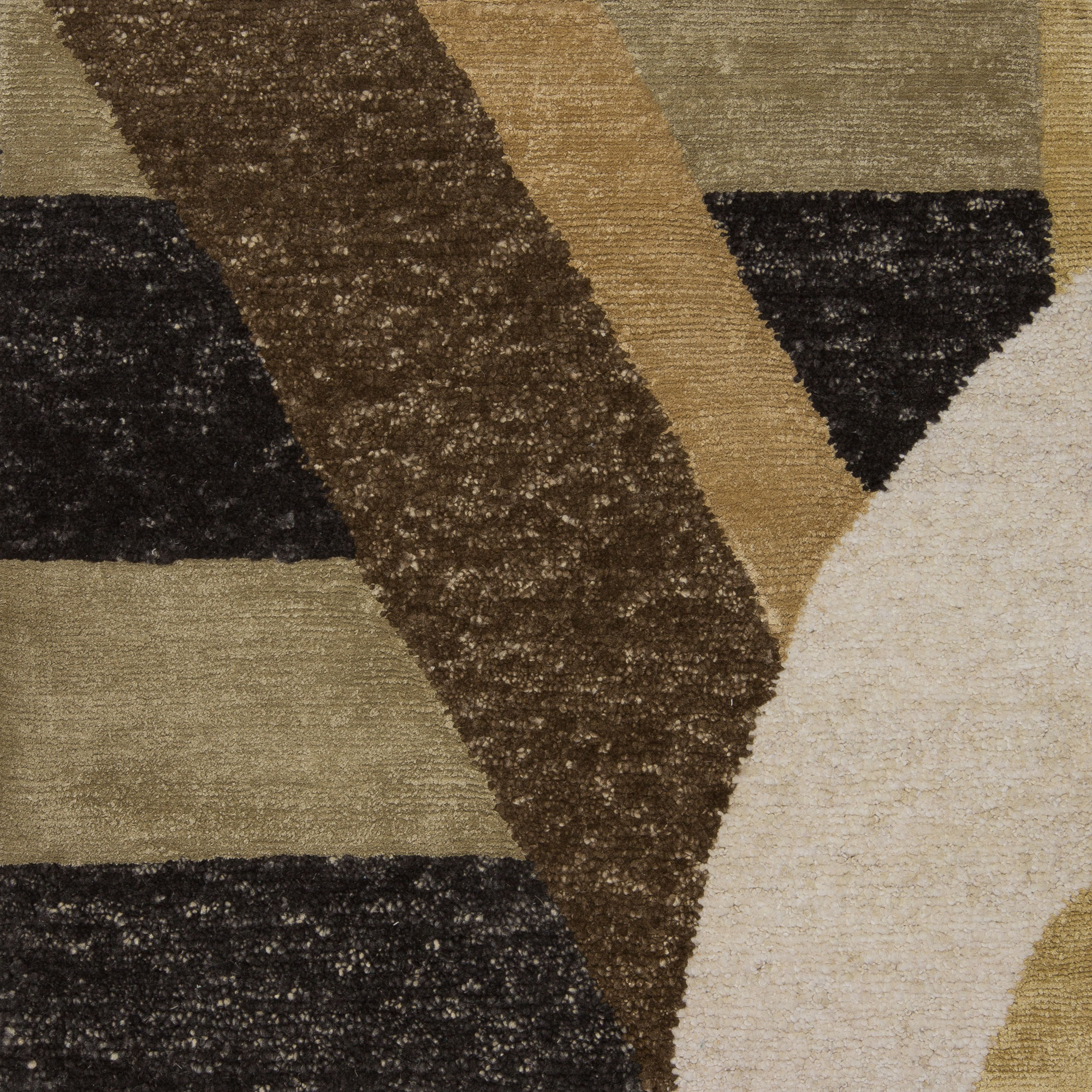
Earthy color palettes can make a room feel grounded, tailored, and quietly expensive, but they need to be handled with precision. In custom rugs, clay, sand, umber, muted green, and related tones work best when their undertones are deliberate and their texture supports the palette. The goal is not simply to choose a warm color; it is to choose the right warmth for the light, architecture, and furniture around it.
Earthy tones are often described as safe choices, but that label hides the real challenge: these colors are highly sensitive to undertone. A clay rug can read sunbaked and luminous in one room, then lean dusty or ruddy in another depending on wall color, daylight exposure, and adjacent upholstery. The same is true for sand, taupe, olive, and umber, which can look elegant when balanced correctly and muddy when the palette lacks distinction. When designers specify custom rugs for rooms that need warmth without visual weight, they pay close attention to saturation, value, and the interaction between fiber and pile.
That is especially important in interiors where the architecture already does some of the heavy lifting. A room with low ceilings, small windows, or dark millwork can still handle earthy color, but only if the rug introduces enough light reflection and texture to keep the composition open. In a brighter room, the same palette can be deeper and more saturated because the architecture provides contrast. The right rug should support the room’s envelope rather than compete with it, which is why material, construction, and scale matter as much as color family.
Identify the undertones that make earthy colors feel rich
Earthy palettes are most successful when the undertones are consistent with the rest of the room. A terracotta rug with a strong red base will feel very different from one that leans brown and ochre, even though both may be described as warm earth tones. Clay colors often sit near pink, rust, or muted orange, while sand tones can drift beige, greige, or pale gold. Umber may be cool or warm depending on whether it carries green, red, or neutral brown undertones, and that variation is what gives designers room to fine-tune the atmosphere.
For rooms that need depth without gloom, the best earthy color palettes are usually layered rather than literal. Instead of a single flat brown, think in terms of weathered stone, dry soil, tobacco leaf, olive bark, or chalky terracotta. These references matter because they imply complexity, and complexity prevents a rug from reading like a large block of color. In woven form, that complexity may come through abrash, subtle striation, or a field that shifts lightly across the surface, all of which create movement without obvious pattern.
This is where handmade construction becomes relevant. In hand-knotted rugs, variations in yarn tension, dye absorption, and knot density can soften a color and make it feel more dimensional. A solid-looking field may still carry multiple values within the same hue, which is one reason such rugs remain compelling in restrained interiors. If you are specifying custom rugs, ask how the chosen fiber and dye process will influence the apparent undertone under your room’s specific light.
Use contrast and texture to keep palettes lively
Earthy palettes rarely fail because of the color itself; they fail because everything in the room ends up at the same level of softness. If the rug, sofa, drapery, and wall paint all sit in the same mid-tone register, the room can feel visually stalled. Contrast does not need to mean high drama. It can come from a lighter border, a more open weave, a slight shift in sheen, or a pattern that introduces quiet rhythm across the field.
Texture is often the most effective way to keep a warm palette from flattening. A wool rug with a low-to-medium pile will usually hold earthy color with a little more structure than a plush surface, because the pile catches light at different angles. Silk or silk-wool blends can sharpen the reading of a clay tone, while a denser wool construction can make umber feel more matte and grounded. If the room already contains many soft surfaces, a rug with subtle carving, a raised motif, or a hand-knotted texture can provide enough articulation to keep the composition from going hazy.
Pattern density also matters. In interiors where the furniture is substantial and the room needs restraint, a near-solid rug with gentle tonal variation often works better than a large-scale pattern that competes with upholstery and art. In other rooms, especially those with simple furnishings, an earthy palette can carry a more graphic design so long as the contrast remains controlled. The key is to treat color and pattern as two separate tools: one sets mood, the other sets rhythm.
Choose the right warmth for north- or south-facing rooms
Light orientation can completely change how earthy colors behave. North-facing rooms often receive cooler, bluer light, which can make beige, taupe, and muted green feel more restrained than expected. In those spaces, rugs with terracotta and clay tones, or with a warm brown base softened by red or gold undertones, can offset the coolness and make the room feel composed rather than stark. A rug that is too gray in this kind of light may lose its richness and begin to feel merely neutral.
South-facing rooms offer a different problem: abundant warm light can intensify reds, oranges, and some browns until they feel heavier than intended. Here, a paler sand-ground rug or an earthy palette with muted green, olive-gray, or smoke-brown accents can keep the room from becoming visually overripe. Designers often test samples at different times of day because morning light, midday sun, and evening lamplight can each shift the same rug in a different direction. This is especially important in rooms that function from breakfast through late evening, where a single color decision has to work across multiple lighting conditions.
If the room has mixed light sources, consider how artificial lighting will interact with the pile. Warm bulbs can deepen umber and chocolate, while cooler LEDs can flatten them or make them seem more graphic than intended. A rug that looks balanced in daylight may take on more depth at night, which is not a flaw if the room is used for dining or entertaining after dark. The best result comes from treating the rug as part of the lighting plan rather than an isolated decorative object.
Explain how to keep darker tones from feeling heavy
Darker earthy colors can be extremely useful, but they need relief. A rug in deep brown and chocolate tones can anchor a room beautifully when the rest of the composition includes lighter upholstery, pale walls, reflective surfaces, or visible grain in the woodwork. Without that counterweight, the same rug may absorb too much visual energy and make the floor plane feel compressed. The answer is not to avoid deep color altogether; it is to give it a job and define its boundaries clearly.
Scale plays a decisive role here. A dark rug that is too small will often feel more heavy than a larger one because the eye reads it as a dense object sitting in the middle of the room. In contrast, a generous rug can distribute the color more evenly and allow the furniture to sit within a coherent field. For living rooms, the rug should typically extend far enough to relate to the front legs of seating pieces, which helps the composition feel intentional rather than anchored by a dark island. In dining rooms, the rug should go beyond the chair pullback so the color reads as a framed surface, not a cramped patch.
Border treatment can also help. A lighter perimeter, a softened edge, or a tonal field that shifts subtly toward the outer zone can keep dark earth colors from closing in on the room. Even a very restrained design may benefit from a slightly more open center or a value shift near the edge. The point is to preserve visual air without undermining the depth that made the color appealing in the first place.
Match earthy palettes to room function, not just style
Earthy rugs work in many styles, but their success depends on how the room is used. In a sitting room built for conversation, a muted green or taupe-based rug can support a calm envelope that does not dominate the furniture. In a library, den, or media room, deeper brown and umber may feel appropriate because the architecture itself invites intimacy. In open-plan spaces, however, too much dark color can collapse the distinction between zones unless the rug is sized and positioned to define a clear boundary.
Material choice should follow that functional reading. Wool remains a practical foundation because it offers resilience, natural warmth, and a broad range of dye response. For rooms where the palette needs more luminosity, wool-silk blends can lift earthy colors and give them edge definition. In traffic-heavy spaces, a tighter construction and a flatter pile often preserve the color’s integrity better than a high-loft surface, which can scuff or shade unevenly. The most successful rug is the one that holds its shape visually as well as physically.
This is also where designer specification becomes valuable. A room may need a warmer palette, but not all warm palettes solve the same problem. One room may need a clay tone to countercool plaster walls; another may need an olive cast to connect with upholstery or stone; a third may need a brown that reads almost like smoked leather because the furniture and architecture are already pale. The right answer depends on proportion, sightlines, and the color temperature of everything surrounding the floor.
A practical scenario: warming a pale room without losing light
Consider a long living room with pale oak flooring, cream walls, a sectional in oatmeal fabric, and a large window facing north. The room feels bright enough during the day, but at dusk it becomes slightly cool and visually thin. A saturated rust rug would add warmth, but it might also feel too assertive against the soft upholstery. In this case, a custom rug in a faded clay ground with muted brown veining and a restrained border could introduce enough body to warm the room while preserving the lightness of the architecture.
Now change one variable: the same room gains dark walnut side tables, a bronze floor lamp, and a charcoal chair. The rug can handle a deeper tone because the surrounding materials already provide contrast and structure. A wool rug with terracotta and clay tones woven into an aged-looking field would create continuity with the wood and metal, while still keeping the composition open. This is the logic designers rely on: not matching every surface, but balancing density across the room so no single element dominates.
When earthy colors need pattern, make the pattern quieter than the furniture
Patterned earth-toned rugs work best when they respond to the room’s architectural rhythm. If the furniture has curved silhouettes, a more rectilinear pattern can introduce useful structure. If the upholstery is already patterned, the rug should usually step back and provide tonal cohesion instead. Earthy colors can support both traditional and contemporary rooms, but the most persuasive results usually come from pattern that reads at a distance as texture, not decoration.
This is one reason antique-inspired surfaces remain so appealing in this palette family. Time-worn effects, muted medallions, and softened borders can make a color feel lived-in rather than newly applied. In quieter interiors, these effects provide depth without forcing contrast. In busier rooms, they keep the eye moving without adding another competing motif. The result is a floor that stabilizes the room instead of broadcasting itself.
If you are selecting custom area rugs for an open-plan home, think about how the rug will read from multiple angles. What feels subtle from a seating area may appear more patterned when seen from a stair landing or hallway. A successful earthy rug should maintain its composure across those sightlines, which means avoiding extremes in contrast and keeping the composition legible from a distance.
How to keep darker tones from feeling flat over time
Darker earthy rugs age best when they have enough variation to disguise everyday use. A single, uniform brown can show dust, vacuum lines, and pressure marks more readily than a nuanced field. Textural variation, tonal abrash, and a lightly variegated weave all help disguise wear while also giving the rug a more tailored appearance. That is especially important in households where the rug sits under frequent use, since visual flatness can make even a well-made piece look tired sooner.
Maintenance also affects perception. A rug that is cleaned appropriately and rotated as needed will preserve its depth and avoid the uneven dulling that can happen in sunny rooms or under heavy seating arrangements. In practice, darker earth tones are best when they are chosen for the room’s actual routine, not only for their first impression. A floor covering that looks beautiful but feels overly precious will not succeed in everyday luxury interiors.
FAQ
Which earthy colors are easiest to live with?
Sand, taupe, muted olive, and softened clay are often the most forgiving because they work across a wide range of wall colors and furnishings. They hide everyday variation better than very saturated rust or very dark brown, yet still provide warmth. The easiest colors to live with are usually the ones that sit between obvious categories, since they adapt more readily to changing light and seasonal textiles.
How do I keep a brown rug from feeling flat?
Choose brown with visible undertone, such as red-brown, olive-brown, or smoked cocoa, rather than a single uniform note. Texture matters as much as hue: hand-knotted construction, abrash, tonal patterning, or a subtle border can all create depth. If the rug is very dark, pair it with lighter upholstery or more reflective materials so the room keeps a sense of visual air.
Can muted green still feel neutral?
Yes, especially when the green is softened with gray, brown, or stone-like undertones. Muted green can function almost like a neutral in rooms with wood, linen, plaster, and bronze because it connects those materials without demanding attention. It becomes less neutral only when the saturation rises or when the surrounding palette is already strongly colored.
What if my room is bright but still needs warmth?
In a bright room, you can use richer earthy tones without making the space feel heavy, as long as the rug has enough texture or value variation. A clay, ochre, or umber palette can warm the room while daylight keeps it buoyant. The key is to avoid a color that is both dark and flat, since that combination tends to read as weight rather than depth.
Earthy rugs are most compelling when they solve a specific spatial problem: too much cool light, too much openness, too little structure, or a need for groundedness without visual darkness. If you are comparing palettes, pile types, and scale for a room that has to feel warm and composed at the same time, Doris Leslie Blau can help refine the choices with gallery-level design guidance and specialist attention to custom rug specification.