

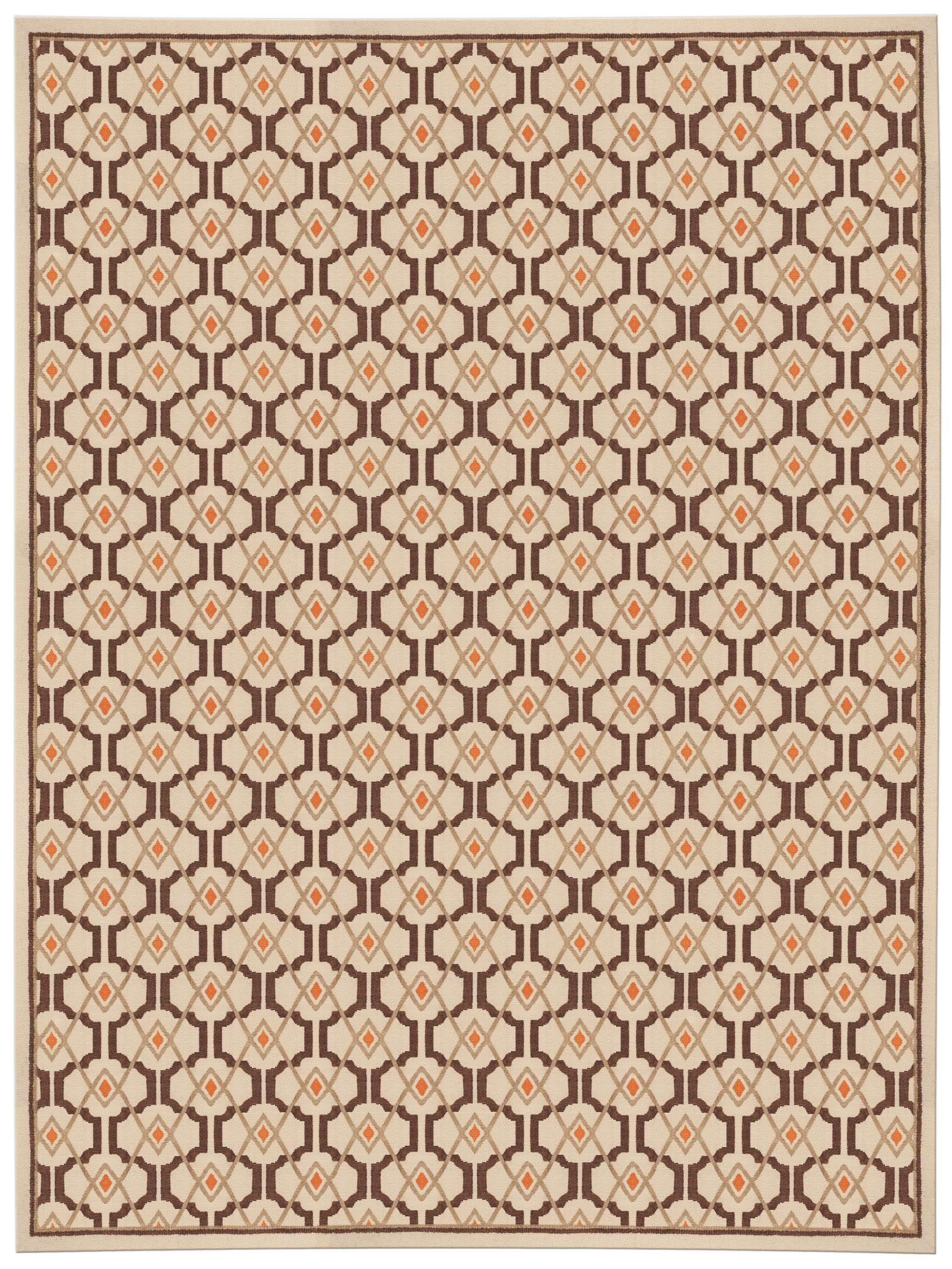
Flatweave rugs occupy a very specific place in interior design: they are visually disciplined, structurally lean, and extremely useful when a room needs clarity rather than extra weight. For custom rugs, that makes them an especially strategic choice, because size, pattern, and fiber can be adjusted with precision to suit the architecture and how the room is actually used. They are not the answer in every setting, and that is precisely what makes them worth understanding. When specified well, flatweaves can solve problems of scale, circulation, and visual clutter with quiet authority.
At Doris Leslie Blau, flatweave construction often comes up in discussions about rooms that need definition without bulk. A flatwoven rug sits close to the floor, which means it reads as part of the architecture rather than as an added layer of plushness. That can be ideal under strong furniture lines, in slender circulation paths, or in rooms where the goal is to preserve light and openness. It can also be the right answer for clients who want a rug that supports a scheme without competing with upholstery, art, or millwork.
Describe the look and feel of flatweave construction
Flatweave rugs have a taut, low-profile surface that immediately changes the character of a room. Because there is no pile to absorb light, the design appears crisp, with pattern edges and color transitions often reading more sharply than they would in a thicker construction. This clarity is part of the appeal: stripes look architectural, geometrics feel exact, and even simple solids gain a woven texture that prevents them from appearing flat or empty. The result is less about softness underfoot and more about visual order.
That said, flatweaves are not one-note. Depending on the fiber, weave density, and finishing, they can feel supple, firm, rustic, or highly refined. A wool flatweave will usually offer more resilience and a richer hand than a jute-based construction, while silk accents or mixed fibers can add subtle sheen. In design terms, this means flatweaves can move across a wide range of interiors, from pared-back modern rooms to warmer spaces that need a more relaxed foundation. The important distinction is that their elegance comes from restraint, texture, and proportion rather than loft.
For clients comparing flatweave rugs with pile rugs, the difference is not only tactile; it is also visual and spatial. A pile rug creates a softer boundary and often feels more materially present, while a flatweave tends to recede, allowing furniture, upholstery, and architectural lines to remain dominant. In a room with strong natural light, that can be a major advantage because the rug will not cast shadows or read as heavy. In a dimmer room, however, the same quality can make the floor covering feel understated to the point of disappearing if the palette is too close to the surrounding finishes.
Compare visual lightness with durability
Flatweaves are often chosen because they look lighter, but the practical question is whether that lightness compromises durability. The answer depends on construction and use. A well-made wool flatweave can hold up well in active spaces, especially when the weave is tight and the pattern is not overly delicate. By contrast, very loose or highly textured natural fiber rugs may be more vulnerable to edge wear, soil retention, or distortion in areas of concentrated traffic.
Durability should be judged in relation to the room rather than in isolation. A flatweave in a family room needs to tolerate chair movement, foot traffic, and occasional spills, while a flatweave in a bedroom may mainly need to provide visual calm and a pleasant landing underfoot. This is where material choice becomes decisive. Wool resists crushing better than many plant fibers, while jute and natural fiber rugs can deliver warmth and texture but require more caution in spaces exposed to moisture, frequent vacuuming, or rough use.
There is also a structural advantage to flatweaves in certain layouts. Because they lack pile, they tend to work smoothly under dining chairs, beneath desks, and at thresholds where thicker rugs might create a trip point or interfere with door swing. In a house with long sightlines, a flatweave can support continuity from room to room without interrupting the flow of the floor plane. That makes them particularly useful when designers want the rug to be functional, but not visually dominant.
Identify the room types that benefit most
Dining rooms are among the most natural settings for flatweave rugs. Chairs move more easily, crumbs are easier to address, and the rug’s low profile helps maintain a clean line beneath the table. The visual neatness of flatweave construction is especially effective when the table is sculptural or when the room already contains many competing elements, such as drapery, cabinetry, and artwork. In those cases, the rug should frame the furniture rather than compete with it.
Entryways and transitional spaces are another strong match. These rooms rarely call for plushness; they need definition, scale, and a surface that can support repeated movement. A flatweave can provide that without making the space feel closed in. In apartments or townhouses with narrow halls, the reduced thickness can be especially useful, because it preserves clear door clearances and prevents the floor covering from becoming an obstacle. The same logic applies to landings, galleries, and open passages where the rug is part of the circulation system rather than the destination.
Open-plan interiors also benefit from flatweaves when the goal is to create zones without adding visual clutter. A large living area may need the dining section to feel distinct from the seating area, but if every rug is deep and heavily textured, the room can start to look over-furnished. Flatweave rugs can establish boundaries with pattern, border treatment, or subtle color shifts while still allowing the floor to feel continuous. In minimalist interiors, they can also supply just enough texture to keep the room from reading as cold.
Bedrooms can work well with flatweaves too, but the specification should be intentional. If the room is designed for softness, layered textiles, and a more enveloping mood, a pile rug may be a better fit. If, however, the bedroom features a low bed, tailored upholstery, and strong daylight, a flatweave can reinforce the sense of order without adding bulk around the perimeter. The same is true in studies and libraries, where a restrained floor treatment can support concentration and allow furniture leg profiles to remain visible.
When flatweave is not the best answer
There are rooms where a flatweave is too visually spare for the job. A formal sitting room that depends on tactility, acoustic softness, and a sense of grounded comfort may benefit more from a hand-knotted rug with greater pile structure. Likewise, spaces that need to disguise irregular flooring or provide a more forgiving surface under bare feet may call for a different construction. Flatweaves do not hide much; they reveal the floor, the furniture line, and the quality of the detailing, which is a strength only when those elements are already resolved.
If the project brief calls for richness, depth, and a more luxurious underfoot experience, a flatweave can still be used, but usually as part of a broader strategy rather than the sole answer. Designers may choose one in a secondary room, in a layering scheme, or where the visual priority is to keep the architecture primary. That is why custom rugs are so useful in this category: the construction can be matched to the room’s function instead of forcing the room to adapt to a standard product.
Explain edge, border, and size considerations
With flatweave rugs, edges matter more than many clients expect. Because the construction is low and precise, any inconsistency in finishing becomes highly visible. A clean edge can make the rug feel tailored, while a heavy or imprecise finish can undermine the very lightness the construction is meant to create. This is where rug finishing becomes part of the design conversation, not simply a technical afterthought. Binding, whipping, fringe, and border treatments all alter how the rug meets the floor and how it reads against nearby furniture.
Border decisions should be tied to the room’s geometry. In a narrow space, a border can help stabilize the composition, especially when the furniture is rectilinear and the rug needs to hold its own against long walls or elongated sightlines. In a wider, quieter room, a border may be unnecessary if the weave itself already provides enough structure. Pattern scale is equally important: large motifs can read clearly in a broad room, but in a smaller setting they may feel abrupt, while a finer repeat can preserve calm and movement without clutter.
Size is often the deciding factor in whether a flatweave succeeds. Because the rug is visually lighter, it can sometimes be undersized without immediately feeling heavy, but that should not be mistaken for permission to shrink the footprint. A rug that is too small will break the proportions of the room, especially under seating arrangements. In dining areas, the rule is practical: the rug should extend far enough beyond the table to allow chairs to move back comfortably. In living rooms, the front legs of major seating pieces should usually sit on the rug so that the arrangement feels anchored rather than floating.
For unusual rooms, custom sizing is often the only way to get the balance right. Long narrow galleries, irregular bays, and oversized lofts can all benefit from a flatweave cut to exact dimensions, with border proportions adjusted to the architecture. A standard rug can look either timid or forced in those environments, whereas a made-to-order piece can resolve the room with much less visual friction. This is especially true when the surrounding finishes are already strong, such as stone floors, large windows, or patterned millwork.
Material choices that change the outcome
Wool remains the most versatile fiber for flatweave construction because it offers resilience, clarity of pattern, and reliable performance in many types of rooms. It can be used in quiet neutrals, tonal stripes, or more complex compositions without losing definition. Cotton is sometimes chosen for a lighter hand or a more relaxed character, but it usually has less substance than wool and may not provide the same long-term stability in busy settings. Silk content, when used sparingly, can sharpen the surface and add a subtle glow, though it is better suited to controlled environments than high-wear zones.
Plant fibers such as jute and natural fiber rugs introduce a different register altogether. They are valued for texture, honesty, and a relaxed architectural feeling, but they are not interchangeable with wool flatweaves. Their surface can be beautiful in a coastal, modern rustic, or casual transitional room, yet they may show wear more readily and can be less forgiving in areas with spills or frequent rearrangement of furniture. If the goal is understated refinement with enough strength for daily use, a designer should weigh the room’s maintenance expectations before selecting a natural fiber construction.
Color also interacts with material. A pale wool flatweave can feel crisp and disciplined, while the same tone in jute may read warmer and more organic. Darker colors will emphasize the weave structure and can ground expansive rooms, but they may also reveal lint or variation more readily depending on the fiber. Patterned flatweaves are useful when the room needs movement without volume, because the pattern can do the work of visual anchoring that a pile rug might otherwise achieve through texture alone.
How flatweaves fit into a designer specification workflow
In a specification process, flatweaves are often selected after the room plan is already taking shape. The designer may know that the architecture needs to stay visible, that chair movement must remain easy, or that multiple furnishings need a unifying layer without extra softness. At that point, the conversation turns to proportion, border width, edge treatment, and fiber selection. If the project also includes hand-knotted rugs elsewhere in the home, the flatweave can serve as a practical counterpoint rather than a lesser substitute.
A realistic example might be a main level with a formal living room, an adjacent dining area, and a broad passage connecting the two. The living room could call for a more substantial rug to support a seated conversation area, while the dining room benefits from a flatweave with a restrained border and durable wool construction. The passage might receive a narrow custom runner in the same palette so the circulation path feels deliberate instead of incidental. In that kind of plan, the flatweave is not an afterthought; it is the component that keeps the whole level visually coherent.
That workflow is where custom rugs earn their value. Rather than choosing a rug only by color or by a room photo, the designer can match construction to use, scale to architecture, and finishing to the surrounding materials. The result is a floor covering that behaves correctly in the room, which is the standard that matters most in serious interiors. It also helps preserve longevity, because a rug that suits its setting is less likely to be overworked or visually out of place.
FAQ
Are flatweaves durable enough for busy areas?
They can be, provided the construction and fiber are appropriate to the level of wear. Wool flatweaves are generally stronger and more adaptable than many natural fiber options, especially in dining rooms, hallways, and family-use spaces. The key is to think about the specific traffic pattern, furniture movement, and cleaning routine rather than treating all flatweaves the same.
Do flatweaves feel less luxurious than pile rugs?
They feel different, not automatically less luxurious. Luxury in a flatweave comes from exact weaving, proportion, finish, and material quality, whereas pile rugs often express luxury through depth and softness. If the room calls for a tailored, architectural mood, a flatweave can feel more refined than a thicker rug because it supports the design instead of competing with it.
When is flatweave the smartest specification?
It is often the smartest choice when a room needs visual lightness, easy chair movement, or a rug that will sit comfortably within a precise architectural plan. Dining rooms, entries, open-plan zones, and narrow passages are especially strong candidates. It is also a practical solution when the designer wants the floor to remain legible and the furnishings to stay visually prominent.
Can flatweave rugs work with natural fiber interiors?
Yes, particularly when the room already includes linen upholstery, wood, plaster, or other tactile surfaces. Jute and natural fiber rugs can reinforce that relaxed sensibility, though they should be chosen carefully for wear and maintenance. In many projects, a wool flatweave offers a more polished alternative while still keeping the natural, low-profile character.
For projects where the floor covering has to solve for proportion, traffic, and restraint at the same time, a thoughtfully specified flatweave can be the right instrument. Doris Leslie Blau can help match construction, size, and finishing to the room’s actual demands, whether the brief calls for softness, structure, or something in between. If you are weighing flatweave rugs against other constructions, a specialist design conversation can clarify the best path before the room is finalized.