

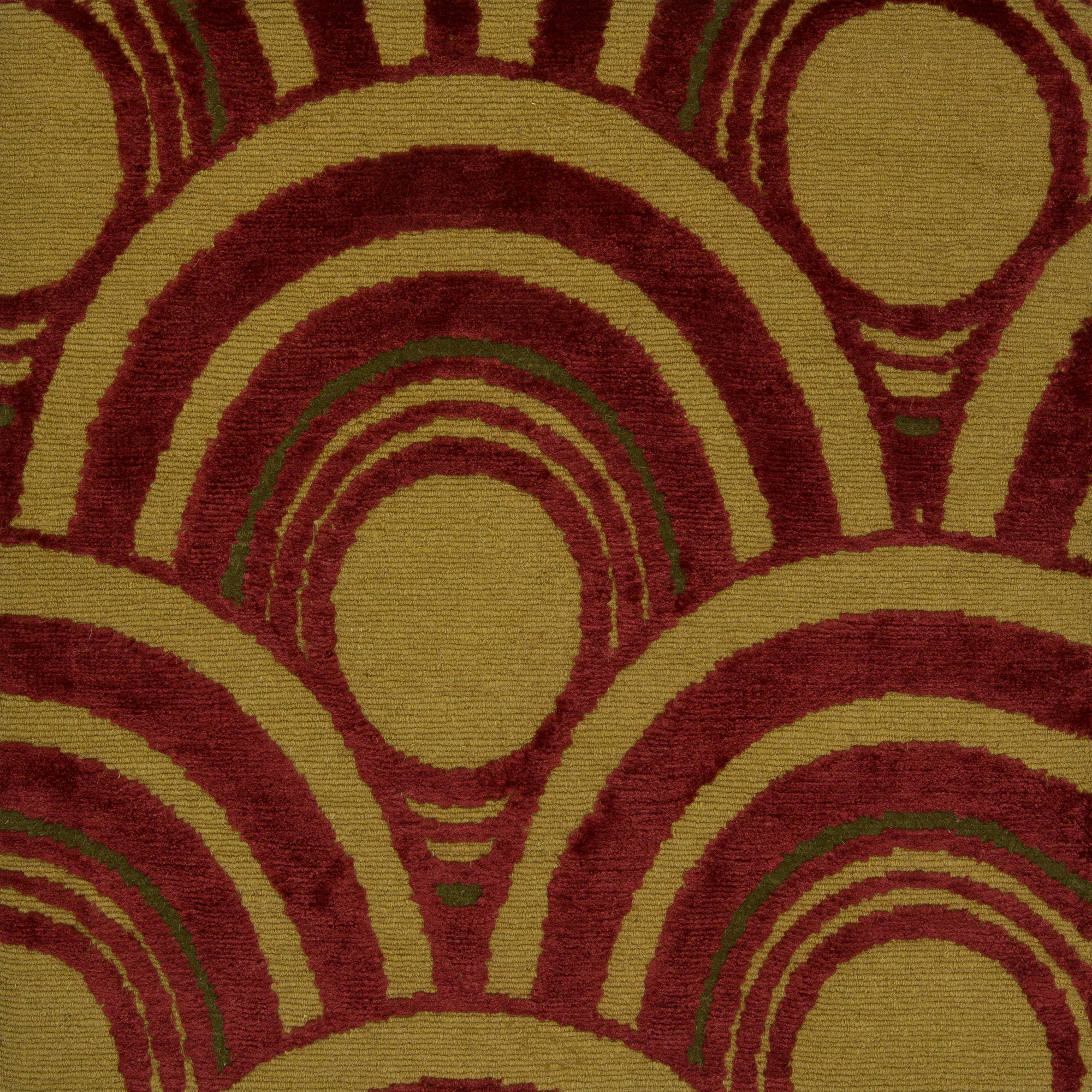
Antique rugs have an undeniable pull: age, patina, irregularities, and the feeling that a room has inherited its character rather than purchased it. But when a project calls for exact dimensions, a specific color temperature, or a pattern that has to work with existing furnishings, custom luxury rugs can solve problems an antique simply cannot. For designers and homeowners who love historic references but need practical control, the choice is often less about taste than about fit, condition, and how the room will actually be used.
That distinction matters most in rooms where proportion is unforgiving. A rug that is six inches too short can throw off a seating area, leave a dining table floating awkwardly, or expose too much floor in a long gallery-like space. Antique pieces were made for a different scale, and even a beautiful one may arrive with borders that no longer suit modern furniture layouts or irregular architecture. By contrast, made-to-order rugs can be drafted to the room, the furnishings, and the sightlines, which is why they are often the stronger answer in contemporary interiors that still want soul.
Compare uniqueness, condition, and size flexibility
Antique rugs are unique because they are singular objects with visible age. Their appeal often lies in the slight asymmetry of the weave, the softened dyes, and the history embedded in wear. But uniqueness is not the same as suitability. A rug can be rare and still be wrong for the space if its proportions fight the room, its color has drifted beyond the palette, or its field pattern is too busy for the furniture arrangement.
Size flexibility is where custom rugs usually win. A custom piece can be scaled to anchor a sectional, extend comfortably under a dining table, or define a bedroom without leaving awkward strips of bare floor at the edges. This is especially useful in open-plan interiors, where a rug has to establish zones without creating visual clutter. For designers specifying for large rooms, unusual footprints, or rooms with fireplaces and offset openings, that control is often worth more than the romance of a piece that almost fits.
Condition is another practical divider. Many antique rugs have been professionally repaired and can be excellent floor coverings, but age still affects durability, edge stability, and pile integrity. If a rug is intended for daily use under a family seating area, next to a kitchen threshold, or beneath dining chairs, wear becomes a serious design variable, not a minor detail. A well-made custom rug can be built with traffic in mind from the outset, using the right foundation, yarn quality, and pile height for the room.
Discuss when antiques are too fragile or too small
There are moments when an antique rug is not the wrong choice aesthetically, but the wrong choice operationally. A fragile silk piece may look exquisite in a formal sitting room, yet it can be a poor candidate for a home with pets, active children, or frequent entertaining. Low areas of pile, historic repairs, and old dye behavior also matter if the room gets strong sunlight or if furniture tends to be moved often. In those cases, preservation concerns begin to outweigh the visual charm.
Antique rugs also fail when they are too small for the architecture. This happens often in rooms with oversized sofas, elongated dining tables, or double-height living spaces where the floor area is as important as the furniture itself. A small antique placed in a generous room can look like an afterthought, no matter how valuable it is. Designers sometimes try to solve this by layering or border framing, but those solutions are compromises; a properly scaled custom carpet is cleaner, calmer, and more convincing.
There is also the matter of practical wear zones. Hallways, family rooms, primary bedrooms, and dining areas all place different demands on a rug. A delicate antique may be best reserved for a low-traffic sitting room or an area where footwear is removed. In contrast, custom luxury rugs can be specified in wool, blends, or other constructions that better suit the room’s daily rhythm, while still delivering the handcrafted look clients want.
Explain how custom can echo historic character responsibly
The strongest custom pieces do not imitate age; they interpret it. That means drawing on historic geometry, medallion structures, border scales, and traditional color relationships without forcing the rug to look artificially worn or theatrically distressed. The goal is to preserve the discipline of antique design while adapting it to contemporary use, cleaner sightlines, and more exact proportions. When that balance is right, the room feels composed rather than decorated with a costume piece.
Material choice is central to that effect. Wool can give a grounded, authentic hand and withstand daily use beautifully, while silk content or silk-like highlights can sharpen detail and create a softer light response in formal settings. Pile height changes the mood as much as pattern does: a slightly higher pile can soften a room with hard surfaces, while a tighter, flatter surface can suit restrained interiors where the architecture should remain dominant. These are not abstract details; they are the tools that determine whether the rug feels genuinely integrated.
Pattern density and palette should also be handled with restraint. A historic reference can become overwhelming if every motif is reproduced at full intensity. Many of the best designer custom rugs borrow the spacing, border logic, or field rhythm of an antique, then simplify the ornament so it sits comfortably under today’s furniture. That approach allows the rug to support antiques, contemporary seating, or art without competing with them. It is especially effective in rooms where the aim is quiet luxury rather than maximalism.
For clients comparing a one-of-a-kind antique with a new rug, it helps to think in terms of visual rhythm. An antique brings accumulated texture, but a custom piece can be drafted to provide exactly the amount of movement a room needs. If the architecture is ornate, the rug may need a calmer field. If the room is minimal, the rug may need a more articulated border or medallion to keep the setting from feeling stripped. This is where custom rug design becomes a design tool, not just a manufacturing option.
Offer questions to ask before choosing
Before deciding between antique and made-to-order rugs, it helps to answer a few practical questions honestly. How precise does the size need to be? Is the room formal, family-driven, or exposed to heavy foot traffic? Will the rug sit in direct light, under dining chairs, or near a fireplace where soot and movement are concerns? The answers often make the choice obvious long before any aesthetic debate begins.
It is also worth asking what the room needs to feel complete. Some spaces benefit from the irregularity and patina of an antique, especially when the furnishings are tailored and the palette is quiet. Others need a clearer border, cleaner geometry, or a more controlled color transition to tie together stone, wood, upholstery, and art. If the room already has strong historical pieces, a custom rug may be the better counterbalance because it can echo the period without adding another layer of visual noise.
For example, imagine a long living room with a low-profile sofa, two vintage armchairs, and a fireplace centered on one wall but not the other. An antique rug found in the right color might still be too short to unify the seating group and too narrow to respect the circulation path. A custom solution can extend exactly far enough to hold the furniture in conversation, keep the room balanced, and preserve generous margins around the perimeter. That kind of correction is hard to achieve with a found piece, no matter how beautiful it is.
Designer specification workflow matters here as well. Good projects usually start with the plan, not the catalog. Measurements, traffic patterns, furniture elevations, and material samples should all be considered together so the rug supports the room rather than arriving as an isolated object. If you are still refining size, shape, or use case, a custom rug sizing guide can be a useful way to think through the practical details before you commit.
What to consider before commissioning a rug
- Room scale and furniture footprint, including how much rug should sit beneath sofas, chairs, or dining tables.
- Traffic level, pets, children, and whether the rug needs to handle frequent use or more formal conditions.
- Light exposure, especially in south-facing rooms where color fading or sheen changes may matter.
- Desired pattern energy, from almost architectural calm to more expressive historic detail.
- Material and pile height, which influence touch, durability, acoustics, and how the rug reads in the room.
- Whether the room needs preservation-grade character or a new interpretation that can be built for daily life.
A practical rule for clients who love antiques
If an antique rug gives the room exactly the scale, condition, and character it needs, it is often the right answer. But if you are solving for a difficult footprint, a family-oriented lifestyle, a specific palette, or a pattern that must coordinate with existing furniture, custom luxury rugs are usually the more disciplined choice. They allow the room to retain warmth and craftsmanship without asking you to compromise on proportion or performance. That is why so many designers treat custom and antique not as rivals, but as different tools for different rooms.
At Doris Leslie Blau, that distinction is part of the conversation from the start: the right rug is not merely beautiful in isolation, but right for the architecture, the use, and the life of the room. If you are weighing an antique against a made-to-order piece, a specialist review can help clarify which direction will serve the interior best.
FAQ
Can custom rugs feel as special as antiques?
Yes, when they are designed with strong proportions, thoughtful materials, and a clear reference point. A well-executed custom rug can feel deeply personal because it responds to the room rather than forcing the room to adapt to it. The special quality comes from precision and craft, not just age.
When is an antique the wrong choice?
An antique may be the wrong choice when it is too fragile, too small, poorly matched to the room’s scale, or not durable enough for the intended use. It can also be problematic if the colors have shifted in a way that conflicts with nearby finishes or upholstery. In those cases, a made-to-order piece is usually the better functional solution.
How can I keep a custom rug from looking generic?
Start with the room’s architecture, furniture layout, and palette rather than a broad trend. Specific border proportions, controlled pattern density, and the right material combination can give a custom piece real character without making it fussy. The best result usually comes from referencing historic logic while keeping the design tailored to the space.