

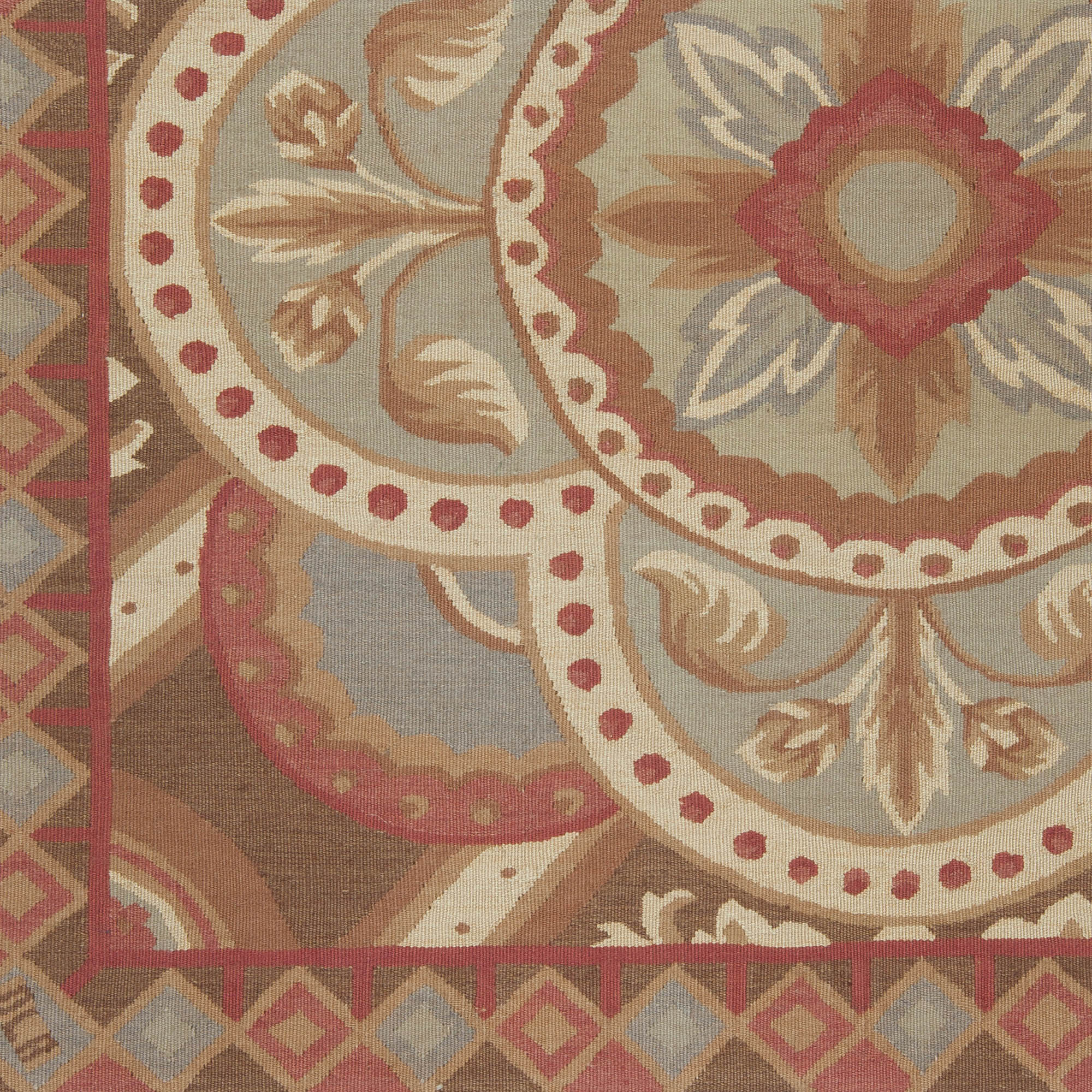
When a hotel lobby, suite, lounge, or corridor needs to feel tailored and welcoming, the rug has to do several jobs at once. It must support the interior concept, handle heavy use, absorb sound, and still look composed after repeated cleaning. That is why custom rugs are often the most effective choice for hospitality projects: they can be shaped around a floor plan, a brand palette, and the realities of daily wear instead of forcing the room to adapt to a standard size.
Designing rugs for hospitality projects begins with a practical question, not a decorative one: what is this floor covering expected to survive? A guest room rug faces rolling luggage, bedside traffic, and frequent vacuuming, while a lobby piece has to withstand constant footfall, furniture movement, and shifting light throughout the day. The best specification process treats style and performance as inseparable, because a beautiful rug that distorts, sheds, or shows wear in six months is not a good design decision. In that sense, custom carpets are less about indulgence and more about control over the variables that determine longevity.
Identify traffic, cleaning, and maintenance requirements first
Before any pattern discussion, map how the room actually functions. A hotel entrance or reception area has concentrated traffic at the thresholds and often along direct sightlines, while a suite may have softer but more complex wear around seating groups, bed edges, and chaise placements. Corridors introduce directional traffic and frequent vacuuming, which can flatten pile and expose construction weak points if the rug is too delicate for the setting. If a project team does not define these conditions early, the final rug may look appropriate in a rendering but underperform in service.
Cleaning protocols matter just as much as foot traffic. Public-facing interiors often require regular low-moisture cleaning, spot treatment, and frequent vacuuming, so the fiber, dye method, and pile structure should be selected with maintenance in mind. A dense wool rug can be an excellent choice for many hospitality settings because wool offers resilience, natural soil resistance, and a more forgiving surface appearance than some delicate fibers. For areas where carts, furniture, or repeated extraction cleaning are expected, low-to-medium pile construction often performs better than a plush surface that traps debris and shows traffic paths quickly.
It is also worth considering how the rug will age in the context of the room. In a softly lit lounge, slight texture changes may be acceptable or even desirable because they add depth. In a bright vestibule or a suite with strong daylight, the same rug may reveal wear more quickly, especially if the palette is uniform and the pattern is minimal. This is one reason designers often specify custom carpets that are built around the precise demands of the room instead of trying to make a residential-size rug carry commercial use.
Balance branding with durability and acoustic goals
Hospitality interiors rarely ask for durability alone; they ask for durability that still looks like the brand. A contemporary business hotel may need restraint, crisp geometry, and a palette that supports architectural finishes, while a destination property may want richer color, more ornament, or a grounded historic reference. The rug should not compete with that narrative, but it should reinforce it through fiber choice, tonal depth, border treatment, and texture. When designers think about branding in rug terms, they are really deciding how much visual energy the floor should carry before it begins to feel noisy.
Acoustics are often underestimated in guest-facing spaces, yet they shape the experience of calm more than many decorative elements do. In suites, libraries, and lounge seating areas, a rug with enough surface area and density can reduce echo, soften footsteps, and make conversation feel more private. That does not mean specifying the thickest possible construction everywhere. The better approach is to match pile height and backing behavior to the room’s acoustic need, the furniture load, and the maintenance team’s practical limits, because a rug that is too lofty can look luxurious but prove difficult in a corridor or under mobile furniture.
Color has a functional role here as well. Mid-tones and layered neutrals can disguise everyday soil better than very pale grounds, while highly saturated colors may hold visual authority but can make seams, wear, or fading more obvious if the placement receives uneven light. A successful palette usually balances identity with forgiveness. In hospitality, that often means choosing hues that read cleanly under warm evening lighting and still look composed under daylight, especially where finishes such as brass, walnut, stone, or lacquer already contribute significant visual weight.
Use scale and repeat patterns to support wayfinding
Scale is one of the clearest signs that a rug was designed for the room rather than dropped into it. In a large lobby or open-plan hospitality setting, a rug that is too small can make seating groups feel detached and reduce the visual authority of the floor plan. Oversized custom rugs help establish zones: a check-in zone, a conversation area, a reading nook, or a quiet waiting lounge. When the rug edges align thoughtfully with furniture legs and circulation paths, guests instinctively understand how to move through the space.
Pattern repeat can also support wayfinding without resorting to obvious directional cues. In corridors, a subtle linear rhythm can guide movement while still feeling refined. In suites, a more centralized pattern may anchor the bed wall or define a seating vignette, especially when the room has irregular dimensions or multiple architectural focal points. The key is to avoid pattern that becomes visually busy at close range and meaningless from afar. Hospitality rugs often need to read well from several distances, which means the repeat must be scaled to the room’s proportions and the expected viewing angles.
There is a useful design test for this: view the proposed rug in relation to the furniture plan, then imagine a guest encountering it after check-in, during evening lighting, and from the opposite side of the room. If the motif feels fragmented when cropped by a sofa, bed, or console, the scale may be too small. If the room seems to disappear beneath the pattern, the design may be too dominant for the architecture. The most successful custom rugs create a quiet order that supports circulation and orientation without drawing attention to themselves for the wrong reasons.
A practical suite scenario
Consider a premium guest suite with a king bed, a lounge chair by the window, and a compact desk area near the entry. A single rug can unify these zones, but only if its proportions respect the furniture layout. If the rug stops awkwardly under the bedside tables, the room may feel cramped; if it extends too far with a diluted pattern, it can swallow the space and make the room appear smaller than it is. A better solution is often a custom-size rug with a restrained field, a border or framing device that holds the composition together, and a construction that can handle luggage wheels and frequent housekeeping. In rooms like this, rug durability is not an abstract specification; it is what allows the design to remain convincing after months of use.
Discuss approvals for public-facing interiors
Hospitality projects usually move through several layers of review, and rugs are often examined by procurement teams, interior designers, ownership groups, operators, and sometimes brand standards committees. That means the rug cannot be judged only by a sample photographed on a table. Decision-makers want clarity on material, pile direction, edge finishing, repeat behavior, and how the rug will sit alongside flooring transitions, millwork, and upholstery. A strong approval package explains the visual intent and the performance rationale in the same language, which reduces confusion and keeps revisions focused.
Samples should be reviewed under the lighting conditions the room will actually have, because tone and texture can shift dramatically between a showroom and a guest-facing interior. It also helps to consider how the rug interacts with adjacent finishes. A hand-knotted wool rug may read very differently next to matte stone than beside polished metal or a reflective marble threshold. If the project includes multiple room types, the specification strategy may need to vary by zone: a more decorative solution for suites, a more robust composition for corridors, and a denser, lower-pile construction for public spaces with carts or high traffic.
This is where collaboration with a specialist matters. A well-guided process can translate architectural intent into a workable textile solution, whether the project calls for hand-knotted structure, tailored dimensions, or a family of related patterns that keep the property visually consistent. Doris Leslie Blau often works at that intersection of craft and specification, where the goal is not simply to source a rug but to shape a floor treatment that belongs to the architecture, supports the maintenance team, and still feels distinctive after long-term use.
Material and construction choices that hold up
For hospitality use, material selection should be driven by the room’s stress profile. Wool remains a strong foundation because it offers resilience, a rich hand, and a surface that tends to age more gracefully than many synthetic-looking alternatives. In some cases, blending wool with other fibers or choosing a tighter construction can improve stability and help the rug retain definition in busy areas. The point is not to chase the hardest surface possible, but to choose a construction that fits the use pattern, cleaning routine, and aesthetic goal.
Pile height influences both feel and wear. Higher pile can look inviting in low-traffic suites or private lounges, but it may be less suitable for public rooms where movement is constant and furniture placement changes over time. Lower pile can sharpen pattern clarity, ease maintenance, and reduce matting, which is especially useful where the design depends on crisp geometry or subtle tonal variation. For many hospitality interiors, the most durable and visually balanced result comes from a surface that feels substantial without becoming overly plush.
Texture can do some of the work that color would otherwise be asked to carry. A rug with mixed weave, carved detail, or a tonal border can hide minor wear better than a flat, uniform field while still maintaining a quiet tone. This matters in spaces where the rug must bridge practical service and refined atmosphere. If the design needs a sense of depth without excess ornament, texture allows the room to feel layered while keeping the maintenance profile more realistic.
Why hospitality projects benefit from made-to-order thinking
Standard rugs are useful when a room is straightforward, but hospitality interiors are rarely straightforward. Furniture plans shift, architecture creates awkward setbacks, and circulation paths rarely follow a perfectly centered grid. Custom rugs solve those issues by allowing the floor covering to be proportioned to the actual plan, not a generic template. That flexibility is especially valuable in historic properties, irregular suites, or expansive common spaces where conventional sizes leave gaps, interrupt the layout, or flatten the visual hierarchy of the room.
Made-to-order also supports long-term value because it reduces the compromises that often lead to early replacement. When the size, pile, pattern density, and fiber are all chosen with the project’s real conditions in mind, the rug is more likely to age evenly and preserve the intended atmosphere. For designers and owners alike, that is not just a matter of style; it affects housekeeping, guest perception, and the consistency of the property over time. In a well-specified project, the rug is not a decorative afterthought but a structural part of the room’s performance.
FAQ
What matters most in hotel rug specification?
The most important factors are traffic level, cleaning method, fiber choice, pile height, and how the rug supports the layout of the room. A hotel rug should also align with the brand’s visual language without becoming too fragile for daily service. Designers usually start with performance requirements, then refine pattern, color, and scale so the rug works in use and not only in presentation.
How do I choose a pattern that handles wear?
Patterns that distribute visual information across the surface tend to disguise wear better than large empty fields or very pale, uniform grounds. Tone-on-tone motifs, controlled repeats, and subtle texture shifts can mask traffic paths while still feeling refined. It also helps to scale the pattern to the room, because motifs that are too small may blur under foot traffic and motifs that are too large can reveal abrasion more quickly.
Can custom rugs support acoustic goals?
Yes. In guest rooms, lounges, and waiting areas, a properly specified rug can reduce echo and soften footfall, improving the sense of calm. The result depends on density, size, backing behavior, and placement relative to the room’s hard surfaces. A custom approach makes it easier to balance acoustic performance with maintenance and visual goals.
For hospitality spaces that need to feel composed from opening day through years of service, the best rug decisions are made with both design and durability in view. If you are planning a hotel, suite, or guest-facing interior, Doris Leslie Blau can help you think through scale, construction, and material choices with the care these projects require.