

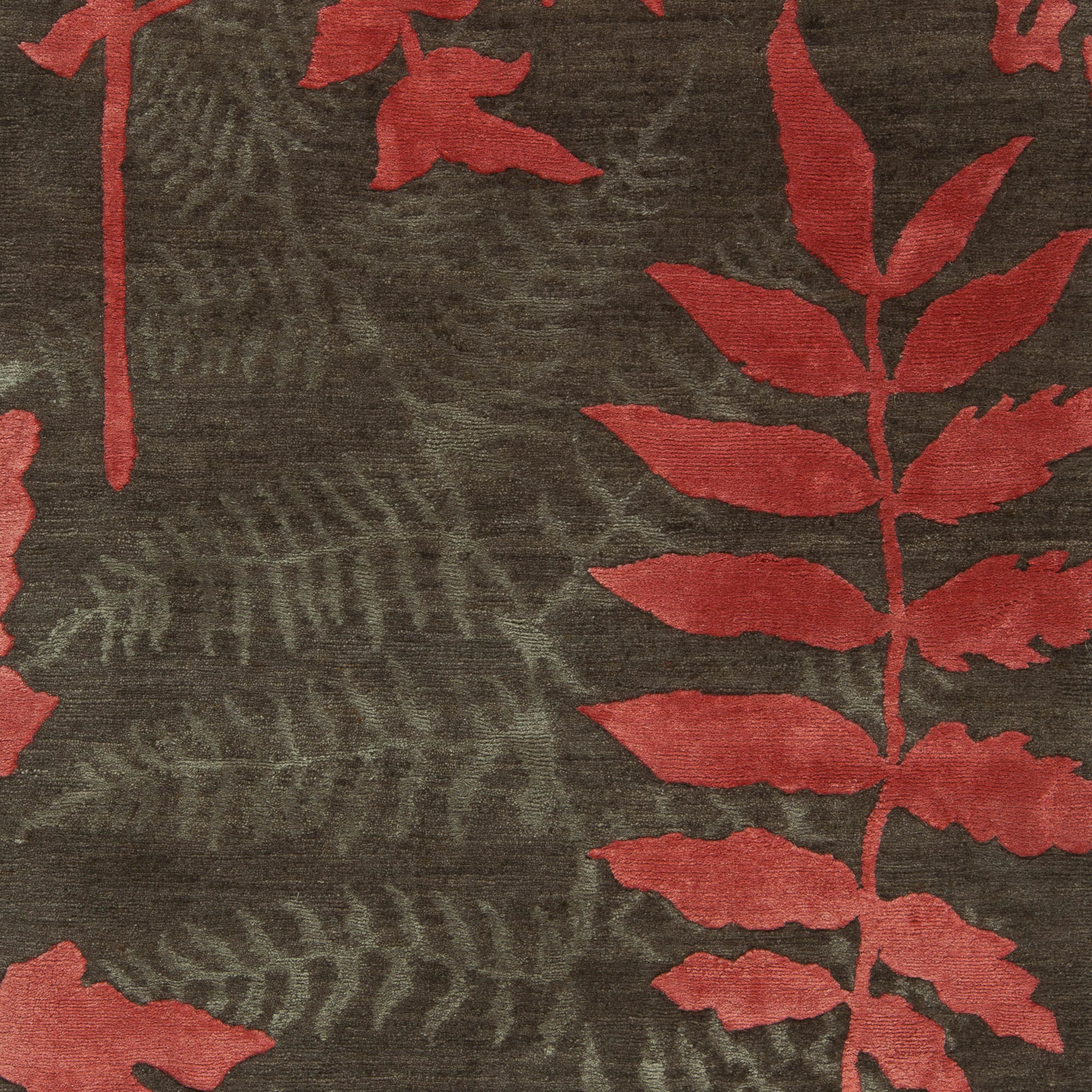
Abrash is the subtle color variation that can appear across a handmade rug, often as soft shifts in tone, banding, or a slightly uneven wash of color. In custom rugs, it is frequently misunderstood as a defect, when in many cases it is part of the rug’s material story, especially in pieces made with wool, hand-spun yarn, or natural dyes. For designers and homeowners working on rooms that depend on texture, proportion, and quiet color, abrash color variation can add depth that a perfectly uniform surface cannot.
Define abrash in plain terms
Abrash refers to visible changes in color within the same rug, usually caused by differences in dye lot, fiber absorption, spinning, washing, or weaving intervals. On a handmade carpet, these shifts may appear as a faint stripe, a cloudier patch, or a change in saturation that catches the eye only when light moves across the surface. The effect is especially common in rugs made with natural dyes, where the color is never chemically standardized to the same degree as in machine production. Rather than reading as a mistake, abrash often signals the human hand and the textile’s handmade construction.
It helps to separate abrash from obvious damage or poor finishing. Wear, staining, and sun fading are uncontrolled changes that happen after the rug is made, while abrash is embedded in the rug from the start or introduced during washing and finishing. In antique rugs and many hand-knotted rugs, this variation can become part of the overall visual rhythm, especially when the pile has softened over time and developed rug patina. A well-made piece may show abrash in a way that feels deliberate, balanced, and integrated with the pattern rather than distracting from it.
Correct common misunderstandings about inconsistency
One of the most persistent myths is that any uneven color in a rug means the rug was made carelessly. That assumption makes sense if you are used to factory-produced floor coverings, where uniformity is the goal and a single shade can be repeated with technical precision. Handmade rugs work differently because each yarn batch, knot sequence, and wash can respond to dye in a slightly different way. In custom rugs, that variability is not a defect to be hidden at all costs; it is often part of the material authenticity clients are actually seeking.
Another misunderstanding is that abrash always looks rustic or visibly antique. In reality, abrash color variation can be nearly imperceptible in a calm palette, especially in wool rugs with a restrained field color, or more graphic in designs that use high contrast and linear pattern. A rug can be modern, architectural, and tailored while still carrying subtle tonal shifts that prevent the surface from reading flat. For designers, that means abrash should be evaluated in context: under the intended lighting, beside the selected upholstery, and at the viewing distance the room will actually have.
It is also important not to confuse abrash with a mismatch between expectation and finish. If a client wants a highly controlled, even field for a pared-back interior, the slight irregularity of a hand-made textile may be unwelcome. If the design brief calls for depth, softness, and a layered feel, the same variation may be exactly what makes the rug persuasive. The difference lies in specification: knowing whether the room needs precision or a more organic surface is part of the custom rug process, not an afterthought.
How abrash reads in different interior styles
In quiet luxury interiors, abrash can be especially effective because it adds complexity without adding noise. A pale wool ground with subtle tonal shifts can sit beautifully under tailored seating, stone, plaster, and matte woods, giving the room a sense of age and depth even when every other finish feels crisp and contemporary. This is where rug patina matters: a little visual softness can keep a room from feeling overdesigned or brittle. When the palette is restrained, abrash becomes less about drama and more about creating a surface that feels lived with and materially credible.
In antique-meets-modern spaces, abrash can bridge the old and the new. A room with a contemporary sofa, a vintage table, and a hand-knotted rug may need a texture that unifies those different eras, and a rug with natural dye variation can do that without forcing a decorative theme. The irregularity suggests handcraft, which helps the rug sit comfortably alongside older objects that already have their own history. This is one reason many designers choose custom rugs for rooms that combine sleek architecture with collected furnishings: the rug can mediate between finishes rather than simply match them.
Maximalist interiors can also benefit from abrash, though the role is different. In a pattern-rich room, color variation prevents a large floor covering from becoming visually sealed off from the rest of the scheme. It gives the eye a place to rest between motifs, helping the rug remain readable at the room scale. If the rug is meant to anchor layered art, lacquer, velvet, and mixed metals, abrash can soften transitions and keep the composition from feeling too hard-edged.
By contrast, in very architectural interiors with sharp sightlines and strong geometry, abrash should be more deliberate. A rug with bold shifts in tone can either enrich the floor plane or interrupt the discipline of the room, depending on how the pattern is laid out and where the furniture lands. That is why scale and proportion matter so much: a broad field with slight tonal movement can read elegant in an open-plan living room, while the same variation might feel too active in a narrow corridor or a compact study. The right answer depends on how much visual weight the rug is meant to carry.
When variation is desirable and when it may not be
Abrash is desirable when the goal is character, softness, and depth. It works well in handmade rugs where the client wants the eye to notice texture before detail, or where the furniture arrangement leaves a generous expanse of floor visible. In large living rooms, for example, a broad custom area rug with slight tonal shifts can keep the floor from reading as a single anonymous field. That matters in open-plan interiors, where the rug often has to define a seating zone, support the color palette, and remain visually calm from multiple angles.
Variation may be less desirable when the design depends on tight color matching or a highly controlled architectural effect. A room with lacquered millwork, polished stone, and very exact upholstery colors may call for a rug with minimal abrash so the composition stays precise. Likewise, if a client is sensitive to visual movement or wants a nearly monochrome surface, even subtle banding can feel too pronounced. This is where designer specification becomes practical rather than aesthetic: the rug must behave properly with the light exposure, wall color, and material sheen already in the room.
Traffic and maintenance should also influence the decision. In a family room or dining area, a rug with natural dyes and gentle variation may be forgiving, because small changes in use blend into the overall texture rather than standing out. In a formal sitting room with controlled light and less daily activity, the same rug may appear more refined and luminous. Pile height contributes too: lower pile can make abrash easier to read, while a denser or more textured surface may soften the transition between shades. That does not make one better than the other; it simply means the rug’s material construction has to support the intended use.
If the goal is a perfectly even field, the answer may be to select a different construction, color method, or weaving approach. But if the brief calls for softness, depth, and a subtle sense of age, abrash can be an asset rather than a compromise. In many custom rugs, the best result is not the most uniform one, but the one that feels most convincing in the room.
How designers use abrash color variation intentionally
Designers often use abrash to control how a rug sits against surrounding materials. A soft tonal shift can prevent a neutral rug from disappearing into a sea of beige, while still preserving a quiet palette. In rooms with walnut, oak, limestone, or bronze, that variation can pick up the slight differences already present in natural materials and make the whole composition feel more considered. It can also help a rug interact more gracefully with daylight, since morning light, late-afternoon sun, and evening artificial light all change the way color is perceived.
There is also a practical advantage in custom rug design: abrash can be used to give a large-format rug a sense of movement without resorting to strong pattern. This is particularly useful in oversized rooms, where a single field of solid color may feel too static. A nuanced surface can stretch across the floor plane while still offering enough visual activity to hold the scale of the architecture. For designers, that makes abrash a tool for proportion, not just a stylistic quirk.
When working with a gallery or specialist, it is helpful to view samples under the same conditions the finished rug will face. A color that looks even in a showroom may shift noticeably under cooler LED lighting or in a sunlit room with south-facing exposure. If you are comparing finishes for custom rugs, ask how the yarn was dyed, how the fiber takes color, and whether the intended visual effect depends on natural dye irregularity or on a more controlled palette. Those questions lead to better results than simply asking for “no variation” or “more character.”
If you are planning a room where the rug must resolve difficult dimensions, a custom-made rugs consultation can help you decide whether abrash supports the architecture or competes with it. That conversation is especially useful when the room has unusual proportions, mixed furniture scales, or a tight color brief. A good specialist will think through both the appearance and the function of the rug, including how it will read under your actual lighting and beside the fabrics you already have in hand.
What to look for when evaluating abrash
The first question is whether the variation feels integrated or accidental. Integrated abrash tends to move naturally with the rug’s pattern, borders, or field, while accidental inconsistency can seem abrupt or isolated. View the rug from several distances: close up, you may notice yarn-level differences; from across the room, you should judge whether the surface still feels balanced. In a well-designed handmade rug, the eye should move across the floor with ease, not stop at a patch of unwelcome contrast.
It is also worth considering how the abrash interacts with furniture placement. If a large sofa, coffee table, or dining table covers the most varied area, the effect may be reduced or even lost. Conversely, if the rug is intended to be seen fully around a floating seating arrangement, the tonal movement becomes more important to the composition. This is one reason rug scale and furniture layout should be resolved together rather than separately. A beautiful rug can fail if the abrash lands awkwardly under the room’s focal points.
Finally, consider long-term aging. A rug with graceful variation may age in a way that feels natural, especially if it already has the depth associated with rug patina. In a strong design scheme, that evolving surface can become part of the room’s continuity rather than a maintenance concern. If you prefer a highly stabilized look, ask early about dye method, construction, and finish so the final piece aligns with your tolerance for variation.
Why abrash often works so well in custom rugs
Custom rugs give designers and clients more control over whether abrash is embraced, softened, or minimized. That is important because variation is not a one-size-fits-all feature; it can be an elegant asset in one room and an irritation in another. In a bespoke project, you can calibrate pile height, fiber choice, weave density, and color plan so the finished rug behaves the way the room requires. The more tailored the interior, the more valuable that control becomes.
For many clients, the appeal of handmade rugs is not only their craftsmanship but their refusal to look mechanically uniform. Abrash supports that quality by reminding the viewer that the textile was made by hand and finished with care, not flattened into sameness. When used thoughtfully, it brings dimension to modern rooms, depth to minimal schemes, and coherence to mixed interiors. That is why color variation should be discussed early in the design process, not treated as a surprise after installation.
FAQ: Abrash in rugs
Is abrash a flaw?
Not necessarily. Abrash is often a normal and even desirable feature in handmade rugs, especially those made with hand-spun yarns or natural dyes. Whether it feels like a flaw depends on the design intent, the level of variation, and how the rug will be used in the room.
Does it mean the rug is poor quality?
No. Abrash color variation can appear in very well-made rugs and may reflect the characteristics of the materials and weaving process. Poor quality is more likely to show up as careless finishing, weak construction, or unevenness that feels random rather than integrated.
How does light affect abrash?
Light can make abrash more visible or more subtle depending on direction, intensity, and color temperature. Natural daylight often reveals tonal shifts more clearly, while artificial light can flatten them or change their appearance. That is why it is wise to review samples in the room where the rug will live.
Can abrash work in a modern interior?
Yes. In modern interiors, abrash can soften hard edges, keep a neutral rug from feeling flat, and introduce depth without strong pattern. It is especially effective when the room relies on material nuance, such as wool, stone, wood, and matte finishes.
For projects where every detail matters, the best approach is to choose the rug based on how it will function in the room, not just how it looks in isolation. Doris Leslie Blau often treats color variation as part of that larger design conversation, helping clients weigh pattern, texture, and finish against scale, light, and use. If you are refining a space and want a rug that feels resolved rather than merely decorative, specialist guidance can make the difference between a floor covering and a truly integrated interior element.