

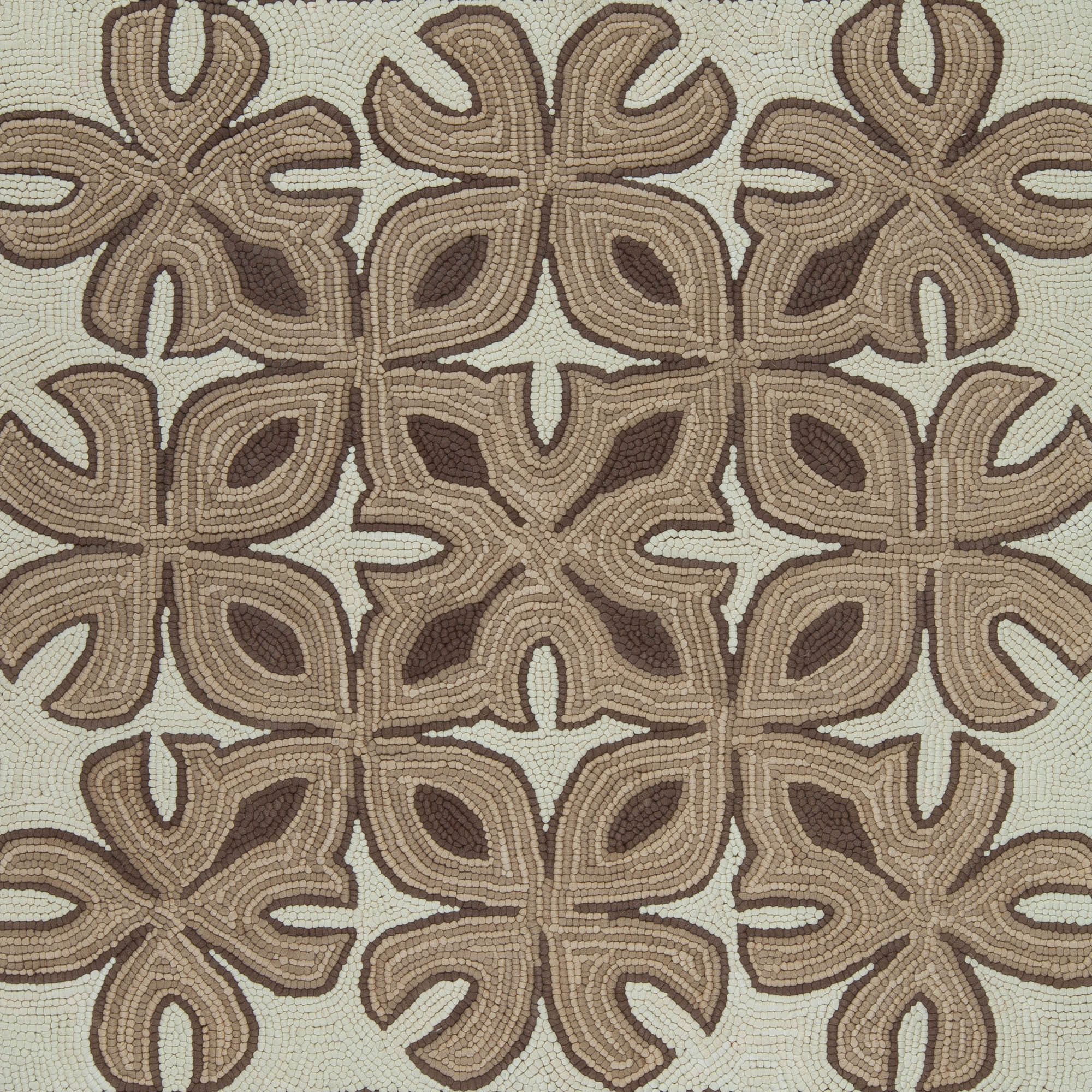
Art Deco rugs remain compelling because they understand a basic design truth: geometry can organize a room without flattening it. In contemporary interiors, that quality feels especially useful. A well-chosen Deco pattern brings order, contrast, and rhythm, while still allowing furniture, architecture, and light to do their work.
The best Art Deco rugs do not rely on nostalgia alone. They translate the movement’s disciplined symmetry, stepped outlines, and polished palette into something that suits present-day rooms with lower profiles, cleaner silhouettes, and more relaxed furnishing plans. For homeowners and designers looking at custom rugs, the question is not whether Deco belongs in a modern interior, but which version of it will support the room rather than compete with it. That distinction depends on scale, line weight, color temperature, and the amount of visual activity already happening elsewhere in the space.
Identify the Deco details that still feel fresh
What still reads as current in Art Deco rugs is the architecture of the pattern. Repeated fans, arcs, stepped borders, sunburst references, and strong axis lines can feel surprisingly crisp when they are handled with restraint. The motif becomes most relevant when it is edited, not when it is overloaded. A rug with a clear central field and a disciplined border often feels more contemporary than one that fills every inch with ornament.
Color discipline matters just as much as the drawing. Cream, sand, taupe, ink, charcoal, soft gold, and muted green can make Deco geometry feel calm instead of theatrical. In contrast, highly saturated contrast can push the piece toward a costume effect, especially in rooms that already use sculptural furniture or bold lighting. The most successful Art Deco rugs in current interiors often borrow the movement’s structure but lighten the tonal drama.
Material choice also changes the reading of the pattern. Wool gives Deco geometry a grounded, matte clarity, while silk or silk highlights can sharpen edges and bring out the play of light across the surface. A low-to-medium pile keeps the lines readable and helps the motif sit neatly under furniture. When the construction is hand-knotted and precise, the pattern has enough definition to feel intentional without looking heavy-handed. That level of control is one reason designers continue to specify custom rug design for rooms where proportion has to be exact.
Show how geometry can be softened for modern living
Geometry does not have to feel severe. In fact, the most livable geometric rugs often use softness at the edges: rounded corners within the composition, gentler transitions between tones, or a field that allows the pattern to breathe. A Deco-inspired rug in a family sitting room, for example, might keep its linear structure but use a quieter border and a slightly warmer palette so the room feels composed rather than formal. That approach works especially well when the furniture is upholstered in tactile fabrics like linen, bouclé, or velvet with a subdued sheen.
Pattern density is the other lever. A room with a sectional sofa, a pair of accent chairs, a coffee table, and visible casegoods already has plenty of visual information. In that setting, a Deco rug with broad negative space can anchor the room without producing glare or clutter. If the rug is going into a more minimal interior, the geometry can be slightly more pronounced because the surrounding architecture is doing less of the talking. The goal is not to mute the motif entirely; it is to let the eye move comfortably across the room.
Texture helps soften the graphic effect. A rug that combines matte wool with subtle silk accents can keep the composition from becoming flat, while still avoiding the mirror-like brightness that sometimes makes geometric work feel too exacting. This is where handmade rugs have a distinct advantage: the slight variation in line and pile gives the design warmth, which is especially useful in rooms with polished stone, lacquered case pieces, or blackened metal. If the surrounding materials are sleek, a more tactile rug is often the best counterweight.
Pair Deco rugs with contemporary furniture and lighting
One of the easiest mistakes is treating a Deco rug as if it must be matched with Deco furniture. It does not. In contemporary rooms, these rugs often look strongest when paired with restrained, current pieces: a low-profile sofa, a streamlined walnut table, a pair of slender lounge chairs, or a simple upholstered bench. The contrast between the rug’s structured pattern and the furniture’s quieter geometry gives the room depth. Without that contrast, the room can feel themed rather than designed.
Lighting should be considered part of the composition. Warm, diffused light tends to flatter Deco-inspired palettes and keeps metallic accents from becoming too sharp. Pendant lights with opaque shades, shaded floor lamps, and indirect wall washing can all help the rug register as part of the room’s atmosphere rather than an isolated object. In a dining room, for example, a geometric rug beneath a clean-lined table and a sculptural pendant can create a strong visual axis without needing much else in the space. The rug becomes the stabilizing plane that ties those forms together.
For open-plan interiors, Deco rugs are especially useful because they can define zones without adding visual noise. A rug with a disciplined border can distinguish the seating area from a circulation path, while an elongated pattern can reinforce the room’s length. In a loft or a combined living-dining space, this is not merely decorative; it solves a spatial problem. Custom area rugs allow that pattern to be sized to the furniture plan, which is often the difference between a room that feels intentional and one that feels assembled from defaults.
Discuss border treatments and scale
Border treatment is one of the most important decisions in an Art Deco rug because it controls how the eye enters and exits the composition. A strong border can frame a seating area with architectural clarity, while a thinner border can keep the rug from feeling too assertive in a smaller room. In some interiors, a double border or stepped edge is the right response because it echoes the geometry of the architecture itself, especially where door casings, paneling, or ceiling details already suggest linear repetition.
Scale is equally consequential. A Deco rug that is too small loses authority and can make the furniture grouping feel fragmented. A rug that is too large may suppress the pattern or make the border feel awkwardly close to the walls. The most successful rooms usually give the rug enough margin to breathe, while still allowing it to establish the seating or dining zone with confidence. This is where a careful custom rugs approach becomes practical rather than indulgent, because the design can be adjusted to the actual room dimensions and the way people move through the space.
In bedrooms, the scale should be gentler and the border less emphatic if the goal is a restful atmosphere. In living rooms, a broader border can help organize the furniture plan and set up a visual perimeter around the seating group. In hallways or libraries, a narrow Deco runner may be enough to introduce rhythm without overwhelming the architecture. The point is that border treatments are not ornamental afterthoughts; they are part of the room’s proportion system.
Why Art Deco rugs work in Neo Deco interiors
Neo Deco interiors are not about copying the 1920s. They reinterpret Deco’s core principles—clarity, symmetry, and refined contrast—through contemporary materials and more open plans. In that setting, a rug can do a great deal of work. It can echo curved furniture, reinforce a symmetrical layout, or introduce a graphic edge that keeps the room from feeling too soft. The style is particularly effective in spaces that combine natural stone, dark wood, brushed metal, and pared-back upholstery because those materials already support a disciplined visual language.
What makes the update feel believable is moderation. A room with Deco references does not need every surface to signal the same era. A rug with a geometric center, a restrained border, and a palette that coordinates with wall color and upholstery can sit comfortably alongside contemporary art and modern lighting. That is why designers often think of geometric rugs as a structural element first and a decorative element second. They define movement, reinforce sightlines, and hold the room together with far less effort than a busy scheme of accessories.
A realistic way to specify the right piece
Consider a living room with a limestone fireplace, a curved sofa in taupe mohair, a pair of brass-and-black side tables, and a neutral plaster wall finish. A busy rug would fight the room’s calm material palette, but an understated Deco composition could sharpen it. In that case, a wool rug with a softened stepped border and a slightly darker center field might create enough contrast to ground the seating area without drawing all attention to the floor. If the room receives strong afternoon light, reducing sheen and avoiding overly pale center sections will keep the pattern legible throughout the day.
That kind of specification is easier when the rug is made to the room rather than the other way around. A designer can adjust the motif so it aligns with the sofa’s footprint, the clearance around the coffee table, and the direction of the main circulation path. The result is a rug that performs both aesthetically and practically. For homes where furniture layouts change seasonally or where an unusually shaped room needs a precise solution, made-to-order rugs can solve problems that standard dimensions rarely address.
Material durability should not be ignored just because the topic is style. Wool remains a sensible foundation for many Deco-inspired rooms because it is resilient, visually calm, and capable of carrying pattern without excessive shine. In higher-formality rooms, silk detailing can be introduced selectively to emphasize borders or key lines. In high-traffic spaces, a lower pile will usually be easier to live with and will preserve the crispness of the geometry over time. The most refined result comes from matching the construction to the room’s use, not from chasing the most dramatic surface effect.
How to keep geometry from feeling busy
Geometry starts to feel busy when too many competing decisions are made at once. Strong pattern, strong contrast, high sheen, and dense furnishing can create visual fatigue even if each element is attractive on its own. The fix is usually subtraction, not substitution. Choose one dominant gesture, such as a border, a central medallion, or a repeated linear rhythm, and let the other parts of the composition stay quieter. When that hierarchy is clear, the rug feels composed rather than noisy.
Another useful strategy is to coordinate the rug with one or two existing elements in the room instead of trying to echo everything. A line from the rug can relate to the profile of a chair, the finish of a console, or the shape of a light fixture, while the rest of the room stays neutral. This keeps the pattern integrated into the architecture of the interior. It also makes Art Deco rugs more adaptable in rooms that mix periods, which is increasingly common in modern homes.
Finally, think about visual rhythm from the point of view of where you sit, walk, and look. A rug that is beautiful in the abstract may feel overwhelming if its strongest lines land directly under a long sofa or at a narrow passage point. Conversely, a design with clear movement can make a static room feel more alive when placed with care. The best custom rugs do not simply fit the floor; they choreograph the room.
FAQ
What makes an Art Deco rug look dated?
Art Deco rugs usually look dated when the geometry is overdrawn, the palette is too literal, or the contrast is too harsh for the room. If every motif competes for attention, the rug can read as themed rather than refined. Softer color transitions, more generous negative space, and a lower sheen often make the design feel more current.
Can Deco work in a minimal room?
Yes, and it can work especially well when the rest of the room is quiet. In minimal interiors, a Deco rug can provide structure without adding clutter, as long as the palette is restrained and the pattern is not overly dense. The rug should support the room’s calm rather than turning it into a graphic exhibit.
How do I keep geometry from feeling busy?
Limit the number of strong visual moves in the same space. If the rug has a bold border, let the furniture stay simple; if the rug has a dense pattern, keep textiles and lighting understated. It also helps to choose a scale that fits the room properly, since a pattern that is too small can read as fussy.
Are geometric rugs suitable for open-plan living?
They are often one of the best choices for open-plan rooms because they can define zones without adding walls or heavy visual dividers. A Deco-inspired rug can anchor a seating area, support a dining setup, or create a visual pause between functions. The key is to match the rug’s proportions to the area it is meant to define.
For a room that needs more than a standard size or a generic pattern repeat, the right guidance can make all the difference. Doris Leslie Blau offers the design knowledge and gallery perspective to help you specify a rug that fits the architecture, the furniture, and the way the room is actually used.