

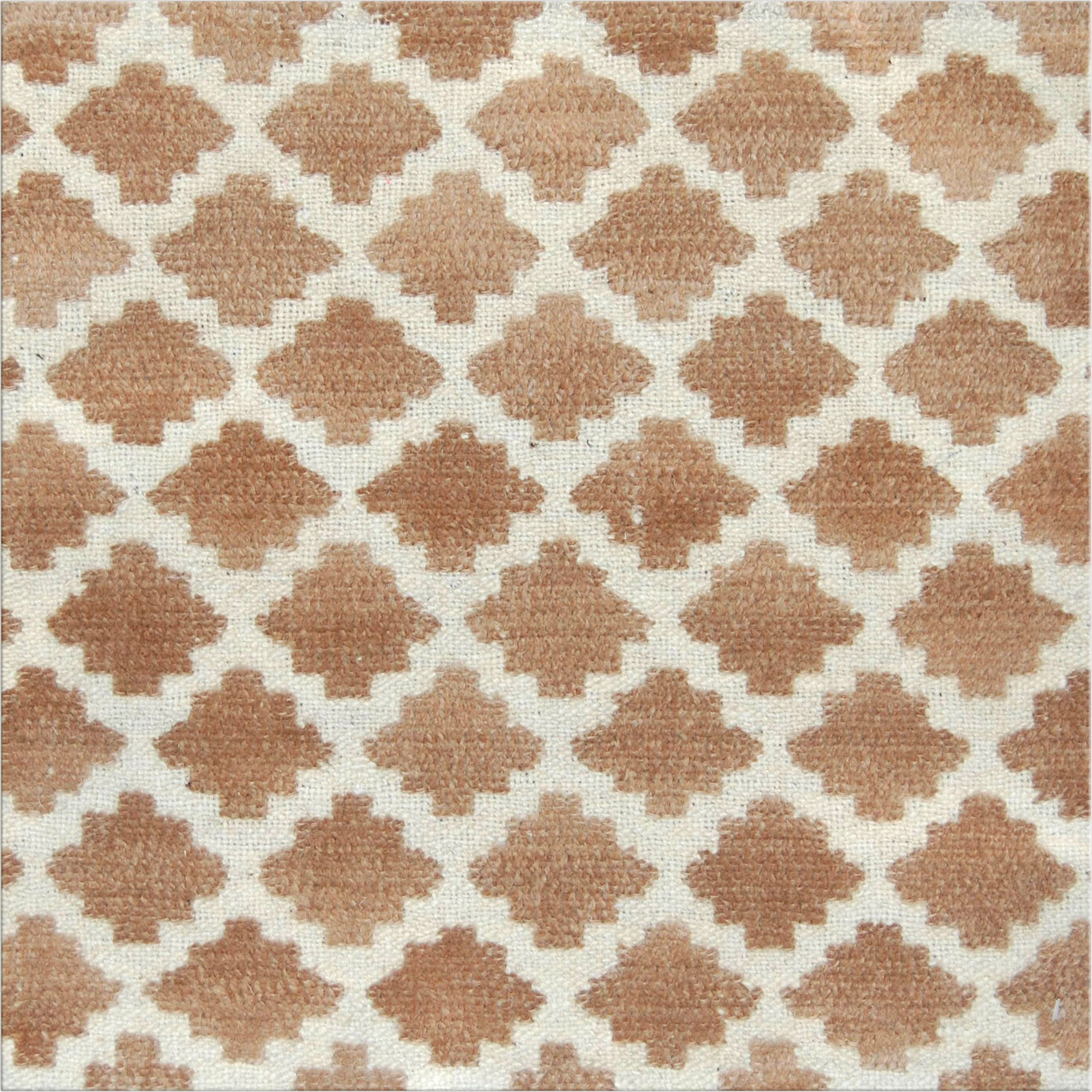
When a concept is clear but the room is not yet fully resolved, custom rugs can become the piece that aligns scale, palette, circulation, and finish choices. For interior designers, the challenge is rarely inspiration; it is specification. A strong rug brief has to travel from moodboard to fabrication without losing proportion, texture, or the intent behind the room. That means documenting the right facts early, asking sharper client questions, and translating visual references into practical instructions that a workshop can actually build from.
Think of a rug specification checklist as part creative brief, part technical worksheet, and part client-management tool. It should help you decide whether the rug is meant to anchor a seating arrangement, soften an acoustic problem, define a circulation path, or provide the one visual counterweight in a restrained scheme. It should also reduce avoidable revisions by clarifying what matters most: border width, pattern density, pile height, yarn behavior, sheen, and how the piece will read in the room’s light. For designers working with custom rugs for interior designers, this process is what separates a beautiful idea from a finished piece that feels inevitable.
Define the Room Role, Traffic Level, and Visual Priority
Before discussing color or pattern, identify what the rug is expected to do in the room. In a formal living area, it may need to create a visual perimeter for seating while remaining quiet enough not to compete with art, upholstery, or architectural details. In a family room, the same rug may need greater resilience, a denser pile, and a pattern that can handle daily use without appearing visually noisy. In a bedroom, the priority often shifts toward softness underfoot and a composition that supports the bed rather than fighting it.
Traffic level should influence both material and construction, not just the expected durability category. Entry-adjacent spaces, corridors, and dining areas need clearer guidance on wear, chair movement, and the likelihood of spills or indentation. A low-traffic sitting room might allow for more delicate fiber mixes or a lighter hand in construction, while a transitional zone may require tighter weave structure and a more forgiving color field. The right specification anticipates use patterns rather than treating every room as a showroom.
Visual priority matters just as much as function. Some rugs are intended to recede, supporting the room’s architecture with quiet texture and low contrast. Others are designed to lead the eye, introducing rhythm through border framing, scale shifts, or a more assertive motif. If you do not define this early, the approved concept can drift: a rug that was supposed to ground a space may end up competing with the upholstery, or a piece meant to animate the room may become too subdued to register. This is where a designer’s judgment is most useful, because the rug has to serve both the plan and the perspective from the doorway.
Record Dimensions, Thresholds, and Adjacent Finishes
Dimensions should never stop at a nominal room size. Measure the usable area, note door swings, define threshold transitions, and record where the rug edge will sit relative to millwork, fireplaces, and fixed furniture. In open-plan layouts, those boundaries are often more important than the room perimeter itself, because the rug may be responsible for zoning one seating group from another without adding walls or bulky furniture. A precise plan lets you decide whether the rug should float under the front legs of seating, run fully beneath all pieces, or align with a pathway that must remain visually clear.
Thresholds deserve special attention because they often dictate edge treatment and pile decisions. A thick rug crossing into a doorway or meeting a lower adjacent finish can create a practical conflict, especially if the client wants visual continuity from one surface to the next. Similarly, stone, polished wood, or high-sheen tile nearby can change how the rug’s color reads, since reflectivity affects perceived saturation and contrast. Record these adjacent finishes during the brief, not later during approval, because they shape both the actual and visual height of the piece.
For proportional accuracy, note the room’s longest sightline and the view that the client will experience most often. A rug that looks balanced in plan may feel undersized from the entry if it leaves too much floor exposed around a central grouping. Conversely, a generous rug can make a room feel more intentional, but only if circulation remains legible and edges are not clipped by furniture. Designers specifying custom rugs often benefit from sketching both the plan view and the primary view corridor, because those two perspectives can reveal different problems.
Translate the Moodboard into Structure, Texture, and Edge Details
A moodboard is not a specification. It is a vocabulary, and the job is to translate that vocabulary into fiber, construction, pile height, border logic, and finishing details. If the board includes brushed plaster, matte bronze, and washed linen, the rug may need a subdued surface with a soft hand rather than a crisp, high-sheen finish. If the board leans toward lacquered furniture, sharp geometry, and art with stronger contrast, the rug can support that energy through clearer linework, more defined motif spacing, or a slightly firmer texture.
The best moodboard to rug design process starts by identifying what is structural in the reference images and what is atmospheric. Structure includes geometry, line weight, contrast, repetition, and scale relationships. Atmosphere includes softness, color temperature, patina, and perceived age. Once you separate those layers, you can specify with greater confidence: perhaps a hand-knotted wool rug with controlled abrash for visual depth, or a wool-and-silk composition where sheen is used sparingly to catch light in a formal salon. The aim is not to imitate the moodboard literally, but to extract its operating principles.
Edge details often deserve more discussion than they receive. A border can stabilize a composition in a room with many competing lines, while a borderless field may suit a space that already has strong architectural framing. Fringes can feel casual, traditional, or deliberately relaxed depending on context, but they should not be added by default. Likewise, carving, loop-pile contrast, and low-relief patterning can quietly change the way a piece reads at distance versus close range. If the client tends to review drawings on a phone, remember that fine subtleties may disappear at small scale; if the room is viewed from across a long gallery, those subtleties may be exactly what makes the rug hold its own.
Practical translation questions for the design team
- Is the rug meant to read as a calm ground plane or as a focal object?
- Should the texture be felt more than seen, or seen more than felt?
- Does the palette need to bridge two finishes that do not naturally match?
- Should the border reinforce the architecture or disappear into the field?
- Will the rug be viewed mostly in daylight, warm evening light, or both?
Build the Specification Around Material, Weave, and Pile Height
Material choice should follow the room’s demands, not just aesthetic preference. Wool remains a workhorse for many interiors because it balances resilience, touch, and visual depth, while silk or silk blends can introduce luminosity where the room can support more refinement. In a quieter scheme, natural texture may be enough; in a more layered interior, a small amount of sheen can add distinction without making the piece feel precious in the wrong way. The key is to think about how the material will behave after placement, not only how it looks in a sample book.
Weave and construction shape the character of the rug as much as color does. Hand-knotted rugs allow nuanced detailing and a refined sense of density, while certain flatweave or hand-tufted constructions may better suit projects that require a different tactile profile or a lighter visual footprint. Pile height also affects how the pattern is perceived: a higher pile can soften geometry and absorb light, while a lower profile can sharpen contour and reveal design details more clearly. If the room includes heavy furniture, sliding chairs, or frequent movement, these are not secondary choices; they determine whether the rug feels luxurious and composed after installation.
For designers balancing appearance and longevity, it helps to think in terms of tactile hierarchy. What should the client notice first: the softness underfoot, the subtle relief of the pattern, or the way the surface catches light across the room? In some projects, the answer is all three, but not equally. A successful specification identifies the primary experience and then supports it with secondary choices, so the material story remains coherent from sample to final installation. This is also where collaboration with a specialist becomes valuable, particularly when the project calls for custom carpet solutions in unusual dimensions, unusual wear conditions, or a highly specific aesthetic brief.
Set Up a Client Approval Process That Prevents Revisions
Client approval becomes easier when the materials you present answer the questions that people actually ask. Instead of showing only a beautiful rendering, frame the decision around the room role, the scale read, and the color temperature under expected lighting. Include notes on how the rug will relate to upholstery, flooring, and wall finishes, and identify any elements that are intentionally quiet so the client understands restraint as a design decision rather than a lack of detail. A well-written approval note reduces the chance that someone later asks for a more visible border, a lighter ground, or a texture change that undermines the original concept.
When presenting options, fewer is usually better. Two or three tightly edited directions often lead to a stronger outcome than a broad spread of unrelated samples, because clients can compare meaningful differences instead of getting lost in variations. Make each option distinct in one controlled way: perhaps one prioritizes softness, one emphasizes contrast, and one tests a more architectural border treatment. That makes the conversation productive and keeps the final choice tied to intent rather than mood-of-the-day preferences.
For hospitality, multi-room residences, and other projects with multiple stakeholders, written notes matter even more. Record what has been approved and why: the border width was chosen to align with ceiling rhythm, the palette references the stone veining, or the pile was lowered to support chair movement. Those notes become useful when procurement, installation, or later room adjustments come into play. They also protect the design logic when someone revisits the project months later and wonders why the rug does not look “more expressive” or “more minimal” than expected; the answer is usually that the original room demanded a specific balance, not a trend-driven gesture.
A Simple Rug Specification Checklist for Interior Designers
Use this as a working sequence rather than a rigid form. It is meant to keep the conversation organized while leaving room for design intelligence. The point is not to create bureaucracy; it is to make sure the rug is specified with the same rigor as the rest of the interior.
- Confirm the room’s function, traffic level, and visual priority.
- Measure usable dimensions, thresholds, and furniture placement.
- Document adjacent finishes, light conditions, and sightlines.
- Extract the moodboard into palette, texture, scale, and edge logic.
- Select material and construction based on use, touch, and maintenance.
- Set pile height and surface effect according to furniture and lighting.
- Prepare client-facing notes that explain the design reasoning.
- Review sample questions before final approval.
Common Sample Questions Worth Asking Before Approval
Sample reviews are often where a project gains clarity, provided the questions are precise. Ask how the colors shift under daylight and evening light, whether the texture feels too flat or too active against surrounding fabrics, and whether the scale reads correctly from the primary entry point. If the room is meant to feel calm, the sample should support that calmness even when viewed beside more expressive finishes. If the room is meant to have energy, make sure the sample does not disappear entirely once it is placed near upholstery, drapery, and artwork.
You should also ask whether the sample still feels correct after considering maintenance realities. A rug can look ideal in a board presentation and still be wrong if it is too light for the traffic level, too delicate for the client’s use pattern, or too reflective for a room with strong sun exposure. These are not compromises; they are specification facts. The more clearly they are addressed early, the less likely the final install will force a redesign of the surrounding room.
FAQ
What belongs in a rug brief?
A rug brief should include room dimensions, furniture layout, threshold notes, traffic level, lighting conditions, the rug’s role in the composition, preferred materials, and any constraints related to maintenance or movement. It should also include design references translated into concrete details such as border treatment, texture, palette direction, and intended visual priority. If the rug is being developed as part of a larger scheme, add notes on adjacent finishes so the piece can be judged in context.
How do I keep a custom rug aligned with the rest of the scheme?
Start with the room’s dominant temperatures, textures, and lines, then decide whether the rug should echo them or provide measured contrast. Matching everything exactly can flatten the room, so the goal is usually coordination rather than duplication. Use the moodboard to identify the strongest recurring traits, then translate those into the rug’s construction, scale, and pattern rhythm instead of copying colors alone.
How should I present options to a client?
Present a small, edited group of options that differ in one or two meaningful ways, such as texture, contrast, or border treatment. Pair each option with short notes explaining why it suits the room and what it contributes to the overall composition. Clients make better decisions when the choices are framed by design logic rather than by a broad, unstructured assortment of samples.
What is the most common mistake in rug specification?
The most common mistake is specifying by image alone without reconciling scale, circulation, and light. A rug can look ideal in a moodboard and still fail in the room if it is too small, too reflective, too busy, or too delicate for its setting. Good specification prevents that gap by treating the room as a working environment, not just a visual reference.
For designers who want a more exacting starting point, Doris Leslie Blau’s gallery expertise can support everything from concept refinement to final material selection, especially when a project calls for careful custom rugs, nuanced scale decisions, or a second opinion before approval. When the room is complex, the best rug is rarely the loudest one; it is the one that resolves the brief with clarity, restraint, and confidence.