

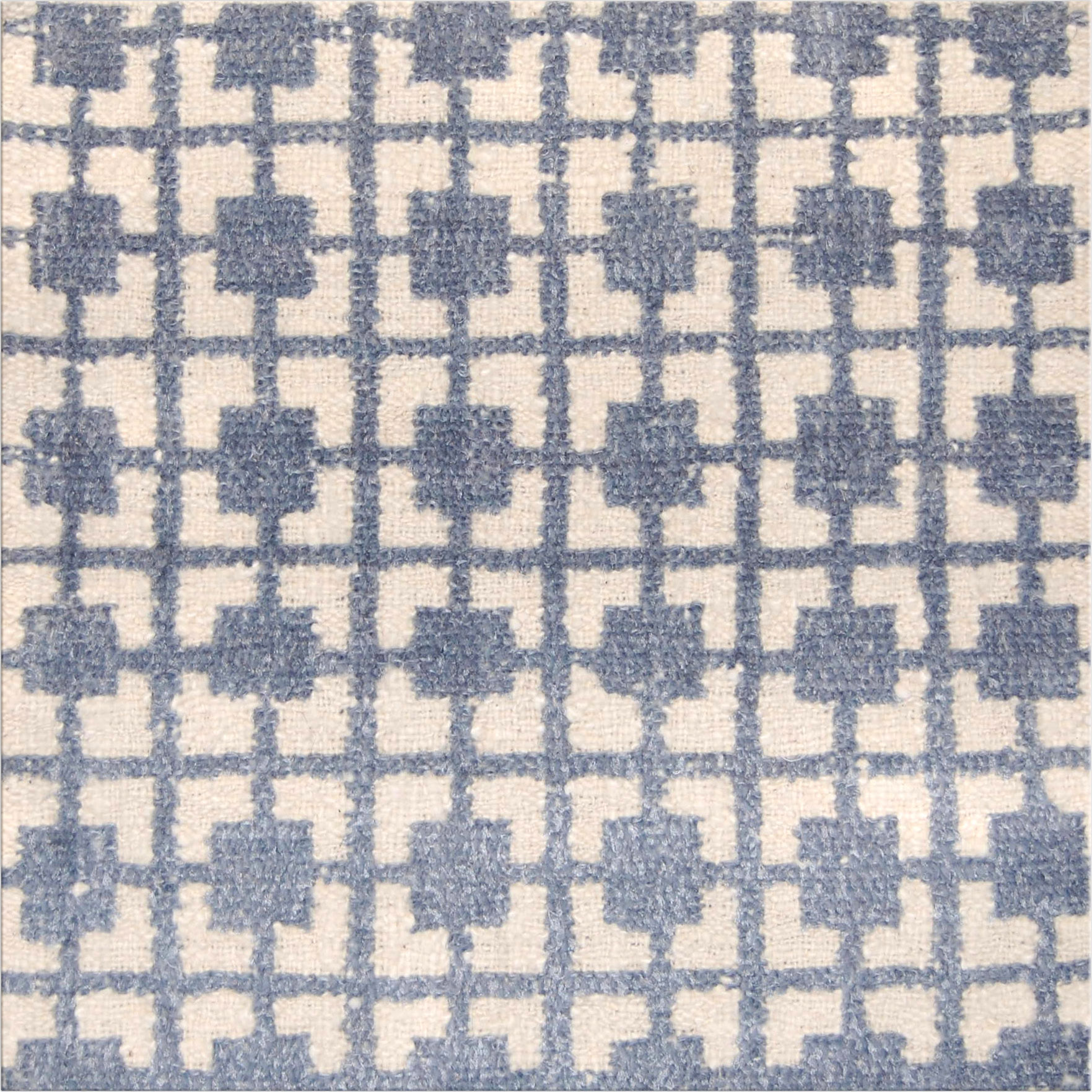
Wool and silk rugs are often chosen for their beauty, but the real value of the blend is how it changes the way a room reads underfoot and in light. In custom rugs, the ratio of wool to silk can alter softness, structure, sheen, and even how clearly a pattern holds its edges from across the room. That makes the material choice less about a simple luxury finish and more about how the rug will behave in a library, salon, or formal seating area. For homeowners and designers, the question is not whether wool-silk is attractive, but where it is most convincing and how its construction should be specified.
Explain the tactile and visual differences between wool and silk
Wool brings body. It has spring, resilience, and a naturally forgiving surface that can hold shape under furniture while still feeling substantial underfoot. Silk changes the equation by introducing a finer filament with a smoother hand and a sharper response to light, which is why the same motif can look more drawn, more dimensional, or more polished when silk is woven into the pile. In practical terms, wool supports structure and silk sharpens detail, so the blend often works best when the design needs both clarity and softness. That balance is especially important in custom rugs, where the fiber decision is part of the composition rather than an afterthought.
The visual difference is easiest to see at the edges of motifs and in directional light. Wool tends to diffuse light, giving fields of color a quieter, matte presence, while silk catches light along the nap and can create subtle movement as someone walks past. This does not mean silk always reads glossy; the effect depends on how densely the pile is packed, how the yarn is finished, and whether the design uses silk for highlights or more broadly throughout the ground. A restrained room with limed oak, plaster walls, and low-sheen upholstery may welcome that contrast because the rug adds depth without forcing shine everywhere else. In a brighter room with abundant windows, the same rug can appear more animated and more reflective than expected, which is why sample viewing in natural light matters.
Texture is also a structural question, not just a visual one. Wool fibers have a more elastic character, so they can support a fuller surface, while silk is typically finer and more delicate in how it stands up in pile. When the two are combined, rug texture becomes a design variable: the hand may feel plush in one zone and almost satin-like in another depending on the weave, the pile height, and how the fibers are distributed. Designers specifying handmade rugs often use this to guide the eye across a room, creating quieter borders and more luminous centers, or vice versa. The result is not one generic finish but a calibrated surface that changes with vantage point and seating distance.
Describe where the blend performs best and where it can be too delicate
Wool and silk rugs perform best in rooms that reward closeness and control. Formal seating rooms, private studies, drawing rooms, and sitting areas with limited foot traffic are natural settings because the rug is likely to be seen, felt, and appreciated rather than heavily used every hour of the day. These rooms usually have more deliberate furniture layouts, which means the rug can be sized to anchor a conversation grouping and extend just enough beyond the furniture to frame the arrangement. In that context, the blend offers tactile richness without needing the hardwearing profile of a utility rug. It is also well suited to spaces where sound control matters, since a denser handmade construction can help soften the acoustic quality of floors, especially in rooms with stone, plaster, or tall ceilings.
By contrast, the blend can be too delicate in rooms that invite abrasion, spills, and constant rearrangement. Family rooms with active children, dining areas exposed to frequent chair movement, and foyers that catch grit at the threshold are usually not the places where a silk-forward construction delivers the best long-term experience. Silk may abrade more readily in those settings, and even when it is used responsibly within the pile, the finish can show wear sooner if traffic is concentrated along the same path. A wool-dominant rug will generally tolerate more of that pressure while still offering a refined hand. If the room must serve dual purposes, it is often smarter to reserve a wool-and-silk composition for a more protected seating area and choose a different material strategy for the harder-working zone.
That said, “delicate” does not mean impractical in every context. A well-specified wool-silk rug can work in a library where furniture placement stays relatively fixed, or in a primary bedroom where shoes are not an issue and the visual effect matters more than durability against daily traffic. The key is understanding the room’s operating pattern before selecting the fiber blend. A client who loves luminous surfaces may still want to avoid a high-silk field if the room opens directly to a terrace or if pets regularly cross the rug. In those cases, the better answer is often a wool-forward custom rug with silk reserved for small design accents rather than broad, exposed fields.
Show how pile height changes the reading of pattern and light
Pile height affects more than comfort; it changes how a rug speaks from a distance. A lower pile tends to hold pattern with sharper definition because the surface is flatter and the eye encounters less shadow variation. A higher pile softens outlines, absorbs more light, and can make the design feel more atmospheric, especially when wool and silk are combined in the same field. In rooms with formal architecture, that decision can be decisive: a tightly clipped surface may complement a crisp paneled salon, while a slightly deeper pile may suit a quieter room where the rug is meant to provide warmth and visual volume. With silk in the mix, even a modest change in pile height can noticeably alter how reflective the rug appears.
There is also a practical relationship between pile height and pattern density. Small-scale motifs, border work, and precise geometry usually benefit from a lower or medium-low pile, where the lines stay legible and the silk highlights do not blur into the surrounding wool. Larger, more painterly designs can tolerate a taller pile because the pattern is not relying on hard edges to carry the composition. When the pile rises, the rug texture becomes more present, and the light falls across the surface in broader planes rather than crisp flashes. That can be useful in a room that needs softness, but it can also obscure detail if the design already carries a lot of visual information. This is one reason experienced designers think about rug pile height at the same time as color and motif.
The effect of pile height is particularly noticeable at seating level. From a standing position, the rug may appear one way; from a sofa or low chair, the nap can read differently because the viewer is closer to the surface and more aware of directional sheen. A low pile with silk accents may create a controlled shimmer beneath a coffee table, while a deeper pile can make the same room feel more enveloping and less graphic. In open-plan interiors, the choice also influences zoning. A lower, more defined surface can help a rug act as a visual boundary around a seating island, whereas a plusher pile can make the zone feel softer and more intimate. For custom rugs, this means pile height is not merely a comfort detail; it is part of the room’s spatial language.
Offer selection notes for libraries, salons, and formal seating rooms
Libraries usually reward restraint. The best wool and silk rugs for these rooms tend to have controlled sheen, enough contrast to register under lamplight, and a pile height that supports a refined reading without becoming visually busy. If the room already contains book spines, wood grain, and layered objects, the rug should organize the view rather than compete with it. A wool-dominant blend with silk used for select highlights can be ideal because it gives the floor a quiet richness while avoiding excess sparkle. In rooms like this, the rug should feel settled beneath substantial furniture and clear enough in its outline to keep the architecture visible.
Salons and formal seating rooms allow for a more expressive treatment, but the expression should still be disciplined. Here, the rug often sits beneath a conversation grouping, perhaps extending beyond a sofa and pair of chairs with enough margin to preserve proportion. A wool and silk rug can be especially effective if the room uses layered neutrals, because the fiber blend adds nuance without requiring a loud palette. If the upholstery is heavily patterned, a lower-sheen rug with a more measured pile can prevent the floor from becoming too active. If the furnishings are quieter, silk can introduce just enough radiance to keep the room from feeling flat. The goal is not spectacle; it is a calibrated relationship between rug, furniture, and architecture.
In formal seating rooms, the most useful question is often how the rug will look after the furniture is in place, not before. The front legs of sofas, the spacing between chairs, and the amount of exposed border all change how the pattern reads. A rug with a strong silk component can behave differently where furniture shadows fall, so it is wise to consider both daylight and evening lighting when reviewing options. This is where a custom-made rugs approach becomes particularly valuable: scale can be tailored to the seating plan, pile height can be moderated to suit the design, and the proportion of sheen can be adjusted to the room’s actual use. For a room intended to feel composed rather than precious, those adjustments matter as much as the motif itself.
If you are weighing wool and silk against other constructions, the most useful next step is usually a conversation about room function, lighting, and how much visual movement you want at floor level. A specialist can compare construction notes, show relevant custom-made rugs options, and help align the material choice with the room’s scale and traffic pattern rather than treating the rug as a standalone object.
What to ask before specifying a wool and silk rug
- How much natural light does the room receive, and from what direction?
- Will the rug sit under fixed seating, or will chairs and tables move across it often?
- Do you want the pattern to read crisply from across the room or soften at the edges?
- Should the surface feel more grounded and matte, or do you want a subtle change in sheen as you walk past?
- Is the room best served by a lower pile for definition or a fuller pile for softness and acoustics?
FAQ
Is wool and silk practical for everyday use?
It can be practical in the right room, but it is usually best in spaces with moderate traffic and more controlled use. A wool-dominant construction is more forgiving, while a silk-forward one is better reserved for rooms where appearance matters more than abrasion resistance. For everyday family circulation, a different material strategy is often the better choice.
Does silk always make a rug more reflective?
Not always. Silk tends to catch light more readily than wool, but the final effect depends on pile height, density, finishing, and how much silk is used in relation to the wool. In some rugs it creates a soft luster rather than a glossy surface, especially when the room lighting is low or indirect.
How does pile height affect the final look?
Lower pile usually sharpens pattern and keeps the surface more defined, while higher pile softens edges and makes the rug appear plusher and more atmospheric. With wool and silk rugs, pile height can also change how much the silk reads in the room. The same pattern may appear crisp, muted, or highly dimensional depending on that one construction choice.
Where do wool and silk rugs work best?
They are particularly effective in libraries, salons, primary bedrooms, and formal seating rooms where the rug can be seen at close range and is not exposed to constant wear. These settings allow the blend’s sheen and texture to be appreciated without demanding the durability of a harder-working floor covering. In the right context, the material mix adds depth without overpowering the room.
Choosing between wool, silk, and a blend is ultimately a room-planning decision, not just a material preference. The best result comes from aligning fiber content, rug texture, rug pile height, and scale with how the room is actually lived in. If you want that level of specificity, Doris Leslie Blau can help with design guidance, material selection, and expert review of the details that shape a rug’s final presence.