

-
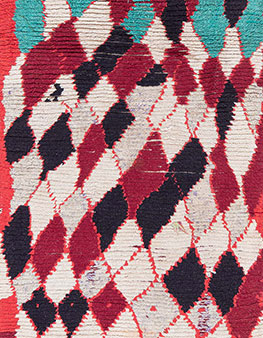
Moroccan Vintage Abstract Ivory Hand-Knotted Wool Rug BB5758
Size: 2'10" × 6'6" (86 × 198 cm) -
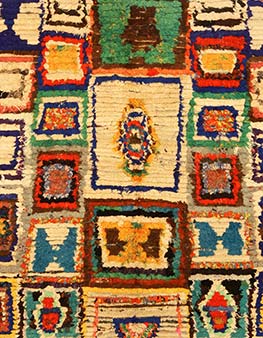
Moroccan Vintage Abstract Light Beige Hand-Knotted Wool Rug BB5145
Size: 4'0" × 7'4" (121 × 223 cm)
Tribal FAQ
What makes a vintage tribal rug different?
A vintage tribal rug is usually defined by handwoven construction, regional motifs, and a less formal design vocabulary than many city workshop carpets. Expect geometric forms, stripes, diamonds, abstract symbols, and natural wool texture. Many pieces were made in the mid-20th century or earlier and are chosen for character, scale, palette, and decorative strength.
Are tribal rugs suitable for modern interiors?
Yes. Tribal rugs often work exceptionally well in modern interiors because their geometry reads as abstract design. Moroccan, Swedish, Turkish, and Khotan-inspired examples can add warmth, rhythm, and texture without overwhelming architecture or contemporary furniture. Neutral wool pieces are especially versatile, while bolder rugs can become the central design element.
How should I choose a tribal rug size?
Start with the room plan and furniture placement. A living room often needs an area rug large enough to connect the seating group, while a hallway may call for a long runner. Oversized tribal rugs can define open-plan spaces, and smaller vintage pieces can add focus beside a bed, under a desk, or in a layered scheme.
Are vintage tribal rugs always antique?
No. Antique rugs are typically 100+ years old, while vintage tribal rugs may be younger, including mid-century Moroccan, Scandinavian, Turkish, or Chinese examples. Both can be valuable for interiors, but age should be considered alongside origin, weave, materials, condition, design quality, and how well the rug fits the intended space.
What materials are common in tribal rugs?
Wool is the most common material because it offers durability, texture, and strong dye absorption. Some tribal rugs also include cotton foundations, mixed fibers, or flatweave structures. Buyers should review whether a rug is hand-knotted, flatwoven, hooked, or pile woven, since construction affects feel, thickness, durability, and placement options.
Can a tribal rug be custom made?
Original vintage tribal rugs are one-of-a-kind and cannot be remade as the same historical object. However, if a project needs a specific size, palette, or coordinated set, a custom made rug inspired by tribal geometry may be an appropriate solution. This is especially useful for oversized rooms, runners, or tightly specified design schemes.