


Oushak Rugs
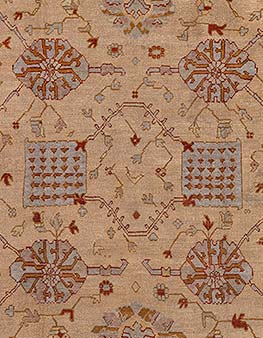
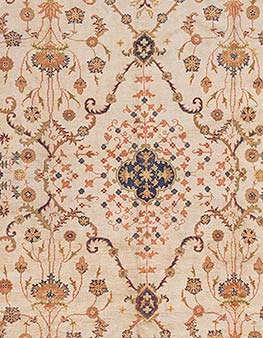
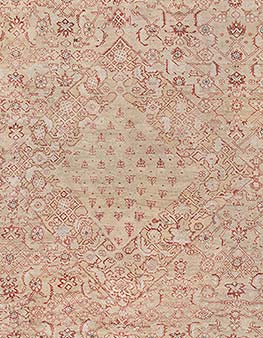
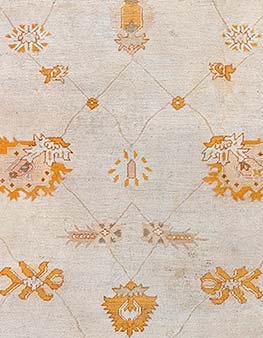
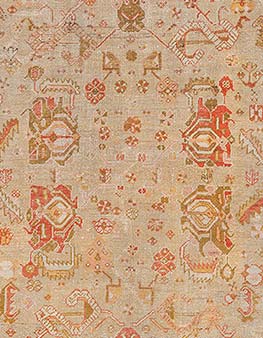
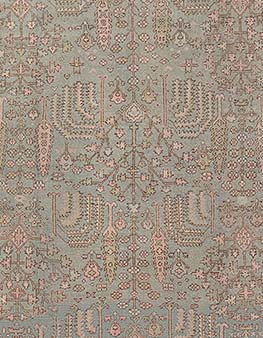
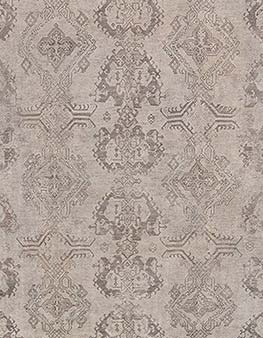
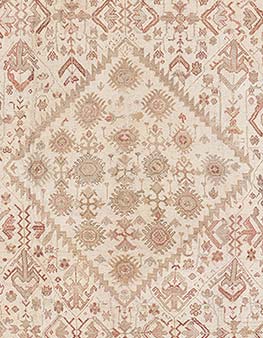
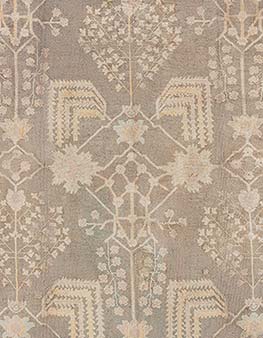
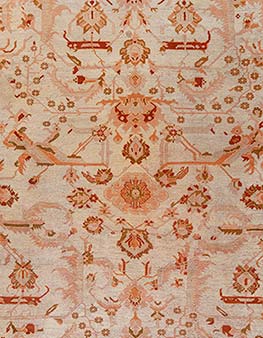
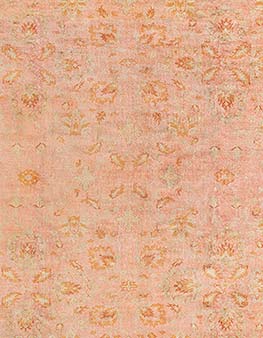
Oushak rugs occupy a distinctive place within Turkish and Oriental carpet weaving: decorative enough for refined interiors, substantial enough for architecture, and historically important enough to interest collectors. Originating from the Uşak region of western Anatolia, these carpets are recognized for their open compositions, generous scale, soft wool pile, and palettes that can range from warm tan, saffron, terracotta, and gold to pale beige, light blue, gray, taupe, and muted teal. Doris Leslie Blau presents Oushak rugs for buyers who want more than a floor covering: they are comparing origin, age, weave, condition, scale, and the visual authority a rug brings to a room.
Why Antique and Vintage Oushak Rugs Work in Luxury Interiors
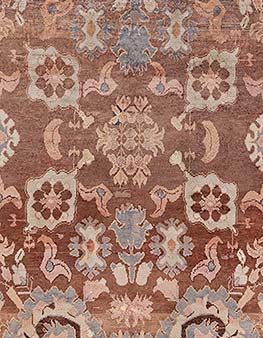
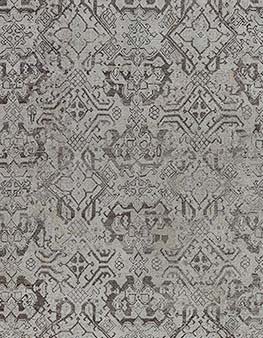
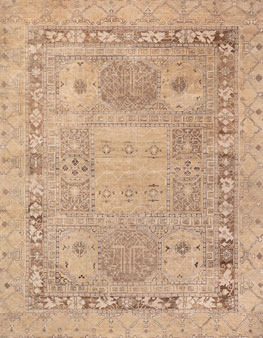
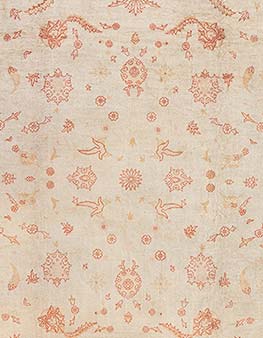
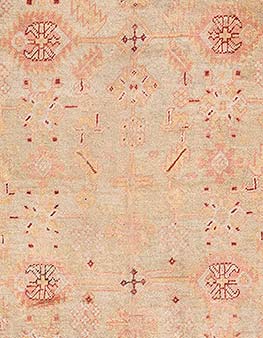
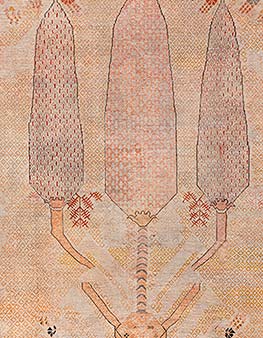
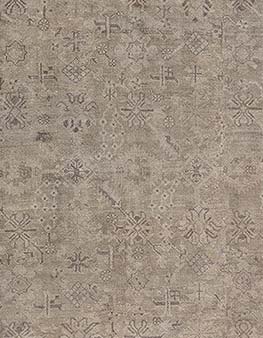
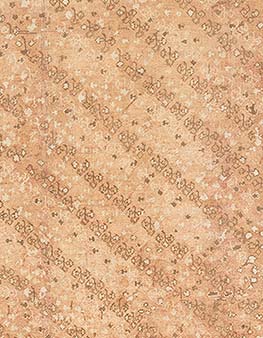
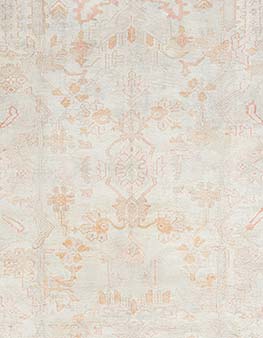
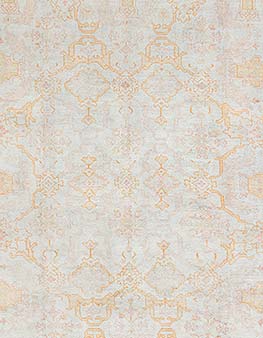
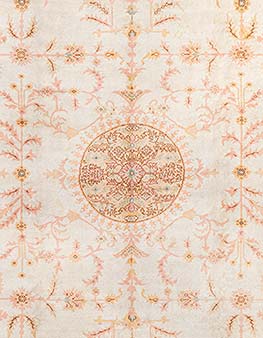
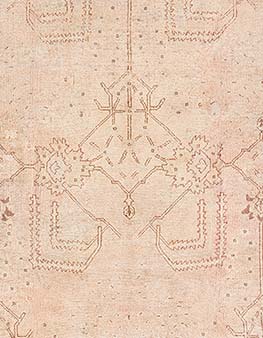
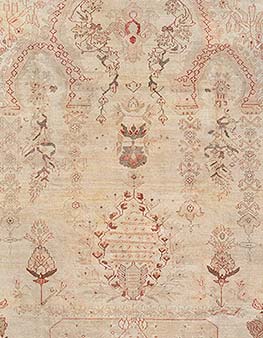
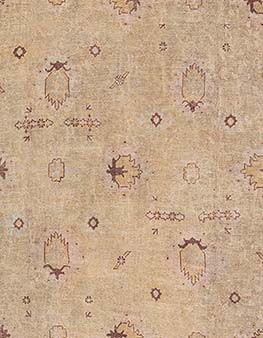
Historic Oushak carpets are especially valued by interior designers because their patterns have presence without the density of many Persian rugs. A large medallion, allover floral field, angular vine scroll, or geometric border can define a living room, library, dining room, primary bedroom, or gallery-like entry while still allowing furniture, art, and architecture to breathe. Antique Oushak rugs are typically sought for patina, mellow color, hand-knotted wool, and the relaxed elegance that develops through age and use. Antique rugs are generally understood in the market as 100+ years old, while vintage examples may offer a similar decorative language from later periods.
- Review age and period, especially circa dates shown on individual rugs.
- Compare allover, medallion, floral, and geometric layouts for furniture placement.
- Measure for room-size, oversized, runner, or square formats before selecting.
- Look closely at wool quality, pile, weave, repairs, and overall condition.
- Consider palette first when coordinating with stone, wood, upholstery, and art.
Materials, Weave, Color, and Scale
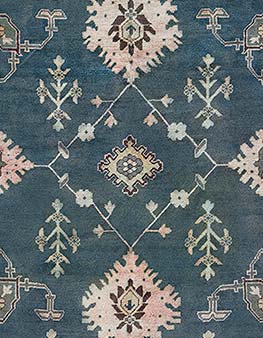
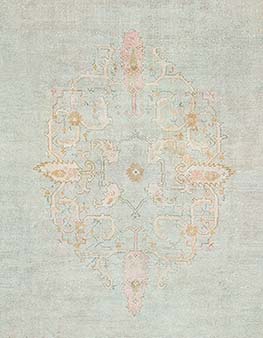
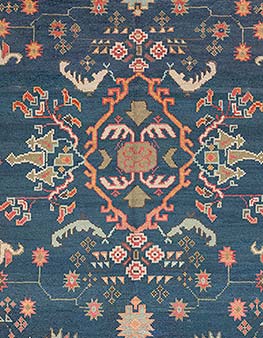
The character of a fine Oushak carpet begins with construction. Many examples are hand-knotted wool rugs, often with a supple handle and a softer visual surface than tightly packed workshop carpets. Their drawing can be grand rather than miniature: large-scale palmettes, stylized leaves, star or ovoid medallions, spacious corner pieces, and borders that frame a room without overwhelming it. This makes Oushaks particularly useful where a Persian carpet might feel too formal or visually compact. Oversized Oushak rugs can anchor open-plan interiors, while narrower runners bring warmth and rhythm to hallways, stair approaches, and transitional spaces.
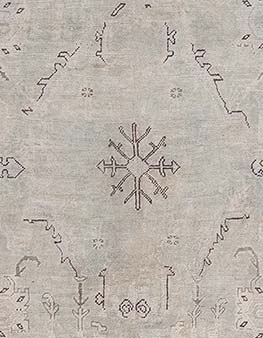
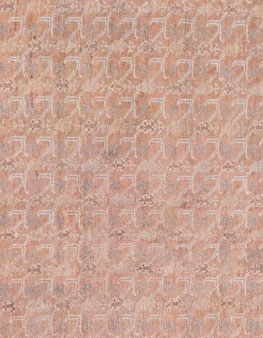
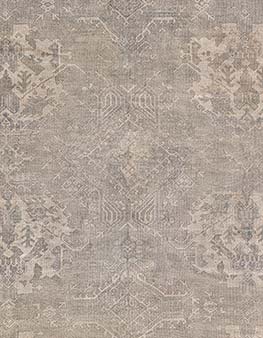
Color is one of the strongest reasons designers return to Oushak rugs. The best pieces often carry layered neutrals and softened vegetable-dye effects that pair well with plaster walls, pale woods, limestone, bronze, linen, mohair, and contemporary upholstery. A beige or light gray Oushak can quiet a room without flattening it; a warm tan, gold, or dusty pink example can add depth to a minimal scheme; a blue or teal Oushak can introduce color while retaining a historic, collected feeling. The result is a category equally at home in traditional, transitional, and contemporary interiors.
Choosing an Oushak Rug from Doris Leslie Blau
Doris Leslie Blau has sourced rugs directly from estates, auctions, dealers, and private collections since 1965, and that experience is especially relevant in a category where subtle differences matter. Buyers can evaluate individual Oushak carpets by listed size, age, origin, material, design, and visible pricing, then narrow the selection by room use and design direction. Some clients look for rare antique Turkish carpets with collector appeal; others need a decorative area rug that can unify a high-end residential or hospitality project without feeling newly manufactured.
When an existing antique or vintage size is not right for the architecture, custom made Oushak rugs and made-to-order interpretations may be appropriate. These allow designers to pursue the calm scale, open drawing, and soft palette associated with Turkish Oushak carpets while specifying dimensions, colors, and materials for a particular project. The strongest choice is ultimately the rug that balances authenticity, proportion, condition, and atmosphere: a piece with enough history to feel grounded and enough decorative clarity to serve the room for years.